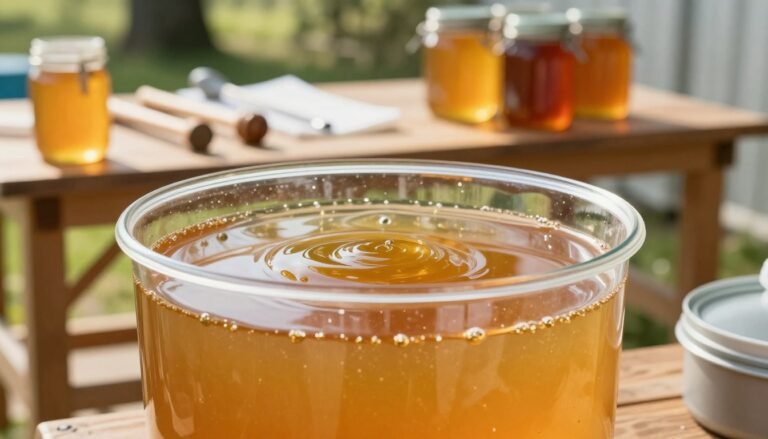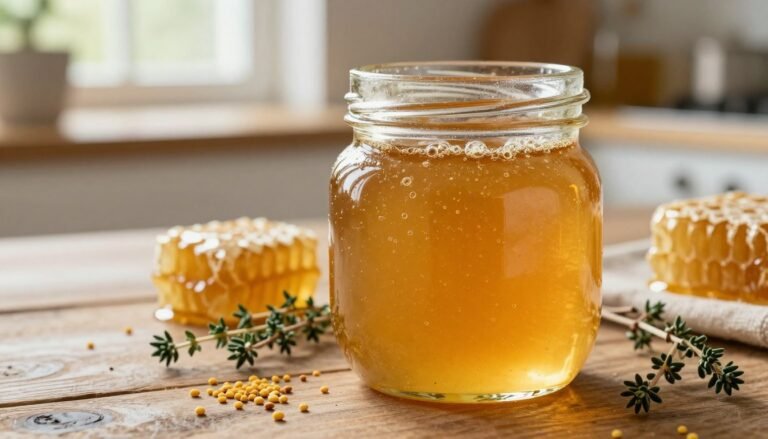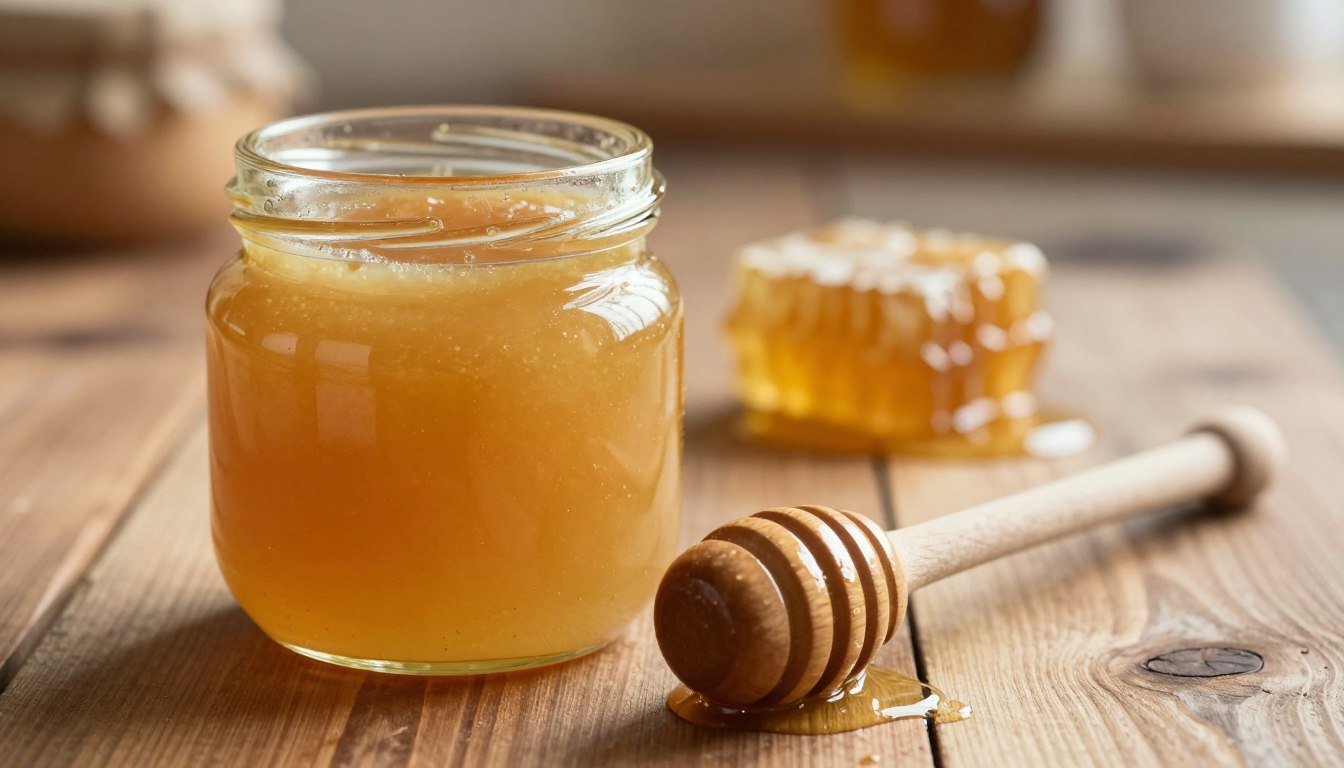
This post walks you through a simple, reliable way to make creamed honey at home. The process is straightforward and fits a busy kitchen. You will use a seed to guide the texture and a trusted starter like Sue Bee Spun Honey.
Gather clean containers and jars before you begin. Work at a steady temperature — Charlotte recommends 50F to 57F — and keep finished jars in a cool room for proper set and storage. A couple of simple steps and a little time give consistent results.
When you beat the liquid honey mixture on low, tiny bubbles may appear. Scoop off the froth or let the mix sit overnight to remove them. This small care helps jars look smooth and shop-ready.
Key Takeaways
- The process is easy and suited to home kitchens.
- Store jars at about 50F–57F to help the set.
- Use Sue Bee Spun Honey as a reliable starter.
- Prepare clean containers before mixing.
- Remove tiny bubbles by resting the mix overnight.
Understanding the Science of Creamed Honey
Knowing why honey forms crystals makes it easier to craft a smooth product. The core process is simple: natural sugars and tiny particulates encourage crystallization. Elton Dyce’s 1930s patent set the stage for industrial control of granulation.
All honey will eventually granulate unless industrial heating and filtration alter it. Pollen and other particulates act as natural seeds that promote fine crystals. That is why preserving a delicate seed structure matters.
The sugar profile controls speed. Honeys high in glucose, such as oilseed rape, granulate much faster than others. Temperature matters too — keep preparations below 40ºC to protect the fine crystal form.
The role of controlled crystallization
Soft set or set honey is the result of guiding this natural granulation to produce a velvet-like consistency. Maintain a steady temperature and avoid overheating; excessive heat will break down the delicate crystals and harm final texture.
- Natural particulates act as nucleation points for crystals.
- Composition and ambient temperature set the rate of granulation.
- The final consistency mirrors the grain of the seed stock you introduce.
For more on practical steps and seed handling, see this concise guide: Creamed honey technique. To understand grading and how composition affects texture, review this analysis: honey grading standards.
Determining the Optimal Seeding Ratio for Making Creamed Honey
Accurate weighing of starter and liquid is the single best step to control set time and grain. The standard guideline is one part seed to ten parts liquid honey by weight. Use a scale; this one-to-ten mix gives reliable crystals and a smooth consistency within about a week at room temperature.
If you drop below roughly 5% seed, expect the process to stretch into many weeks. A quality starter matters. Grind crystallized honey in a food processor or pestle until it is toothpaste-smooth, then blend gently so the seed distributes evenly through the batch.
Larger containers can add a few extra days compared to small 2 oz jars. Once the set honey forms, pantry storage is fine, though some keep jars in the fridge.
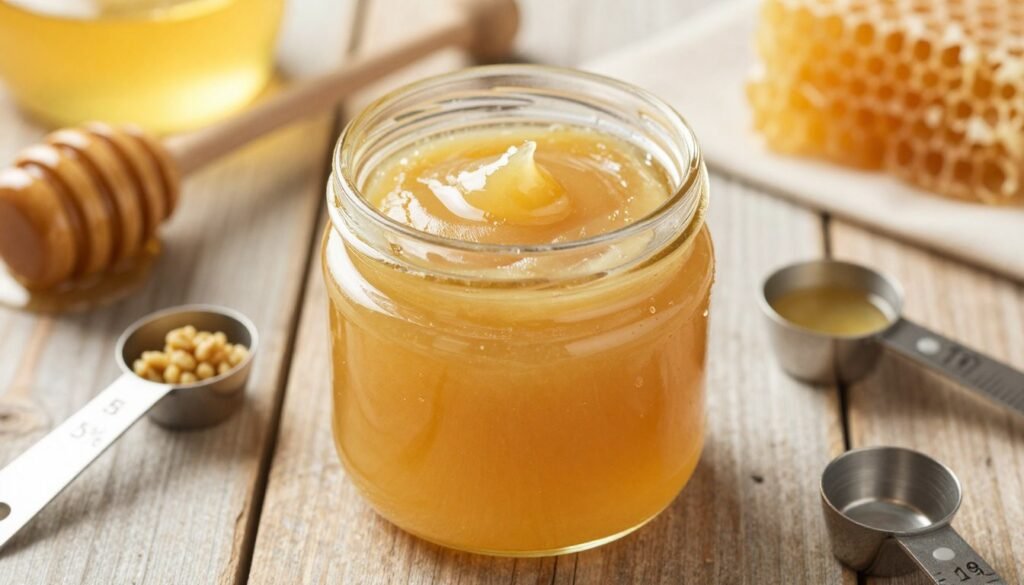
- Use 1:10 seed to liquid by weight for dependable results.
- Prepare the starter finely and mix at room temperature.
- Expect a typical set in about one week; larger jars may need more time.
| Step | Typical Measure | Expected Time |
|---|---|---|
| Seed to liquid | 1 : 10 (by weight) | ~1 week |
| Low seed ( | Less than 5% of batch | Many weeks |
| Starter prep | Processed to smooth paste | Minutes |
| Container size | Small (2 oz) vs large jars | Small sets faster |
Ready to try this method? See a practical walk-through on how to make creamed honey and tips on package and label honey.
Essential Equipment and Preparation Steps
Start by checking your equipment—clean strainers, a warm cabinet, and a reliable mixer will save time.
Selecting Your Starter Seed
Choose a smooth seed stock processed in a food processor or with a pestle until toothpaste-smooth. Fine seed gives even crystals and a consistent set.
Store this seed in a bucket with a tap so you can fill a jar without trapping air. Holding the jar just under the tap reduces bubbles and keeps the top clear.
Preparing the Liquid Honey
Warm your liquid honey to about 35ºC in a warming cabinet before adding the seed. This eases blending without overheating the sugars.
Use food-grade gear: a double stainless strainer and nylon cloth (Thorne’s recommended) will remove debris and keep the product food-safe.
A stainless corkscrew drill attachment or a dedicated honey creamer works well for thorough mixing. Avoid whipping in air; trapped air causes frosting in finished jars.
| Tool | Use | Result |
|---|---|---|
| Food processor / pestle | Prepare seed | Smooth, fine crystals |
| Warming cabinet (35ºC) | Warm liquid | Easy blending, fast set |
| Strainer (stainless + nylon) | Filter | Food-grade clarity |
| Bucket with tap | Dispense seed | Less air in jar |
Within a few days, a properly prepared batch will begin to set in room conditions. For practical step-by-step details, see a Dyce method walkthrough at Dyce method walkthrough and advice on how to extract and store raw honey at extract and store raw honey.
Mixing and Setting Techniques for a Smooth Texture
Gentle, timed mixing while the batch cools is the single best step to a velvety set. Mix every 12 hours as the temperature drops toward 14ºC in a cool room.
Use low speed. A planetary mixer with a whisk fitting breaks down the seed and blends it through the liquid honey without whipping in air.
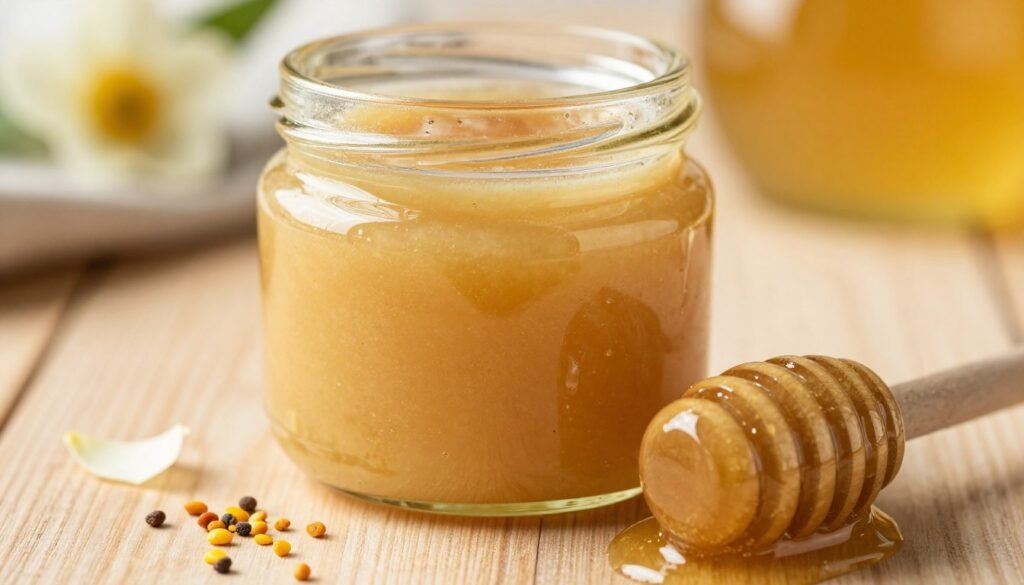
Prepare your starter in a food processor so no large crystals remain. Stir with a silicone spatula to get the last ounces from buckets and keep jars clean at the top.
Avoid introducing air. If you see bubbles, let the mix rest so they rise before filling jars. Small bubbles mar appearance but won’t harm the product.
- Mix gently on schedule; do not overwork the batch.
- Use silicon molds to form bars and chill in the fridge for 4–6 weeks before popping out.
- Finished jars store well in the pantry; remove from the fridge 10 minutes before serving.
| Action | Target | Tool |
|---|---|---|
| Mixing interval | Every 12 hours until set | Planetary mixer / whisk |
| Cooling temperature | ~14ºC in a cool room | Ambient cooling |
| Seed prep | Smooth paste, no large crystals | Food processor |
| Storage tip | Pantry or fridge; thaw 10 min before use | Jars / containers |
For a deeper crystallization guide see this crystallization guide. For long-term storage tips, read how to store honey long-term.
Conclusion
Transforming liquid honey into a velvet spread is a satisfying reward of careful technique. Follow steady temperature control and use a fine starter seed to guide crystal size and speed of set.
Keep air out during mixing to avoid visible bubbles. Pack jars and other containers cleanly and allow adequate time to set; small batches often finish faster.
Store finished jars in a cool spot or the fridge for long-term stability. For processing details and test data, see this processing study and practical notes on harvest and storage at this harvesting guide.
With practice, you will reliably make creamed honey that highlights fine crystals and elevates any cheese board or breakfast.