Reviewed by Sofia T. · How we review
Yes, honeycomb is edible. It is beeswax cells holding honey, and both are food. The wax is not digested, so you can chew it like gum and spit it out, or swallow a little. Nebraska Extension calls it “indigestible but harmless.” Skip it for babies under 12 months, and don’t eat it by the pile.
Key Takeaways
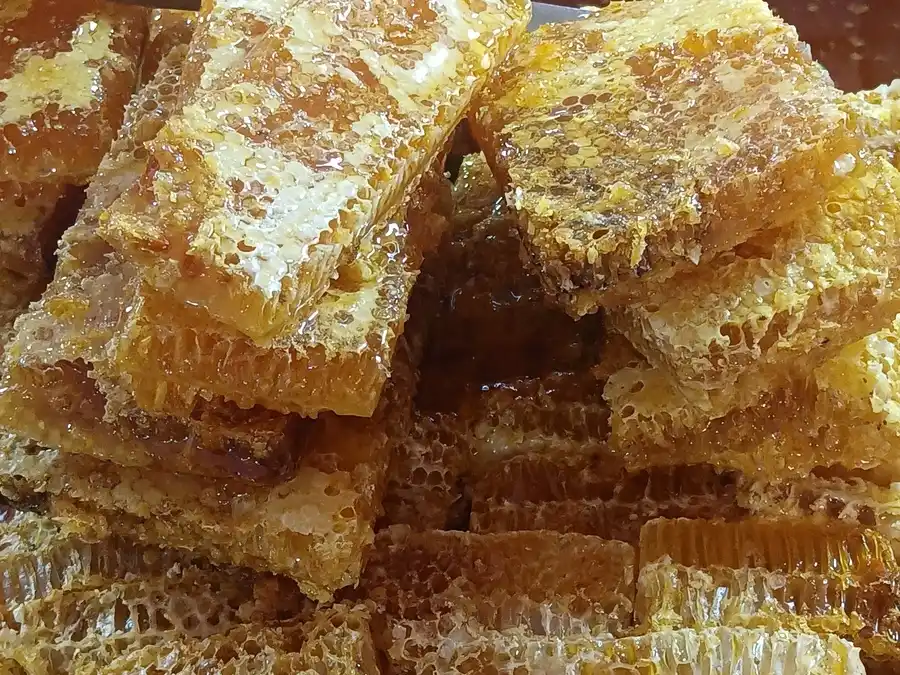
- Honeycomb is beeswax cells filled with honey, sold as comb honey, cut comb or chunk honey.
- The wax passes through undigested. The only harm we found in the medical literature is one case report of a woman who ate large amounts daily for two months.
- Honey is unsafe for children under 12 months (CDC). The National Honey Board says pregnancy is not a botulism concern.
- Choose capped, dry, unbroken comb. Store it sealed; frozen comb turns brittle.
- Honey in comb counts as added sugar, and USDA’s reference nutrition data has no entry for the wax.
What Honeycomb Is Made Of
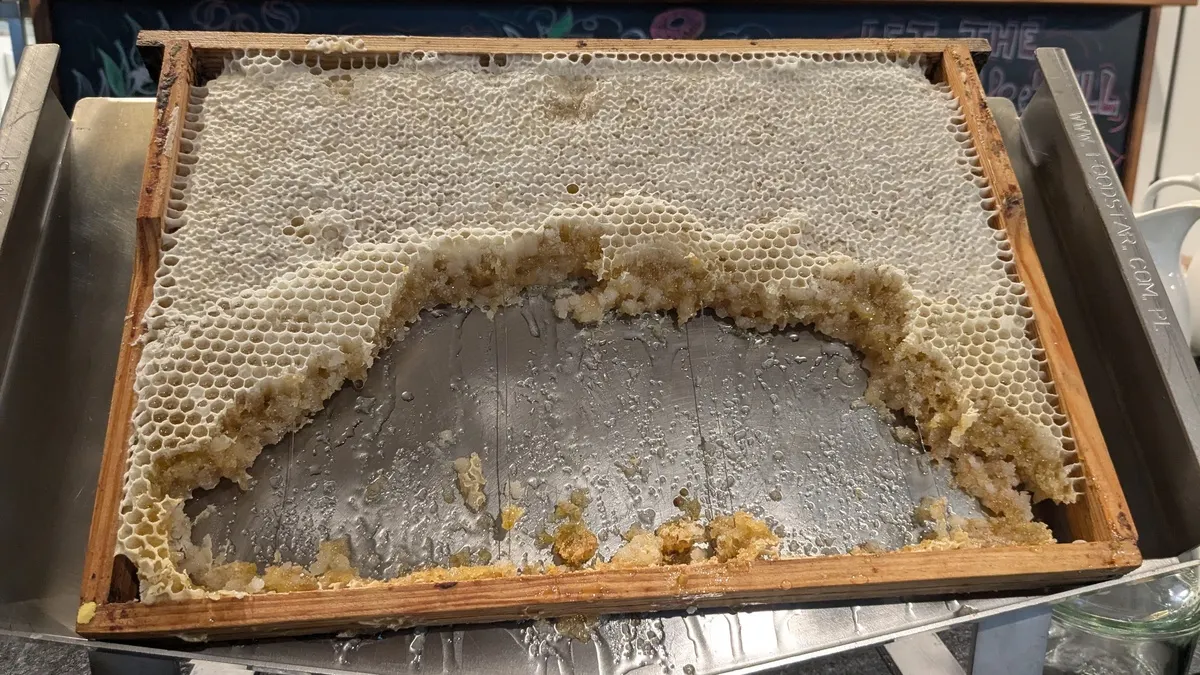
Worker bees secrete wax, shape it into hexagonal cells, fill them with honey and seal them with a wax cap. Federal food rules describe beeswax as “a secretory product of honey bees used as a structural material in honeycombs.”
Bees need about 8 pounds of honey to make 1 pound of wax, per Nebraska Extension, which is one reason comb costs more. Honeycomb candy is a different food: cinder toffee with no comb in it (see honeycomb candy).
Is the Wax Safe to Eat?
“The beeswax comb itself is indigestible but harmless and can be eaten along with the honey or spat out.”
Refined beeswax is listed as generally recognized as safe under 21 CFR 184.1973, but as an additive at tiny levels: up to 0.065 percent of chewing gum and 0.002 percent or less of most other foods. That is not a ruling on a mouthful of comb. Comb honey has had USDA grade standards since 1933.
A 2009 case report in Cases Journal describes a 44-year-old woman who ate large quantities of honeycomb daily for two months, hoping to ease irritable bowel syndrome. She developed a hard stomach bezoar that needed endoscopic removal. The authors called it the first reported honeycomb bezoar. A few bites are fine; a daily habit is not.
Allergy to bee products is rare but real. If you react to pollen or bee products, ask an allergist first.
Educational information, not medical advice. Ask your doctor or allergist about your own situation.
How to Eat Honeycomb
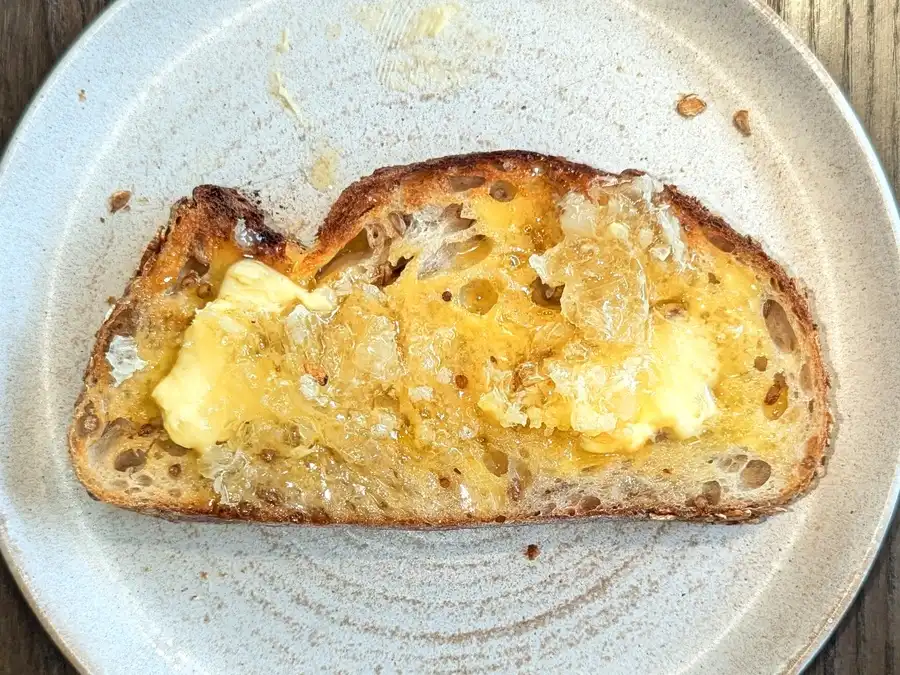
- Straight: cut a bite-size piece and chew it like gum. Swallow the wax or spit it out.
- With bread or crackers: Nebraska Extension says a cracker or bread may improve the wax’s consistency. It also suggests charcuterie boards and ice cream.
- With cheese: set a slab on the board and let guests cut their own bites.
- Mixed in: Sporked suggests stirring it into oatmeal or yogurt.
Types of Comb Honey You Can Buy
| Form | What you get | Source for the name |
|---|---|---|
| Section or round comb | One whole comb in a small frame or ring | USDA “comb-section”; see Ross Round |
| Cut comb | A slab cut from a frame and wrapped | USDA “wrapped cut-comb”; see cut comb honey |
| Chunk honey | Comb pieces in a jar of liquid honey | USDA “chunk or bulk”; the National Honey Board calls it “cut comb” |
How to Pick a Good Piece
USDA’s voluntary comb honey standard (last issued 1967) shows what graders reward. Use it as a buyer’s checklist:
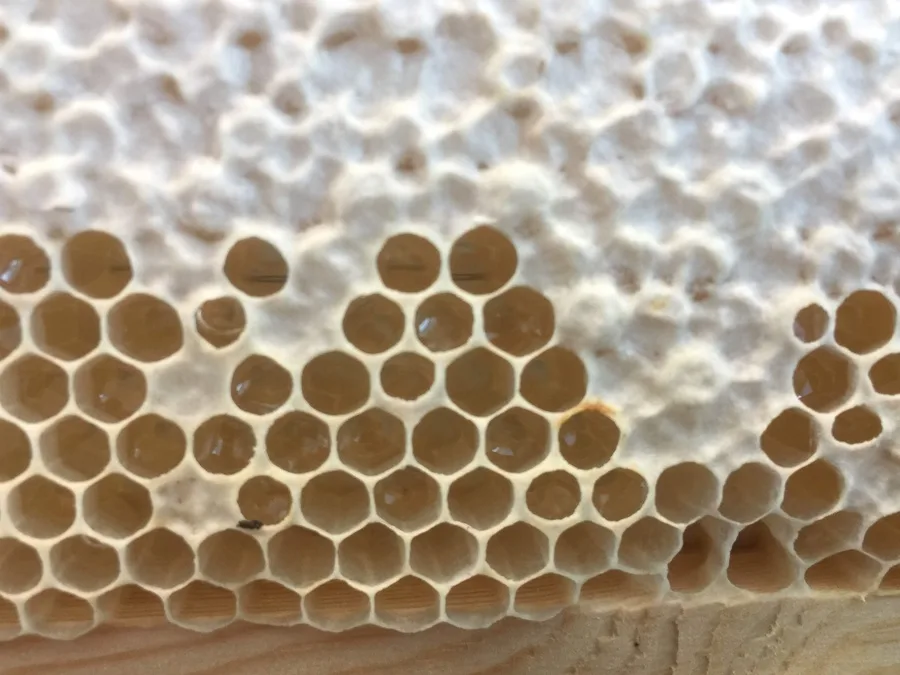
- Dry cappings. USDA defines weeping as honey seeping through the cappings in drops, “usually caused by absorption of moisture from the atmosphere.”
- Capped cells. Nebraska Extension says uncapped cells do not hold shelf-stable honey, which is under 18 percent moisture.
- No brood. USDA’s cut-comb grades require comb that must “never have contained brood.”
- Little granulation. Crystals are safe to eat, but USDA marks down comb with more than 10 percent granulated honey in uncapped cells.
Ask the seller about mite treatments. Nebraska Extension says comb honey should come off the hive before they are applied, to avoid contaminating the food. Find a seller through our guide to local honey.
Storage, Shelf Life and Freezing
The National Honey Board says sealed honey can stay stable for decades, though a two-year shelf life is often stated. It darkens or crystallizes with time; the Board says you can eat honey in crystallized form. See our guide to honey storage.
Nebraska Extension recommends producers freeze comb honey to kill pests, and notes that frozen wax is brittle, so thaw it fully before cutting.
Who Should Skip It, and What About Sugar?
“We do know that honey is not safe for infants. Honey can contain the bacteria that cause botulism.”
That applies to comb too; see honey and babies. Some pages warn pregnant women off honeycomb. The National Honey Board says adults, including pregnant women, are not susceptible to infant botulism.
The Dietary Guidelines count honey as an added sugar. USDA FoodData Central lists honey at 304 calories and 82.12 g of sugars per 100 g, so one 21 g tablespoon is about 64 calories and 17 g of sugars, roughly a third of the 50 g daily benchmark on a 2,000-calorie diet (our arithmetic). Its reference datasets have no entry for comb or beeswax. Heart and liver claims about comb usually rest on studies of isolated beeswax alcohols, not whole comb.
Frequently Asked Questions
Can you swallow honeycomb?
Yes, in small amounts. The wax is not digested, so chewing and spitting is also normal.
Is honeycomb good for you?
It is honey plus wax: mostly sugar, with no proven edge over extracted honey in the sources we checked.
Can you chew beeswax?
Yes. Chew it like gum, then spit it out or swallow a little.
Does honeycomb go bad?
Capped comb keeps for a long time. Crystals are harmless; mold or a sour smell means discard it.
What is the difference between honeycomb and honey?
The honey is the same. Comb adds the wax; liquid honey is easier to pour and cook with.
Can dogs eat honeycomb?
Our dog honey guide covers amounts and xylitol but not comb, so ask a vet before giving wax.
The Bottom Line
Honeycomb is a food: chew it, enjoy the honey and don’t worry about a bit of wax. Buy capped, dry comb and keep it from babies.
Image credits: Featured photo: Hannah Clover via Wikimedia Commons, CC BY 4.0, cropped. Other photos are credited in their captions.