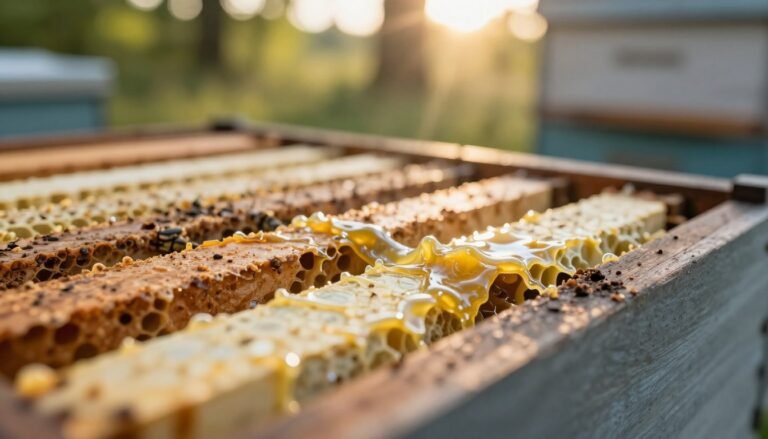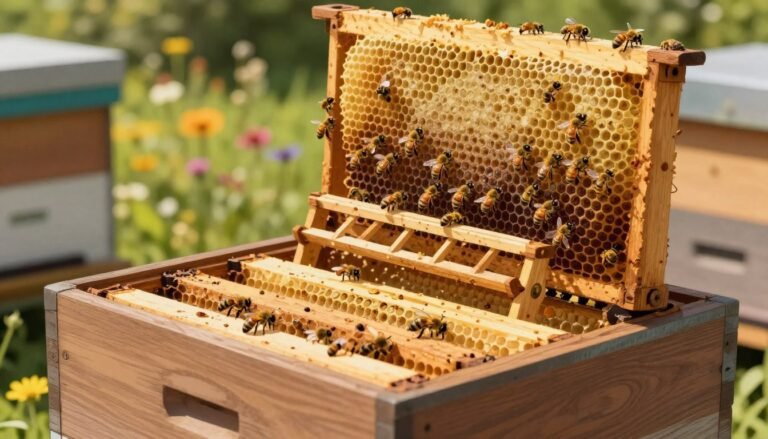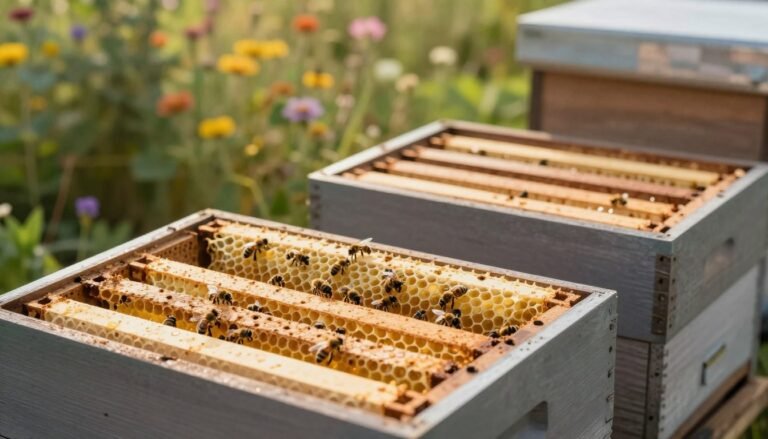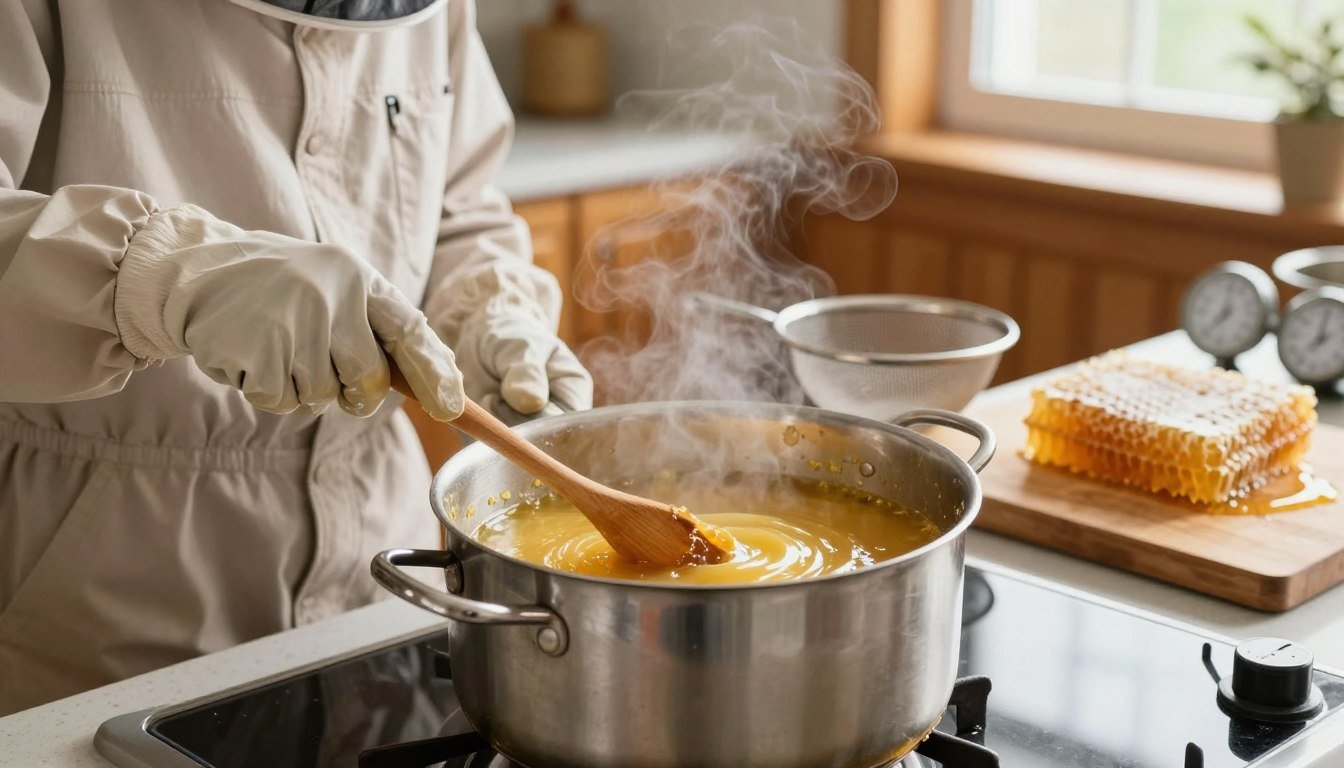
Every beekeeper can turn sticky hive scraps into a tidy block of beeswax with a clear process. This guide lays out a practical method that trims mess and saves time.
Whether you harvest cappings or old comb, following a few careful steps delivers a clean wax result. We cover the best way for hot-water extraction and offer alternatives like solar melters for small batches.
Expect a simple workflow: prepare comb, bag and heat gently, collect the cooled disk, and finish with filtration. Using the right gear prevents scorching and cuts waste.
For deeper detail on hot-water extraction, see a practical explanation at hot water extraction for beeswax. If you prefer sun-driven units, review options for backyard setups at solar wax melters.
Key Takeaways
- Use gentle heat and a porous bag for the best initial clean wax yield.
- Hot-water extraction handles dirty comb well; solar units suit clean cappings.
- Cool fully before removing wax to form a solid, pure disk.
- Filter and re-melt in a double boiler for final finishing.
- Mind safety: never leave heating wax unattended.
Understanding the Value of Beeswax Cappings
Beeswax cappings carry more value than most people realize. Worker bees must consume roughly 50 pounds of honey to produce 10 pounds of beeswax. That effort makes these thin seals a concentrated resource during any extraction.
The comb structure itself is remarkable: it takes about 1,100 wax scales from worker bees to form a single gram of comb material. This fact highlights why cappings are prized for high-end products like beeswax candles and cosmetics.
Many people toss cappings during honey removal. Yet these trimmings are often cleaner than old brood comb. Proper frame management at the hive yields better material for small-batch melting and refining.
- High yield from minimal processing
- Cleaner than aged comb for premium uses
- Supports sustainable beekeeping and added income
| Source | Cleanliness | Best Uses |
|---|---|---|
| Cappings | High | Beeswax candles, cosmetics |
| New comb | Medium | Blocks, balms |
| Old brood comb | Low | Fuel, reprocessing |
Essential Equipment for the Rendering Process
A compact set of tools makes the melting cycle safer and more efficient for any beekeeper. Choose gear that keeps the operation tidy and reduces contamination. Dedicated items also protect kitchenware and speed cleanup.
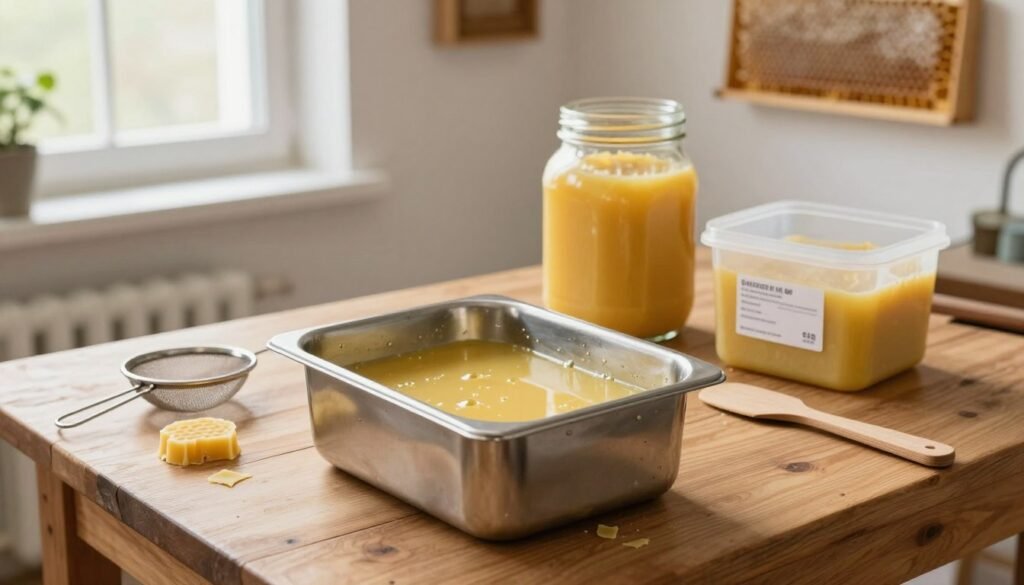
Dedicated Tools
Use a reserved double boiler or pot. Professional beekeepers recommend a unit kept only for beeswax work. This prevents sticky residue from harming food cookware.
Pick a sturdy container and a reliable strainer. A heat-safe container collects the melted beeswax. A metal strainer paired with cheesecloth removes debris during the first pass.
Sourcing Materials
- Allocate enough time; slow, gentle heat protects quality and lowers risk.
- Prepare a spot outdoors or a well-vented place in the workshop for extraction tasks.
- Keep a small supply of clean water on hand for the melting stage and for quick cool-downs if needed.
Note: drain residual honey before final filtering. For an in-depth practical guide on processing wax cappings, follow the linked resource.
How to Render Cappings Wax Cleanly
Maintain control of temperature and timing when turning comb scraps into usable beeswax. Keep the water at a gentle heat; the melting point sits near 145°F. Slow, steady warming preserves color and scent.
Bundle the trimmings in a double layer of cheesecloth and secure the top with a rubber band. Place the bundle in a pot that sits inside a water bath. This keeps debris and dirt inside the cloth while the molten wax separates.
As the material melts, beeswax rises to the top and honey and heavier dirt sink to the bottom. Monitor temperature closely to avoid the discoloration point. Pour off the hot wax while leaving sediment below for easier cleanup.
- Use a reserved pot and low heat for consistent results.
- Strain once more through cheesecloth for a cleaner disk.
- For detailed extraction notes, see a practical guide at bee-wax extraction or separation techniques at separating beeswax from honey.
Preparing Your Wax for the Melting Phase
Before any melting begins, give trimmed comb a few days in a strainer so most honey drains away. This brief resting period reduces sticky mess and cuts down on boiling time when you place the comb into a water bath.
Use a large container beneath the strainer to collect the honey. A roomy container prevents overflow and keeps the comb relatively dry before it goes into your pot for melting.
Draining Residual Honey
Place the comb on a coarse strainer and leave it in a cool, shaded area. Let gravity do the work for several days; check the container each day and transfer collected honey into jars.
Removing most honey up front helps maintain steady temperature in your water bath. When less free honey remains, the top of the pot heats more evenly and the melted beeswax forms a cleaner layer at the top.
- Drain cappings for 48–72 hours for best results.
- Collect honey in a large container that is easy to pour and sanitize.
- Remove visible debris from comb before melting to improve final beeswax quality.
“Proper preparation saves time and preserves the natural color and scent of the beeswax.”
For an alternate melting approach, see a practical microwave method linked here: microwave rendering tips. Use this as a supplementary step if you work with small batches and need a quick test run.
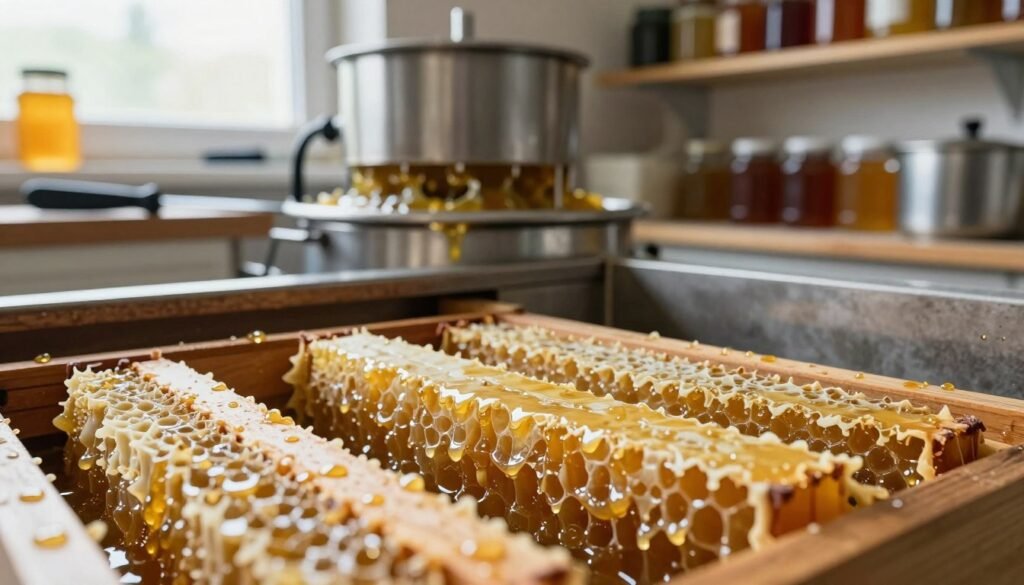
Advanced Filtering Techniques for Purity
Advanced filtering steps make the difference between usable blocks and artisan-grade beeswax. Use layered filters and gentle heat control to keep color and scent intact. Remember, beeswax melts near 145°F and will darken if allowed above 185°F.
Using Cheesecloth
Double and triple filtering matters. Pour molten wax slowly through folded cheesecloth or a fine strainer. Let gravity do the work so slumgum and debris stay behind.
Solar Wax Melter
Solar units use steady sun heat to reach temperatures above 145°F. They give a clean top layer without constant supervision. This method is ideal for beekeepers with clean cappings and sunny space.
Oven Rendering
For small batches, oven rendering offers precision. Place trimmings in a heat-safe container over a shallow water layer. The water catches drips and helps separate the clean layer from the bottom residue.
“Multiple passes through cloth and a final double boiler re-melt yield the purest products for candles and cosmetics.”
For a related guide on turning your harvest into finished candles, see beeswax candles from your hive.
Safety Precautions When Working with Hot Wax
A careful setup and steady attention protect you and your gear during any melting session. Set up near a stable work surface and keep children and pets away. Use only dedicated equipment and a reliable double boiler to manage heat.
Respect the flash point: beeswax has a flash point near 400°F, so avoid open flames and high heat. Monitor the temperature constantly and keep the pot and container steady to prevent tipping.
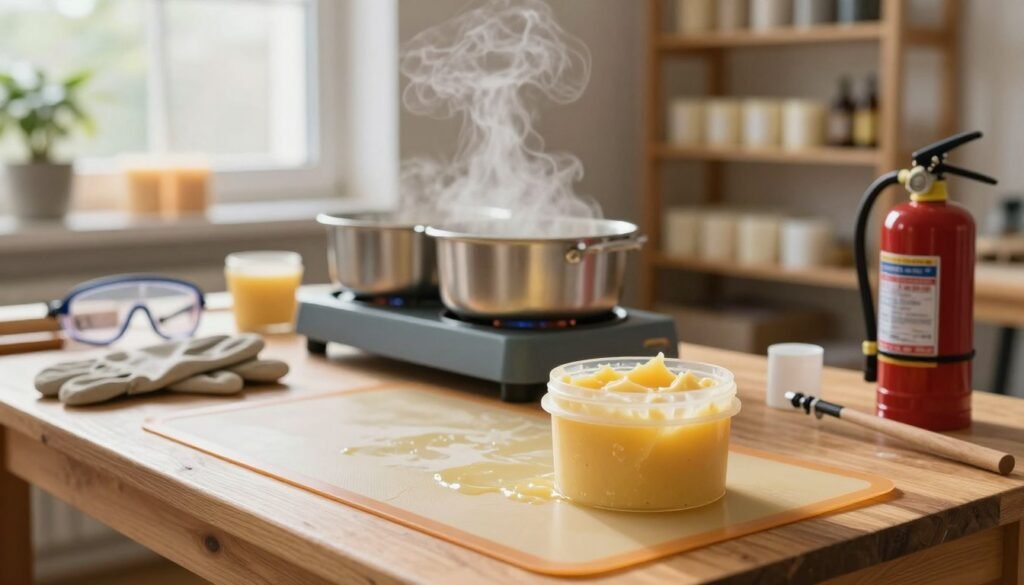
Never add water into a pot with already melted beeswax. Introducing water can cause rapid expansion and force hot liquid out of the top, creating a dangerous splash hazard.
- Use a double boiler and low, steady heat rather than direct flame.
- Wear protective equipment—gloves and goggles—when filtering through cheesecloth or a strainer.
- Keep a fire extinguisher nearby and know basic first aid for burns.
If hot beeswax spills on skin, rinse immediately with cool water and seek medical attention for severe burns. Keep a clean container of water nearby for quick cooling when needed.
“Good setup, steady monitoring, and proper equipment let beekeepers focus on quality without risking injury.”
For recommended gear and extra safety notes, see an equipment guide at extraction equipment and a practical process write-up at a step-by-step cappings post.
Creative Ways to Use Your Rendered Beeswax
Once your beeswax has set, small pours unlock a range of durable, natural products. Use a double boiler for gentle melting and pour into molds for neat storage blocks or decorative shapes.
Make candles or skin salves. Melt the block in a reserved pot and blend with carrier oils for soothing balms. Candles poured slowly from a double boiler burn clean and steady.
Coat hive frames. Many beekeepers brush thin layers onto wood frames. This helps bees accept foundation and speeds comb building on new frames.
Beeswax is naturally antibacterial and antifungal, making it ideal for reusable food wraps that replace single-use plastic. Pour melted beeswax over cotton fabric and press for a quick, practical pantry solution.
- Pour into silicone molds for long-term storage and gift-ready blocks.
- Polish wood furniture and cutting boards for a protective, food-safe finish.
- Save small pieces as handy tinder or for craft projects.
“A little time spent shaping and filtering yields durable, multi-use products for home and hive.”
For an extra idea that uses old brood frames, see a practical recipe for natural firelighters at natural beeswax firelighters.
Conclusion
With steady temperature and clean equipment, your last pour becomes a reliable finishing step.
Rendering your own wax turns hive scraps into useful, natural products like candles and food wraps. Follow each step in this guide and you will keep beeswax pure and low in debris.
Mindful control of water levels and gentle heat preserves color and scent. Proper equipment and consistent practice make the process faster and more consistent with every honey season.
For a related process that helps form foundation sheets, see how to create wax foundation at home and apply similar care when finishing your blocks.
FAQ
What is the best first step when collecting cappings from an extraction session?
Start by scraping cappings into a clean, dry container near the extractor. Allow excess honey to drain back into the extraction tub or a separate jar. Keep frames and comb pieces free of large debris like brood fragments or wood bits to make the next steps easier.
Which tools help separate honey from comb before melting?
Use a fine mesh strainer, stainless steel colander, or a dedicated wax press. Tilt and drain cappings over a jar to recover honey, then place the cappings in a pot or solar wax melter. A piece of nylon or reusable cheesecloth speeds up finer filtering during melting.
Can I use a regular kitchen pot for melting beeswax?
Yes, but avoid food pots you use for cooking. Use a dedicated stainless steel or enamel pot and a double boiler setup to keep direct heat off the wax. Label the pot for beekeeping use so you don’t mix food and beeswax equipment.
What temperature should I maintain while melting beeswax?
Keep bath water temperature around 150–170°F (65–77°C) for gentle melting. Direct flame can overheat wax and burn debris in it. Use a thermometer and simmer the water — not a rolling boil — to protect wax quality and minimize scent loss.
How can I remove debris and dirt from melted beeswax?
Strain molten wax through layered cheesecloth or a silk paint strainer into a heatproof container. Pour slowly so sediment stays in the top layer. Let the wax cool slightly; bubbles and small impurities will rise and can be skimmed off before full solidification.
Is a solar wax melter effective for purifying cappings?
Yes. A solar wax melter uses the sun to heat cappings in a sealed tray with a mesh bottom and a collection vessel underneath. It’s energy-efficient and preserves natural scents, though results depend on weather and require longer processing time than heated methods.
What are the pros and cons of oven processing for wax collection?
Oven processing speeds melting and helps separate honey and wax from comb. Place cappings in an oven-safe pan lined with a mesh or fabric filter on low heat (around 150°F). The drawback: ovens can be messy and may retain wax odors, so use a dedicated appliance if possible.
How do I deal with sticky, honey-soaked cappings?
Let them drain overnight in a sieve or on a slanted tray over a jar. Warm, low-temperature baths speed up drainage. For heavy honey, a slow press recovers both honey and a dryer capping mass that’s easier to melt cleanly.
What safety measures should I take when working with hot wax?
Wear heat-resistant gloves, eye protection, and long sleeves. Work on a stable surface and keep a fire extinguisher nearby. Never leave melting wax unattended and avoid plastic containers when heating; wax can melt or burn plastic and release fumes.
How long does the rendering process take from start to finish?
Short batches may finish in an hour with a double boiler; solar methods take several hours to days. Filtering and cooling add time. Plan for at least a few hours for melting, straining, and setting when using heated methods.
Can I use the leftover beeswax for candles and cosmetics?
Absolutely. After thorough filtering and deodorizing if needed, clean beeswax makes excellent candles, salves, lip balms, and wood polish. For cosmetics, perform an extra fine filtering and avoid contaminant-laden cappings.
What filtration steps improve wax clarity for premium products?
Use a three-stage approach: coarse mesh to remove large debris, layered cheesecloth or nylon for medium particles, then a fine silk or paint strainer for clarity. Re-melt and repeat if necessary, and consider activated charcoal if you need odor removal.
How should I store rendered beeswax for long-term use?
Store blocks in airtight, food-safe containers away from direct sunlight and strong odors. Keep at cool, stable temperatures. Label containers with date and source of comb or cappings for inventory and quality tracking.
Are there eco-friendly ways to dispose of residue and dross?
Solid dross and trap debris can go into compost if free of synthetic contaminants, or into an organic waste stream. Honey-heavy residues can feed livestock or wildlife where regulations allow. Avoid pouring waxy water down drains; it can clog plumbing.
Which brands or suppliers sell reliable beekeeping filtration gear?
Reliable suppliers include Mann Lake, Brushy Mountain Bee Farm, and Beesource. They offer stainless strainers, silicone molds, and solar melters suited for hobbyist and small-scale beekeepers. Choose food-grade materials for cosmetic-grade wax.
What common mistakes reduce the quality of collected wax?
Overheating, rushing filtration, using contaminated containers, and failing to drain honey thoroughly all lower wax quality. Prevent these by using controlled heat, staged filtering, and dedicated, clean equipment for beekeeping tasks.