Drift happens when foragers and orientation flyers land in the wrong unit and join a foreign colony. Scott Souders notes this usually stems from navigation errors during flight. Left unchecked, drift can make some hives strong while others weaken.
Managing multiple colonies in a single apiary means keeping each queen and brood safe. Simple layout changes, clear visual cues, and smart box choices help keep groups distinct. Practical steps also reduce the spread of pests and disease.
We will cover proven methods that protect each nuc box and maintain steady honey production. For design ideas and hardware, see a guide on best nuc box. For behavioral tactics and placement tips, review reducing drift.
Key Takeaways
- Simple visual markers and varied paint help bees find their home.
- Staggered placement and breaks in lines lower accidental visits.
- Choose well-ventilated, secure nuc boxes for clearer colony identity.
- Balance frames between strong and weak units to even colony strength.
- Observe orientation flights early in the week to spot problem movement.
Understanding the Mechanics of Bee Drifting
Navigation errors at flight time often send foragers into the wrong hive, shifting local population balance and creating a real problem for an apiary. Research shows that up to 40% of foragers may enter the wrong colony on any given day.
Drones move more freely than worker bees and often cross many hives. This mobility increases the spread of phoretic mites through the box and across the site. When hives sit in long lines, one entrance can look like another and confusion rises.
- Drifting starts with a simple navigation error during a foraging run.
- Foragers carrying honey or pollen are often accepted into a new hive, causing uneven population shifts.
- Lack of distinct visual markers on the side of a hive makes identification harder for returning bees.
Observe each entrance for several days to spot unusual movement and detect if one hive gains while another weakens.
Why Bees Drift Between Adjacent Nucs
Young workers and returning foragers often lose track of a single hive when many boxes look the same. This simple error is common in dense apiaries and rises during heavy nectar flows. The University of Georgia Honey Bee Lab found that foragers in high-density, visually identical linear apiaries were more than three times as likely to drift.
The Role of Orientation Flights
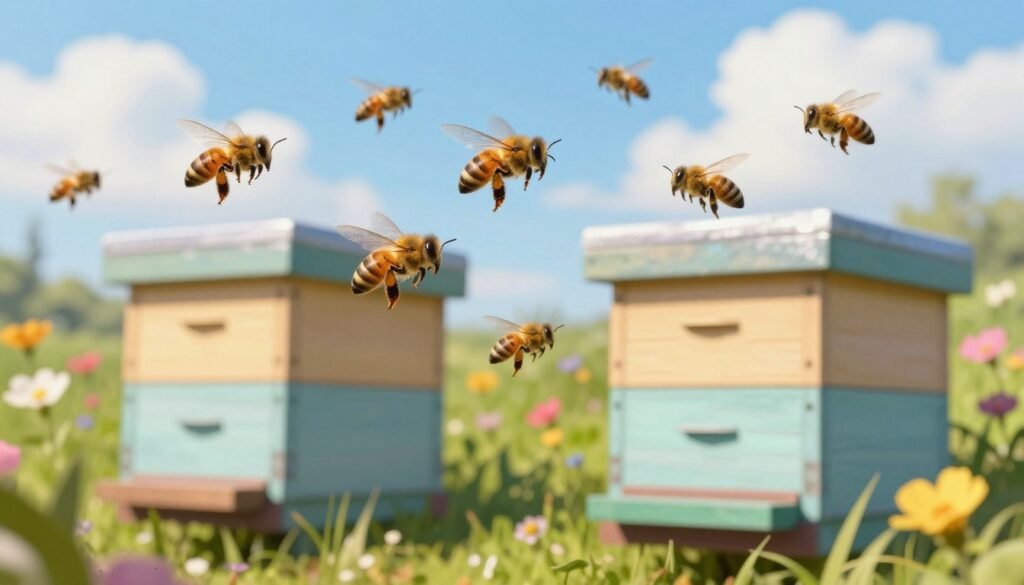
First flights matter. Young bees use local landmarks to learn their home. When several hives sit in a straight line, those cues blend. Foragers also get confused during busy days, which raises accidental visits to a nearby hive.
Impact on Queen Mating
A returning virgin queen must find her own nuc box. If she enters a hive with an existing queen, a fatal confrontation can occur. That one event can derail a new colony and reverse weeks of careful work.
| Factor | Effect | What a beekeeper should watch |
|---|---|---|
| Orientation flights | High risk of wrong landing | Observe early-week flights and entrances |
| High population / nectar flow | More foragers, more confusion | Check frames and brood weekly |
| Linear placement | Visual similarity across hives | Use contrasting marks and stagger boxes |
Tip: Keep a close eye on frames and brood each week and review colony movement during mating and heavy foraging days. For guidance on strengthening colony numbers and balancing population, see boost colony population naturally.
How to Prevent Drifting Between Adjacent Nucs
A few deliberate changes in placement and appearance are often enough to keep workers returning to the correct box. Use a unique landmark—an upright log or painted marker near the entrance—to give each hive a clear visual cue.
Place the nuc box somewhere visually distinct from the original hive, or move the unit more than three miles when practical. Moving that far is a reliable way for a new queen and her colony to establish without returning back original numbers from the old site.
Keep frames organized so the queen has space for brood and eggs. Check each nuc weekly and, if one hive is taking too many bees, swap positions with the weaker box to balance populations.
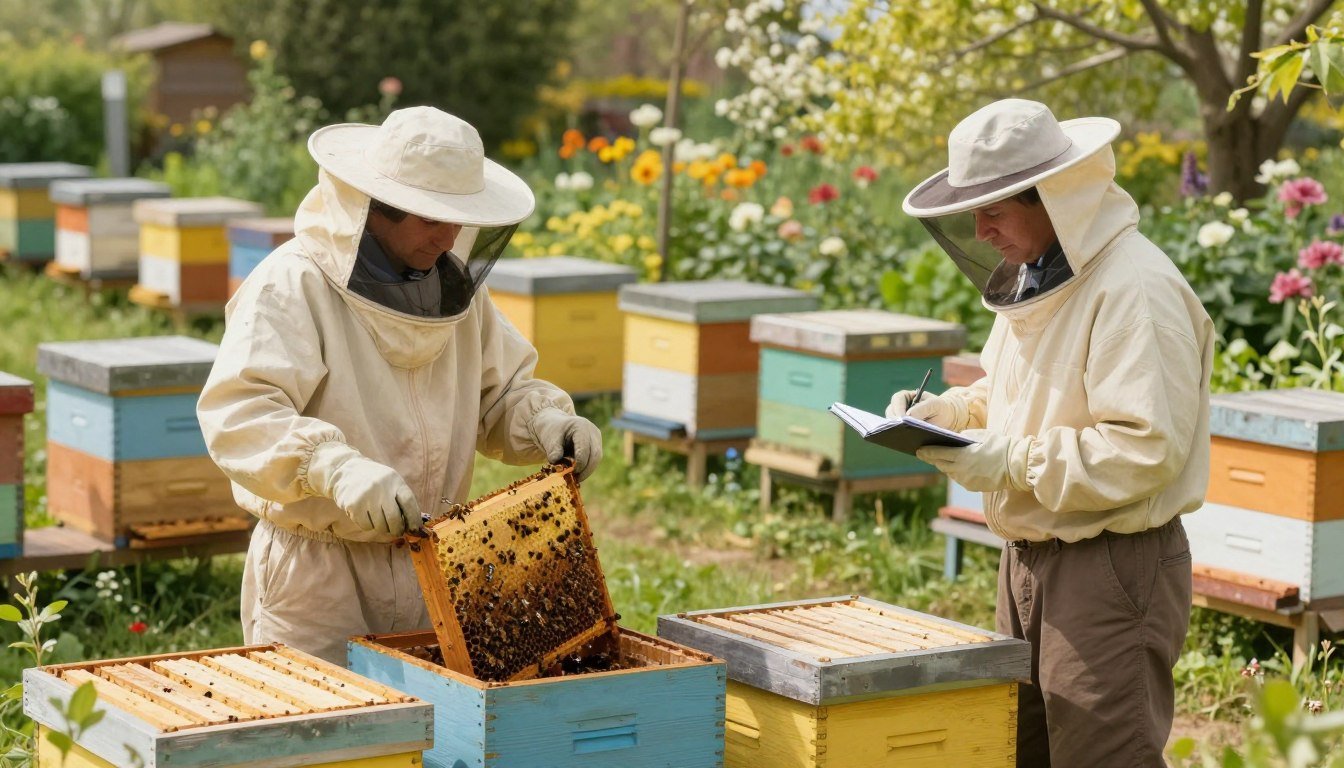
- Unique color or pattern: paint a side of the nuc for quick recognition.
- Enough frames bees: ensure the new hive has sufficient frames and nurse bees to support the new queen.
- Weekly checks: watch for signs that bees are returning to one hive more than another.
For further reading on reducing drift, see this useful guide on reducing drift.
Visual Strategies for Apiary Organization
Clear visual cues and smart layout choices make a major difference in how well each hive stays focused on its own entrance.
Using Contrasting Colors
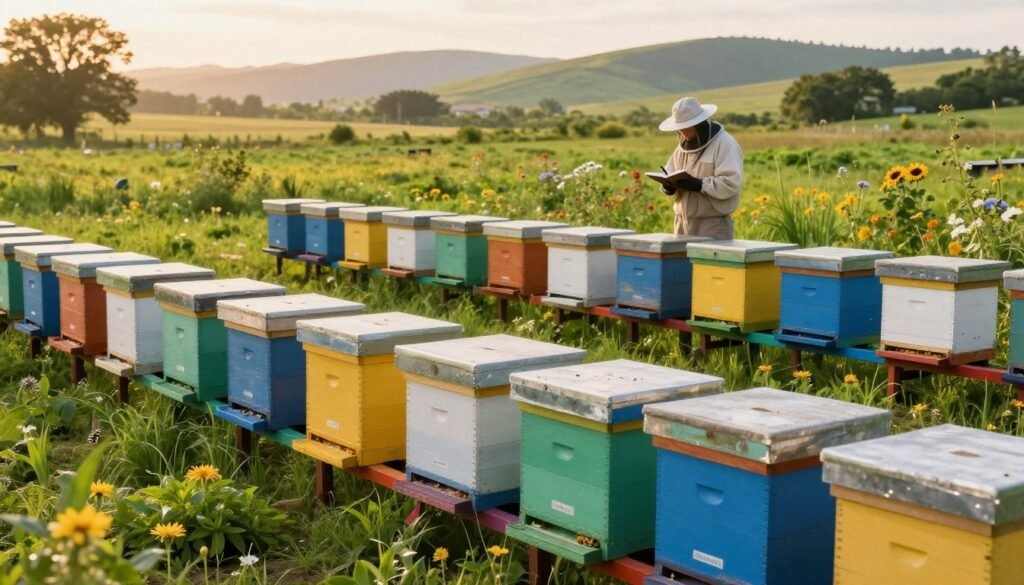
Paint the front of each hive with bold, different colors. Bees learn contrast quickly and use color to find their box. This reduces accidental visits and protects brood and frames.
Implementing Geometric Layouts
Arrange hives in a circle, U-shape, or staggered lines rather than a straight row. Springer Nature noted that wider space between colonies lowers mite spread and supports clearer navigation.
Adding Physical Landmarks
Place a log, painted rock, or simple flag near an entrance. Scott Souders used a log section successfully for five hives and cut drifting noticeably.
- Unique fronts: different patterns on each side help a queen and foragers return.
- Non-linear placement: gives bees more location cues than long straight lines.
- Distinct entrances: a single, marked entrance protects honey stores and colony health.
“A clear point of reference at each entrance saves time and stabilizes colonies.”
For further practical guidance see preventing bee drifting.
Managing Environmental Factors and Wind
Local topography and shelter shape the flight paths bees use to find their home hive.
Utilizing Natural Windbreaks
Use hedgerows, fencing, or tree lines as barriers that cut crosswinds near the entrance. These features steady a forager’s final approach and reduce accidental landings in the wrong box.
Place each nuc and full-size hive so exposures differ across the apiary. Facing entrances in varied directions helps the queen and workers orient, even on gusty days.
- Windbreaks protect the colony and create a stable microclimate for brood.
- Secure frames and center heavy equipment inside the box to keep a neat, stable interior during storms.
- Protect every hive on the site; one exposed unit can cause bees to wander and spread pests.
| Windbreak Type | Primary Benefit | Placement Tips |
|---|---|---|
| Hedgerow | Filters gusts; adds landmarks | Plant upwind; keep 10–20 ft from entrance |
| Fence or wall | Immediate shelter; visual cue | Run parallel to hive row, vary facing |
| Tree line or slope | Stable microclimate; long-term landmark | Use natural contours; avoid dense shade over brood |
“A tidy site with clear shelter keeps workers focused on their home and supports steady colony growth.”
For guidance on managing a nucleus colony in poor weather, see nucleus colony management. For advice about humid sites and siting hives, consult these humid climate tips.
Corrective Measures for Existing Imbalances
When one hive grows while its neighbor shrinks, targeted steps can restore balance across the apiary.
Swap the physical positions of a strong hive and a weak nuc during the day. Most foragers are out then, so workers will return and reorient around the new front.
Move one or two frames of bees and brood from the strong colony into the weaker box. This gives the new queen space and nurse support while keeping brood care steady.
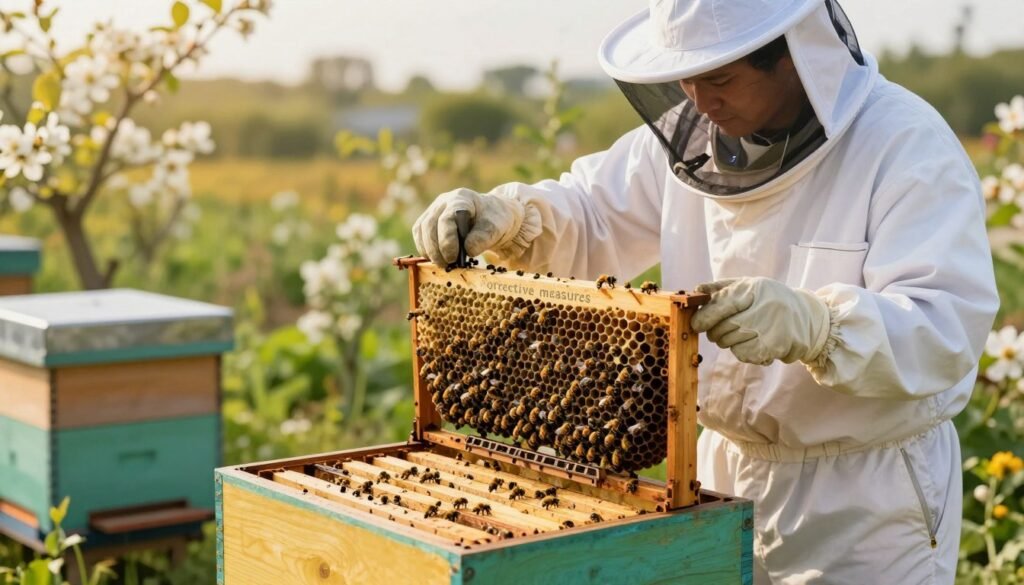
Check each entrance weekly for signs that the queen is laying and the brood is healthy. If a queen is lost during mating, place a ripe frame from another hive to help the nuc recover.
- Day swaps: reposition during peak foraging for best results.
- Frame transfers: add nurse bees and brood rather than empty comb.
- Record keeping: note which colonies gain or lose bees and when.
Consistent checks and quick corrective action keep every queen bee a fair chance to thrive.
For inspection guidance before sharing frames or buying replacements, see this short guide to inspect purchased nucs for disease risk.
Conclusion
Small, consistent actions across an apiary deliver big gains in colony stability and honey yields.
Protecting the queen and keeping each hive distinct pays off over time. Regular checks of every frame and brood patch help spot imbalance in early days and let a beekeeper act fast.
Use clear marks, tidy placement, and good equipment habits. For risks tied to mite movement, review this varroa transport risks. For tool and gear routines, see equipment hygiene.
With steady monitoring and a few proven methods, your bees, queen, and colony will stay healthier and more productive.
FAQ
What causes bees to leave their original nuc and enter a neighboring box?
Bees often confuse hive entrances after orientation flights, especially when boxes sit close together. Foragers rely on visual landmarks and scent; similar-looking nucs, matching frames, or shared pollen sources can increase mix-ups. Population imbalances and strong scent cues from brood or queen pheromones also draw workers across entrances.
When should a beekeeper expect the most movement between colonies?
Movement peaks during the first two weeks after introducing a new queen or nuc, and again during intense foraging days in spring and summer. Orientation flights in the first days of emergence are critical. Monitoring activity during these windows helps spot and correct misnavigation early.
Can entrance placement reduce mixing of bees between hives?
Yes. Staggering entrances along the front and back of boxes or offsetting them by several inches changes flight paths and lowers accidental visits. Small entrance reducers also channel traffic, while adding a clear front line between hives helps bees recognize their landing area.
Are visual cues effective for helping bees find the correct hive?
Visual cues work very well. Painting nuc boxes with contrasting colors, adding numbered tags, and placing geometric patterns on the front of each hive give bees distinct landmarks. These aids speed recognition during orientation flights and reduce wrong-site visits.
How can landscape features be used to minimize cross-visits?
Natural windbreaks like hedges and shrubs alter flight corridors and reduce drifting caused by gusts. Placing hives near a fixed landmark—tree, fence post, or rock—gives bees a stable reference. Combine with artificial markers such as stakes or brightly colored boards for consistent guidance.
What corrective steps help when one colony is being robbed or overwhelmed?
Separate the colonies by increasing distance or inserting a temporary barrier. Reduce entrance size on the weaker colony, remove obvious attractants like open honey frames, and, if necessary, requeen or combine very weak stocks using the newspaper method to restore balance without heavy fighting.
Does moving frames between boxes affect orientation and mixing?
Moving frames with brood or strong scent cues can attract foreign workers and increase cross-visits. When transferring frames, do so sparingly and avoid swapping frames from very strong to weak colonies unless combining. Marking frames and limiting exchanges during active foraging helps preserve colony identity.
How far apart should nucs and hives be placed to limit cross-traffic?
Ideally, space hives several feet apart; when possible, place new nucs at least 10–20 feet from established colonies. If limited by space, use visual differentiation and staggered entrances. Even modest separations combined with clear markers significantly reduce confusion.
Will altering the queen or introducing a new queen change drifting behavior?
Introducing a new queen can temporarily increase mixing as bees respond to altered pheromone profiles. Keep new queens in well-marked, slightly isolated nucs during mating and the first week post-introduction. Monitor for disorientation and limit frame movement until the colony stabilizes.
What practices help maintain distinct colony identities over time?
Maintain consistent entrance landmarks, use different color schemes for each hive, limit frame exchanges, and manage colony strength to avoid one group overwhelming neighbors. Regular inspections during key periods—mating, early spring buildup, and peak nectar flows—allow prompt adjustments.