Good hygiene stops unseen threats. Effective management keeps colonies healthy and lowers the risk of disease spread. The National Bee Unit stresses that even healthy-looking bees can carry pathogens, so steady attention matters.
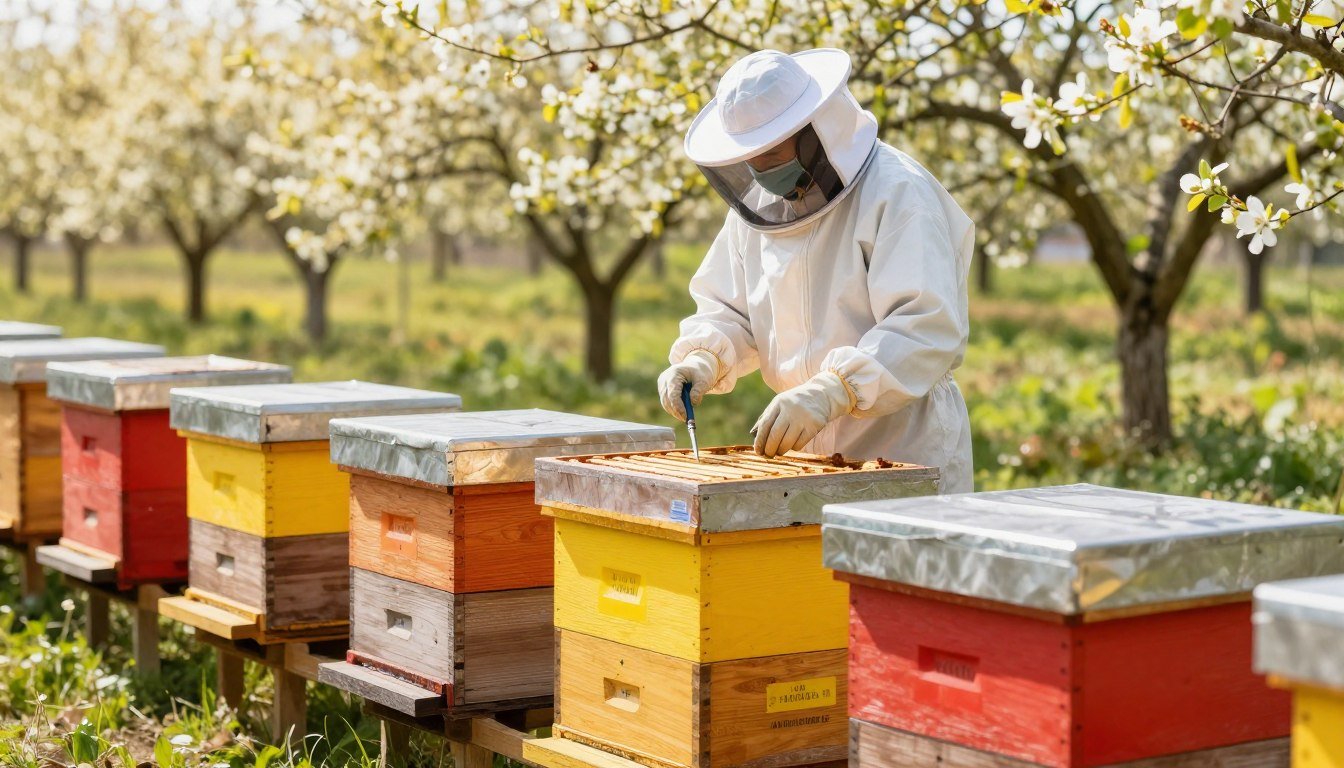
Practical steps include using dedicated equipment for each colony, marking top-bars and supers with a colony number, and keeping boxes, frames, and comb separate. Keep a bucket with 150 ml of 4.5% sodium hypochlorite plus 1 kg soda crystals for routine washing of gloves and tools.
New swarms should be hived on clean foundation and kept under quarantine. After 24 hours they may be fed, then monitored through two brood cycles before joining established apiaries. Record checks for any signs of brood or queen problems.
Key Takeaways
- Use labeled equipment and dedicated tools to limit cross-contamination.
- Maintain a cleaning solution of sodium hypochlorite and soda crystals for washing.
- Monitor brood and queen health during quarantine and keep records.
- Clean propolis and wax from boxes, frames, and the protective suit regularly.
- Follow NBU guidance; see the detailed fact sheet for quarantine and hygiene practices: NBU quarantine guidance.
The Importance of Biosecurity in Your Apiary
Strong biosecurity stops small problems becoming apiary-wide crises. Good placement and routine actions cut the chance that a single infected hive will spread disease across boxes and colonies.
Position entrances so they face different directions to reduce drifting. Reduce entrances after the main honey flow and seal any dead colony immediately. These steps limit robbing, a major route for pathogens between colonies.
- Clean tools: wash hive tools in a soda crystals solution (1 kg soda crystals to 4.5 liters water) to dissolve propolis and kill pathogens.
- Barrier practices: use disposable or washing-up gloves rather than leather for easier decontamination.
- Smoker care: barrel heat kills many pathogens; scrub bellows with soda solution.
Launder suits regularly to remove sting pheromones that attract more defensive behavior during inspections.
For detailed protocols and robbing prevention, see the NBU fact sheet and an early-robbing sign guide: biosecurity beeyard guidance and robber behavior signs.
How to Label Quarantined Hives in an Apiary
Clear numbering and strict movement rules are the backbone of good quarantine practices. A simple, consistent system makes it easy for beekeepers to track equipment and spot problems early.
Marking Frames and Supers
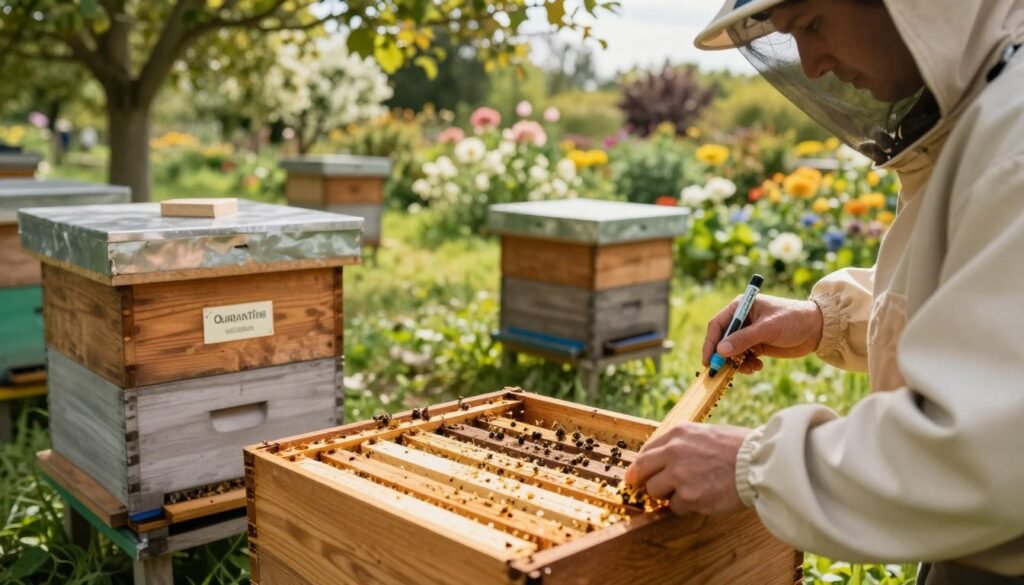
Mark top-bars and supers with the colony number using a permanent marker, as the NBU recommends. Keep super comb assigned to one colony only to limit spread of disease.
Record every frame moved. If eggs or brood are shifted to confirm a queen, note date and origin. That log reduces risk if signs of infection appear later.
Managing Colony Movement
Unknown-source swarms belong at a separate quarantine apiaries and must be hived on new foundation in clean boxes. Allow colonies to pass through two brood cycles (about six weeks) before joining established apiaries.
“Restricting equipment to a single site is a proven measure to reduce the occurrence and spread of disease.”
- Avoid moving brood combs between colonies — it carries high risk.
- If foulbrood signs appear, place the site under standstill and contact the NBU immediately.
For full protocol details, see this detailed quarantine guide and the seasonal checklist for routine measures.
Essential Tools for Effective Hive Management
Clean, reliable tools cut the chance that pathogens move between colonies. This reduces spread of disease and keeps bees productive. Keep a simple kit for routine washing and repairs.
Cleaning and Disinfecting Equipment
Follow proven mixes. NBU inspectors use 150 ml of 4.5% sodium hypochlorite plus 1 kg soda crystals in 4.5 liters of water for heavy cleaning. Use eye protection and gloves when handling chemicals.
Scrape propolis and wax from frames and boxes before disinfection. Wooden boxes can be scorched until uniformly dark brown. Submerge polystyrene and plastic parts for 20 minutes in 0.5% sodium hypochlorite.
- Smoker care: scrub bellows with washing soda and sterilize the barrel with heat.
- Old comb: replace with new foundation to cut disease incidence in brood and super comb.
- Honey supers: never place directly on the ground to avoid soil-borne contamination.
| Item | Method | Contact Time / Temp | Safety Notes |
|---|---|---|---|
| Wooden boxes | Scorch interior with blowtorch | Uniform dark brown | Wear gloves and eye protection |
| Plastic / polystyrene | 0.5% sodium hypochlorite soak | 20 minutes | Rinse with clean water |
| Frames & comb | Scrape then disinfect; replace old comb | As needed; replace brood comb regularly | Limits disease spread in colonies |
| Smoker | Wash bellows, heat barrel | After heavy use | Prevents tool-borne pathogens |
For more on disease control, consult a detailed disease management guide. If boxes need repair, see this repair and maintenance guide.
Regulatory Standards and Signage Requirements
Clear signs and accurate records are simple steps that protect neighbors and support inspectors. Durable markers help trace equipment and ownership when colonies move sites. Signs must be readable and remain legible in poor weather.
Weatherproof Signage Specifications
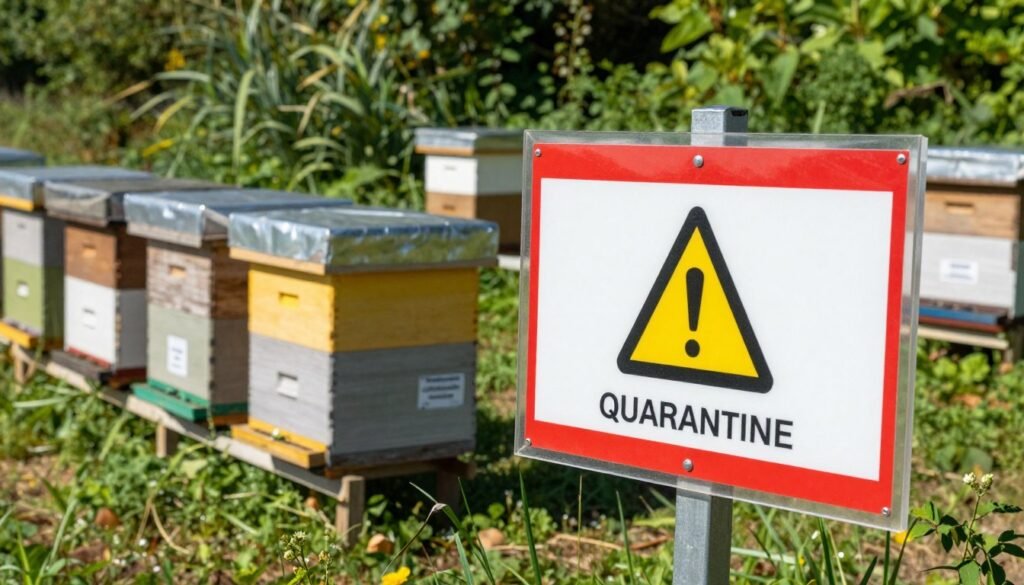
Required dimensions: at least 15 cm by 10 cm with 2‑inch dark‑on‑light lettering.
Include owner name, address, and telephone. Use corflute panels with four eyelets for gates or A4 panels for stake mounting to ensure long life.
Placement Strategies for Inspections
- Keep hives at least 20 feet from homes and 50 feet from streets for safety and zoning compliance.
- Carry signage when moving colonies and reposition it at the new site for traceability.
- Install flyway barriers and a water source within 15 feet to reduce nuisance and local complaints.
Maintaining Accurate Records
Log feeding supplements, treatments, and quarantine status. Accurate notes support pest monitoring and reduce spread disease risk. Good records also help new beekeepers learn sound practices; see mentoring resources for guidance.
Conclusion
Consistent cleaning, careful movement, and tight records protect against disease spread. Maintain good washing routines, use gloves, and keep equipment dedicated to individual colonies to cut risk.
The NBU offers clear guidance on using soda crystals and other methods for removing propolis and wax. Replace old comb with new foundation when possible to reduce pathogen load.
Marking each hive and frame keeps equipment with its colony and supports barrier practices. Watch brood and look for early signs; healthy-looking bees can still carry infection.
Follow signage and placement rules for a safer apiary, better honey yields, and fewer complaints. Small, steady measures protect your bees and neighbors over the long term.