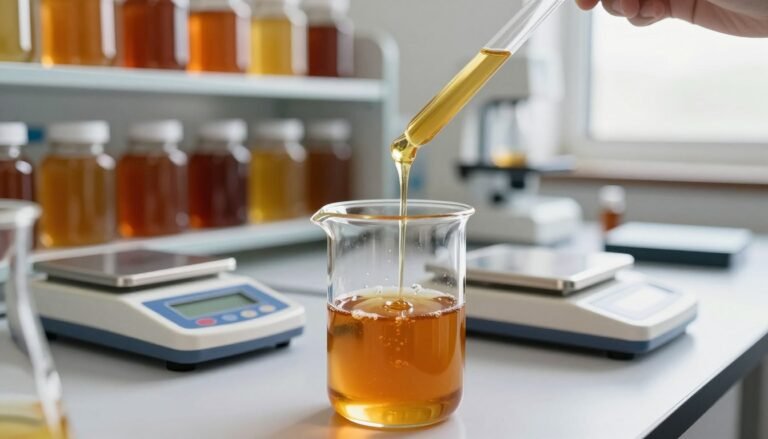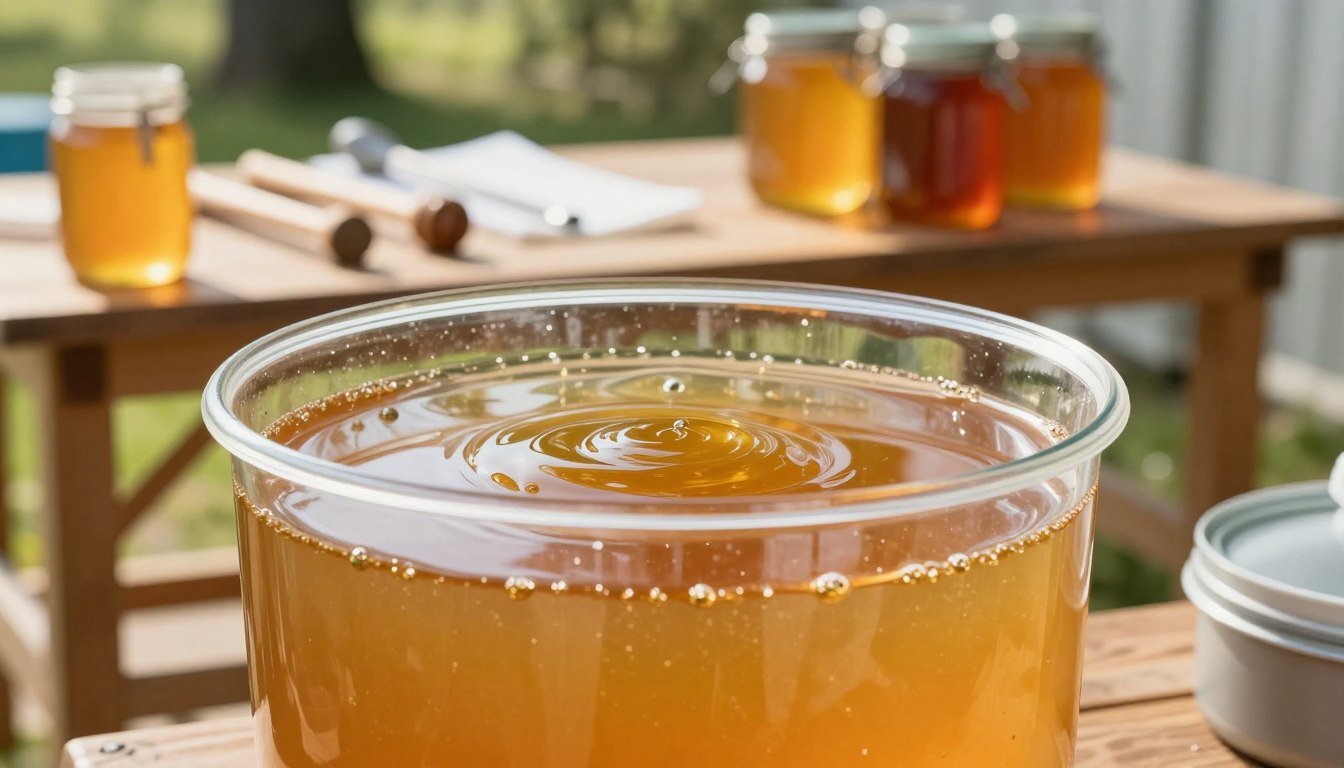
Settling nectar after extraction is a key step for beekeepers who aim to produce a clean, market-ready product. Letting the liquid rest allows wax, air bubbles, and fine debris to separate naturally.
Industry practice favors about 48 hours in the vat at a gentle warmth to help trapped air rise and scum form on the surface. This short pause improves clarity and supports consistent quality before bottling.
Patience here pays off. Proper honey storage begins with this settling phase, which reduces the need for aggressive filtering and preserves flavor. For practical tips on extraction and safe handling, see extract and store raw honey.
Key Takeaways
- Allow roughly 48 hours in the vat to improve clarity and remove debris.
- Gentle warmth speeds air removal and skimming without harming flavor.
- Good settling reduces extra filtering and protects the final product.
- Consistent technique boosts quality and customer satisfaction.
- Follow safe storage steps before bottling to maintain freshness.
Understanding the Role of a Settling Tank
After extraction, a calm vat gives solids time to fall, preserving natural components in the final product.
A settling tank uses gravity to clarify the liquid without aggressive filtering. This gentle process keeps beneficial pollen and flavor compounds intact.
Effective honey storage begins here. Letting the product rest reduces the need for mechanical methods that strip key elements.
- The tank offers an undisturbed environment for passive clarification.
- It protects natural color and aroma while debris settles out.
- Operators achieve more consistent appearance and bottled appeal.
“Passive settling preserves quality while simplifying later steps.”
| Method | Impact on Pollen | Typical Use |
|---|---|---|
| Passive settling | Retains most pollen | Small to medium operations |
| Mechanical filtering | Reduces pollen content | Large-scale clarity needs |
| Controlled storage | Maintains consistency | Post-clarification holding |
Why Honey Needs Time to Settle
Mechanical extraction and pumps often whip air into the liquid, leaving microscopic bubbles and fine wax particles behind. Letting the product rest gives those elements a chance to separate without forced filtering.
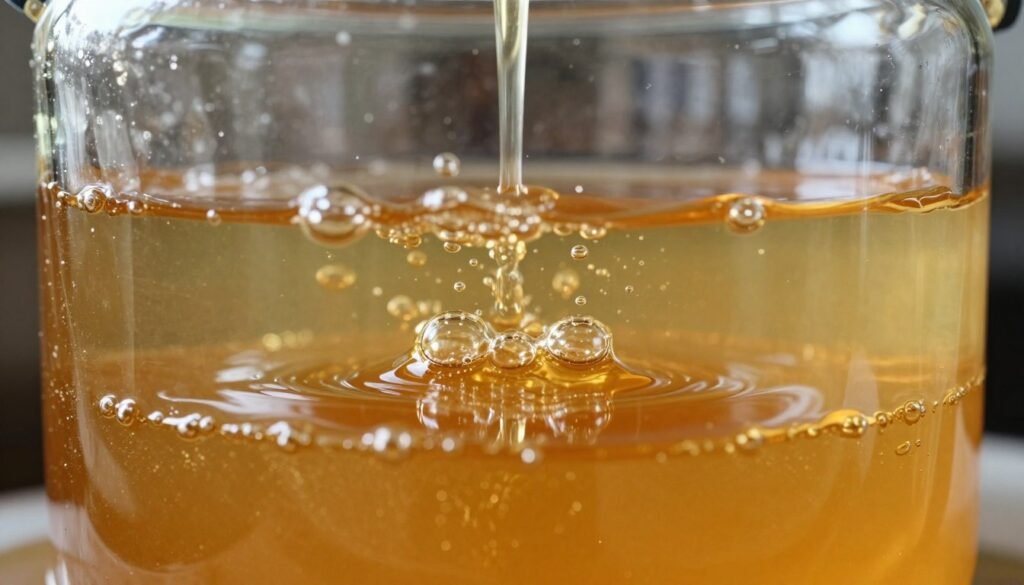
Removing Air Bubbles
High-speed extractors, such as a 9-frame radial extractor, introduce thousands of tiny bubbles. These bubbles take time to rise to the top and form a removable scum.
Quiet holding reduces cloudiness that would otherwise show up later in the jar or bucket.
Separating Fine Debris
Specks of wax from the comb slip past initial strainers. During passive clarification, these particles float to the top for easy skimming.
For small scale operations, a reliable honey filter before storage cuts down on visible debris and speeds processing.
“Allowing the product to calm preserves quality and reduces the need for aggressive filtering.”
| Issue | Cause | Resolution |
|---|---|---|
| Microscopic bubbles | Extractor aeration | Quiet hold until bubbles rise |
| Fine wax | Comb fragments | Pre-filter, then skim surface |
| Cloudy jars | Bubbles and specks | Settling then careful bottling |
Every beekeeper aiming for high quality should treat the holding phase as essential. For more on recommended settling periods, see our settling time guide.
Determining How Long Honey Can Sit in a Settling Tank
Timing the rest period in the vat affects both visual clarity and the risk of premature crystallization.
Aim for balance: wait enough to let micro-bubbles and fine debris rise, but avoid excessive hold that speeds natural crystal formation.
If you bottle too soon, tiny suspended bubbles make jars look hazy and reduce shelf appeal. Letting the liquid rest roughly 48 hours usually gives peak clarity without inviting an early set.
- Early bottling risks cloudy jars from trapped air.
- Extended hold increases the chance of crystallization starting in the vat.
- Monitor tank temperatures and appearance to time bottling precisely.
“Proper honey storage hinges on watching clarity, not the clock alone.”
For tips on packaging and to ensure best results when you bottle honey, see package and label honey for sale.
The Science of Gravity and Viscosity
Gravity and viscosity together decide how quickly trapped air escapes from freshly extracted honey. Less dense air bubbles rise, but the thick nature of the product slows that movement.
Because the liquid resists flow, separation is gradual. A calm environment gives gravity time to lift debris and bubbles to the surface.
Temperature matters. Warmer hive-derived liquid flows more readily and clears faster, while cooler batches hold bubbles longer.
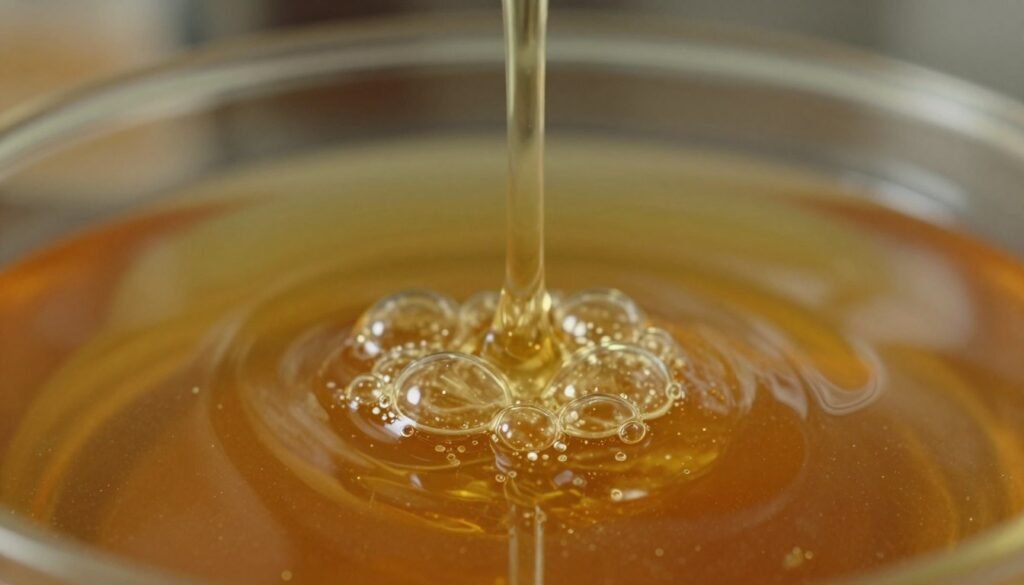
Set up the vat to avoid vibration and drafts. Minimizing disturbance speeds clarification and improves honey storage results.
“Provide stability and let physics do the work; the result is clearer jars with less processing.”
- Density differences: air bubbles will rise if undisturbed.
- Viscosity: thicker liquid slows the separation process.
- Control temperature: modest warmth helps flow without risking quality.
For small producers looking to optimize equipment, consider a reliable best honey bottling tank to support a steady, low-vibration workflow.
Impact of Temperature on Processing
Temperature in your processing room makes the biggest difference to flow and clarity during hold periods. Warmer air lowers viscosity and helps trapped air and fine debris rise to the surface faster.
Maintaining the Ideal Warm Room
Keep the warm room between 80–90°F (27–32°C). That range reduces thickness and can cut the required time in the tank to as little as 24 hours for many batches.
Consistent warming matters. If the room is too cool, the liquid stays thick and the clearing process drags on. A steady environment improves repeatable results during processing.
“Controlled room temperature is the easiest step beekeepers can take to speed clarification.”
| Room Temp (°F / °C) | Effect on Viscosity | Expected Hours to Clear |
|---|---|---|
| 70–75°F / 21–24°C | High viscosity; slow rise of bubbles | 48+ hours |
| 80–85°F / 27–29°C | Optimal flow for many floral types | 24–36 hours |
| 86–90°F / 30–32°C | Fastest clarification; monitor quality | 18–24 hours |
Monitor your room and tank closely. For guidance on gentle post-extraction steps, see preparing honey to support best results in honey storage and bottling.
Managing Floral Sources and Crystallization
Floral origin plays a major role in whether a batch will solidify quickly or stay fluid. Different nectar sources affect crystal formation and they change the best approach for holding and bottling.
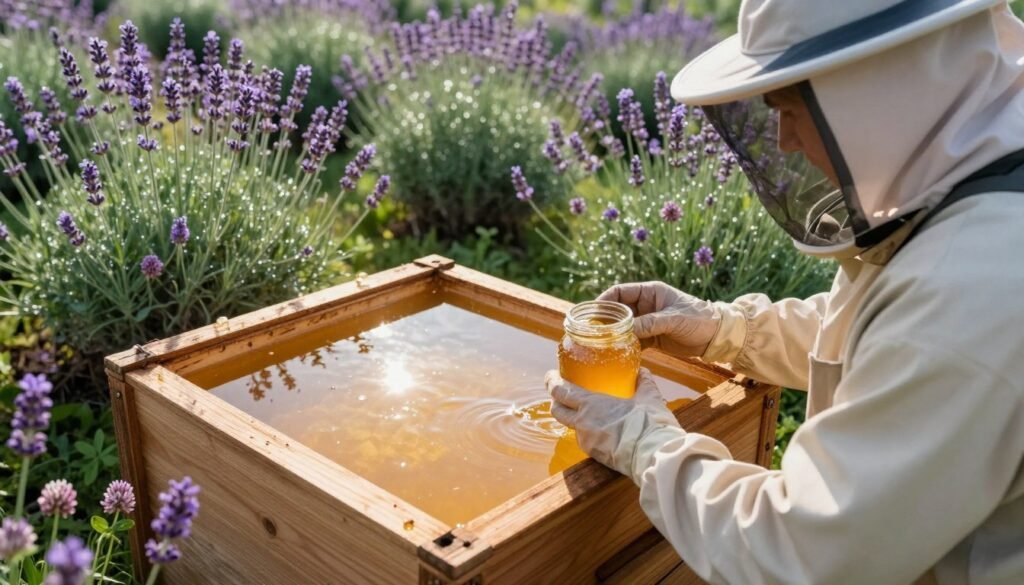
Beekeepers should learn the traits of each harvest. Some blooms produce fast-setting blends that need a shorter hold to avoid early solidification.
For example, canola and clover often crystalize rapidly. Those batches benefit from quicker transfer and warmer room control to reduce risk while preserving quality.
Other floral types stay liquid for longer. Those allow a more relaxed schedule and extra time for bubbles and specks to rise before bottling.
“Match your process to floral origin to reduce waste and keep product appeal.”
| Floral Type | Crystallization Rate | Recommended Hold |
|---|---|---|
| Canola / Clover | Fast | Short — monitor closely |
| Wildflower Blend | Moderate | Standard 24–48 hours |
| Acacia / Tupelo | Slow | Extended hold OK |
Track floral sources for better honey storage decisions. For more on floral influence, read this floral source guide.
Techniques for Removing Surface Scum
Skimming the oily scum from the surface is a simple step that improves visual appeal and reduces rework. Removing that thin layer keeps trapped particles and air from entering jars during bottling.
Using Clingfilm for Clean Removal
Lay a sheet of clingfilm gently over the top. Let it rest so the film adheres to the scum and captures trapped bubbles and wax.
Lift the film slowly and discard. This method is low-cost, sanitary, and preserves the clear product beneath.
Managing Bucket Tipping
When you transfer to a honey bucket, increase the angle gradually as you fill jars. A controlled tilt prevents the top layer from pouring out with the clearer liquid below.
Use a honey bucket tipper or a spout with steady flow to maintain control. Slow, deliberate movement helps keep air bubbles from mixing back into the product.
“Skim first, then tip carefully; these small steps save time and protect product quality.”
- Remove scum from the top of your tank to ensure clarity.
- Clingfilm lifts bubbles and wax that rise to the surface.
- Manage the bucket angle to avoid pouring the top layer into jars.
- Clean handling supports better honey storage and cleaner bottling.
For step-by-step guidance on preserving clarity after extraction, consult this clarity checklist.
Balancing Clarity Against Premature Setting
Achieving glass-clear product without triggering early crystallization is the central tension during passive holding.
Waiting extra hours in the tank improves clarity, but it also raises the chance the batch will begin to set. Small temperature shifts are often the trigger.
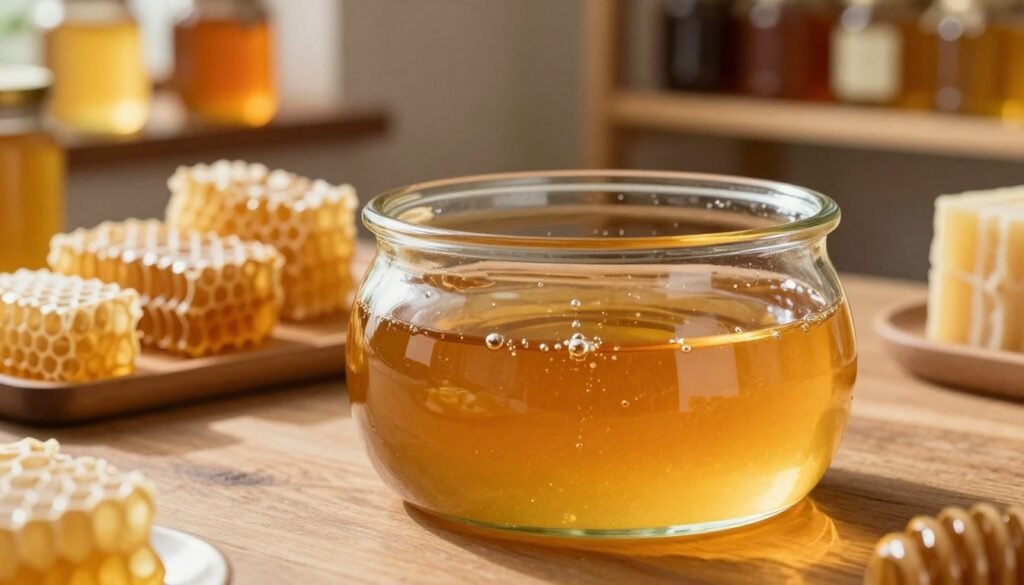
Every operator must pick the right moment to stop the rest period and start bottling. That decision affects visual appeal and how easily the product pours into a jar.
Vigilance is key. Monitor temperature and watch the surface for scum and early crystals. Skim promptly and move clear liquid when it is still fluid.
- Balance clarity versus the risk of premature setting.
- Limit hold hours if floral source or cool temps raise crystallization risk.
- Maintain steady conditions for reliable honey storage and smooth bottling.
“Aim for visual clarity, but act before the first crystals form.”
For practical steps on processing, see processing honey.
Essential Equipment for Professional Results
Choosing reliable gear makes the difference between messy processing and professional results.
Invest in a robust honey extractor and a durable tank to protect your product and speed up work.
HONESTBEE supplies commercial-grade beekeeping tools, from high-capacity tanks to heavy-duty extractors that fit professional workflows.
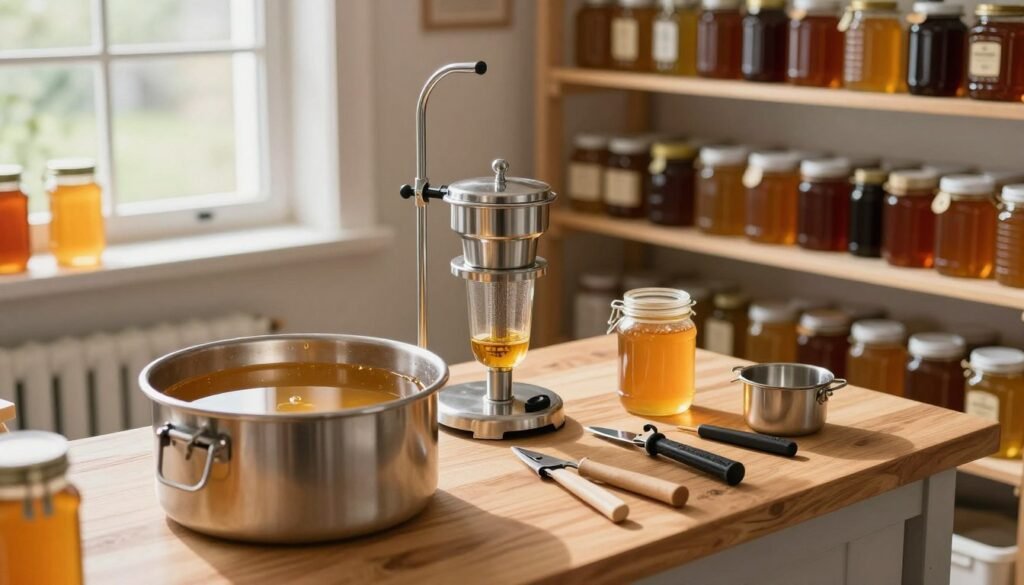
For small scale operators, a good honey filter and a steady honey bucket are vital to maintain quality during extraction and bottling.
- Durable tank: easy clean-up and long service life for reliable honey storage and processing.
- Honey extractor: reduces labor and preserves texture during extraction.
- Honey filter: traps wax and debris before transfer to the bucket.
- 1.5″ plastic tap: speeds filling and reduces drips at the point of bottling.
“Every piece of gear, from extractor to spout, influences the final product and your output rate.”
| Item | Purpose | Benefit |
|---|---|---|
| Honey extractor | Frame extraction | Faster, cleaner removal of liquid |
| Settling tank | Clarification and storage | Reduces rework before bottling |
| Honey bucket with 1.5″ tap | Transfer and filling | Efficient, low-drip filling |
| Honey filter | Final debris removal | Improves jar clarity and quality |
Professional beekeepers rely on these tools to keep processing predictable and to uphold product quality. For gate parts that make filling simpler, see this gate replacement for bottling buckets.
Best Practices for Bottling and Storage
Clean bottling and smart storage finish the journey from beehive to shelf.
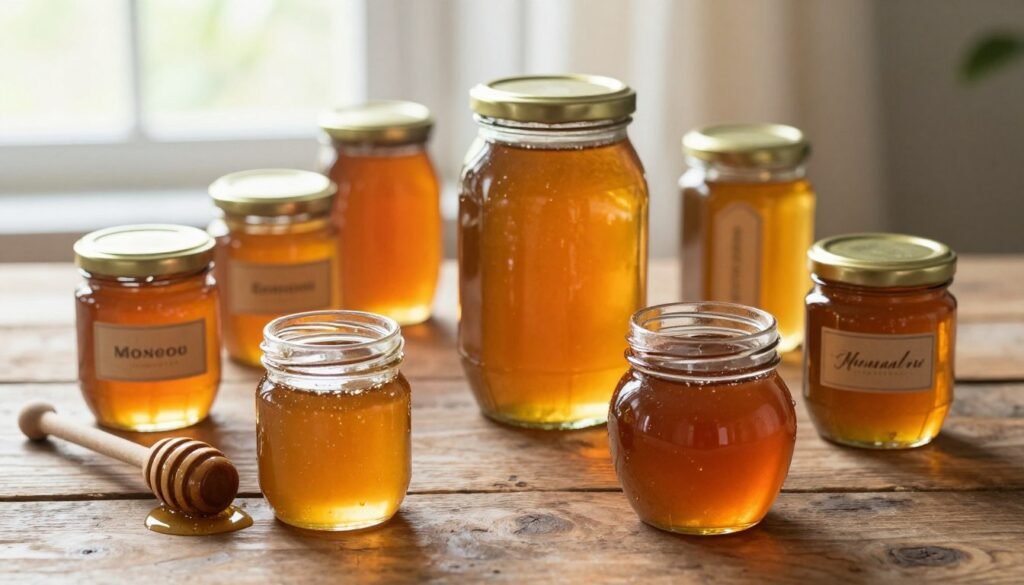
Prepare jars and lids before filling. Use clean 12 oz hex jars for a distinct look and consistent weight. Warm jars briefly to reduce frosting with soft set products.
Use quality lids and anti-tamper seals. These protect the product and reassure buyers that the jar is untouched.
Labeling and Anti-Tamper Measures
Label jars clearly with net weight, floral source, and price. Place a tamper band or seal on every jar to signal safety.
- Check each jar weight during filling to confirm accuracy.
- Manage every bucket of product to avoid introducing bubbles while pouring.
- Use a reliable extractor and a clean filter to reduce debris before bottling.
- Store filled jars in a cool, dark place to preserve flavor and color.
| Step | Tool | Benefit |
|---|---|---|
| Pre-warm jars | Warm water bath | Reduces frosting on soft set jars |
| Final filter | Micro mesh filter | Removes wax and comb particles |
| Fill from bucket | 15 kg bucket or smaller | Controlled flow, fewer air bubbles |
| Seal and label | Tamper band + printed label | Consumer confidence and legal compliance |
Pro tip: For detailed packaging guidance, review effective bottling techniques at effective bottling techniques.
Conclusion
Mastering the settling routine turns routine processing into consistent, market-ready jars.
Follow the 48-hour standard while tuning timing for your environment to protect texture and clarity. Proper honey storage and steady tank management preserve the integrity of each harvest.
Invest in reliable gear and simple handling steps to speed workflow and reduce rework. These choices raise overall quality and help your final product meet customer expectations.
For practical steps on processing, consult this processing guide to refine your routine and deliver a superior product.
FAQ
How long should honey rest in a settling tank before bottling?
Resting time varies by batch size, temperature, and debris load. For small-scale extraction, allow 12–48 hours at about 70–80°F to let air bubbles rise and fine particles sink. Heavier loads or cooler rooms may require up to 72 hours. Check clarity and surface scum before bottling.
What does a settling tank do in the processing chain?
A settling vessel gives suspended wax, pollen, and tiny comb fragments time to separate from the liquid. Gravity pulls solids to the bottom while trapped air moves to the top. That reduces the need for aggressive filtering and improves final jar clarity and shelf appeal.
Why is removing air bubbles important after extraction?
Bubbles reduce visual quality and can cause foaming during filling. They also speed oxidation at the honey–air interface, which affects aroma. Gentle settling and minimal agitation help bubbles rise and dissipate before bottling.
How are fine debris and wax particles separated during settling?
Over time, heavier particulates settle to the bottom of the tank or bucket. Using a coarse filter during transfer to the settling vessel or a flow-through stainless-steel filter after settling captures remaining solids without stripping desirable pollen or flavor.
How does temperature influence viscosity and settling speed?
Warmer honey flows faster, allowing bubbles and solids to move more quickly. Maintain a warm room or tank jacket near 70–80°F for efficient clearing. Avoid overheating above 95°F to prevent flavor loss and degradation of enzymes.
What is the role of a warm room during processing?
A controlled warm room keeps extractor buckets and tanks at optimal temperature, reducing viscosity so impurities settle faster. Consistent warmth also lowers the risk of premature crystallization during processing and bottling.
How do floral source and crystallization affect settling time?
Some varietals crystallize faster and trap air, slowing clarification. If a batch shows early granulation, process and bottle sooner for creamed products or keep slightly warmer and filter more aggressively for clear jars.
What’s the safest way to remove surface scum?
Skim scum gently with a sanitized spoon or use clingfilm stretched across the surface and peeled off to lift thin layers. Avoid stirring; that reintroduces bubbles and delays settling.
When should beekeepers tip buckets to aid clearance?
Slightly tilting a settling bucket can concentrate particulates toward one side for easier removal, but do this after most bubbles have risen. Perform tipping carefully to prevent mixing settled solids back into the liquid.
How do you balance clarity with the risk of premature setting?
Aim for enough settling time to allow solids to drop without holding honey so long that crystallization starts. Monitor temperature, use gentle filtration, and test small samples for clarity and grain before full-scale bottling.
What equipment yields professional results for settling and bottling?
Use stainless-steel settling tanks with valves, coarse and fine filters, calibrated honey extractors, warm-room thermostats, and quality bottling jigs. Food-grade plastic buckets with tight lids work for small operations but can retain scum and odors.
What bottling and storage practices preserve quality after settling?
Bottle at stable room temperature, seal with tamper-evident lids, and label with floral source and harvest date. Store jars upright, away from direct sunlight and excessive heat. For longer storage, keep between 50–70°F to slow crystallization without degrading enzymes.
Do I need to filter honey after settling?
Yes—light filtration removes remaining particulates and improves clarity. Choose screen sizes that protect pollen and flavor if desired. Fine filtering may extend shelf appeal but can also strip trace elements that some customers value.
How should beekeepers label and secure containers?
Include harvest date, floral source, net weight, and country of origin. Use tamper-evident caps or shrink bands for retail. Clear, compliant labeling builds trust and helps command a better price for artisanal jars.
Can plastic buckets affect honey quality during settling?
Food-grade HDPE buckets are acceptable short-term but can retain odors and scum. Stainless steel remains the best option for repeated use because it is easy to clean and does not interact with honey over time.