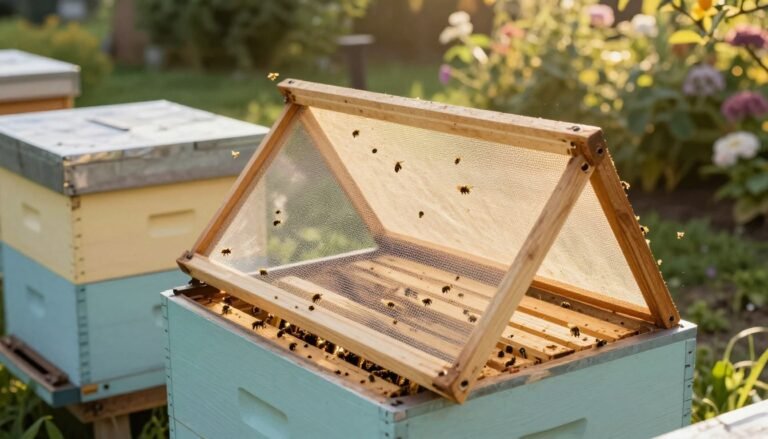
Small adjustments inside a hive can make a big difference. Professional beekeeping relies on smart equipment to manage space, ventilation, and winter moisture. A screened inner cover that uses 1/8-inch hardware cloth improves airflow and helps honey cure by letting excess water vapor escape.
George Imirie designed a 3/4-inch wooden frame that provides an upper entrance between honey supers. This simple frame gives beekeepers a way to add a feeder or place sugar bricks without crushing bees or breaking the propolis seal.
Good ventilation and proper spacing protect frames, the queen, and brood through seasonal shifts. Nectar starts at about 80 percent water and must dry to roughly 18 percent to become stable honey. Using an inner cover or a shim top helps control moisture and supports winter survival.
Key Takeaways
- Screened inner covers boost airflow and speed honey curing; see the Imirie shim details here.
- The Imirie shim adds a 3/4-inch upper entrance and creates space for feeders or treatments.
- Feeding shims let beekeepers place solid sugar bricks safely inside the hive.
- Proper ventilation and moisture control are vital to colony health; read more on ventilation here.
- Monitor every frame so the queen has room to lay and stores cure into stable honey.
Understanding Hive Shims What They Are Used For
Many practical hive fixes begin with adding a simple 3/4-inch frame between boxes. George Imirie designed that exact wood spacer to act as an upper entrance between honey supers in Langstroth setups. This modest addition gives a clear path for the queen bee and workers while preserving frame alignment.
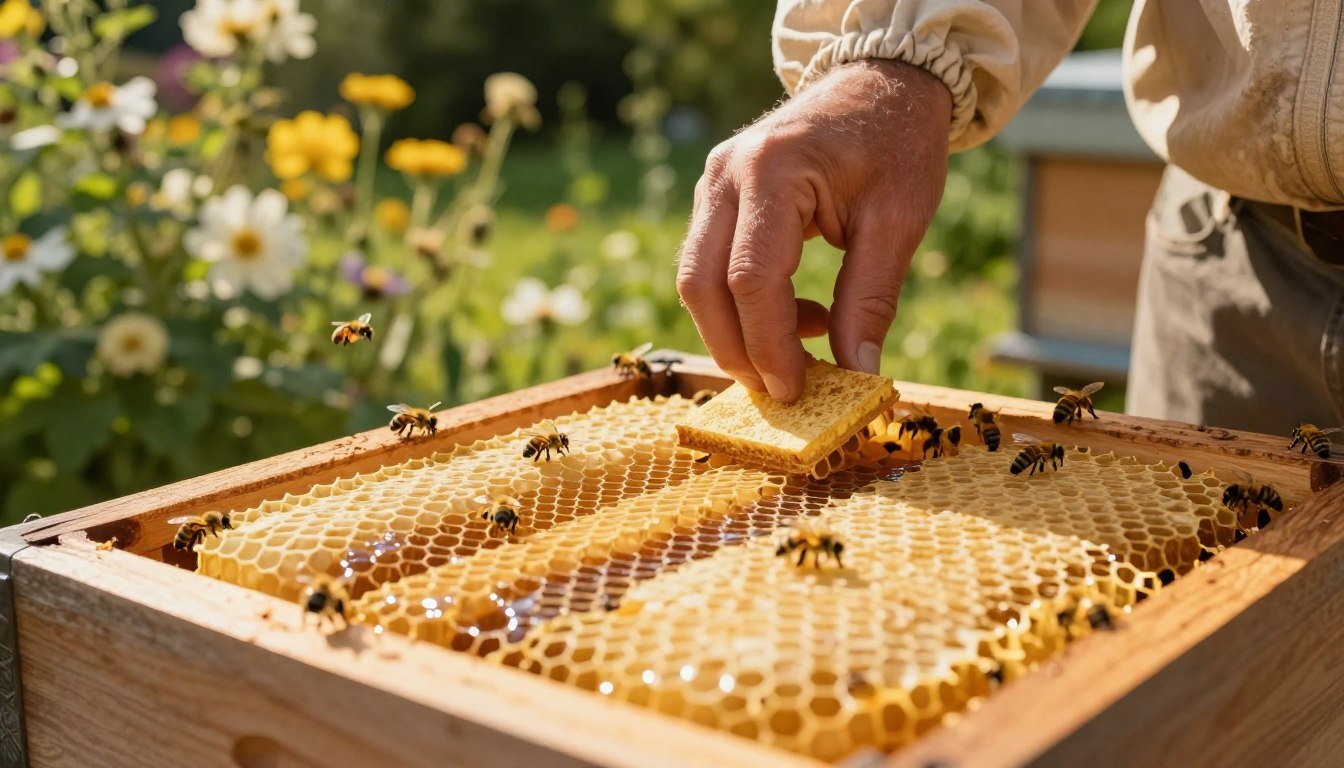
A feeding shim acts as a structural adapter that creates extra space to hold bulky winter food. Beekeepers place sugar bricks or a feeder on top of the frames without crushing bees or breaking propolis seals. The spacer also helps the outer cover sit flush, which reduces drafts and heat loss during cold months.
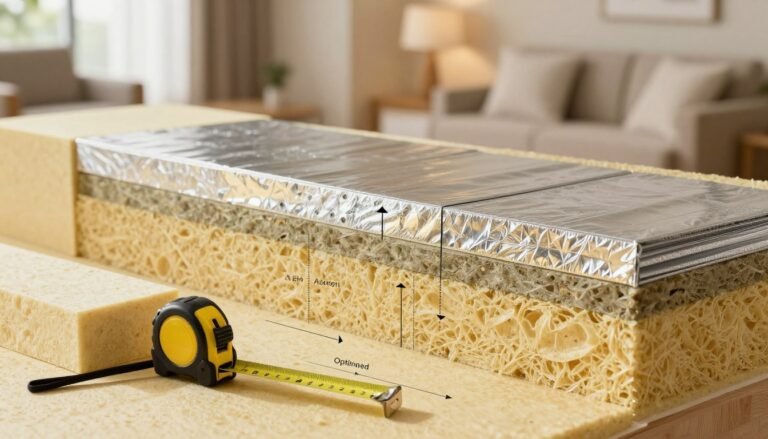
Standard Langstroth equipment leaves about 3/8-inch of bee space above frames. Installing a 3/4-inch shim changes that clearance just enough to add feeders or supplements while keeping frames stable. That small change supports proper ventilation and helps honey cure by avoiding trapped moisture.
“A correctly sized shim preserves the stack’s integrity and gives beekeepers a safe way to add winter feed.”
- Use shims to create space for sugar bricks and feeders without shifting frames.
- They prevent the cover from compressing bees during internal feeding.
- Proper measurement ensures the spacer fits the equipment and protects the colony.
Read more on the original design at Imirie shim details.
Enhancing Hive Ventilation and Honey Production
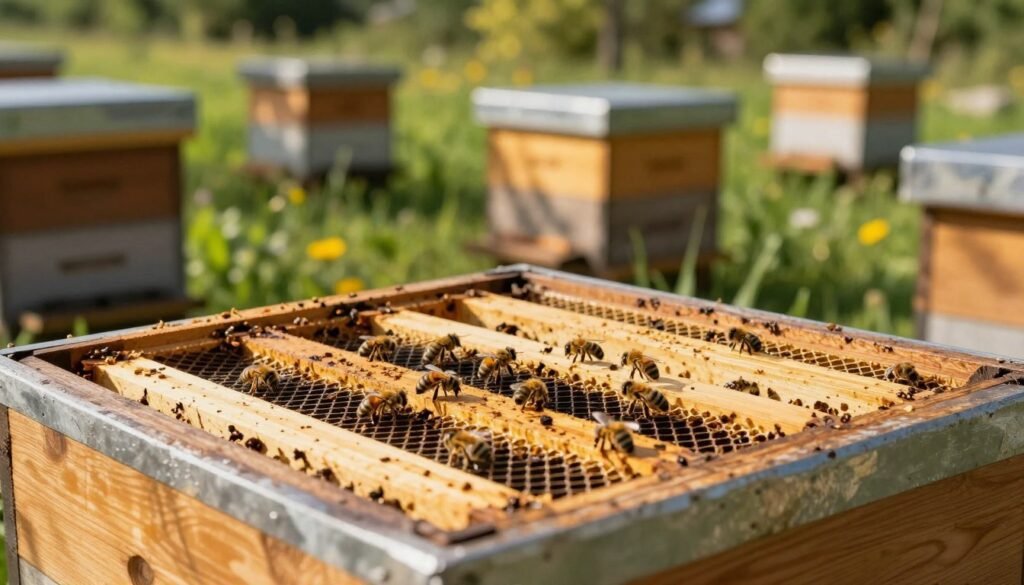
Creating a top opening near the supers sends warm, moist air out and aids honey curing. Proper airflow helps bees drop nectar moisture from about 80% to the roughly 18% needed for stable honey.
The Role of Upper Entrances
Upper entrances give foragers a direct route to honey supers. George Imirie observed that these openings let returning nectar bypass a queen excluder while keeping the queen confined below.
Beekeepers often place a spacer between boxes to create multiple upper entrances. This reduces fanning time and the colony’s energy spent moving moisture out of frames.
Benefits of Screened Inner Covers
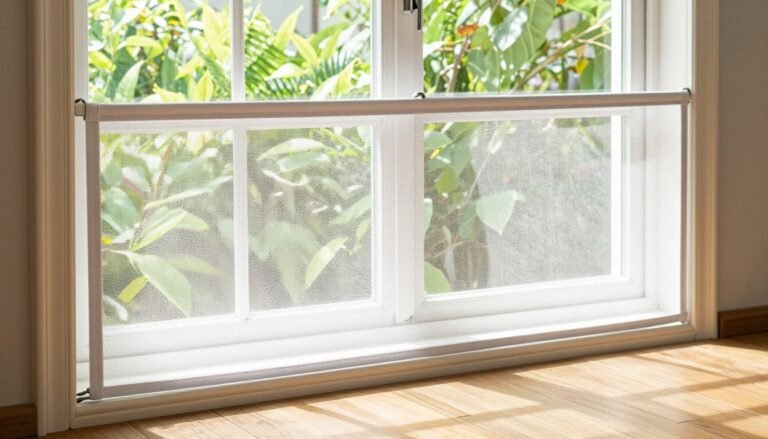
A screened inner cover with 1/8-inch hardware cloth replaces the solid cover and allows water vapor and warm air to escape. The mesh is small enough to block wax moths and wasps while improving circulation.
Installing a screened inner cover is a proven method to keep the colony cool in summer and speed honey production. For detailed guidance on improving airflow, see this guide to increase hive ventilation.
- Upper entrances let honey bees deliver nectar directly to supers without crossing the queen excluder.
- The 1/8-inch screen permits moisture exit but excludes common predators.
- Better airflow helps each frame in the honey super finish curing faster.
| Feature | Implementation | Effect on Honey | Notes |
|---|---|---|---|
| Upper Entrance | Shim or spacer between supers | Speeds nectar transfer to storage | Allows forager routing without moving the queen |
| Screened Inner Cover | 1/8-inch hardware cloth | Increases moisture escape; aids curing | Blocks wax moths and wasps |
| Multiple Openings | Two or more upper holes | Reduces fanning effort by bees | Improves summer cooling and production |
| Frame Circulation | Placement near airflow paths | Each frame cures more evenly | Supports consistent honey quality |
“Good ventilation shortens the drying phase and protects stored honey.”
For winter planning and how vents affect cold-weather survival, review tips on winterizing beehives.
Managing Supplemental Feeding with Spacers
Adding a narrow wooden spacer lets beekeepers tuck solid feed and supplements above active frames without squashing workers.
The feeding shim provides the 1 to 2 inches of extra space needed to place sugar bricks, candy boards, or pollen patties directly on top of frames. Standard equipment leaves only about 3/8 inch of bee space, so that modest lift matters in winter.
Accommodating Sugar Bricks and Pollen Supplements
Use the spacer as a temporary feeder shelf to hold bulky sugar safely while the cover sits flush. George Imirie’s design is often repurposed to hold mite treatments or candy boards during cold months.
“A properly placed feeding shim gives colonies winter support without disturbing brood or stores.”
- Extra space prevents crushing bees and lets the cover close.
- The built-in entrance hole lets the queen bee and workers access outside without crossing the whole stack.
- Keep the assembly sealed to avoid robbing by other bees or wasps.
- If you use a queen excluder, the spacer keeps the lid from pressing on frames.
For guidance on emergency feeding practices, see emergency and spring feeding.
Seasonal Considerations for Shim Application
A properly fitted spacer can toggle a colony’s needs between moisture control and supplemental sugar stores.
In winter, placing an Imirie-style spacer below a candy board gives an upper entrance that is small enough to block wind and rain yet still allows bees to take cleansing flights on warm days.
Beekeepers must match the spacer to their boxes so no gaps leak heat. A tight fit prevents drafts and reduces moisture loss from the cluster.
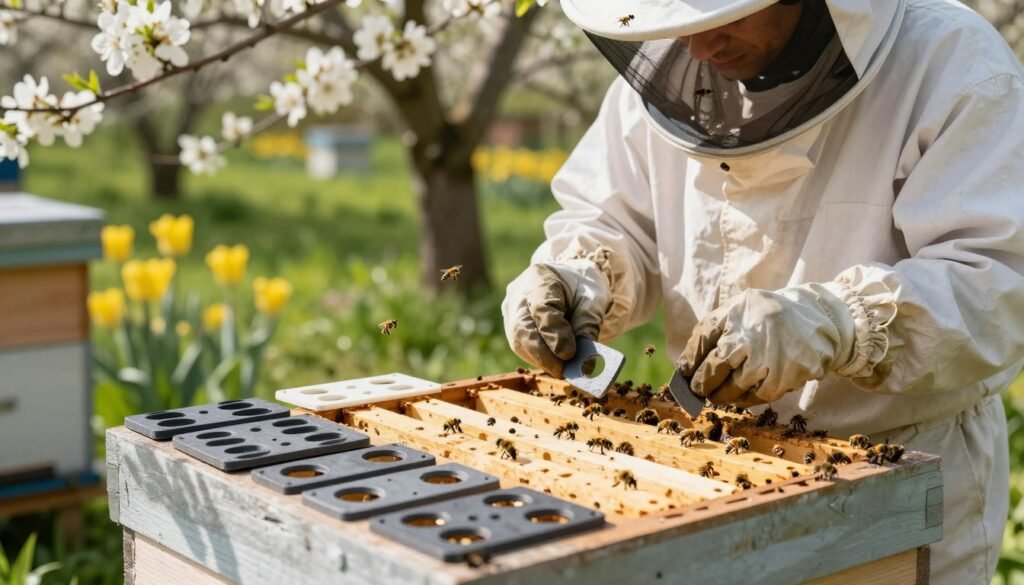
Remove any feeding shim after the season ends. Empty space invites burr comb. Pull the spacer when supplemental sugar or bricks are gone to restore normal frame spacing.
Proper placement of a shim top or inner cover helps control water vapor and ventilation. Managing moisture is vital to keep honey stores stable and brood healthy.
- Seasonal use adapts equipment for summer ventilation or winter feeding.
- Extra space works well for a candy board, but avoid leaving it empty long-term.
- Check every frame and box to confirm the spacer is necessary and fits correctly.
“A correctly sized upper entrance lets honey bees exit for short flights without exposing the cluster to harsh weather.”
| Season | Spacer Role | Action |
|---|---|---|
| Winter | Place under candy board; provides upper entrance | Ensure snug fit; remove after feeding |
| Late winter / early spring | Small entrance hole allows cleansing flights | Keep inner covers adjusted to manage moisture |
| Summer | Use with screened inner covers to aid ventilation | Fit mesh or shim top to control water vapor |
For seasonal ventilation tips and cover insulation, see ways to provide ventilation and painting tips for better insulation.
Conclusion
, Small, well-placed spacers can change airflow and feeding options without upsetting the colony. Use a single shim or a screened inner cover to balance summer ventilation and winter protection.
These simple tools boost honey production and help bees manage water and heat. A feeding shim gives a safe shelf for sugar bricks and a tidy place for a feeder without crushing workers or shifting frames.
If this guide helped, please let know. If you found other creative uses for this equipment, please let know in the comments. For starter tips on leveling and spacer placement, see how to start a beehive.