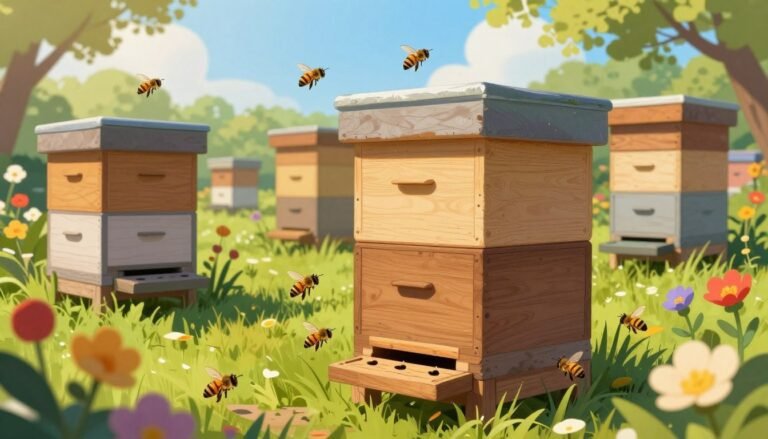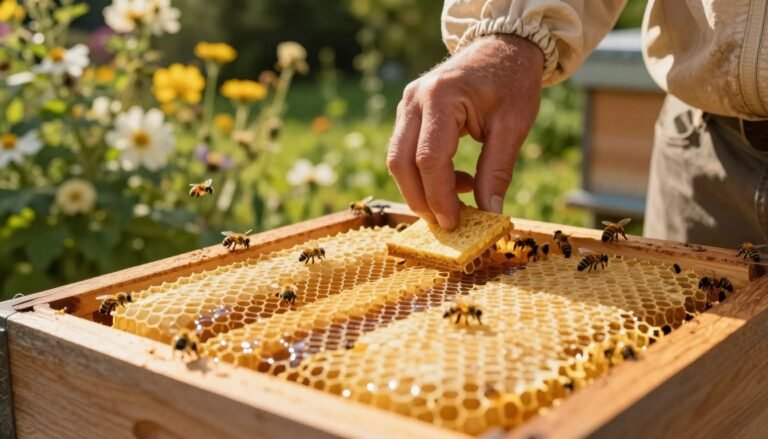
Protecting your colony starts with simple, effective steps. A well-made hive moisture board DIY can reduce condensation under the outer cover and keep your beehive dry through cold winter nights.
Proper ventilation helps regulate humidity and prevents water from forming inside the boxes. This guide gives a clear, step-by-step approach for installing a custom board so internal conditions stay stable.
Responsible beekeepers in the United States know that guarding against excess moisture is key to colony survival. Learn how a simple addition under the cover makes a big difference in spring health and hive activity. For product options and tested designs, see this recommended moisture solution.
Key Takeaways
- Adding a fitted board under the outer cover controls internal humidity.
- A proper setup prevents dangerous condensation during winter.
- Clear steps make the project approachable for any beekeeper.
- Maintaining ventilation helps colonies survive and thrive.
- See tested options at best moisture board for winter hives.
Understanding the Dangers of Hive Moisture
When outside temperatures fall, the warm air inside a hive loses its ability to hold vapor and condensation forms. That water gathers on the top surfaces and can drip onto the cluster. In harsh winters, like those in Montana, this process happens often.
Condensation Risks
Warm air inside the box cools rapidly at night. Water then collects under the cover and runs down onto combs and bees.
Impact on Bee Health
Wet, chilled bees struggle to maintain heat. A cold, damp cluster faces higher disease risk, including chalkbrood.
- In very low temperatures, trapped air cannot hold vapor and drops form at the top.
- That dripping can be fatal to a small colony if bees cannot dry and warm themselves.
- Good ventilation helps but may not stop mildew and disease without additional protection.
Understanding how excess water affects your beehive lets you plan winter protections. Small changes at the top of the stack can keep bees dry and improve survival rates.
Why You Need a Hive Moisture Board DIY Project
A well-built quilt box acts like a sponge, catching warm-air vapor before it reaches the comb and bees. A medium super with a canvas base filled with pine shavings lets vapor pass upward and be trapped in the wood shavings.
The quilt sits under the outer cover and above the top frames. This position gives the colony a dry top and keeps the lower boxes warmer.
Beekeepers often pair a quilt box with a candy board and extra insulation for long winter months. That approach provides both water control and a place for emergency feeding.
Benefits are clear: air can move through the upper entrance while shavings wick away excess water. The result is improved survival into spring and less risk to brood and honey stores.
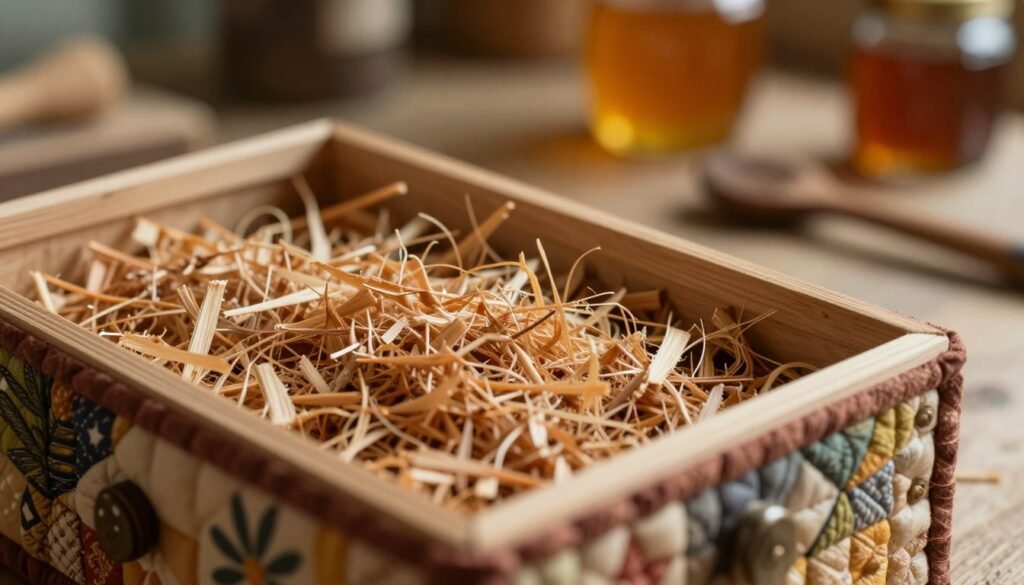
- Absorbs water before it drips on frames.
- Insulates the top hive and reduces drafts.
- Easy to build and fits most standard boxes and supers.
Essential Materials for Your Build
Begin by selecting a sturdy, absorbent panel that captures condensation and fits snugly beneath the cover. The right choice protects the colony and helps keep frames dry during cold nights.
Selecting Fiberboard
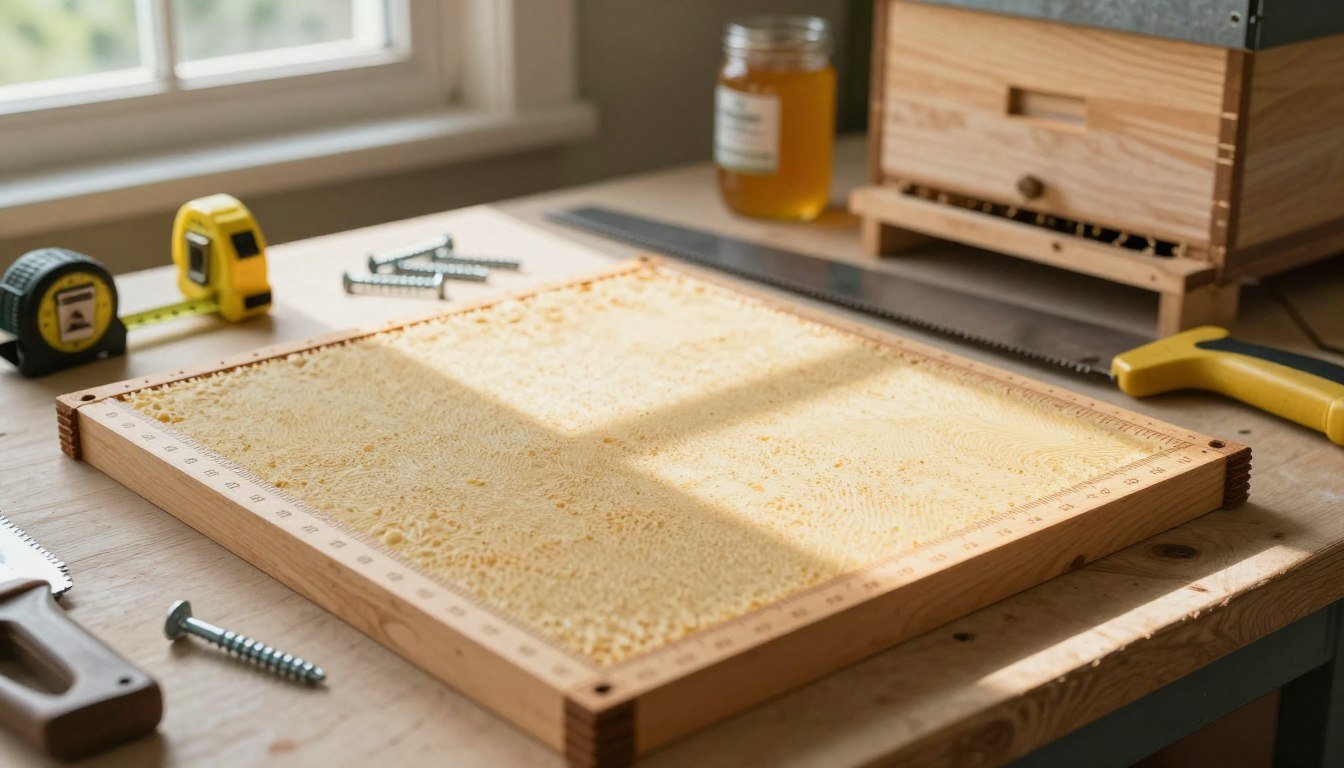
Choose a fiber wallboard such as Homasote. This type of panel soaks up vapor, holds shape, and resists sagging when placed under the outer lid.
- Thickness: Aim for about half an inch so the piece fits neatly under the outer cover without shifting.
- Tools: You will need a tape measure and a saw to size the fiberboard to your hive dimensions.
- Function: The absorbent surface traps water and returns it to the air when conditions dry, helping bees through winter.
- Material note: Choose quality wood fiber or similar wallboard for durability and long service life.
Using high-quality materials early saves time later and improves colony survival. A well-fitted piece at the top reduces dripping and keeps the interior environment more stable for your hive.
Measuring and Cutting Your Fiberboard
Start by mapping the outer cover’s inner dimensions so the fitted insert sits flat and stable.
Carefully measure the length and width of the hive opening. Mark the fiber panel with a pencil and double-check each mark before cutting.
Use a sharp saw or utility knife to trim the board to size. Cut slowly to keep edges straight and to avoid splintering.
Precision matters: a tight fit prevents gaps where excess moisture can bypass the absorbent layer and reach the bees.
Test the trimmed piece in place before final smoothing. Make small adjustments rather than removing large sections.
Tip: Leave a tiny clearance for seasonal expansion so ventilation stays unblocked and the panel does not bow.
Once the top piece fits, place it on the hive under the outer cover. A well-cut insert protects your colony and makes winter care easier.
- Measure twice, cut once.
- Keep cuts straight and clean.
- Confirm fit before final placement.
Creating the Expansion Groove
A centered relief slot reduces stress on the panel as it swells and shrinks across the season. Cut a groove lengthwise through the center of your fiber panel to permit natural movement.
Make the channel about one inch wide and 3/8 inch deep. This size gives enough room for the piece to expand when it absorbs vapor and to contract as it dries.
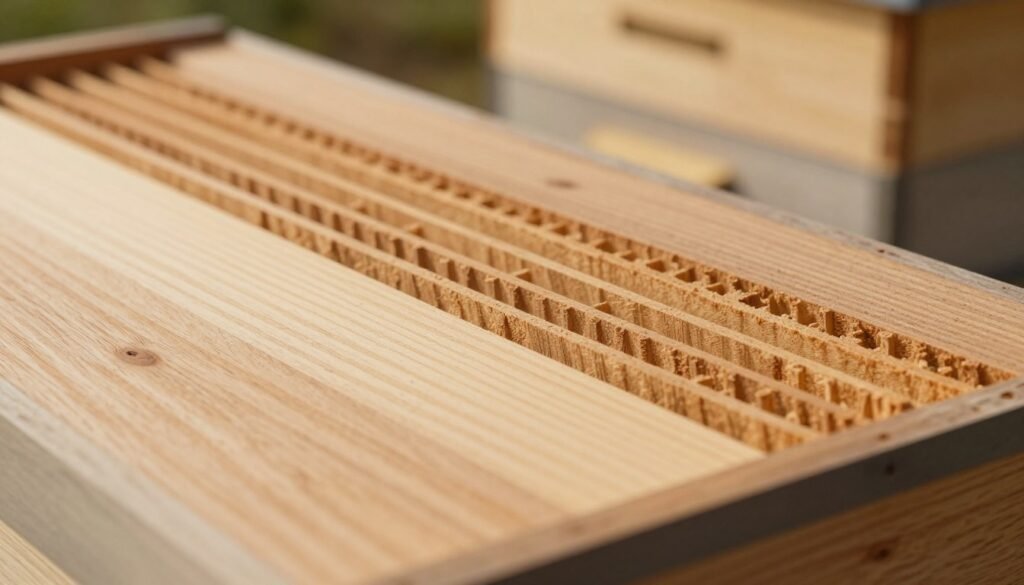
Without this relief, the board can warp, crack, or buckle. Those failures let water bypass the absorbent layer and threaten comb and cluster health.
Prepare carefully: mark the center, clamp the panel, and cut with a straight bit or a router for a clean channel. Smooth edges so no loose fibers fall into the hive.
“One simple groove prevents common top-piece failures and keeps the system reliable through winter.”
Result: a durable top insert that withstands wet and dry cycles and helps regulate humidity for a healthier colony.
Assembling the Moisture Quilt Box
Begin by choosing a medium super that will act as the shell for your quilt and sit comfortably under the outer cover.
Choosing the Super
Select a sturdy, standard medium super that aligns with your inner cover and top hive dimensions. A snug fit keeps warm air moving up and reduces gaps where water can travel.
Attaching the Screen
Drill a 1/2 inch hole on each end of the super to provide gentle ventilation through the quilt box. Cover those holes with Shop Screen 80 Grit and secure it with hot glue to keep bees, bugs, and mice out.
Nail a canvas panel to the bottom of the super to hold wood shavings in place. Use galvanized nails so the canvas stays taut and the pine shavings remain secure during the year.
If your apiary sees strong winds, consider adding small Velcro tabs to the bottom to help anchor the box to the outer cover. Always confirm the assembled quilt box fits over the candy board and inner cover before placing it on active hives.
“Proper assembly keeps the top dry and gives colonies a safer, warmer winter.”
Installing Ventilation Holes
A pair of 1/2-inch vents at each end of the top super ensures steady airflow without overcooling the cluster. Drill these holes centered on the ends so warm, wet air can escape the quilt box and rise away from frames.
Cover each opening with a fine wire screen. Use mesh small enough to keep out bees, bugs, and mice while still permitting good circulation.
Placement matters: locate holes low on the end panel but above the inner cover rim. This balances ventilation and insulation, letting damp air leave without creating a direct draft across the colony.
- Drill a 1/2 inch hole on the ends of your moisture quilt box to ensure adequate ventilation for your bee colony.
- These holes allow moist air to escape the hive, preventing condensation that can harm bees in winter.
- Cover each hole with a fine wire screen so mice and pests cannot enter the quilt box.
- Proper placement maintains the right mix of air and insulation within the stack.
Pro tip: for more on designing effective vents and managing airflow in winter hives, see this beehive ventilation guide.
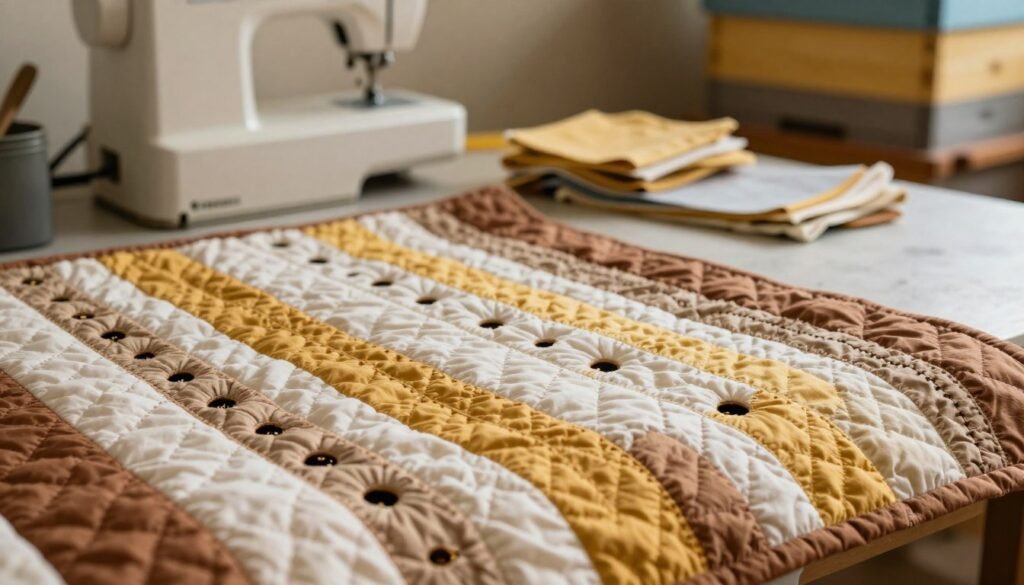
“Small, screened vents keep damp air moving out while protecting the colony from pests.”
Preparing the Canvas Base
A well-cut canvas base forms the first line of defense, holding shavings while letting vapor move upward. Cut a piece to fit the bottom of your quilt box so it lays flat and reaches all edges of the super.
Nail the canvas securely to the bottom panel. Use galvanized nails or staples around the perimeter to create a sturdy floor that keeps the wood shavings in place during handling and wind.
This canvas layer lets moisture rise from the cluster and be absorbed by the shavings in the quilt. Make sure the piece is taut and fastened near the inner cover area to avoid gaps where bees might escape.
- Trim the canvas for a snug fit to the top super interior.
- Attach evenly so the bottom stays level under load.
- Check for any openings at the cover interface and seal them by tightening nails.
A tidy canvas base improves quilt function and keeps your bees dry and comfortable all winter.
“A well-prepared canvas base is vital for the effective operation of your moisture quilt.”
For additional setup ideas and winter feeding integration, see this winter quilt guidance.
Integrating the Candy Board for Winter Feeding
Integrating a candy board gives bees easy access to food while helping control moisture near the top of the stack. Use a simple sugar cake to support the colony during cold months without disturbing frames.
Mixing Sugar and Water
Mix 4 pounds of sugar with 1 cup of water to make the candy board mixture. Stir until the sugar is evenly damp but not soupy.
Spread the paste onto a frame layered with wire and parchment. Let it dry overnight so the cake firms up before you place it in the hive.
- Feeding: The dried cake provides essential winter calories for bees and helps them reach spring in better shape.
- Wicking: The sugar mass also helps wick excess moisture away from frames and the inner cover area.
- Boosting: For struggling colonies, stir in BeePro before drying to support larval food production.
- Placement: Slide the candy board between boxes or set it on top under the outer cover so bees can access it easily.
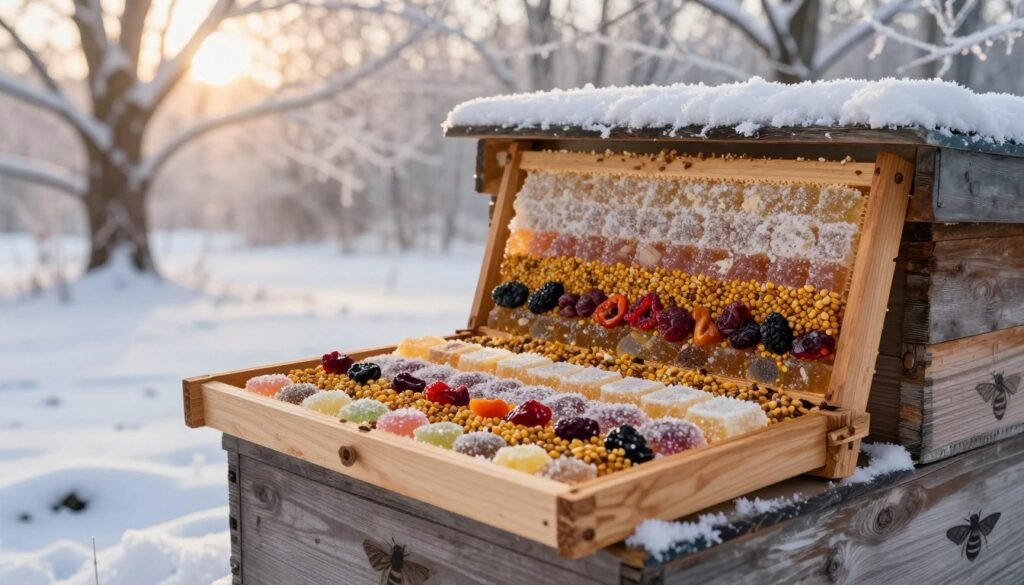
“Place the candy board where bees can reach it; it feeds the colony and helps manage wet spots under the cover.”
For a tested method, see a detailed candy board recipe. If you work in cold regions, review tips on winterizing hives in northern states.
Adding Insulation for Extreme Cold
A simple insulating jacket around the boxes can cut nighttime heat loss and steady internal temperatures.
Wrap the stack with breathable insulation designed for beekeeping so the top and bottom stay warmer without trapping stale air.
Keep ventilation open. Confirm screened vents and the inner cover remain clear so bees can perform cleansing flights and exchange air.
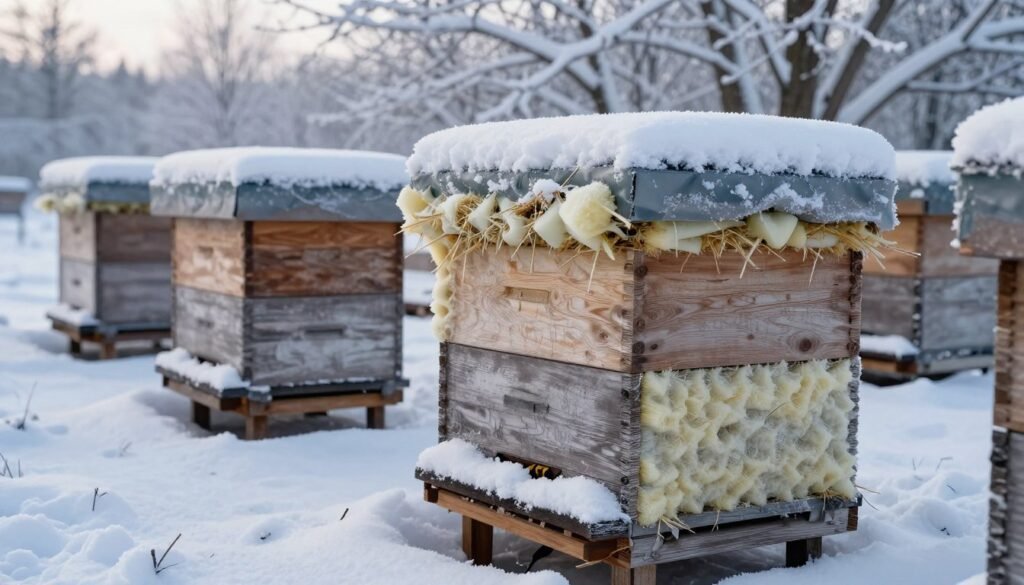
Insulation should work with your quilt and candy board to create a stable environment. Pine shavings in the quilt keep vapor in check while the wrap reduces heat loss.
- Wrapping your hives gives extra warmth during the coldest months of the year.
- Always ensure adequate ventilation and that entrance holes stay clear for flight and waste removal.
- Check that insulation does not block the upper entrance above the inner cover.
- Proper insulation reduces the energy bees spend heating the colony and protects frames and honey into spring.
“A balanced system of insulation, quilt box shavings, and clear vents keeps colonies healthy through low temperatures.”
For tested wrap designs and tips on installation see insulation wraps and windbreaks.
Proper Placement Within the Hive Stack
Stack components in a consistent order so the colony gets both food and dry space through winter. Place the candy board directly on top of the deep super where honey sits. This gives bees easy access to stores and keeps the feeding surface near the cluster.
Next, add the quilt box filled with pine shavings above the candy board. The quilt wicks excess moisture and protects the frames below.
Set the inner cover on top of the quilt, then finish with the outer cover as the final protective layer. This order helps the quilt work as designed and keeps the top area drier into spring.
Stability matters: secure the entire stack and weight it with bricks or purpose-made hive straps to prevent wind from shifting boxes or lids.
For future seasons, consider placing the candy board between boxes if bees tend to move downward in your hives. Proper placement ensures the quilt box and candy board function together all winter long.
“Correct stacking keeps food reachable, frames protected, and the top of the hive working as a moisture control system.”
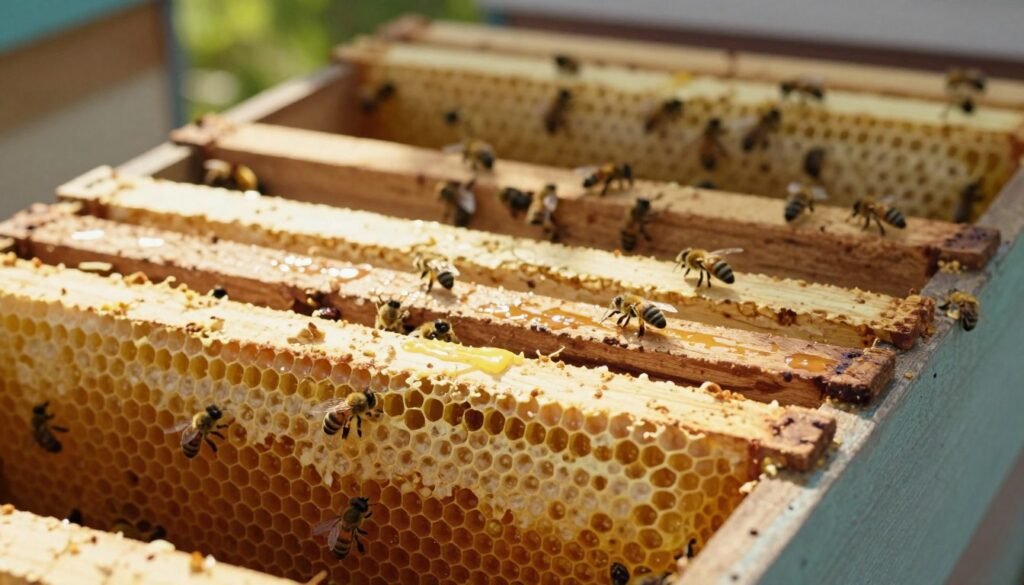
Managing Airflow and Entrance Holes
Balanced openings at the top and bottom of the hive let damp air escape while preserving warmth.
Make entrances wide enough so bees can take cleansing flights on mild winter days. A narrow slot can trap waste and raise humidity risks inside the box.
Match the quilt box ventilation to the main entrance to create steady airflow. When the top vents and lower entrance work together, warm air moves upward and leaves through the upper entrance.
Monitor holes regularly in winter. Snow, ice, and debris can block vents and cause water to collect near frames and the inner cover.
Keep the upper entrance clear; it is the easiest path for moist air to exit. When this opening works, condensation on the top and bottom of the cover drops markedly.
- Check vents after storms and clear any snow or packed debris.
- Use screened holes to prevent pests while allowing air flow.
- Adjust entrance size if bees struggle to leave on warm days.
| Location | Recommended Size | Function |
|---|---|---|
| Lower entrance (front) | 1–1.5 inches | Allows flights and controlled air intake |
| Quilt box vents (ends) | 1/2 inch screened | Permits upward release of warm, damp air |
| Upper entrance (rear or notch) | 3/8–1/2 inch | Primary exhaust for condensation and water vapor |
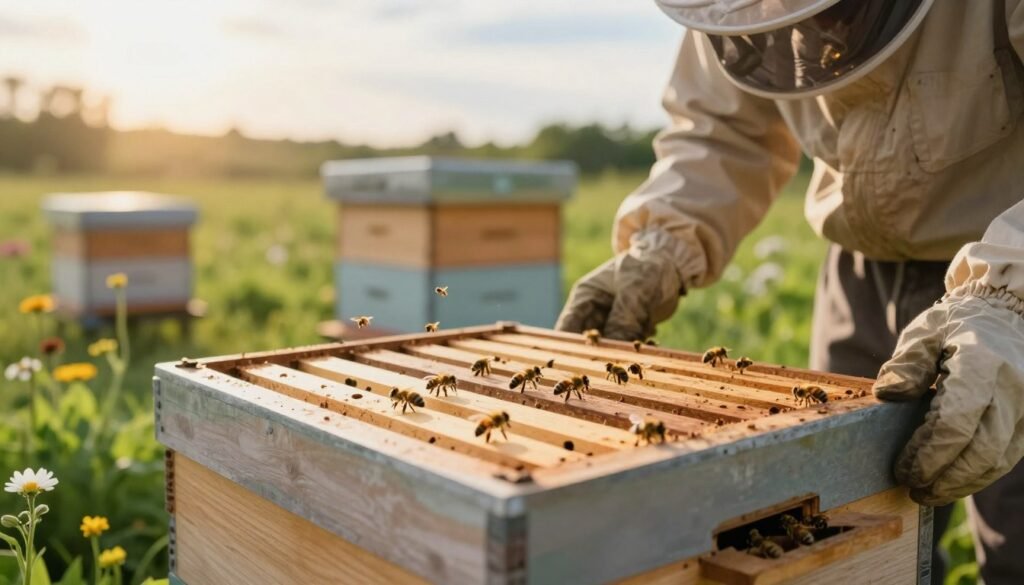
“Simple checks of entrances and vents can cut winter losses and keep honey stores and frames drier.”
Monitoring Your Colony During Winter Months
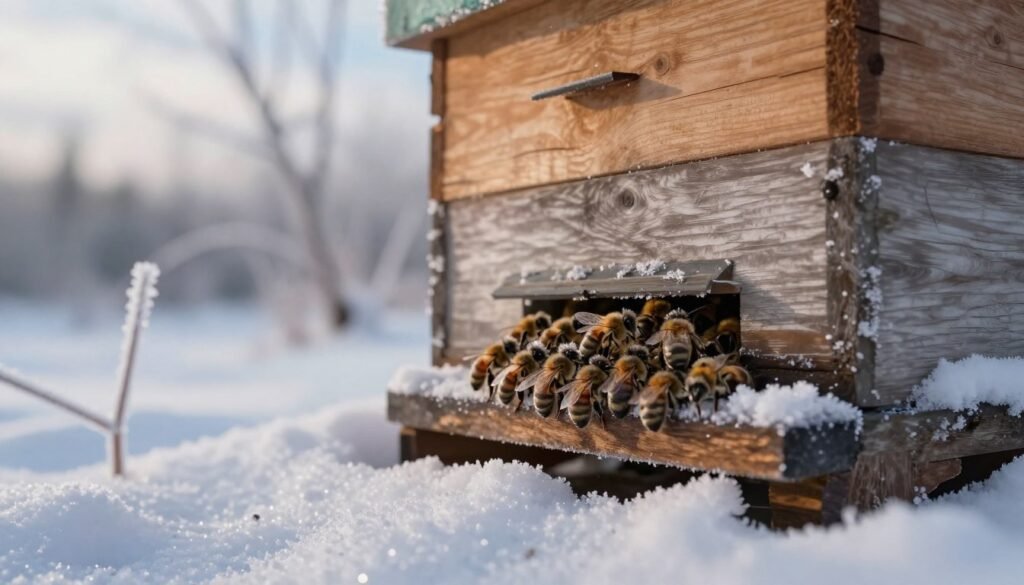
Inspect on mild days so you can see activity and spot problems without stressing the cluster. A quick walk can reveal a tipped hive, blocked entrance holes, or storm damage that needs immediate attention.
Watch the bees during warm spells. Healthy bees will make short flights and shift frames as needed. If few leave or you see debris at the entrance, take note and plan a closer check.
Check the quilt box top weekly if weather allows. Make sure the wood shavings are not oversaturated and that the quilt still wicks vapor away. Replace or dry the shavings if they remain soggy more than a few weeks.
Staying vigilant improves the colony’s chance to reach spring with stores intact. Address issues early so small fixes now prevent larger losses later in the year.
| Check | Frequency | Action |
|---|---|---|
| Tipped or leaning box | After storms | Level and secure stack; add straps if needed |
| Blocked entrance holes | Weekly | Clear snow/debris to restore flight and airflow |
| Quilt box shavings | Every 2–4 weeks | Replace damp shavings; dry or add fresh material |
| Bee activity | On warm days | Note flight frequency; plan spring inspection if low |
Troubleshooting Common Moisture Issues
A persistent drip under the cover usually means air paths are wrong or the absorbent layer is saturated.
Start with vents and holes. Check that ventilation holes and the upper entrance are open and free of snow, ice, or debris. Blocked openings stop wet air from escaping and raise humidity quickly.
Inspect the quilt box and shavings. Make sure the quilt is filled with dry pine shavings or wood fiber. Damp shavings cannot wick vapor and the top will stay wet.
If the candy board crumbles, the hive may be too humid or the mix was too dry. Replace the cake or re-mix and reseal to keep honey stores and frames safe.
- Look for leaks at the inner cover and outer cover; seal gaps at the sides.
- Swap soggy shavings and let the quilt dry before replacing.
- Adjust screened vents to balance air without chilling the cluster.
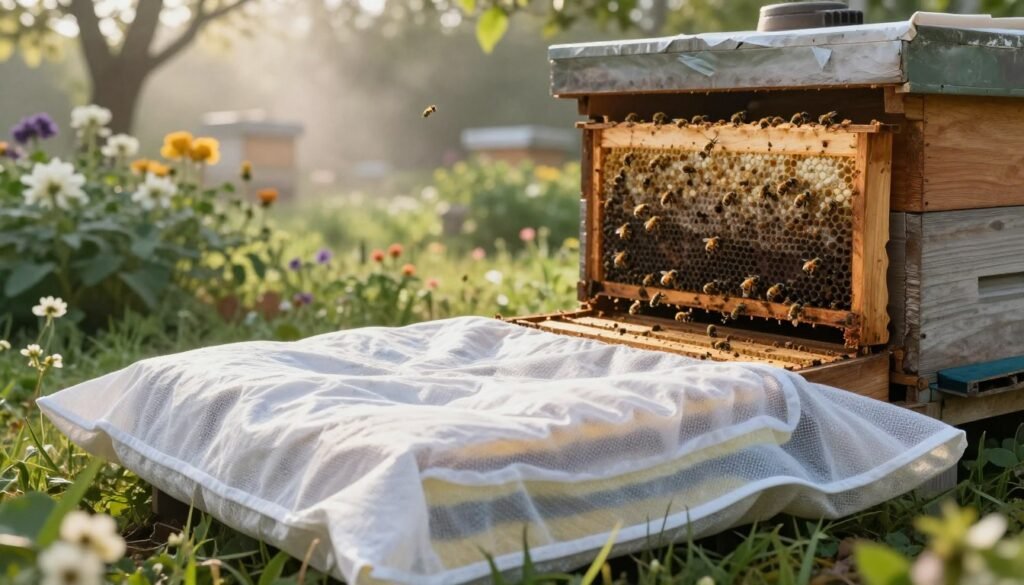
“Catch problems early in the season; simple fixes now protect the colony and improve spring survival.”
| Issue | Likely Cause | Quick Fix |
|---|---|---|
| Dripping under top | Blocked ventilation holes or saturated shavings | Clear holes; replace shavings; check upper entrance |
| Crumbly candy board | High humidity or improper mix | Make new cake; dry or move slightly lower in stack |
| Wet frames near sides | Leaky outer cover or poor seal at inner cover | Seal gaps; repair outer cover; add light insulation |
| Persistent damp quilt | Shavings compressed or packed | Refresh with dry wood shavings; ensure air flow |
For more on managing damp conditions, see guidance on managing hives in wet climates. Early troubleshooting during cold months saves colonies and eases spring work.
Preparing for Spring Hive Inspections
Before bees begin heavy foraging, stage your tools and protective gear so inspections go smoothly.
Gather a smoker, hive tool, gloves, and a clean suit. Plan to open the stack on a calm, warm day in early spring when bees fly.
Remove the quilt box and candy board once foraging picks up. Take out the quilt box carefully and check shavings for damp spots. Store dry shavings and wood pieces for next season.
Inspect frames for brood and honey. Look for solid brood patterns and adequate stores so the colony can grow.
Clean and maintain quilt boxes and any fitted parts. Replace soggy shavings, repair small cracks, and check holes and the upper entrance before reusing.
“A calm, methodical spring check sets the way for a healthy season.”
| Task | When | Note |
|---|---|---|
| Remove quilt box & candy board | When bees forage consistently | Store dry shavings; air out quilt boxes |
| Frame inspection | Early spring warm day | Check brood pattern and honey stores |
| Equipment care | After inspection | Repair wood parts; replace damp shavings |
For tips on timing and avoiding late-season wet problems, review guidance to prevent hive moisture in winter. Regular spring inspections help you plan feeding and hive work for the year.
Conclusion
In short, a simple top insert paired with proper vents and insulation gives your colony the best chance to survive cold months.
Build and fit the quilt carefully, monitor shavings, and keep entrances clear. These steps cut condensation, lower disease risk, and conserve stores.
Regular checks and correct assembly matter more than fancy parts. For tested products and care tips on moisture boards, see moisture boards.
Take the time now and you’ll welcome a strong, buzzing colony in spring ready to thrive and produce honey.
FAQ
What is a moisture quilt box and why build one for winter?
A moisture quilt box is a shallow insulated box placed near the top of the hive to trap condensation and provide an absorbent layer so water does not drip onto frames or bees. Building one helps control excess water during months with cold nights and warmer days, reduces condensation risks, and keeps the colony drier and healthier through winter and early spring.
Which materials work best for the quilt layer?
Use breathable, natural materials such as pine shavings, untreated burlap, or coarse canvas as the absorbent layer. Pair these with a rigid top made from exterior-grade plywood or tongue-and-groove wood to sit under the outer cover. Avoid airtight insulation; the goal is controlled ventilation and absorption rather than sealing the top completely.
How do I size and cut the fiberboard or wood for a quilt box?
Measure the internal dimensions of your top box or inner cover and cut the board so it fits snugly without forcing the sides. Leave a small expansion groove around the perimeter to allow for seasonal swelling. The quilt should sit flat and not press on frames or the broodnest below.
Do I need ventilation holes in the quilt box, and where should they go?
Yes. Install a few small ventilation holes or a screened opening near the upper entrance side to allow moist air to escape while preventing drafts over the cluster. Keep openings above the absorbent layer so vapor moves into the quilt rather than chilling the brood.
Can I add a candy board to the quilt box for winter feeding?
You can integrate a candy board or fondant directly above the brood when stores run low. Place the candy on a thin board that sits over the shavings or canvas, ensuring bees can access it without exposing them to cold drafts. Mixing sugar and water is unnecessary for fondant; if using syrup, solidify it into a loaf to avoid leakage.
How much insulation should I add for extreme cold climates?
Add an extra inch or two of solid insulating material around the top box walls or use a thicker quilt layer with more shavings. Avoid over-insulating the sides to the point of trapping damp air; balance insulation with adequate airflow so the colony can ventilate and expel excess water vapor.
Where in the hive stack should the quilt or moisture control layer be placed?
Position the quilt directly under the outer cover and above the inner cover or topmost super. This location captures rising warm, moist air from the cluster and gives condensation a place to collect away from frames and honey stores.
How do I maintain airflow without chilling the bees?
Maintain a small upper entrance and a reduced or blocked bottom entrance depending on conditions. The upper entrance paired with the quilt allows warm, moist air to exit without creating cold drafts through the broodnest. Monitor colony behavior and adjust entrances as temperatures change.
What signs indicate the colony is suffering from condensation or wet conditions?
Look for ice or water under the outer cover, moldy or clumped shavings in the quilt, bees clustering low in the hive, or honey cappings showing moisture stains. These signs signal the need to improve absorption or ventilation and possibly add fresh shavings or replace a saturated quilt layer.
How often should I check or refresh the absorbent material in the quilt box?
Inspect the quilt during mild days in late winter or early spring. Replace or refresh shavings or canvas if they become compacted, moldy, or waterlogged. Aim to disturb the colony as little as possible and perform checks only when temperatures allow safe opening of the top.
Can I use screened bottom boards with a quilt system?
Yes. Screened bottom boards improve ventilation and pest control while the quilt handles upward moisture. In very cold, wet climates, consider a removable insert to partially close the screen during severe weather, then reopen it in spring to aid mite monitoring and summer airflow.
Is it safe to place wooden shims or extra wood inside the boxes for insulation?
Small amounts of extra wood or thin shims can reduce dead air space and help stabilize the quilt, but use untreated, dry lumber and avoid blocking heat movement entirely. Keep materials off frames and ensure they do not trap bees or interfere with normal comb inspections.
How does a quilt box affect spring inspections and hive cleanup?
In spring, a quilt often contains collected debris and old shavings that need replacing. Remove the quilt before full hive inspections, refresh the absorbent material, and check for honey stores or signs of starvation. The quilt can be cleaned and reused if dry and mold-free.
Are there commercial alternatives to making my own quilt or moisture box?
Many beekeeping suppliers such as Mann Lake, Kelley, and Betterbee offer quilt boxes, candy boards, and insulated inner covers. These products save time and ensure consistent fit, but a homemade version using pine shavings and plywood also works well when built to correct dimensions.