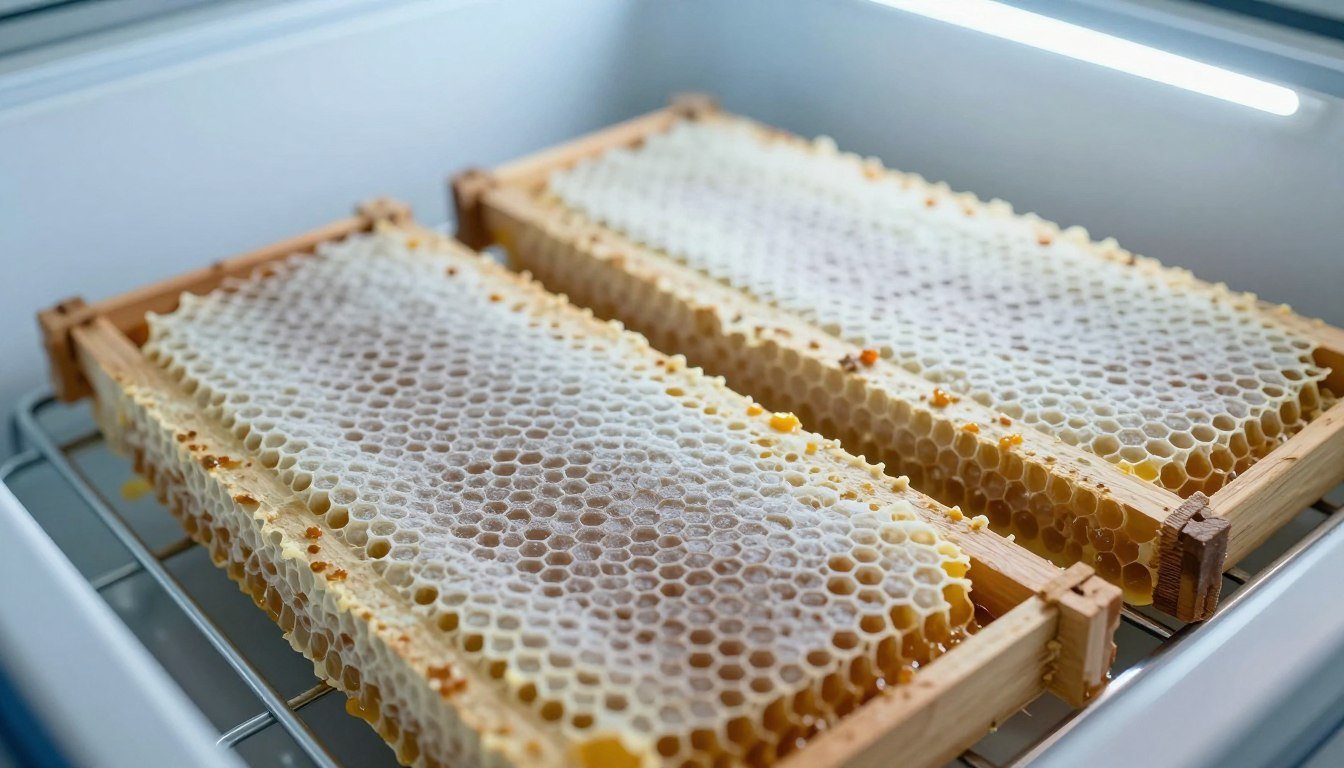
Protecting stored hive frames is a year-round task and one that pays off in stronger colonies. Implementing a regular plan for freezing drawn comb to kill wax moth eggs helps preserve your equipment and cuts losses.
These pests target weak stores and empty frames rather than healthy, active colonies. The Foxhound Bee Company notes that vigilance and proper handling keep infestations from spreading.
Use a standard deep freezer to eliminate all life stages in stored frames. Combine this step with good hive hygiene and routine inspections to protect resources and boost production.
Key Takeaways
- Routine freezing safeguards stored frames and reduces losses.
- Watch for signs of pests and focus on weak colonies first.
- Deep freezers can neutralize all life stages when used properly.
- Pair freezing with cleaning and inspection for best results.
- Consistent management improves hive health and honey yield.
Understanding the Impact of Wax Moths on Your Hives
Opportunistic by nature, wax moths exploit gaps in hive defenses and damage stored frames over time.
The Greater and Lesser wax moths are the two species beekeepers in the United States watch most closely. They act like scavengers, seeking out old comb and weak colonies rather than attacking strong, active bee populations.
When a colony drops in strength, these insects invade fast. They eat wax, pollen, and sometimes bee brood, leaving behind messy webs and frass that ruin frames and stored honey.
“Wax moths are not the primary cause of colony death but opportunistic scavengers that clean up weakened hives.”
- Study the life cycles of the Greater and Lesser species to time interventions.
- Keep colonies strong — healthy bees usually repel moths on their own.
- Monitor honey stores and give bees enough space to defend combs.
For practical guidance on active management, see resources on managing wax moths in beehives and tips for proper frame storage.
Identifying Signs of Infestation in Your Apiary
Regular inspections reveal issues early, making treatments simpler and less costly.
Visual Indicators of Larvae
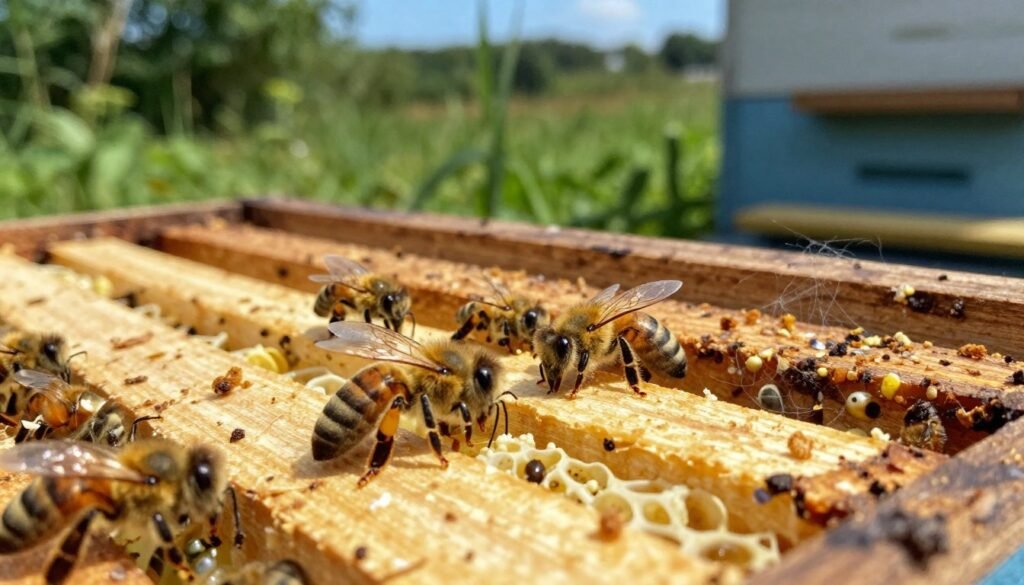
Look for vanilla-colored worms crawling in brood frames; this is a primary sign of a pest infestation.
Webby trails, clusters of cocoons, or chewed wax around cells mean an active problem.
If you find these, remove affected frames and act fast. Dead colonies attract pests and they can ruin wooden boxes in weeks.
Distinguishing Moths from Hive Beetles
Wax moths larvae are larger and leave silken webbing. Small hive beetle larvae are smaller and often leave an oozing slime in cells.
Seeing a few adult moths or beetles is not always critical, but large numbers point to deeper trouble.
- Inspect frames every few weeks, especially before winter and in early spring.
- If a beehive has been dead for some time, act quickly to protect frames and boxes.
“Vanilla-colored larvae crawling through your brood frames are a clear sign that the colony is in trouble.”
For step-by-step guidance on stopping infestations, see how to stop wax moth infestations.
The Science Behind Freezing Drawn Comb to Kill Wax Moth Eggs
Exposing infested frames to sub-zero temperatures halts development across all life stages.
Cold treatment works because wax moths do not reproduce in freezing weather. Eggs and early larvae cannot survive sustained sub-zero conditions, so a properly timed cold period stops the cycle.
Larvae tunnel through the comb, eating wax, pollen, and bee cocoons. This feeding leaves behind frass and silken webs that cause serious damage to brood and stored honey.
The Foxhound Bee Company points out that a hive tool can remove visible larvae, but eggs remain invisible and untouched without cold treatment. Placing frames in a freezer arrests development of the adult, egg, and larval stages.
“By stopping development at every stage, cold treatment prevents recurring infestations and preserves stored equipment.”
- Cold is a proven method to stop eggs and young larvae from hatching.
- Because larvae consume wax and leave webs, treatment is the only reliable way to return frames safely to the hive.
- For spotting early signs before storage, check this guide on spot early signs.
Essential Steps for Preparing Frames for the Freezer
Start with a careful inspection. Sort frames and set aside any with webbing, frass, or visible larvae. Remove badly damaged frames from active storage so they do not spread the problem in boxes or racks.
Selecting the Right Equipment
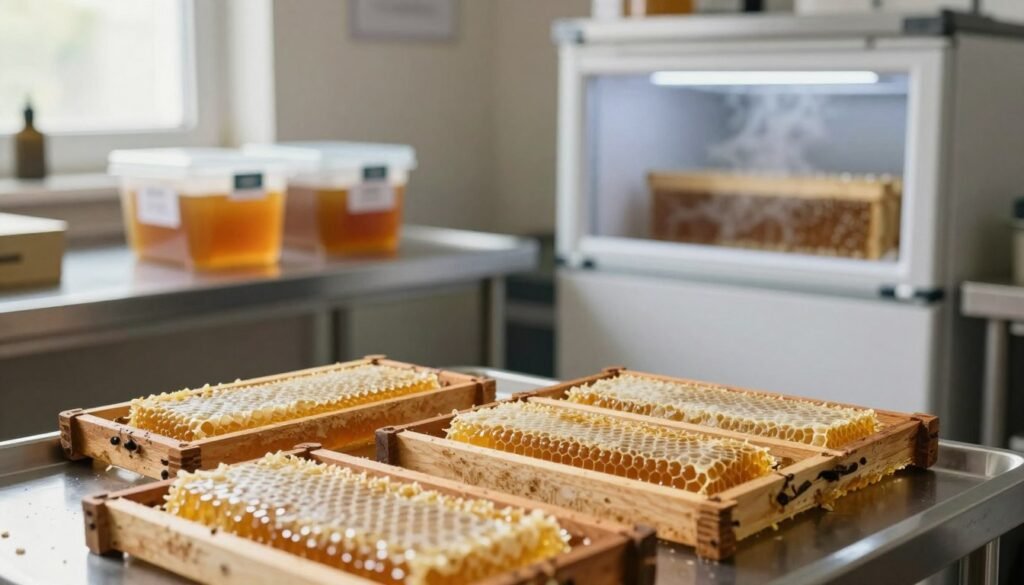
Choose a chest or upright freezer that fits full frames without bending. The unit should hold frames flat so comb and honey stay intact.
Tip: Leave infested boxes on their side outdoors for several days or weeks. Light and wind often drive adult moths out before you bring equipment inside.
Managing Temperature and Duration
Plan for a full 24–48 hours in the freezer to ensure all stages are neutralized. Check your manual for safe loading times and avoid overfilling, which extends the required hours.
Reintroducing Frames to the Colony
After treatment, place frames back in the hive and let bees clean and repair comb. Inspect the colony for disease or queen problems before returning equipment to active hives.
“Proper prep and storage are the best defenses against future damage.”
For more on storage and prevention, see prevent wax moth infestation.
Managing Heavily Infested Equipment and Woodenware
Severe infestations demand immediate action or you risk losing woodenware and valuable frames. Start by isolating affected boxes and removing loose webbing outdoors. Work quickly to keep moths from spreading through the apiary.
Scrape all silk, frass, and debris from covers, bottom boards, and hive boxes. The Foxhound Bee Company recommends thorough scraping as a first salvage step. If wood is deeply eaten, discard those frames and replace them rather than storing a future problem.
Plastic foundation often survives damage better than wax. You can brush off residue, treat the plastic in a freezer, and then coat with new wax. This process saves time and reduces waste.
- Act fast: move contaminated gear out of central storage to prevent spread.
- Use natural cleanup: chickens will happily eat larvae and help reduce populations.
- Sanitize and inspect: clean all equipment, then follow guidance on why it is recommended to freeze before long storage.
“If damage is extensive, replacing frames and reconditioning boxes protects healthy colonies.”
For post-cleanup advice on returning woodenware to service, read about reusing hive bodies after wax moth.
Long Term Strategies for Preventing Future Infestations
Sustained protection relies on bees that can patrol and defend hive space. The most effective long-term approach is keeping a strong, healthy colony that can guard frames and stored honey.
Match hive space to colony strength. Avoid giving bees too much room; the Foxhound Bee Company notes they can only cover what they can physically protect.
Maintaining Strong Bee Populations
Use a queen excluder to keep the queen out of honey supers. This makes those boxes less attractive to pests and limits reproductive sites.
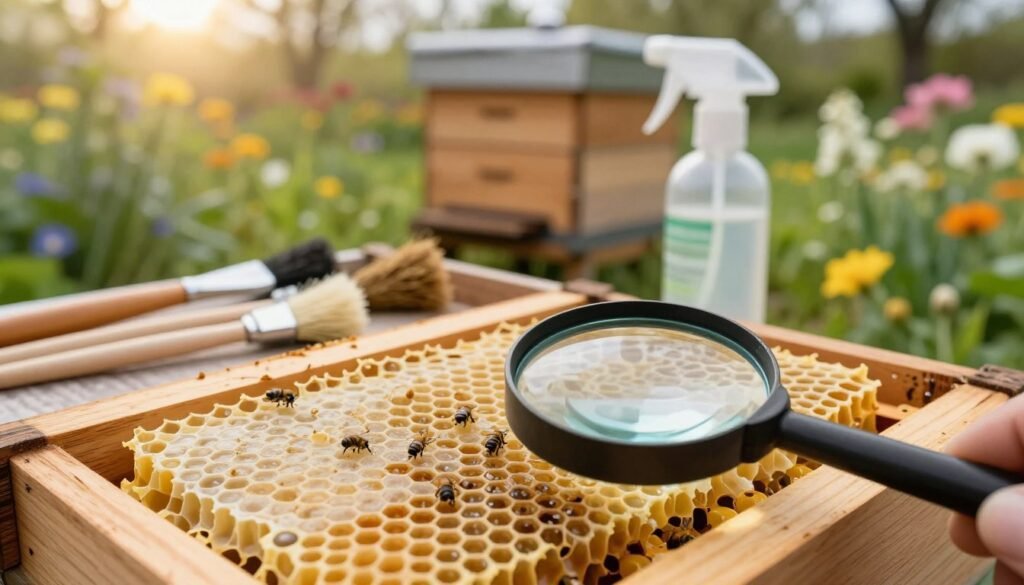
Check for Varroa with tools like the Varroa Easy Check. Treat and combine weak hives promptly so surviving bees can defend remaining frames.
Store spare equipment where local conditions deter attackers. Michael Hood found that placing gear near heavy fire ant activity can reduce moth pressure on stored comb.
- Freeze frames immediately if you spot an infestation, then return frames back only after inspection.
- Keep inspections regular in spring and winter to catch issues early.
For storage and prevention guidance, consult a practical guide on how to get rid of wax and tips for preventing wax moths in stored equipment.
Alternative Methods for Protecting Stored Comb
Several non-thermal options give beekeepers practical protection for stored frames during winter.
Biological sprays like Certan b402 bt are a safe choice. Spray treated surfaces so larvae consume the bacteria when they feed. This reduces damage while keeping honey and brood areas safe.
Traditional crystals remain an option during cold storage, but air frames well before returning them to the hive. Good ventilation and light in storage areas discourage pests from settling into boxes and equipment.
Plastic foundation makes cleanup easier after long storage. You can process wax from plastic sooner and save time when preparing for spring.
“Combine treatments with routine inspection—this keeps equipment ready and honey production steady.”
- Use biological sprays on stored frames and woodenware.
- Ventilate storage spaces and use light where possible.
- Process plastic foundation early for faster cleanup.
- Pair methods with regular checks before spring use.
| Method | Effectiveness | Safety | Best Use |
|---|---|---|---|
| Certan b402 bt | High for larvae control | Non-toxic when used per label | Stored frames and boxes |
| Crystals | Moderate | Requires airing before hive return | Winter storage |
| Ventilated storage | Prevents settlement | Very safe | All equipment |
| Plastic foundation processing | Speeds cleanup | Safe for honey handling | After long storage |
Conclusion
Simple, regular steps make your stored frames resilient and ready for spring work. Treating affected frames with a proper cold cycle preserves gear and halts all life stages in infested areas.
Keep colonies strong and inspect often. Use tools like the Varroa Easy Check and good storage habits to stop problems before they spread.
When damage appears, investigate underlying issues such as mite loads or disease and act quickly. For practical examples and reports from other beekeepers, see this hive investigation on wax moth page for field-tested workflows.