Bee Pollination Services: What Growers Pay and Get
How commercial bee pollination services work: who supplies hives, 2025 USDA prices per colony by crop and region, what to check, and which contract terms matter.

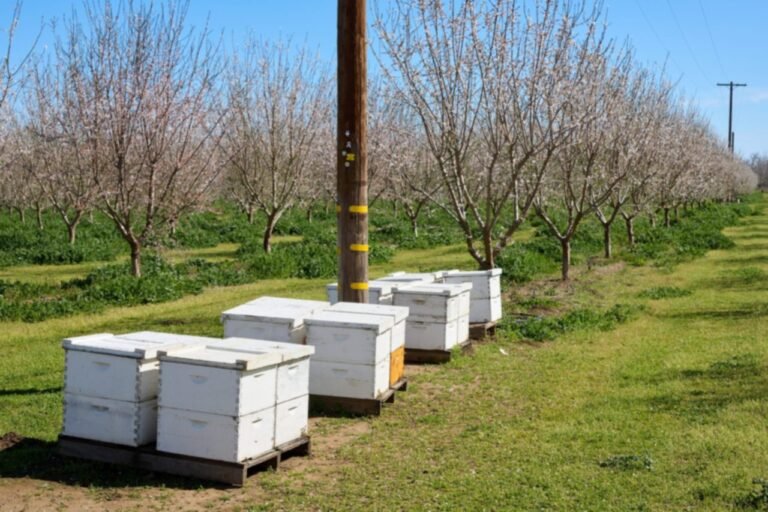
Beyond honey, bees are an agricultural service: commercial pollination contracts move colonies onto almond, blueberry, seed and vegetable crops each season to support plants that depend on insect pollination. This category covers the commercial side of beekeeping: how pollination contracts work, what migratory operations actually involve, and the business realities of running an apiary at a scale beyond hobbyist production.
The articles follow the working year of a pollination outfit. Before a contract, that means grading colony strength by frames of bees rather than by the look of the top box, feeding syrup and pollen substitute so brood rearing starts early enough for a February almond bloom, and settling queen problems before hives are loaded. During the contract, it means placing hives to limit drift between rows, keeping water available in dry orchards, and negotiating pesticide clauses so a grower does not spray during bloom. Afterwards come invoicing and record keeping.
A second cluster of posts treats bees and honey as products: pricing nucleus colonies and queens, deposit policies, packaging live bees for pickup, lot tracking for honey sold direct to consumers, and honey house workflow for small producers. Sideliners weighing a first contract and established operations tightening their systems will both find the templates and checklists useful.
Start here:
How commercial bee pollination services work: who supplies hives, 2025 USDA prices per colony by crop and region, what to check, and which contract terms matter.

Honey isn't what makes beekeeping economically significant. Pollination services are, and the real dollar figures are larger than most expect.

With the increasing demand for organic and natural products, honey production has become a lucrative business. However, like any other product, effective marketing is crucial for its success. In this…

A real breakdown of what honey production costs: startup equipment, ongoing labor, colony replacement, and why true cost per pound is often closer to sale price than beekeepers expect.

Turning honey production into an actual business, rather than a well-loved hobby that happens to sell a few jars a year, involves a distinct set of decisions around scale, cost…