Deciding between a candy board and sugar bricks can mean the difference between a thriving hive and colony loss. SIBA calls a candy board a low-cost insurance policy that supplies honey bees a steady food source when natural stores run low.
The main aim of winter feeding is simple: keep the cluster warm and well-fed until spring. Proper winter management includes choosing the right supplemental feed and placing it where bees can access it without chilling the cluster.
Beekeepers debate methods, but many U.S. apiarists still rely on solid feeds and simple syrup at the right time. Practical setups consider the inner cover, a secure frame or posts, and a vent hole to manage moisture.
Whether you make a cake or use molded blocks, understanding how bees eat their stores helps you pick the best way to protect hives through harsh weather. For a minimalist approach to timing and placement, see this winter feeding guide, or read about moisture control with a moisture board.
Key Takeaways
- Goal: Provide reliable food so the bee cluster survives until spring.
- Placement matters: top placement with proper ventilation reduces chilling risk.
- Simple solutions often work best—timely feeding beats complex methods.
- Monitor stores and bee consumption to choose between solid feed and syrup.
- Manage moisture with a quilt or moisture board and secure the feeding frame.
Understanding Winter Bee Nutrition
When temperatures fall, the hive becomes a compact furnace powered by honey stores.
Honey bees cluster tightly around the queen to hold heat. Worker bees eat stored honey and convert it to metabolic heat. This steady consumption is the colony’s primary defense against freezing nights.
Unpredictable weather can force rapid depletion of stores. A strong colony usually enters winter with enough reserves, but storms or early cold snaps may change that fast.
Supplemental food becomes essential when natural honey runs low. Many beekeepers in the United States use a candy board to add carbohydrates above the cluster. This prevents starvation and keeps the cluster moving until spring foraging begins.
“A steady, accessible carbohydrate source helps the cluster maintain temperature and survive prolonged cold.”
- Bees depend on stored honey to fuel heat production.
- Worker bees consume food to keep the cluster warm.
- Supplemental feeds supply the carbs needed during harsh weather.
Why Candy Board vs Sugar Bricks for Winter Matters
Choosing the right supplemental feed can decide whether a hive survives a hard season.
Candy board and molded sugar blocks offer concentrated energy that keeps the cluster warm when foraging stops. Installation ease and moisture control often guide the choice between an integrated top feeder and a shim-mounted block.
Proper placement helps bees access stores without breaking the tight cluster. A top-mounted board sits directly above the cluster, while sugar blocks can be slipped onto a shim for quick deployment.
“Providing an accessible, stable carbohydrate source reduces starvation risk and supports hive temperature regulation.”
- Survival impact: The right system preserves honey and stops colony loss.
- Access: Keep feed near the cluster so bees do not expose themselves to cold.
- Moisture: Consider ventilation and absorbent layers when choosing a setup.
| Method | Installation | Moisture Control | Best Use |
|---|---|---|---|
| Candy board | Integrated, sits on top | Good with quilt or vent | Stable long-term feed |
| Sugar bricks | Placed on shim or inner cover | Requires careful sealing | Quick supplemental boost |
| Honey reserves | No installation | Natural moisture balance | Primary, preferred food |
The Role of Candy Boards in Hive Health
A purpose-built candy board gives colonies a nearby emergency food source when weather shuts down foraging. This simple device pairs feeding and moisture control in one top-mounted unit. Place it on top of the inner cover so bees can reach stores without breaking the cluster.
Feeding Benefits
Practical winter feeding means the colony has calories close at hand. A 2–3 inch deep frame holds the mixture, and hardware cloth on the bottom supports the block while letting bees eat safely.
Many apiarists treat a candy board as insurance. If honey stores run out, the supplement keeps the colony alive until spring. Proper placement on the top keeps activity centralized and reduces stress on the cluster.
Moisture Absorption
Moisture control is a primary advantage. The sugar mix pulls excess humidity away from the cluster and prevents condensation from dripping down and chilling bees.
“A 5/8 inch hole drilled through the unit lets warm, humid air escape and helps prevent deadly moisture buildup.”
- The candy board functions as an inner cover and feeding surface.
- Hardware cloth keeps the block supported while allowing bees to eat.
- A drilled 5/8″ hole provides essential ventilation and reduces condensation.
Essential Materials for Building Candy Boards
Start by choosing a sturdy frame that matches your hive dimensions; the rest follows easily.
Core supplies include a candy board frame sized to fit your boxes, an insulated inner cover, and parchment or packing paper to line the unit.
Use a frame 2–3 inches deep to hold enough sugar candy to sustain the colony through cold spells. Build the board frame from wood or a similar durable material that matches your hive.
Mixing tools differ by recipe. A pot or pan is needed for cooked recipes, while a large tub or container works for uncooked mixes. Parchment paper keeps the hardened block removable and neat.
| Item | Purpose | Recommendation |
|---|---|---|
| Frame | Holds feed | 2–3 in deep, wood construction |
| Insulated inner cover | Reduces chill | Place under frame to protect cluster |
| Parchment / packing paper | Lines frame | Easy removal of hardened feed |
| Mixing vessel | Prepare feed | Pot for cooked; tub for no-cook |
Tip: Gather these parts before the first cold snap to build reliable boards quickly.
Step by Step Guide to Making Candy Boards
A clear, repeatable procedure makes building a reliable feeding unit quick and safe.
Prepare materials first: a candy board frame sized to your hive, parchment paper, a bottom screen, granulated sugar, and water. Line the frame with paper and cut a small access hole where bees can feed.
Cooked Recipes
Heat sugar and water to 240°F, then remove from heat and cool to 195°F before pouring into the lined frame. Stir in a splash of vinegar as a mold inhibitor if desired.
- Boil to 240°F using a candy thermometer.
- Cool to 195°F, pour into the frame.
- Pack level, cover with parchment, and let harden overnight.
Uncooked Recipes
Mix granulated sugar and water until you reach a cakey, packable consistency. Press the mixture into the frame and allow it to set.
- Mix to a thick paste, add a pinch of vinegar to the water.
- Pack into the candy board frame and smooth the top.
- Let it harden before installing on the hive.
“Line the frame with paper and cut a hole so bees reach the block without breaking the cluster.”
Placement and finishing: set the unit with the screen side down on the inner cover after the block hardens. The hole in the paper gives ventilation and access. Adding a small pollen patty can boost nutrition, but use caution to avoid early brood rearing.
| Method | Key Steps | Time to Harden |
|---|---|---|
| Cooked | Heat to 240°F → cool to 195°F → pour into paper-lined frame | Overnight |
| Uncooked | Mix to cakey texture → pack into frame → smooth top | Overnight |
| Installation | Screen down on inner cover, hole aligned above cluster | Immediate after hardening |
For step diagrams and a complete how-to, see this practical guide on how to make candy board.
Understanding Sugar Bricks as Supplemental Feed
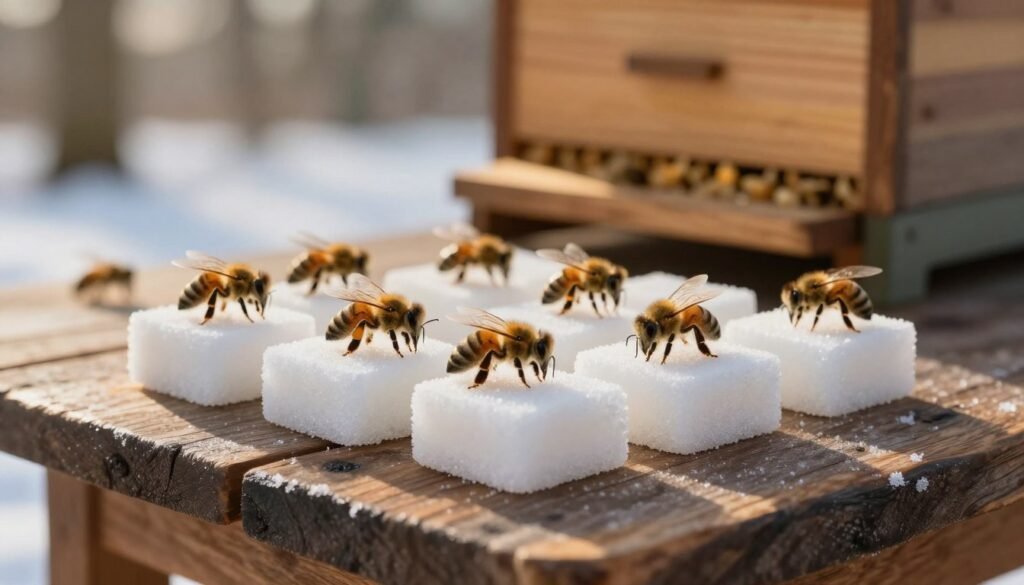
Dense molded blocks are made by mixing granulated sugar with a small amount of water and, sometimes, a splash of vinegar. The mix is packed into molds and left to harden until it becomes a firm block bees can eat.
These blocks are installed on a shallow feeding shim that should be placed in the hive before the cold season arrives. A properly set shim keeps the block just above the cluster so the colony can reach food without breaking tight formation.
Mixing can be done with a hand mixer, a drill-mounted paddle, or a sturdy spoon. Thorough mixing ensures even texture and reliable hardening, which makes handling and installation simple.
Practical benefit: this method supplies concentrated energy when honey runs low. Many beekeepers choose molded blocks as an easy, proven backup to a top-mounted candy board.
“A hard feed block gives colonies a compact, accessible source of calories that helps them ride out long cold stretches.”
| Component | Preparation | Placement | Best Use |
|---|---|---|---|
| Hard feed block | Mix sugar + water, pack into mold, harden | Place on shim above cluster | Emergency energy when honey runs low |
| Feeding shim | Install before cold sets in | Fits between boxes under inner cover | Keeps feed near bees without chill |
| Mixing tools | Drill paddle, mixer, or spoon | Prepare off-hive, pack quickly | Ensures consistent block texture |
Comparing Moisture Control and Ventilation
Warm, humid air from the cluster often meets a cold hive top and creates deadly condensation. That water can drip and chill the cluster, increasing mortality.
Managing Hive Condensation
A candy board serves two roles: it holds emergency feed and pulls moisture up into the packed sugar so droplets do not form above the cluster.
Ventilation matters. A properly placed hole in the top unit lets humid air escape. Do not block that hole; continuous exchange prevents buildup.
“Wet bees lose heat faster and face far greater risk during cold snaps.”
- Absorbs excess moisture that would otherwise drip on the bees.
- Provides a top hole that vents warm, humid air safely out of the hive.
- Keeps the cluster dry while offering concentrated feed near the bees.
| Feature | How it Helps | Best Practice |
|---|---|---|
| Absorption | Packs moisture into the feed mass | Use firm mix and parchment lining |
| Vent hole | Allows humid air to exit | Drill 5/8″ and keep clear |
| Top placement | Keeps feed near cluster without chilling | Set screen down; align hole above cluster |
For detailed strategies on managing damp hives, see our guide on managing hives in wet climates.
The Importance of Pollen Patties in Winter
Choosing a low-protein patty helps sustain hive health without triggering heavy brood production.
Pollen patties supply protein, vitamins, and minerals that support nurse bees and emerging brood. They keep the colony ready for spring while natural pollen is scarce.
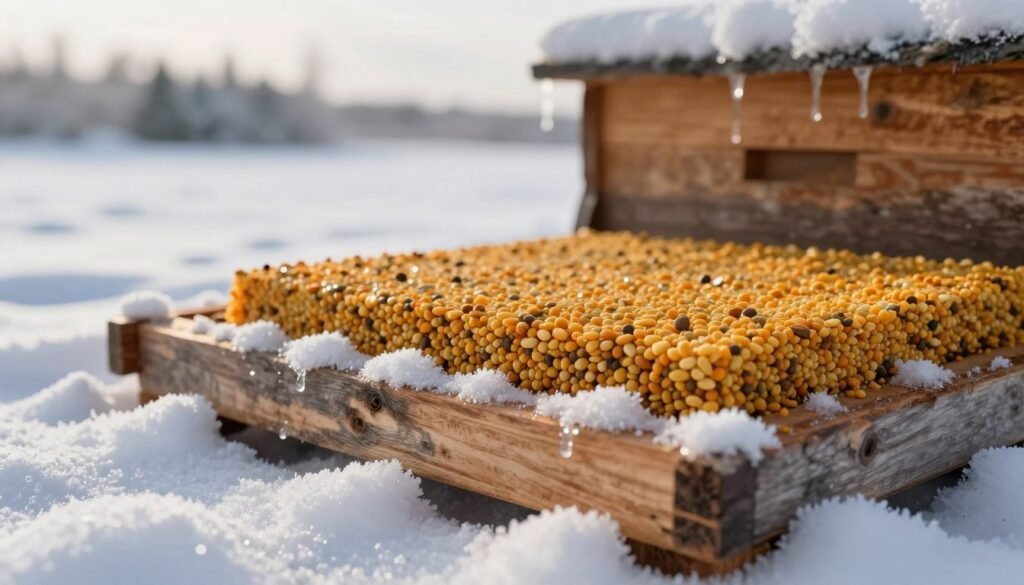
Traditional patties are rich in protein and can stimulate brood rearing. That can backfire if the colony expands during a cold spell.
Use a winter-blend patty with lower protein to avoid excessive brood. This gives nutrition without prompting a costly population boom.
- Benefit: Patties deliver the amino acids honey bees need to maintain health.
- Simple DIY: mix sugar, water, and pollen powder; add a supplement like Honey B Healthy if desired.
- Placement: set the wrapped patty on top of the frames in the hive center so bees access food without breaking the cluster.
Combine patties with light syrup or stored honey to balance carbs and protein. Proper timing and modest portions keep colonies stable until spring.
Best Practices for Installing Winter Feed
Install supplemental feed on calm, warm days so you do not chill the cluster. Aim for late fall—around December 1st in colder regions or December 22nd in milder zones—so stores are available when cold sets in.
Fit matters: replace the inner cover with a proper candy board frame or set the unit on top of the inner cover. Position the frame so the screen side faces downward; this gives bees safe access to the hardened sugar without leaving the cluster.
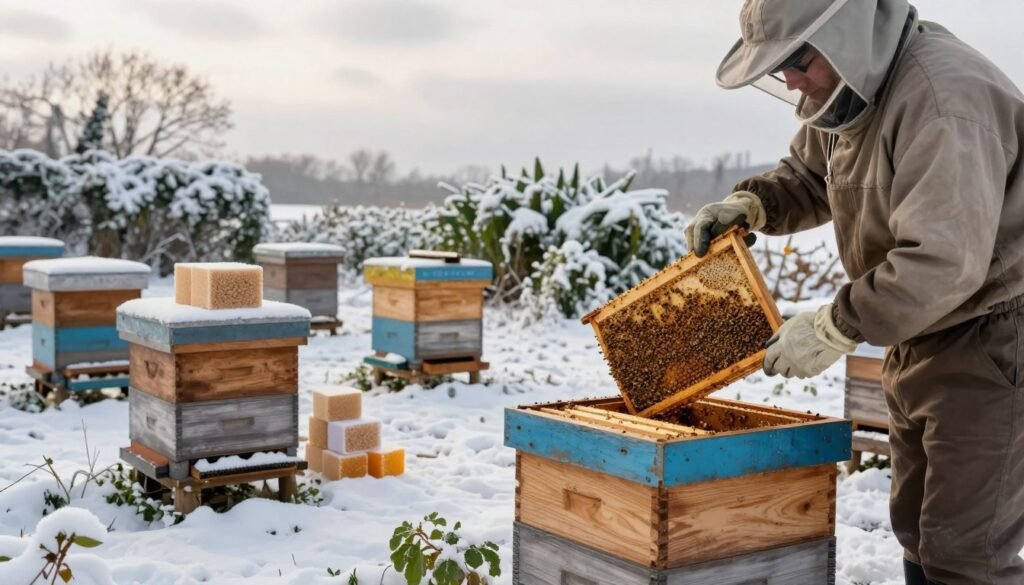
Check hives on warmer afternoons and inspect the feed from outside the top. Replace the block or add a pollen patty when consumption is high. After adjusting, secure the cover tightly to preserve heat and keep pests out.
“Proper installation ensures food is available when bees need it most and reduces winter losses.”
- Install in fall to prepare the colony for cold weather.
- Keep the unit aligned above the cluster and screen side down.
- Monitor on warm days and replace feed as needed.
- Use a frame that fits the hive to maintain internal temperature.
- For a full winterize checklist, see this winterize beehives guide.
Seasonal Timing for Hive Intervention
Timing feed placement to the colony’s cycle can make or break hive survival in cold months.
Prepare in fall so stores are available before the first freeze. Install candy boards in early December to give bees nearby carbohydrates before the coldest stretch.
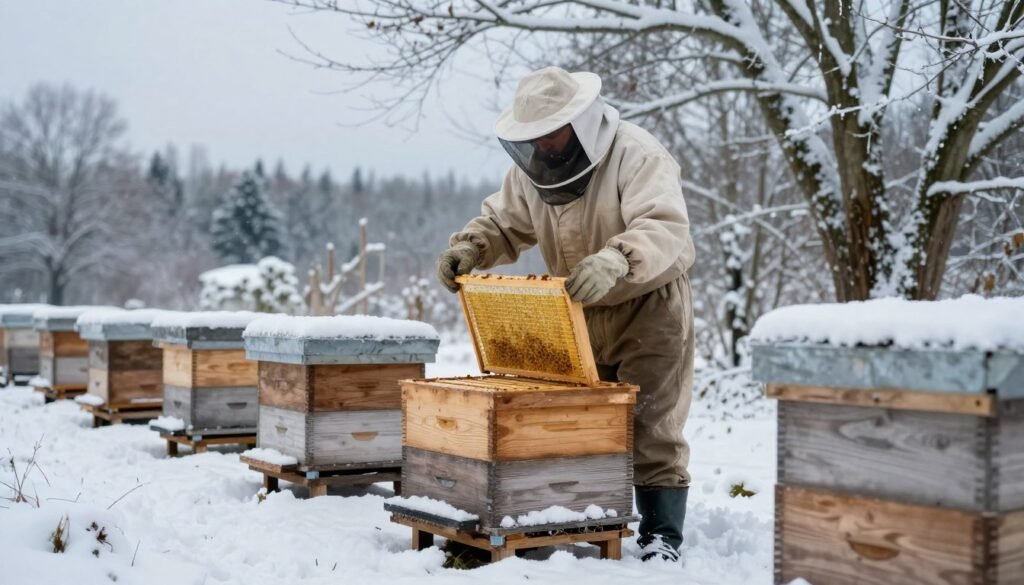
Monitor hives through the year. Watch cluster movement, hive weight, and any early brood signs. These clues tell you the best time to add or replace emergency feed.
Brood rearing begins in late winter and peaks in spring. Nurse bees will need stored honey and pollen then, so keep supplemental feed accessible into late winter.
- Early December: recommended window to install candy boards.
- Fall prep: stage feed and insulation before freezes start.
- Year-round checks: observe activity and adjust supply as needed.
“Understanding the seasonal cycle of the honey bees is key to successful management and survival.”
For more on feeding choices and why some syrups fail, read why bees won’t take sugar syrup.
Troubleshooting Common Winter Feeding Issues
Simple checks on warmer days reveal many common feeding failures.
Mold and runny feed often mean the mix had too much water or ventilation is blocked. Add a small splash of vinegar when you make candy to reduce mold risk and improve shelf life.
If the cluster cannot reach the top stores, starvation can still occur. Always place the unit directly above the cluster so bees can access feed without leaving their heat pocket.
Sometimes bees do not eat the candy because they still have honey or it is too cold for movement. Check on mild afternoons and look at cluster position before assuming a refill is needed.
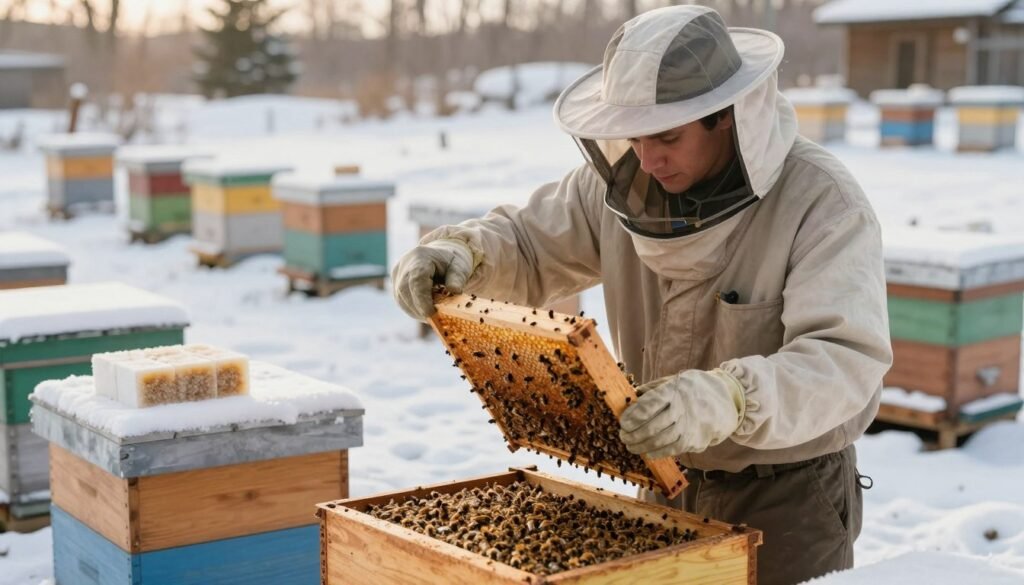
“A cakey, firm mix prevents dripping and keeps moisture away from the bees.”
- Keep the mix cakey, not runny, to avoid drips onto the cluster.
- Use ventilation and a small hole to limit condensation and mold.
- Monitor moisture and check consumption on warm days to confirm bees eat the feed.
| Issue | Probable Cause | Quick Fix |
|---|---|---|
| Mold on feed | Mix too wet / poor vent | Add vinegar, improve ventilation |
| No consumption | Honey stores remain / cold weather | Check cluster on warm day; wait or add small patty |
| Dripping feed | Runny sugar candy | Re-mix to cakey texture; reinstall when firm |
For early detection of low stores and signs of starvation, see this guide on how to detect early hive starvation. For broader inspection tips during cold months, read feeding bees in winter and early.
Conclusion
Choosing the right supplemental feed and managing moisture keeps colonies strong until spring.
Both a simple top feeder and molded blocks give bees concentrated energy when natural stores run low. Proper placement keeps the cluster warm and reduces risky movement.
Moisture control and ventilation matter as much as the recipe. A vent hole and absorbent layer stop condensation and help bees stay dry and healthy.
Follow the step-by-step guides, check hives on mild afternoons, and replace supplies when consumption rises. Small, timely actions greatly increase hive survival.
With good prep and steady monitoring, you can protect your colonies and help them thrive into spring.
FAQ
What is the difference between a candy board and sugar bricks for winter feeding?
A candy board is a shallow feeding frame or flat that holds a soft fondant or concentrated syrup alternative placed above the cluster. Sugar bricks are hard, solid blocks made from granulated sugar and water that bees can nibble. Candy-style feeding typically rests on the inner cover and can sit directly over frames, while bricks often fit inside a feeder or on top bars. Both supply carbohydrates, but they differ in moisture content, placement, and how quickly bees can access the food.
When should I install supplemental feed in the hive?
Install supplemental food in late fall before temperatures drop and the cluster tightens, or any time stores run low as winter approaches. Timing depends on local nectar flows and hive weight; many beekeepers add feed after honey supers are removed and before prolonged cold sets in. Check hive weight and frames in late autumn and provide food while temperatures allow bees to move and consume it.
How do candy-style feeds affect moisture and condensation in the hive?
Soft fondants and cooked syrups have low free water compared to liquid syrup, so they reduce internal moisture migration. Properly designed feeding systems often incorporate an absorbent layer or ventilation gap to limit condensation above the cluster. Good insulation and an inner cover with ventilation can further manage moisture and keep the cluster dry through thaw cycles.
Are cooked and uncooked recipes safe for honey bees?
Yes, both cooked fondant (heated to dissolve sugar then cooled to a paste) and uncooked pressed sugar mixes can be safe if made with pure granulated sugar and minimal additives. Avoid corn syrup, honey from unknown sources, or ingredients that ferment. Always prepare clean, sanitary feeders and use food-grade containers to prevent mold and contamination.
Can I use honey frames instead of prepared feeds?
If you have surplus honey frames free of brood and disease, they make excellent winter stores because bees prefer honey and it contains minor nutrients. However, regulations and personal spring needs may affect whether you keep surplus honey in the hive. Frames must be well-capped, secure, and positioned so the bees can reach them without excessive cluster movement.
How do pollen patties fit into winter feeding strategies?
Pollen patties supply protein and help maintain nurse bee health, especially for early spring brood rearing. In fall and late winter, small, well-timed patties support colony strength without stimulating excessive brood during deep cold. Place patties near the cluster or on top of frames where bees can access them without breaking cluster cohesion.
Will sugar blocks attract pests or robbing behavior?
Exposed sweet feeds can attract robbers, mice, and wax moths if not protected. Use internal feeders, well-sealed feeders, or place blocks under an inner cover to limit access. Maintain strong entrances and monitor hive activity; reduce exposure times and remove leftover feed promptly when temperatures warm to minimize pest issues.
How do I position a candy-style feed relative to the cluster?
Place the feed directly above the cluster or as close as possible so bees can move upward within the hive to reach it. If you use a candy board on top of frames, ensure a small gap or hole is aligned over the cluster. For multi-box hives, check cluster location and shift boxes if needed so the bees can access the stored food without long transit in cold weather.
What materials are best for building a fondant tray or frame-style feeder?
Use food-safe materials like untreated pine, plywood, or plastic designed for beekeeping. Avoid treated lumber, particleboard that can delaminate, or materials that leach chemicals. Include small posts or spacers to create a shallow cavity, and cover with a paper barrier or mesh if you want to limit direct contact while allowing bees to access the feed.
How do I prevent moisture buildup when using top feeders?
Provide ventilation via screened inner covers, small top entrance holes, or moisture-absorbing materials like corrugated paper placed above the cluster. Keep an air gap between the feed and outer cover to encourage airflow. Regularly check for frost or condensation and replace wet absorbers to maintain a dry environment that protects brood and cluster health.
Can bees survive on pressed sugar blocks alone through winter?
Bees can survive on pressed sugar mixes if supplies are adequate and the cluster remains healthy, but pressed sugar lacks trace nutrients found in natural honey. Supplement with pollen patties and ensure disease-free conditions. Monitor colony weight and consider leaving some natural honey stores when possible to improve overwinter success.
Is making fondant at home better than buying commercial products?
Home-made fondant gives control over ingredients, texture, and cost, but requires careful preparation to avoid graininess or microbial growth. Commercial products from reputable brands like Mann Lake or Betterbee offer convenience and consistent quality. Choose based on your experience, availability, and the colony’s specific needs.
How much supplemental feed should a typical hive need for winter?
Requirements vary by local climate and hive size; many medium hives need the equivalent of 60–90 pounds of stores to overwinter in cold regions. Use hive weight checks, frame inspection, and local beekeeper guidance to estimate. Provide enough feed to span cold months plus a safety margin for late-winter dearths.
What are common problems when providing winter feed and how do I troubleshoot them?
Common issues include feeders freezing, fermentation, pest attraction, and bees failing to find the food. Troubleshoot by selecting appropriate feed types (low moisture), insulating or insulating-top feeders, protecting feeds from robbers, and locating feed directly above the cluster. Regular winter checks on mild days help identify and correct problems early.