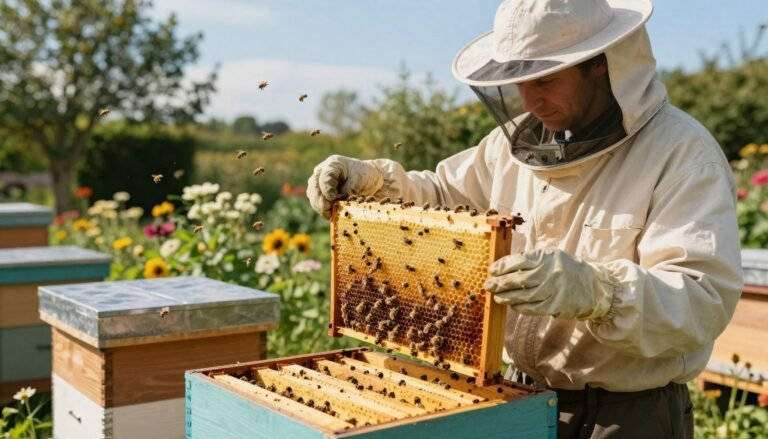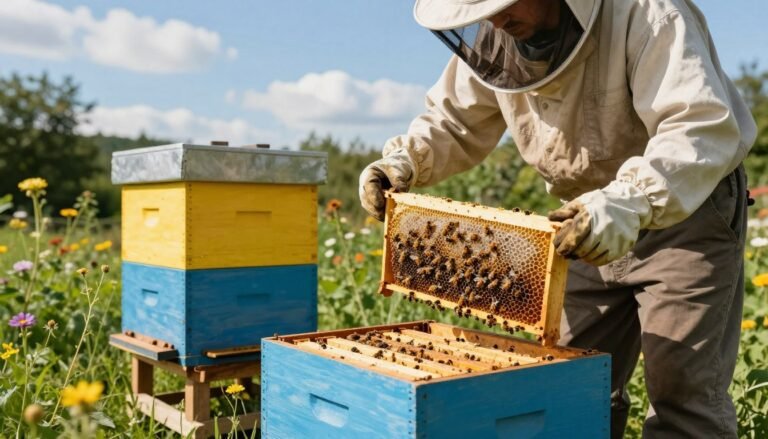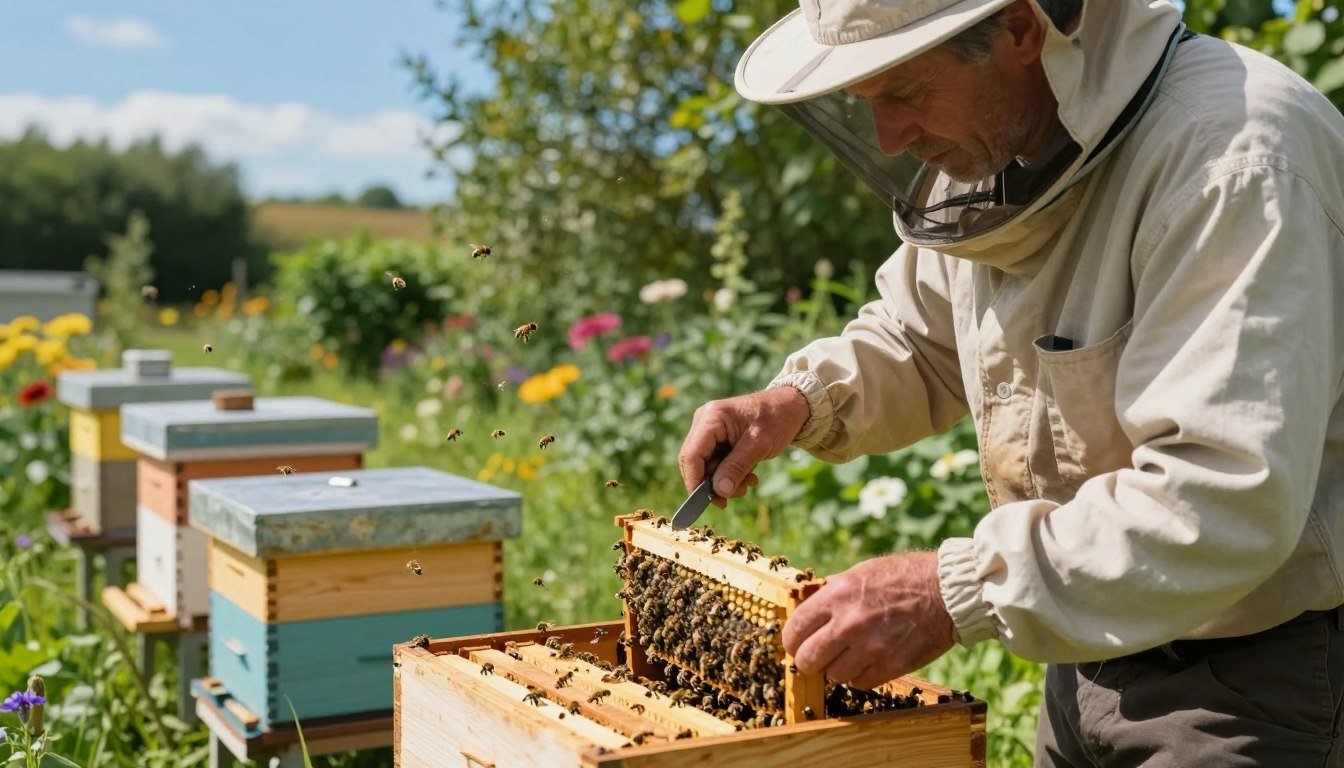
Many beekeepers wonder whether merging weak nucleus colonies is the best path forward. When a hive has too few adult bees to cover both sides of three or more frames, the Foxhound Bee Company classifies it as weak. This condition often prompts a decision about merging to protect the queen and brood.
Combining two nucs may be the most effective way to save a failing colony in active season. Proper planning helps ensure a smooth integration so bees accept the queen and reduce fighting.
This short page outlines the right steps, timing, and precautions. Follow expert methods such as the newspaper technique and careful frame placement. For detailed step‑by‑step guidance, visit this helpful combining colonies resource.
Key Takeaways
- Identify a weak hive by its inability to cover three frames.
- Merge a weak nucleus with a stronger colony to boost survival.
- Use gradual methods like newspaper to reduce fighting.
- Protect the queen and distribute brood and frames evenly.
- Monitor post‑merge and provide supplemental feeding if needed.
Understanding the Need to Combine Weak Colonies
A strategic merge protects the queen and preserves brood when adult bee numbers fall short. According to the Foxhound Bee Company, a weak hive lacks enough adult bees to cover both sides of three or more frames. That shortfall threatens brood survival and the colony’s ability to thermoregulate during winter.
Beekeepers face a choice when a nucleus shows decline: invest time to revive the nucleus or consolidate it into a stronger hive. Acting quickly stops total loss of the bees and reduces stress on the remaining workers.
Consolidation also helps the queen receive enough attendants to maintain egg laying and care for brood. Merging failing colonies limits exposure to pests such as wax moths and small hive beetles that prey on weak combs.
- Quick action: Join a failing nucleus with a stronger colony to protect brood.
- Winter risk: Small colonies often lack heat to keep brood viable.
- Hive health: Consolidation reduces pest and disease vulnerability.
For practical community insights and hands‑on advice, see this forum thread on merging weak colonies.
Can You Combine Two Small Nucs Safely
When two failing nucleus colonies show low adult counts, consolidation often gives the best chance to save brood.
Proper merging strengthens the queen’s workforce and reduces pest threats to comb. A timely union also saves the beekeeper time and reduces the number of boxes to manage during late season.
Benefits of Consolidation
- Stronger colony: More bees to cover frames and care for brood.
- Pest reduction: Less risk of wax moth and small hive beetle damage to comb.
- Efficient management: Fewer boxes to feed and inspect in spring.
- Calmer integration: The newspaper method gives space and days for scent adjustment.
Risks of Leaving Colonies Weak
- Weak hives often lack heat for winter and may lose brood viability.
- Low worker numbers increase disease and predator damage.
- Extended recovery takes weeks and may fail by spring.
“Using a newspaper barrier is a proven way to prevent fighting while the bees adjust to a new queen scent.”
| Option | Short-term Outcome | Seasonal Risk |
|---|---|---|
| Consolidate with newspaper | Faster stabilization; fewer inspections | Lower pest and winter loss |
| Leave separate weak nuc | High monitoring time; slow growth | Greater comb and brood loss |
| Add frames to each | Temporary boost in space | Insufficient if worker count stays low |
| Merge later in season | More stress on queens and bees | Higher chance of failure by spring |
Assessing Your Hive Strength and Queen Status
A clear assessment of hive strength and the queen’s status guides any merging plan. Start with a quick glance: count frames covered by bees. A weak hive that shows fewer than three frames of adult bees may need immediate action to protect brood and stores.
Identifying queenless colonies requires inspecting brood frames for eggs, larvae, or a laying pattern. Absence of fresh eggs after several days is a strong sign the colony lacks a laying queen.
Practical checks
- Look for eggs or young larvae on brood frames to confirm a laying queen.
- If queenless, introduce a new queen by merging with a queen-right nucleus to avoid brood loss.
- Place the active hive queen on a central brood frame, with a frame on each side to shield her from foreign workers.
- Consolidate the best brood and honey frames to build a stronger colony primed for spring.
“Protect brood by ensuring the queen has attendants and sufficient frames of bees on either side.”
For guidance on inspecting purchased nucleus stock before merging, see this helpful resource: inspect purchased nucs.
Preparing Your Colonies for Integration
Prepare each hive methodically to give the merged colony the best chance at winter survival.

Start by gathering the strongest frames of brood, pollen, and honey into a single brood box for each nucleus. Move only healthy brood frames and the best stores. This gives the queen attendants and a clear brood nest.
Condense any weak nuc down to one box so bees have enough space to cluster. If using 10-frame equipment, select the best 20 frames from both hives to form a robust start.
Use light syrup drips over comb to keep workers busy cleaning and focused on the merge. Position honey above the brood nest so foragers and nurse bees access food quickly.
- Select brood frames that show solid larval patterns to support the queen’s laying.
- Keep frames with nectar and pollen near the brood box for immediate use.
- Limit extra empty frames to reduce lost space and winter stress.
| Action | Goal | Result |
|---|---|---|
| Consolidate best frames | Strong brood nest | Faster recovery of colony |
| Reduce to one box | Save clustering space | Lower winter loss risk |
| Drip light syrup | Busy workers | Improved acceptance of queen |
For practical gear advice and transport options, review a best nuc box guide and Foxhound Bee Company’s notes on how to combine beehives.
Executing the Newspaper Method
Begin the newspaper method by arranging a sheet or two of paper over the strong brood box. This creates a slow, controlled link between the top and bottom boxes. The barrier gives scent time to blend so the queen and workers reach acceptance.
Layering the paper
Use one or two sheets depending on hive size and temperament. Gerald_Nickel recommends a couple of sheets, noting they usually take about 3 to 5 days to chew through.
Dawn_SD prefers two layers for calmer integration. Michael_Bush finds one sheet often suffices; add small slits to help workers start the breach.
Creating ventilation
Always provide airflow above the top box. Trapping many bees under paper can cause heat buildup. Cut a small slit or leave a notch at the edge of the upper entrance to improve ventilation.
Monitor the hive during warm afternoons. If the top box feels hot, open the notch wider or add a screened escape to keep brood safe.
Timing the process
Expect the paper to be chewed through in about 3–5 days. This period forces contact and scent mixing, which helps the workers accept the new queen.
After the breach, inspect the merged frames for calm behavior and shared brood tending. If aggression persists after a week, separate and reassess.
“By trapping the bees from the top colony, they chew through the paper and adjust to the new queen’s scent.”
| Step | Goal | Expected Time |
|---|---|---|
| Place 1–2 sheets of newspaper | Slow scent blending | 3–5 days |
| Provide ventilation notch | Prevent overheating | Immediate |
| Inspect after breach | Confirm acceptance | 1 week |
For more hands‑on tips about uniting colonies, see this practical guide on how to unite two colonies.
Managing Forager Drift and Hive Placement
Managing hive placement and forager orientation prevents lost workers after a merge. Forager drift occurs when foragers from the top nuc try to return to their old site. That movement can thin the new colony and stress the queen and brood.
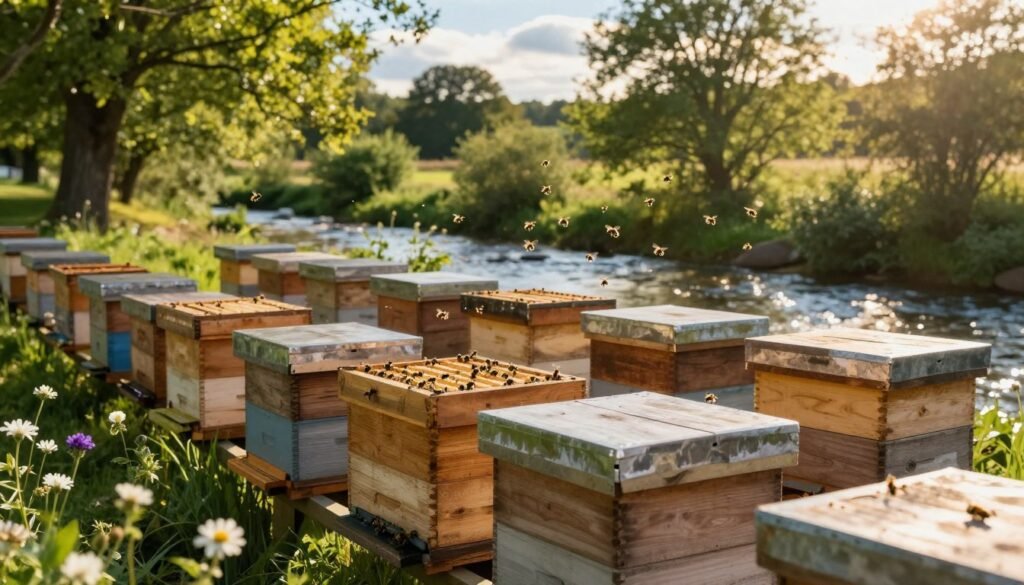
Practical steps reduce confusion. Perform the move near sunset or after dark to limit flights. Place a movable object where the weak hive stood so departing bees pause at the old location.
- Move the weaker hive onto the stronger hive’s stand when feasible — Kirsten_Redlich succeeded with a 5‑meter shift.
- Dump a couple of straggler bees in front of the new entrance to help them reorient.
- Keep the top box entrance aligned with the new hive opening so returning bees learn the new site.
“Moving the weaker box to the stronger colony’s location stopped most foragers from drifting back.”
| Action | Why it helps | Timing |
|---|---|---|
| Move weak hive to strong site | Reduces return flights to old site | At dusk or night |
| Place a marker at old site | Distracts departing foragers | Before transport |
| Release a couple of bees at new entrance | Promotes re‑orientation | Immediately after setup |
| Align top box entrance | Helps bees adopt the new hive entrance | During placement |
Tip: Keep syrup feeds nearby for a few weeks to focus workers on feeding rather than orientation flights. For extended reading on related management methods, review a guide to spring beekeeping walkaway split and advice on buying packaged bees and nucs.
Monitoring Progress After the Merge
After a merge, careful checks over the next week reveal whether the new queen and workers have blended into a single colony.
Initial signs are simple and easy to spot. Check the front for pieces of chewed newspaper. Loose paper at the entrance means the newspaper method worked and scents are mixing.
Wait a few days before opening the brood box. Semaphore reported that, after joining two tiny nucs, the bees accepted the new queen and laying started within several days.
Look for a healthy brood pattern across frames and calm activity. Dead bees at the entrance may appear; a couple is normal after a merge but many dead workers signal trouble.
- Watch the entrance: chewed paper and steady traffic are good.
- Inspect the brood box: clear larval pattern shows the queen is laying.
- Check stores: adequate honey and nectar are vital for winter.
“Acceptance often shows in days rather than hours; patience avoids needless disruption.”
| Indicator | Good Sign | Action |
|---|---|---|
| Chewed newspaper | Scent blending | Wait 3–7 days |
| Brood pattern | Solid eggs and larvae | Routine inspections after a week |
| Entrance casualties | Few dead bees | Monitor; intervene if numbers rise |
| Stores | Honey and nectar present | Add syrup only if low |
Conclusion
Final guidance focuses on protecting brood, securing the queen, and strengthening the merged colony.
Combining weak units is a reliable way to give struggling bee stock the best chance through winter and into spring. Prepare the best frames and stores, place the top box over the stronger brood, and use the newspaper method to reduce conflict.
Allow several days for the paper to be chewed through and monitor calm behavior at the entrance. Check for a solid brood pattern, steady traffic, and adequate honey or syrup before consolidating down to one box.
For practical details on staged merges and scent blending, read the upstairs‑downstairs method. For checks on queen status and resource balance during seasonal work, follow these seasonal beekeeping checks.
Patience and careful inspection will help this colony grow into a productive hive ready for spring.