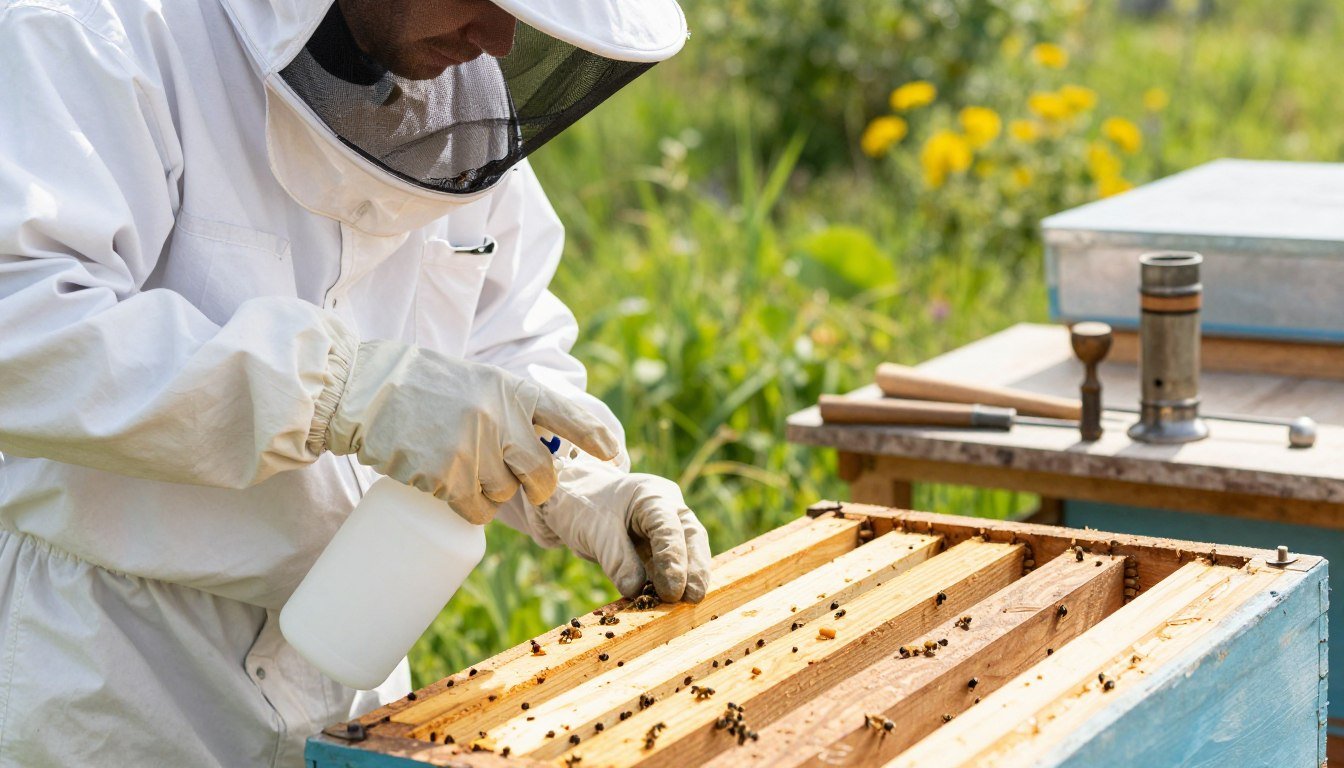
Bleach Solution: Disinfect Your Beekeeping Equipment

Get step-by-step instructions on how to use a bleach solution for beekeeping equipment to keep your beehives clean and disease-free.

Honey production and colony health depend on recognizing disease and taking swift action. The National Bee Unit notes that colonies face threats from microsporidia, fungi, viruses, and bacteria. American foulbrood (AFB) spores resist many cleaners and can linger in the environment for decades.

Disinfecting hive components that have had contact with infection is a primary step to stop outbreaks. Proper use of a dilute bleach solution helps make boxes, frames, and other surfaces safe for bees to inhabit during the season.

Pre-cleaning debris, following immersion and drying guidance, and using proven protocols reduce the chance that pathogens spread through social hives. For detailed cleaning steps, see the National Bee Unit fact sheet and a practical guide to resources and books on hive care.

Key Takeaways

  • AFB spores can survive long periods; prompt action matters.
  • Sanitize items that had contact with disease to protect honey and brood.
  • Pre-clean, soak appropriately, then rinse and dry in sunlight.
  • Follow official guidance from the National Bee Unit.
  • Consult practical beekeeping resources for step-by-step protocols.

The Importance of Maintaining Clean Beekeeping Equipment

Routine care of hive components is a frontline defense against colony illness. The National Bee Unit advises that you clean and disinfect beekeeping equipment when you bring gear in from the field or before you reuse it.

Disinfecting items before moving them between colonies prevents cross-contamination and lowers the risk of spreading infection. Before you accept or use second-hand frames or boxes, make sure they are fully decontaminated to protect your apiary.

Clean gear supports healthy bees and better honey yields. Regular maintenance extends the life of your tools and hives, saving money and cutting downtime during the season.

After an outbreak, thorough decontamination is essential to stop the cycle of disease. Keeping surfaces clear of wax build-up and debris also makes pest control easier—wax moths and small hive beetles thrive in neglected boxes.

Preparing Your Gear for the Bleach Solution for Beekeeping Equipment

First, take apart the hive so you can remove old comb, propolis, and buildup. Doing this lets any later disinfectant reach hidden crevices and reduces the chance that organic matter shields spores or pests.
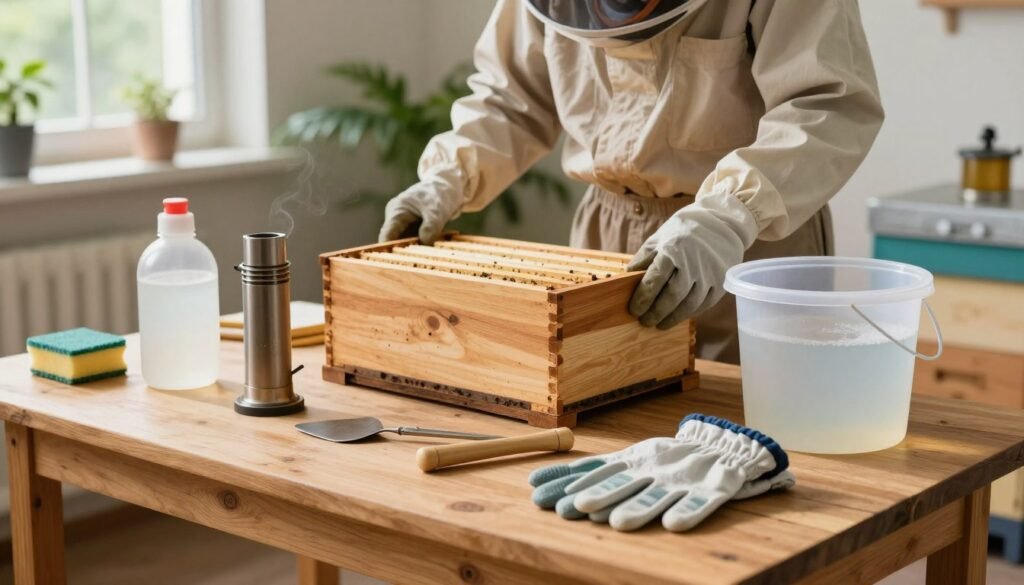
A well-organized workspace for beekeeping equipment preparation is depicted. In the foreground, a clean wooden table displays an array of beekeeping tools: a hive tool, smoker, and protective gloves arranged neatly. A bucket containing a diluted bleach solution sits on one side, with a small sponge nearby. In the middle, a beekeeper, wearing a professional light-colored outfit and protective gloves, is carefully inspecting a wooden beehive. The background features soft natural light filtering through a nearby window, casting gentle shadows. Green plants subtly enhance the atmosphere, creating a fresh and clean vibe, emphasizing the importance of equipment maintenance and sanitation in beekeeping. The overall mood conveys focus and professionalism, essential for proper beekeeping practices.

Scraping Organic Debris

Place parts on cardboard inside an upturned roof to catch falling debris. Use a paint scraper or hive tool to clear wax and propolis from corners and frame runners.

For frames, cut out old comb with a knife. Use a flathead screwdriver to clean the bottom groove and a pick to clear pin holes in side bars. Collect bits of wax and propolis on the cardboard and burn them when finished.

Freezing Components

Dismantle the hive and place all parts into a chest freezer at −20°C for at least 48 hours to kill wax moth larvae and other pests.

Plastic feeders and frame ends can be scrubbed, though open-ended correx sheets are hard to clean inside. Proper prep ensures any disinfectant reaches every surface.

For additional care and tool guidance, see a thorough guide to cleaning and maintenance and tips on choosing quality beekeeping gear.

Step by Step Guide to Disinfecting with Bleach

Begin each cleaning task with safety gear, accurate dilution, and a plan for drying. Work outdoors or in a well-ventilated area. Wear gloves, eye protection, and long sleeves before handling any harsh chemicals or soiled parts.

Mixing the Correct Concentration

Household bleach contains 3–5% sodium hypochlorite and must be diluted to reach 0.5% sodium hypochlorite. Use cool water when mixing; heat breaks down active chlorine.

Tip: Measure carefully. Too strong damages wood and comb; too weak may not kill spores.

Immersion and Contact Time

Research shows a 20-minute immersion at 0.5% kills AFB spores and common bacteria. For larger boxes, soak each wall about 30 minutes in a tray.

Use lids or weights to keep wooden parts from floating. Never mix household products—hazardous gases can form.

Rinsing and Drying

After soaking, rinse parts with copious hot water. Leave frames, boxes, and tools to air dry in direct sunlight; UV and heat help break down pathogens and speed drying.

For full protocols and sterilization guidance, see the extension guide on cleaning and sterilizing. For rescue techniques and handling advice, consult practical tips at bee rescue techniques.

Alternative Sanitization Methods for Apiary Tools

When chemical methods are unsuitable, targeted heat and hot alkaline washing help reclaim wooden hive parts.
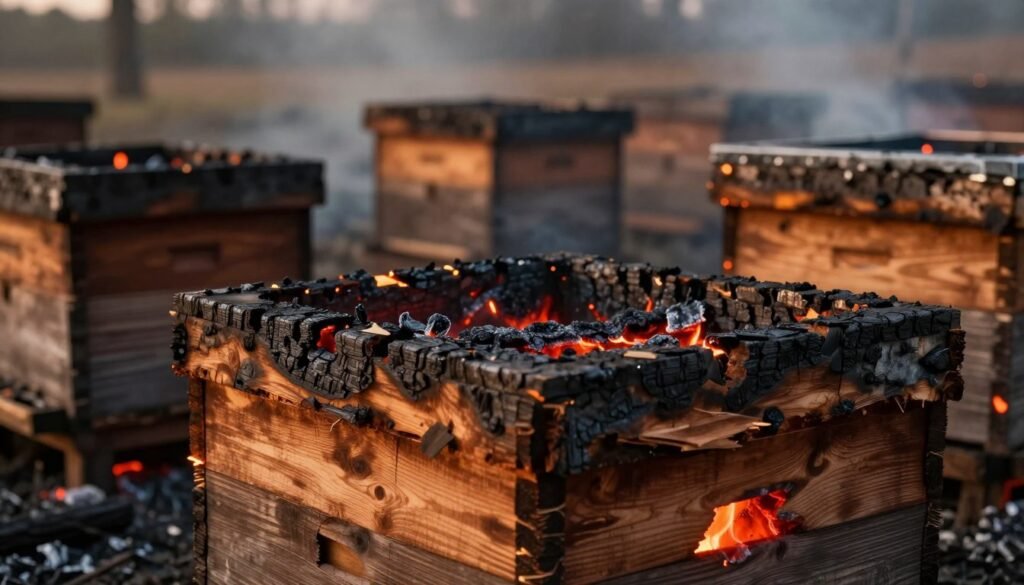
A close-up view of scorched wooden hive boxes, reflecting the aftermath of an intense fire. The foreground features a charred, visibly damaged hive box with splintered wood and glowing embers, illustrating the impact of heat. In the middle ground, other hive boxes appear slightly singed, hinting at the surrounding devastation. The background displays a blurred, smoky landscape, adding depth and context to the scene. Warm, dramatic lighting accentuates the contrast between the rich brown of the charred wood and the bright orange-red glow of the embers, evoking a sense of urgency and caution. The composition is shot from a low angle, emphasizing the height and severity of the damage while creating a somber atmosphere. No text or people are included.

Scorching wooden boxes is effective only on timber. Do not attempt this on plastic or polystyrene hives; they can melt or catch fire. Light a blow torch and scorch the timber until it darkens to a uniform coffee-brown tone so propolis softens and boils away.

Keep a bucket of water nearby in case smoldering starts. Wear eye protection, gloves, and flame-resistant clothing during the process.

A hot wash using soda crystals works well on frames and metal parts. Mix 1 kg of soda crystals in 4.5 litres of hot water and add a dash of washing-up liquid to lift wax and propolis.

For deeper sanitizing, heat the soda mix in a steam boiler above 80°C and wash frames and hive tools. If foulbrood affected a colony, destroy zinc queen excluders by burning rather than attempting to clean them.

  • Scorch only wood; avoid plastic hives.
  • Soda crystals (1 kg : 4.5 L) plus washing-up liquid remove stubborn wax.
  • Heat the wash above 80°C for better sanitation.
  • Always use PPE and keep water on hand while scorching.

For guidance on how to clean a hive tool, see clean a hive tool. For repair tips on wooden boxes after scorching, consult this short guide to repair damaged hive boxes.

Conclusion

Keep hive parts clean and dry to stop disease and protect colony health.

Regular scraping, washing, and sun-drying extend the life of frames, boxes, and tools while reducing bacteria and pathogens that harm brood and honey production.

Always wear protective gear when handling bleach or a hot wash. Store clean gear in a dry, well-ventilated area to prevent moisture and pest build-up.

If you suspect a serious infection, contact the National Bee Unit and review AFB handling guidance at AFB handling guidance. Investing time in these steps keeps hives productive and your honey harvest strong.
FAQ

What concentration of household bleach and water should I use to disinfect hive boxes and frames?

Use a diluted mix of household sodium hypochlorite with water at about 1:9 (10%) for routine disinfection and 1:4 (20%) for heavy contamination. Always follow label directions on the bleach bottle and wear gloves and eye protection. Test a small area first on painted or plastic parts; higher concentrations can damage wood and strip finishes.

How long should tools, frames, and hive parts stay in contact with the chlorine mix?

Immersion time depends on contamination level. For general cleaning, 10–15 minutes of contact is usually effective. For visible disease or persistent pests, extend contact to 30 minutes. Allow items to air for a short period before rinsing to ensure the disinfectant works, but avoid prolonged soaking of untreated wood to prevent swelling.

Can I use this method on wax, comb, or brood frames that contain honey?

Do not submerge comb or brood frames with honey or viable wax in a chlorine-based mix. Chlorine can strip wax and contaminate honey. Instead, remove salvageable wax, melt and render off comb safely, or use heat-based treatments and freezing for comb disinfection when appropriate.

Is rinsing necessary after disinfecting, and how should I dry parts?

Yes—thoroughly rinse all washed parts with clean water to remove residual sodium hypochlorite. Dry in direct sunlight when possible; UV exposure helps reduce pathogens. Ensure wooden boxes and frames are completely dry before returning bees to prevent mold and discourage hive pests.

Can I use bleach mix on plastic feeders, supers, and gloves?

Many plastics tolerate diluted chlorine if rinsed promptly, but some can degrade or discolor. Use the milder concentration, limit soak time, and rinse well. Replace heavily worn plastic items and consult manufacturer guidance for specific materials like PVC or polyethylene.

How do I prepare equipment before applying a disinfectant mix?

Start by scraping off wax, propolis, and debris with a hive tool. For comb or frames, freeze for 48–72 hours to kill wax moth larvae and small pests. Remove stubborn residues, then proceed to mix and apply the disinfectant to clean surfaces for best efficacy.

Are there alternatives to chlorine-based cleaners for apiary use?

Yes—steam, scorching or flame for wooden boxes, baking soda scrubs, 3% hydrogen peroxide rinses, and commercial veterinary disinfectants are common alternatives. Many beekeepers use scorching to sterilize wood and hot water or steam to clean metal tools and some plastic parts.

Will repeated use of chlorine damage my wooden hives or frames?

Frequent or high-concentration exposure can dry and weaken wood, strip paint, and remove preservatives. Limit full immersion of untreated wood, patch paint or seal damaged surfaces, and alternate with gentler methods like hot water, scorching, or UV exposure when possible.

Can this disinfectant prevent spread of bacterial and fungal pathogens between apiary sites?

Properly mixed and applied, chlorine solutions reduce many common pathogens and help prevent cross-contamination. Combine cleaning with good apiary practices: isolate sick hives, avoid sharing contaminated tools, and disinfect supers and harvest equipment between sites to lower infection risk.

How should I handle and store household hypochlorite safely for apiary use?

Store sealed containers in a cool, dark place away from sunlight and heat to preserve strength. Keep out of reach of children and pets. Mix only the amount you need, prepare fresh batches regularly, and never combine bleach with ammonia or acidic cleaners; that creates toxic gases.

What personal protective equipment (PPE) should I use when working with chlorine disinfectants?

Wear chemical-resistant gloves, safety goggles, and a mask if splashing or working in confined spaces. Use long sleeves and boots when immersing parts. Rinse skin promptly if contact occurs and ventilate the work area to avoid inhaling fumes.

If I find propolis and heavy buildup, should I boil, freeze, or chemically treat those parts?

Start with mechanical scraping to remove propolis, then consider freezing frames to kill pests. For non-wood items, brief hot water or chemical disinfection works. Avoid boiling wood—it can warp—and reserve chemical treatments for items that tolerate them, followed by a good rinse and drying.

How do I clean hive tools and metal parts most effectively?

Scrape off debris, soak briefly in the diluted chlorine mix or hot soapy water, scrub with a brush, then rinse and dry. Metal holds up well to chlorine if dried immediately to prevent rust. Apply a light coating of mineral oil to steel tools to protect against corrosion.

Will contact time vary for viruses, bacteria, and fungi commonly found in hives?

Yes—bacteria and many fungi respond quickly to proper disinfectant contact, while some viruses and spore-forming bacteria may require longer exposure or alternative treatments. For suspected American foulbrood or other serious diseases, consult your state apiary inspector for recommended actions and legal disposal options.
Share on Social Media