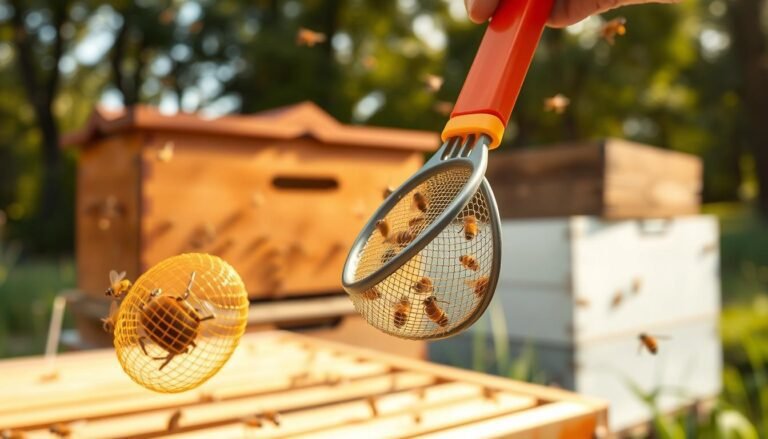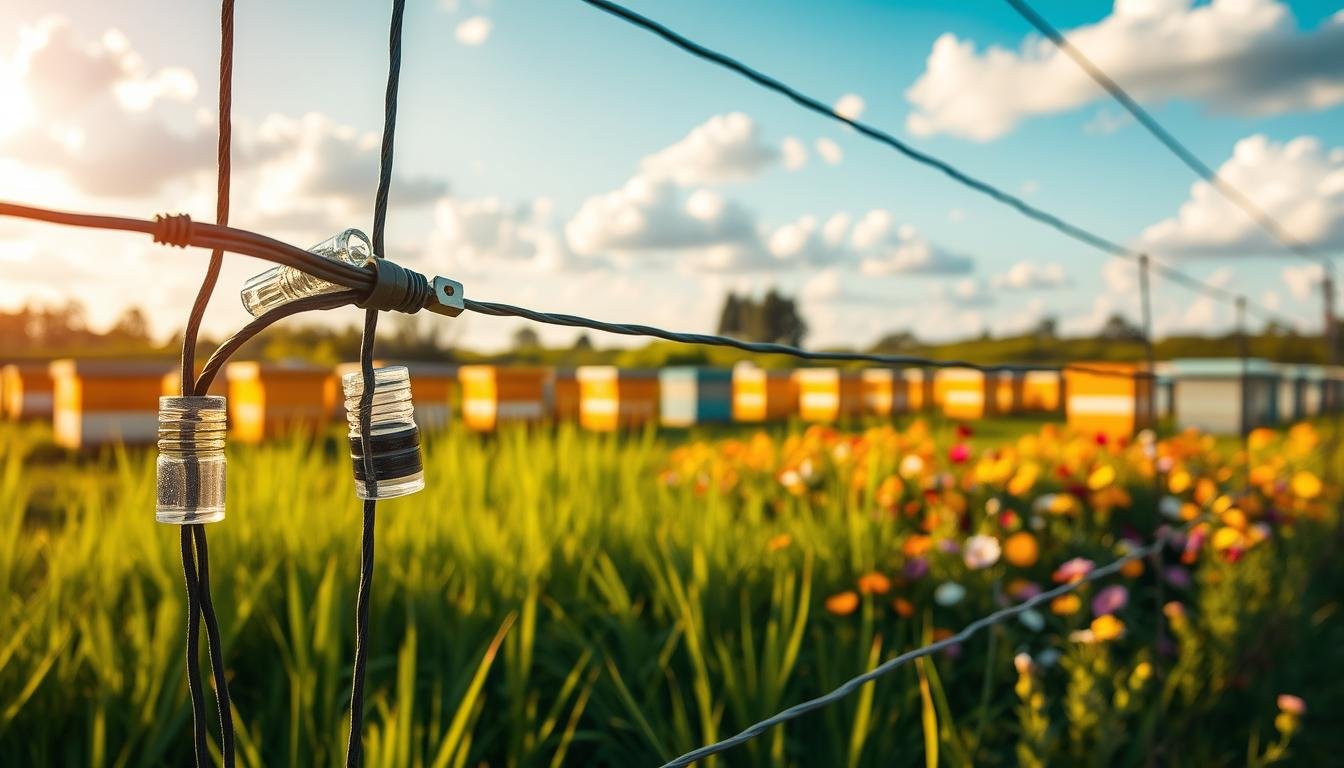
Protecting your apiary starts with a simple, reliable barrier. A well-installed system keeps wildlife and livestock away without harming bees. It creates a non-lethal deterrent that trains animals to avoid your property.
Quick installation and low maintenance make this option appealing to busy beekeepers in the United States. Choose a setup sized to your yard and plan for seasonal power needs. For guidance on materials and sizing, see this bear fencing equipment guide.
Securing hives preserves pollinators and keeps your colonies productive. Start protection before predators discover your apiary; preemptive measures work best. For placement tips near homes and property lines, review recommendations at how far to place hives from a.
Key Takeaways
- Install a deterrent early: set up protection before animals become a problem.
- Non-lethal protection: a mild shock trains wildlife without harming bees.
- Size matters: pick equipment that fits your yard and allows expansion.
- Maintain regularly: check chargers, clear vegetation, and test lines.
- Combine defenses: visual screens and placement help reduce conflict.
Why You Need the Best Electric Fence for Beehives
When bears start hunting by scent, simple barriers no longer protect hives. Black bear activity in Connecticut has climbed, and that change makes proactive protection essential.
Bears have a smell far keener than dogs, so they can find food sources quickly. Once a bear discovers honey, it often returns. That means a single breach can lead to repeated visits and escalating damage.
Although electric fencing commonly protects livestock, it is equally important around an apiary. A properly set up system delivers a sharp, memorable shock that trains wildlife to avoid the area without harming animals or bees.
Act early and decisively. Protecting your property from predators reduces loss of colonies and equipment. For targeted guidance on bear behavior and deterrents, review this bear resources page.
- Psychological barrier: a brief shock discourages repeat visits.
- Preventive approach: install protection before bears locate food.
Essential Components for an Effective Predator Barrier
Choosing the right parts makes the difference between a weak barrier and a dependable system.
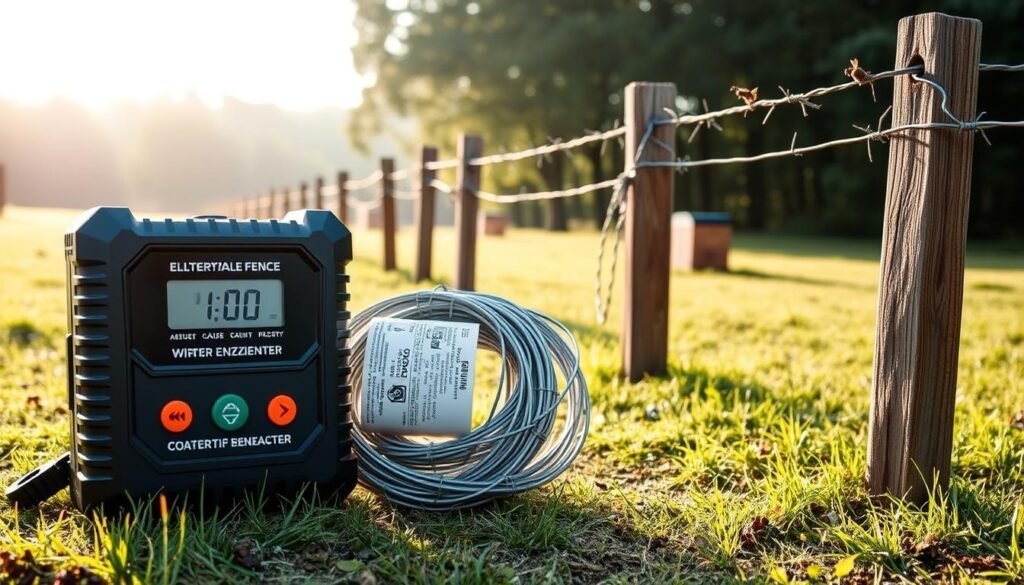
Match the energizer to your layout. Pick a unit sized for current runs and future expansion. A higher output energizer delivers a more consistent pulse and better protection when persistent wildlife seeks food.
Choosing the Right Energizer
Consider output, grounding, and backup power. For a 110′ x 30′ yard, Premier1 lists hardware like 163900 MaxiShock insulated cable and 327600 6‑ft T‑posts to pair with your energizer.
- Fit energizer output to wire length and expected pressure from predators.
- Plan grounding rods and solar or mains backup for reliability.
- Contact Premier1 support at 800-282-6631 for technical help during business hours.
Selecting Durable Fencing Materials
Use high-tensile wire and proper spacing to create a physical and electrical deterrent. Tight, well‑spaced wire reduces the chance a bear will push through after repeated shocks.
“The effectiveness of any barrier depends on quality wire and a consistent pulse from the chosen energizer.”
| Component | Example Item | Purpose | Notes |
|---|---|---|---|
| Conductive wire | High-tensile strand | Deliver consistent shocks | Use correct spacing to deter persistent animals |
| Posts & insulators | 327600 6-ft T-Posts, 381010 Safety Cap | Support wiring | Durable posts reduce sag and contact |
| Accessories | 163900 MaxiShock cable, 380350 Slip Over Activator | Connect and tension lines | Match parts to energizer specs |
For layout planning and additional setup tips, review guidance on choosing a power unit and consult a planning layout guide.
Strategic Installation and Maintenance Tips
A well-planned wiring scheme stops persistent animals before they test your perimeter.
Start with the right layout. In low to moderate risk areas, a 7-wire arrangement at 42″ deters bears while letting deer pass. For apiaries and sensitive sites, raise the pattern to 54″ to block bears and wolves.
Configuring Wire Height for Maximum Deterrence
High-risk locations should use a 9–11 wire design set between 60″ and 72″. This taller, denser setup gives a reliable barrier when predator pressure is high.
Always tension wires correctly and use quality insulators. Proper tension keeps lines from sagging and lowers the chance of shorts that reduce pulse strength.
| Configuration | Height | Target Predators | Key Notes |
|---|---|---|---|
| 7-wire compact | 42″ | Black bears, grizzly (moderate risk) | Allows deer/elk passage; good for mixed wildlife areas |
| 7-wire apiary | 54″ | Black bears, grizzly, wolves | Recommended near hives and equipment |
| 9–11 wire heavy | 60″–72″ | Wolves, persistent bears, high-risk zones | Maximum deterrence; needs stronger energizer and grounding |
Maintain the energizer weekly during active months. Test output and clean grounding rods. A steady pulse trains wildlife and preserves colony assets.
- Check tension and clear vegetation to avoid shorts.
- Use robust insulators to prevent wire contact with posts.
- Keep backup power or solar options available to maintain the system.
For practical installation tips and placement guidance, consult this bear fencing guide and review hive siting advice at hive placement recommendations.
Conclusion: Securing Your Apiary Investment
Protecting your apiary with a reliable barrier stops loss before it starts. A properly installed electric fence and related fences act as a clear deterrent that keeps predators away and preserves your colonies.
Regular checks and tension tests keep the system functioning and maintain the psychological effect that discourages repeat visits. Monitoring prevents failures that could expose your hives or livestock to harm.
Combine physical measures with site fixes—secure stands, anchors, and visible markings—to make access harder and theft less likely. Learn practical anti-theft steps in this anti-theft guide and consider raised stands and tie-downs from hive stand advice.
Take action now to install and maintain a robust barrier so your investment stays productive and protected season after season.