Clear planning makes the bloom season safer and more productive. This short guide explains why an organized beekeeper–grower process matters and which points should be agreed on early.
Registering hive locations and tracking movements reduces confusion. Programs like BeeWhere and BeeCheck tools let beekeepers pin and update hive sites in real time. Many growers follow rules to have hives registered by Jan. 1.
Talk about pesticide timing, hive placement, water supply, and arrival dates before bees reach the orchard. These steps protect colony health and help the crop set well.
Formalizing an agreement early saves time and prevents rushed calls during bloom. When both sides share clear information, beekeeping and farming operate smoothly and safely.
Key Takeaways
- Use BeeWhere or BeeCheck to pin and update hive locations promptly.
- Agree on arrival dates, hive counts, and placement before bloom.
- Plan pesticide use and give at least 48 hours notice when required.
- Provide safe, potable water and mark colonies with owner contact info.
- Formal agreements reduce risk and protect honey bee health all season.
Essential Pre-Season Planning for Pollination Success
Season planning that names delivery dates and hive strength prevents costly disputes.
Proper orchard preparation matters. Growers should remove mummy nuts and ensure trees receive timely irrigation to prime the crop for bloom.
Orchard Preparation
Start early. Clearing dead fruit and stabilizing soil moisture helps bees work efficiently and improves fruit set.
Timing and Scheduling
Finalize your pollination contract template by November to gain better pricing leverage. A missing clause in a contract can cost a grower between $5,000 and $50,000 in disputed fees.
- Set a firm delivery date and placement plan so hives arrive where they will be most effective.
- Specify hive strength requirements in the contract to guarantee service quality.
- Include pesticide notification steps in the template to protect colonies and the crop.
| Action | When | Who |
|---|---|---|
| Finalize contract template | By November | Grower/Beekeeper |
| Orchard cleanup & irrigation | Pre-bloom | Growers |
| Confirm delivery date & placement | 2–4 weeks before bloom | Both parties |
Need background on almond timing or renting logistics? See almond pollination preparation and renting bees guidance.
Developing a Comprehensive Beekeeper-Grower Communication Checklist for Pollination
Documenting each service point removes guesswork around delivery dates and hive placement.
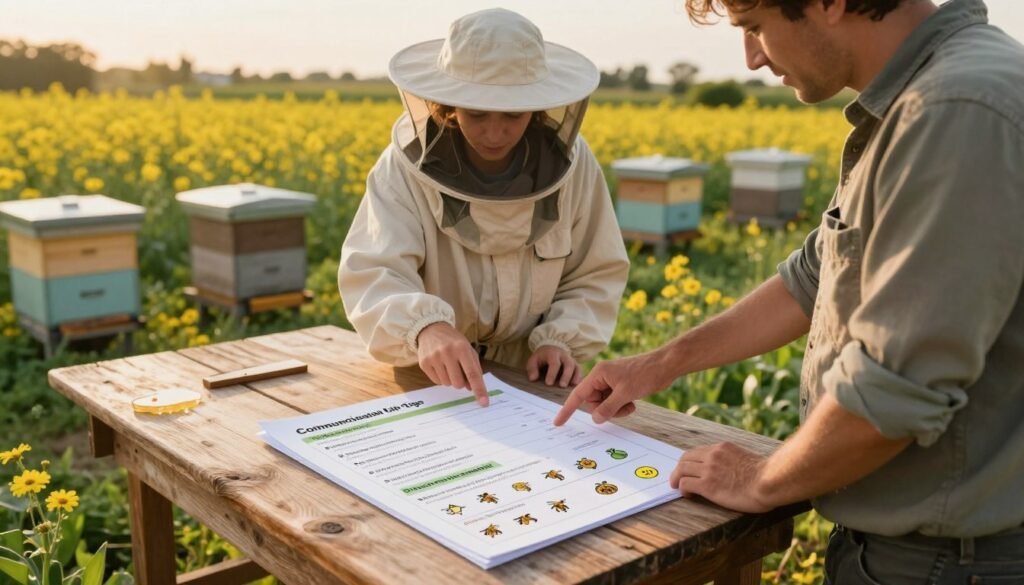
Use a digital pollination contract template to record dates, locations, hive strength, and owner contact info. This prevents common disputes and creates a single source of truth.
- Confirm the delivery date and ensure all hive locations are clearly marked on maps or apps.
- Set payment terms: a standard model is 50% due on delivery and 50% at removal, with a 14-day net on the back half.
- Track hive strength and placement digitally so the beekeeper meets contract terms through the season.
Document state-specific rules and every item of the agreement. Clear terms reduce legal risk and make payment smoother.
For tools and outreach, see resources on how to use technology to connect teams, review crop protection guidance from a national pollinator group, and consider cross-training resources for better field coordination.
| Contract Element | Who Signs Off | When to Confirm |
|---|---|---|
| Delivery date & placement map | Grower & beekeeper | 2–4 weeks before bloom |
| Hive strength verification | Beekeeper | On delivery |
| Payment terms (50/50, 14-day net) | Both parties | At contract signing |
| State permits & specific terms | Grower | Before contract finalization |
Managing Hive Health and Biosecurity Standards
Protecting colony health begins with clear testing and regular inspections. Both grower and beekeeper must agree on health checks and access arrangements before delivery. This reduces risks during bloom and keeps honey yields steady.
Disease and Parasite Testing
Test early. Mandatory checks like American Foulbrood (AFB) must be done before hives enter the orchard. Exotic pests such as Varroa are screened by drone uncapping and verified with sugar shake or alcohol wash.
Hive Strength Requirements
At delivery, confirm brood frame counts and colony strength. A simple verification at arrival ensures the beekeeper met contract terms and that the hive will perform during bloom.
Water Access and Safety
Provide potable water and cover containers with burlap to prevent drowning. Keep water free from pesticide drift and inspect sources regularly to protect bee health during the time they stay in the orchard.
- State registration: Beekeepers must register hives (e.g., Agriculture Victoria requires brands on all hives).
- Include 24–48 hour pesticide notification in the pollination contract to allow timely protective action.
See a practical industry guide and seasonal tasks to support these steps: pollination guide and seasonal beekeeping tasks.
| Check | When | Who |
|---|---|---|
| AFB and Varroa testing | Pre-delivery | Beekeeper |
| Brood frame & strength verification | On delivery | Grower & beekeeper |
| Water safety inspection | Weekly during bloom | Grower |
Navigating Legal Agreements and Payment Terms
A precise contract turns vague expectations about delivery, access, and payment into enforceable terms. Use a pollination contract template that lists delivery confirmation, payment schedule, and pesticide notice rules.

Pesticide notification protocols must require the grower to give the beekeeper at least 24–48 hours notice before any pesticide application within the foraging range of placed hives.
“Require clear notice windows and a beekeeper right to remove hives if warnings are not given.”
Include these key clauses in every contract:
- Payment terms: 50% deposit at delivery booking and balance on removal.
- Delivery proof: GPS-verified record or signed delivery confirmation.
- Cancellation fees: defined penalties for late schedule changes.
- Access and placement: guaranteed routes so the beekeeper can reach hive placement during bloom.
| Requirement | Who | When |
|---|---|---|
| Pesticide notice (24–48 hours) | Grower | Before application |
| Delivery confirmation (GPS) | Beekeeper & grower | On arrival |
| Documentation of colony health | Beekeeper | During season |
Documenting pesticide uses and colony records also helps meet state rules and protects both parties. For a practical protocol on protecting bees, see the Oregon blueberry bee protection protocol.
Building Long-Term Partnerships for Orchard Productivity
Sustained success blooms when growers and beekeepers review results and plan renewals together.
Send a season-end report that notes hive placement, colony strength, and honey yields. Use that data to update the pollination contract and set clear delivery and payment terms early in July.
Keep a short checklist that records water access, pesticide notice windows, and state permits. Prioritizing hive health and biosecurity supports orchard productivity and the long-term viability of pollination services.
Monitor colonies during and after bloom; practical monitoring helps refine colony counts and placement. Learn more about monitoring colonies and managed pollinator strategies in this study: monitoring colonies.
FAQ
What should be included in pre-season planning to ensure reliable pollination?
Start by confirming bloom dates and target delivery windows. Agree on hive numbers and minimum colony strength, plus placement maps and access hours. Discuss water availability, site security, and any pesticide schedules. Put payment terms, insurance, and a pickup plan in writing so both parties have clear expectations.
How do growers prepare an orchard to maximize hive performance?
Remove competing pesticide-treated bloom sources when possible and provide clear traffic routes for trucks and equipment. Designate shaded staging areas and safe short-term parking for apiary trailers. Ensure no-spray buffers during bee activity and keep irrigation schedules consistent to avoid worker conflicts.
What timing and scheduling details are essential when arranging hive delivery?
Set firm delivery and removal dates tied to bloom progression. Agree on earliest and latest arrival times and a contingency window for weather delays. Include minimum on-site hours per day and notify beekeepers about any expected farm events that could limit access.
Which hive strength requirements should be specified in the agreement?
Define colony strength by frames of bees, brood presence, and queen quality. A common standard is 8–10 frames of bees with active brood for fruit crops, but adjust by crop type. Require beekeeper certification of strength at delivery and a remedy clause if colonies arrive below standard.
How should disease and parasite testing be handled before hives enter an orchard?
Require up-to-date health records and recent varroa monitoring results. Agree on acceptable treatment thresholds and testing responsibilities. Include a clause for denial of entry if active contagious disease or heavy parasite loads are detected, and outline remediation steps.
What are best practices for providing water sources to bees on-site?
Provide shallow, fresh water near hive locations, with floatation or landing pads to prevent drownings. Keep sources free of pesticides and fertilizer runoff. Agree on maintenance responsibilities and a backup plan if natural water dries up during bloom.
How should pesticide notification protocols be structured to protect bees?
Establish a written notification system with contact names, phone numbers, and least-risk spraying windows. Share proposed spray dates and products at least 48 hours in advance. Use bee-safe products whenever possible and restrict applications to times of low bee activity, such as late evening.
What key elements belong in a pollination service agreement and payment terms?
Include number of colonies, delivery/removal dates, minimum hive strength, placement map, liability and insurance details, and pesticide notification procedures. Specify payment amount, schedule (deposit and balance), penalties for early removal, and conditions for withholding payment if service standards aren’t met.
How can growers and beekeepers maintain biosecurity during the season?
Limit unnecessary access to hives, disinfect tools and vehicles, and avoid moving equipment between distinct apiaries without cleaning. Record visits and health checks. Communicate immediately about suspected disease to coordinate testing and containment.
What steps build long-term partnerships that improve orchard productivity?
Foster regular seasonal planning meetings, share crop forecasts, and give timely feedback after each season. Offer stable, multi-year contracts with fair compensation and clear expectations. Respect hive care practices and coordinate on habitat enhancements that benefit both bees and crops.
How should placement and site maps be communicated to ensure efficient hive setup?
Provide digital maps with GPS coordinates and marked staging zones, water points, and no-go areas. Highlight gates, road weight limits, and overhead hazards. Share maps at least two weeks before delivery and confirm on arrival.
What recourse is available if hives are damaged or stolen while on a grower’s property?
Rely on the contract’s liability and insurance clauses. Document incidents with photos and a written report. Notify local authorities if theft occurs. Carry joint risk assessments in advance and maintain clear proof of ownership on hive equipment.
How should unexpected bloom changes or weather events be handled?
Agree on flexible windows and rapid notification procedures. Allow short-term adjustments to delivery and removal dates without penalty when weather shifts bloom timing. Consider a clause for additional compensation if extended service is required due to late bloom.
What information should be exchanged at delivery and pickup?
Share an inventory of colonies, recorded hive strengths, health certificates, and placement map confirmation. Note start and end times, signatures from both parties, and any issues observed. Keep copies for season records and invoicing.
How can both parties minimize conflicts over access and operational hours?
Define access gates, hours of operation, and contact points in writing. Schedule deliveries outside peak farm operations when possible and confirm arrival times in advance. Use a designated site manager to coordinate onsite decisions quickly.