Comb management is a cornerstone of modern beekeeping. Scott Derrick noted on February 5, 2025, that caring for frames keeps a hive productive and a colony healthy.
Old wax can harbor residues and dangerous pathogens like American foulbrood. Regular inspections in spring help the beekeeper spot damaged frames, sagging combs, or signs of disease before they spread.
Gradual rotation and a yearly plan give bees fresh wax for honey storage and reduce toxin build-up. For practical guidance on a steady rotation schedule, read the Blythewood note on comb care and recycling.
Key Takeaways
- Inspect frames each spring to check condition and disease.
- Plan a yearly rotation so combs don’t exceed a few years in service.
- Remove damaged frames gradually to let the bees rebuild without stress.
- Watch for pathogens and residues; act quickly if American foulbrood appears. See expert advice on discarding comb after disease.
- Prepare frames after winter so bees have fresh wax for honey storage.
- Good comb care keeps the colony strong and the apiary environment safe.
Understanding the Importance of Comb Management
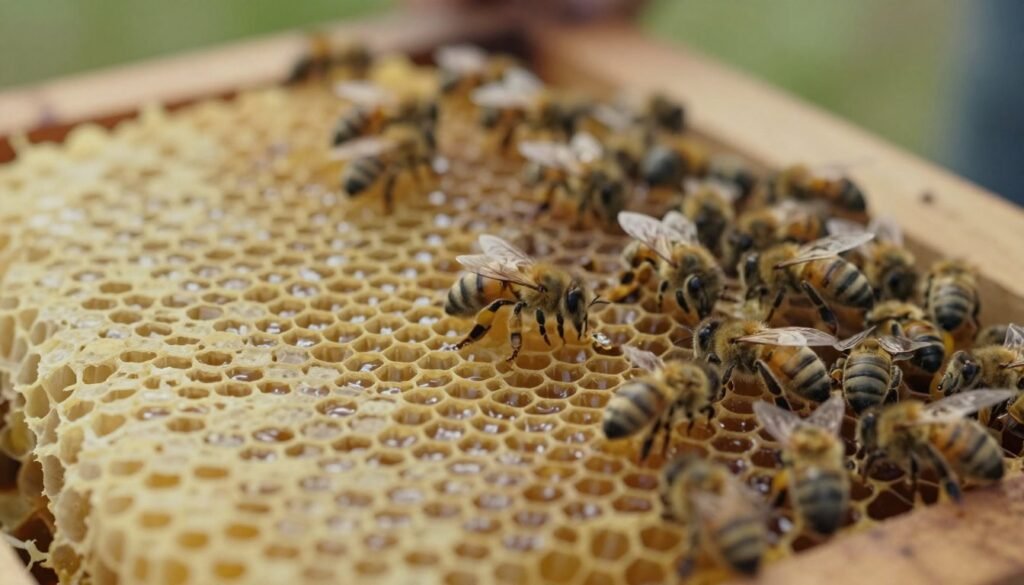
Frames with fresh cells give bees the best chance at strong seasonal buildup. Honeycomb is the hive’s basic foundation. It stores honey and pollen and serves as a nursery for brood.
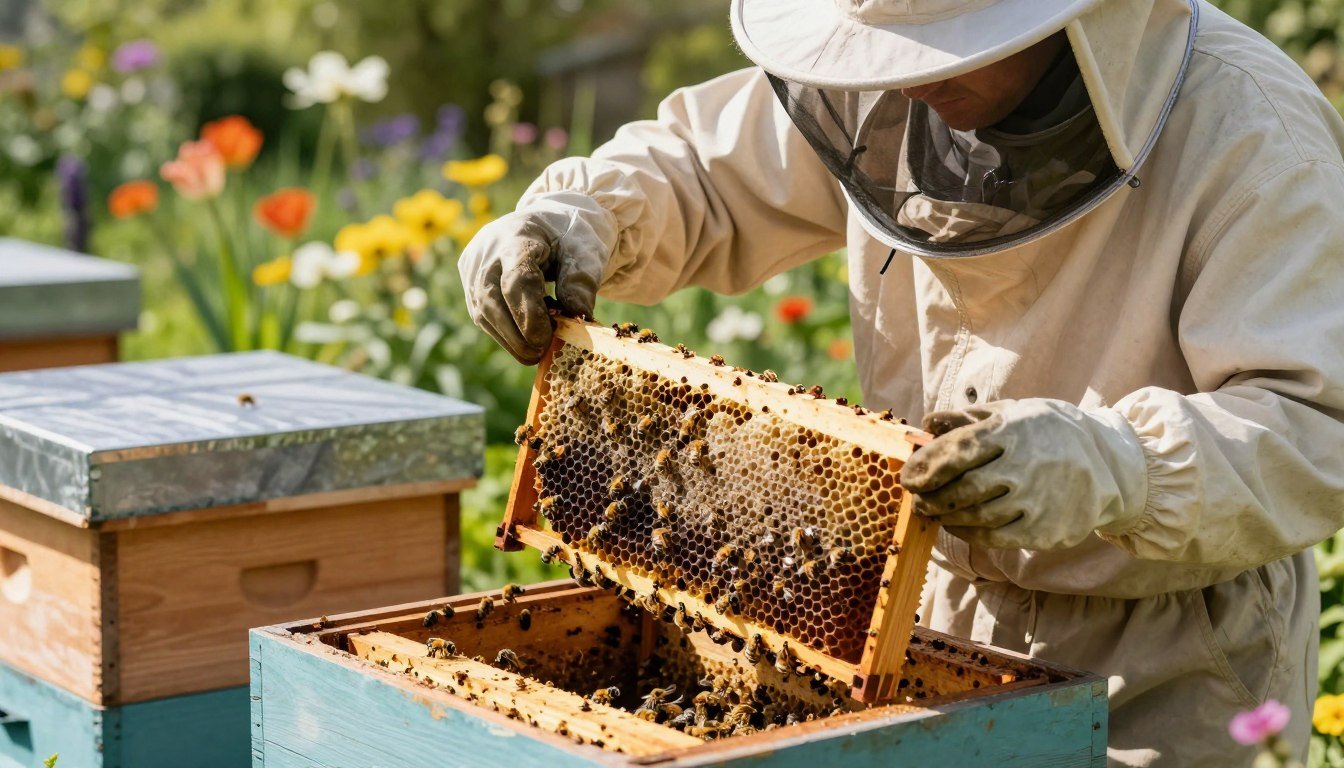
Regular inspection of frames helps you spot dark, brittle wax before it harms colony productivity. View comb as consumable equipment rather than a permanent fixture. That mindset makes rotation easier and keeps hive health higher.
Bees make wax from glands, but wax absorbs residues over time. That buildup can lower honey yield and stress the colony. Proper rotation of frames and fresh foundation keeps cells clean and preserves airflow for better brood rearing.
Practical steps include steady frame turnover and using new foundation when rebuilding. For guidance on cleaning and reuse, see this note on clean plastic foundation.
How Often to Replace Old Brood Comb
Planned turnover of frames prevents debris buildup and supports brood success.
The Five Year Rule
Keep any single piece of comb in service no longer than three to five years. This limit helps stop the buildup of cocoons, pesticides, and pathogens that reduce cell volume and productivity.
In spring, the beekeeper should move worn frames out and fit a new foundation or fresh sheets. Whether using plastic or wood foundation, this gives bees clean surfaces for cells and honey storage.
Annual Percentage Targets
A common, practical target is to rotate 20–30% of frames each year.
- This steady rotation prevents winter stress by keeping enough stable cells for brood and stores.
- Replacing 20–30% annually means no comb stays in a hive beyond the five-year guideline.
- Beekeepers balance removal and rebuild so colonies keep steady honey flow and brood space.
| Plan | Annual Change | Max Service Life |
|---|---|---|
| Conservative | 20% of frames | 5 years |
| Standard | 25% of frames | 4 years |
| Aggressive | 30% of frames | 3 years |
For practical removal tips and disposal of aging equipment, see this guide on aging frames and comb.
Identifying Signs of Aging and Contamination
Dark, stained wax and shrinking cell walls signal that frames need attention. These are visible signs that residues, cocoon debris, or pathogens may be present in the hive.
What to watch for:
- Progressive darkening from pale yellow to deep brown or black is a clear visual cue.
- Watch for wax moth damage or powdery patches that suggest disease or infestation.
- Smaller cells caused by waste buildup reduce space for honey and brood and spread contamination.
If you suspect American foulbrood (AFB) or find nosema spores, remove the affected frames immediately and follow testing protocols. A useful reference on honeybee pathogens is available in the USDA disease guide.
Regular inspections and steady rotation of frames let you monitor residues and the general condition of wax. For advice about reusing frames after a colony loss, see this practical note on frame reuse.
The Physical and Chemical Risks of Retaining Old Wax
Neglected frame surfaces gradually trap cocoons and residues, shrinking usable cell space.
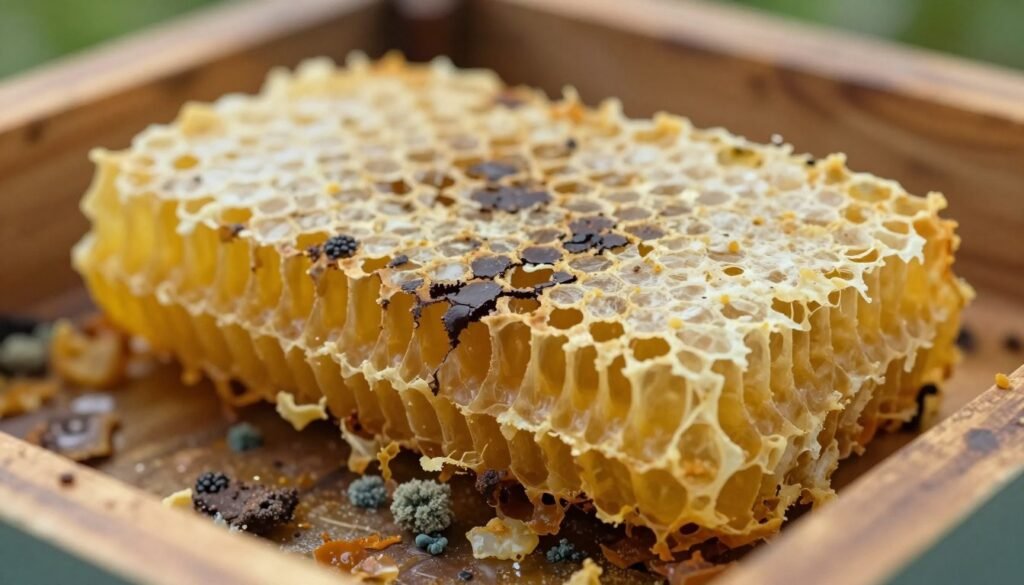
Accumulation of Cocoon Debris
Every bee that matures leaves a silk lining in a cell. Over many years that lining builds up.
The result is darker, heavier frames and reduced cell size. This makes brood care harder for the colony.
Reduction of Cell Volume
Shrinking cells mean less room for honey and pollen. Workers must work harder to store food.
Smaller cells also alter development and can lower overall hive productivity.
Retention of Environmental Toxins
Beeswax is lipophilic. It absorbs miticides and oil‑soluble chemicals from the environment.
Residues lodge in wax and persist for years, increasing contamination and raising disease risk.
A diligent beekeeper recognizes that some residues cannot be cleaned away. Prioritizing frame rotation removes persistent sources of pathogens and protects colony health. For practical guidance, see why and when brood comb should be.
Best Practices for Gradual Frame Rotation
Small, planned changes in frames keep cells open and let bees focus on growth.
Move only a few frames at a time. Removing a couple of old frames per hive avoids shock and keeps colony rhythm steady.
Target a simple annual plan: swap two frames per 10-frame box each year. This steady rotation keeps wax healthier and limits residue buildup over the years.
In spring, introduce new foundation sheets such as plastic or wax-coated options. Starter strips and quality foundation help bees rebuild cells at the proper size and protect honey stores.
Avoid winter inspections that disturb hives. Plan most replacement work during the active season so brood rearing stays stable and workers can restore storage quickly.
Use good materials. Wood frames with higher-quality foundation give bee colonies the best environment for brood and honey. Beekeepers who follow a steady rotation report stronger hives and less need for emergency replacement.
Selecting the Optimal Time for Hive Maintenance
Schedule maintenance around colony strength rather than a strict calendar date.
Spring or early summer is the best window for frame work. The colony is building, stores are rising, and workers can rebuild cells and store honey quickly.
Avoid major work in late fall and winter. Disturbing the hive in cold months stresses bees and can harm brood development and cluster stability.
Seasonal considerations for colony stability
- Plan a 20% annual rotation so the hive sheds the darkest wax without shock.
- Swap about two frames per box each year; this keeps the hive steady and supports normal brood cycles.
- Use inspections in spring to check frame condition and available honey space.
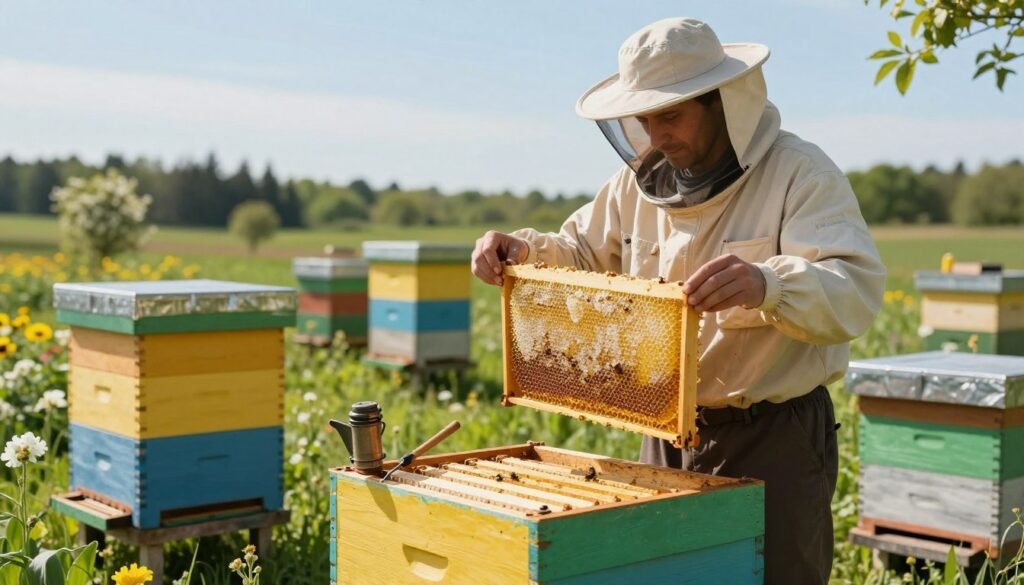
Introduce fresh foundation during active building. This helps bees rebuild cells at the correct size and keeps wax healthier for years.
For a practical guide on timing and equipment, see our note on comb care and recycling.
Methods for Recycling and Repurposing Old Comb
Repurposing darkened wax can produce foundation, crafts, or swarm bait that benefits the colony.
Start with sanitation. Freeze old frames for at least 24 hours to kill pests and spores. This step protects your hive and apiary equipment before any further work.
Render clean wax using a solar wax melter or a double boiler. Collected wax can be filtered and cast into blocks.
- Render wax into sheets and feed into new foundation.
- Make candles, balms, or blocks that reduce waste and cut supply costs.
- Place small pieces of wax or frames in swarm traps as bait; this attracts bees looking for a new hive.
Practical benefits: Recycling conserves material gathered by bees and supports steady rotation of frames across boxes. Using reclaimed wax for foundation lowers expenses and keeps hives productive.
For step-by-step guidance on safe-handling and recycling, see our note on comb care and recycling.
Supporting Colony Recovery During the Transition
When new foundation goes in, a short period of focused care helps bees adapt and thrive.
Monitor frames closely. Check that workers are drawing wax and filling cells with nectar and pollen. Small, regular inspections reveal whether the hive is expanding brood areas and storing honey efficiently.
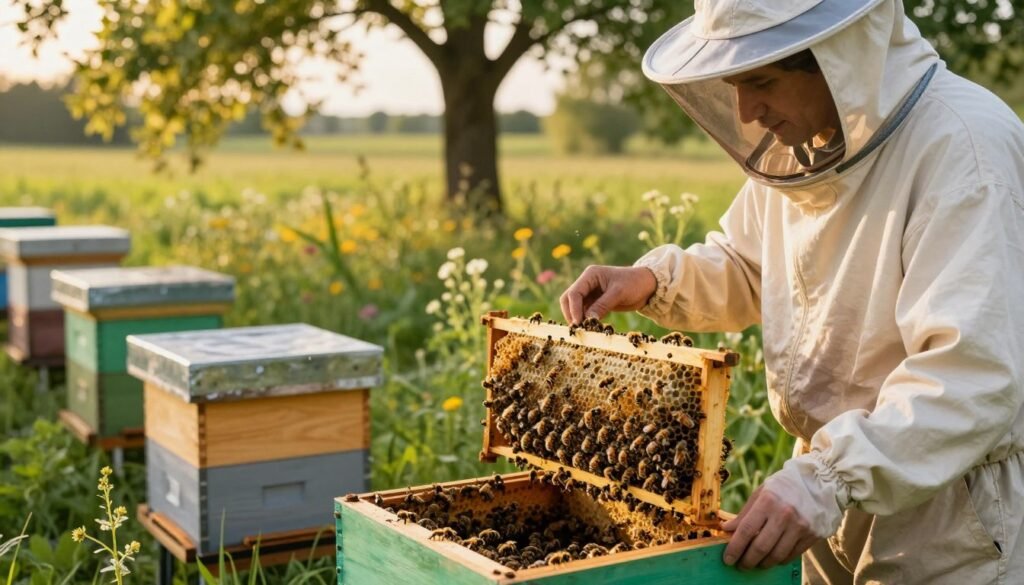
Offer light sugar syrup early in the rebuild phase. Supplemental feed gives the colony energy to draw foundation and finish comb faster without stressing workers.
Keep the environment clean and calm. Using sterile equipment and steady rotation reduces the chance that disease returns. Let the natural rhythm of the swarm guide timing for bigger changes.
- Watch for steady progress on three or four frames each inspection.
- Balance removal of dark combs with gradual replacement so bees stay productive.
- Record observations in your apiary log to track hive health and honey stores.
| Action | Why it helps | Timing |
|---|---|---|
| Monitor frames weekly | Ensures bees draw foundation and expand brood | First 4–6 weeks after install |
| Provide light sugar syrup | Supports wax production and honey storage | During active nectar gaps |
| Use clean equipment | Limits disease carryover in the hive | Whenever replacing combs |
For tips when colonies hesitate to draw new cell walls, see 7 reasons bees won’t draw comb. Proper follow-up helps your colony regain strength and keeps hive health high.
Conclusion
A steady plan for frame rotation protects colony vigor and preserves honey stores.
Simple, regular maintenance keeps a hive productive and lowers disease risk. Rotate a portion each year and track frame age. Fresh wax gives bees clear cell space and helps brood develop normally.
Small, planned swaps avoid shock and let workers focus on nectar and brood. This approach limits residues and chemical buildup that harm long‑term health.
Prioritize steady work and use practical guides like the case for clean comb and tips on how to encourage bees to clean old comb. A little time each year pays big dividends for hive health and beekeeping success.
FAQ
What is the general rule for replacing older brood frames?
Most beekeepers follow a five-year guideline for taking out worn brood frames. Rotating frames incrementally each season keeps comb age spread across the hive and reduces buildup of cocoons, pathogens, and pesticide residues. Use a plan that swaps a portion of frames every spring so no frame stays in continuous use beyond about five years.
Why manage wax and brood cell age in my hives?
Managing wax and cell age preserves colony health. Older sheets accumulate cocoon debris that shrinks cell volume, harboring disease agents and chemical residues. Regular turnover helps maintain normal brood development, reduces disease pressure, and supports consistent honey production.
How should I set annual replacement targets for frames?
Aim to replace roughly 20% of brood frames each year so you refresh an entire brood nest within five years. In small apiaries you can remove a couple frames per hive annually; larger operations often follow a formal rotation schedule and track frame age with marks or tags.
What signs indicate a frame needs urgent removal?
Remove frames showing heavy cocoon build-up, crushed or misshapen cells, dark staining, or persistent foul odors. Visible wax moth damage, chronic drone-laying patterns, or repeated pesticide spot tests also justify immediate replacement.
How does cocoon accumulation affect the colony?
Cocoons left from successive broods line cell walls and reduce cell diameter. That can lead to smaller workers, malformed bees, and reduced queen egg placement accuracy. Thick cocoon layers also shelter pathogens like Nosema spores, increasing disease risk.
Do old wax foundations retain environmental toxins?
Yes. Lipophilic pesticides and miticide residues concentrate in wax over time. These chemicals can impair brood development and weaken bees. Regular frame turnover and using clean foundation—wax or plastic—limits long-term contamination.
Is it better to use wooden frames with wax foundation or plastic foundation sheets?
Both have pros and cons. Wax foundation encourages natural comb shape and is biodegradable, but it can harbor residues. Plastic foundation withstands repeated use and is easier to sanitize, yet it can trap residues and is less compatible with natural comb building. Choose based on management style, sanitation practices, and your goals for organic or treatment-free beekeeping.
When is the safest season for frame replacement and rotation?
Late spring to early summer is ideal after the main nectar flow begins and the colony is strong. This timing minimizes stress on brood rearing and ensures enough foragers to support wax rebuilding. Avoid major frame changes during cold snaps or peak dearths.
How can I rotate frames without disrupting the queen or brood cycle?
Rotate gradually: remove one or two marginal brood frames during inspections, then replace them with new foundation or drawn comb from honey supers. Use frame exchanges in brood breaks or after supering up. Track frame age with small marks or colored tags to keep the rotation steady and predictable.
What are practical ways to recycle old wax and frames?
Render wax into blocks for candles, cosmetics, or foundation practice. Sanitize metal fastenings and reuse wooden frames if structurally sound after heat or paraffin dips. Heavily contaminated wax should be discarded or used only outside the apiary to avoid reintroducing residues.
How do I support the colony during comb transition?
Provide supplemental sugar syrup or pollen patties if brood rearing slows. Avoid heavy manipulations during swarming season. Keep disease monitoring high, and requeen if you notice drops in brood quality. Gradual changes and steady nutrition help bees rebuild comb quickly and maintain productivity.