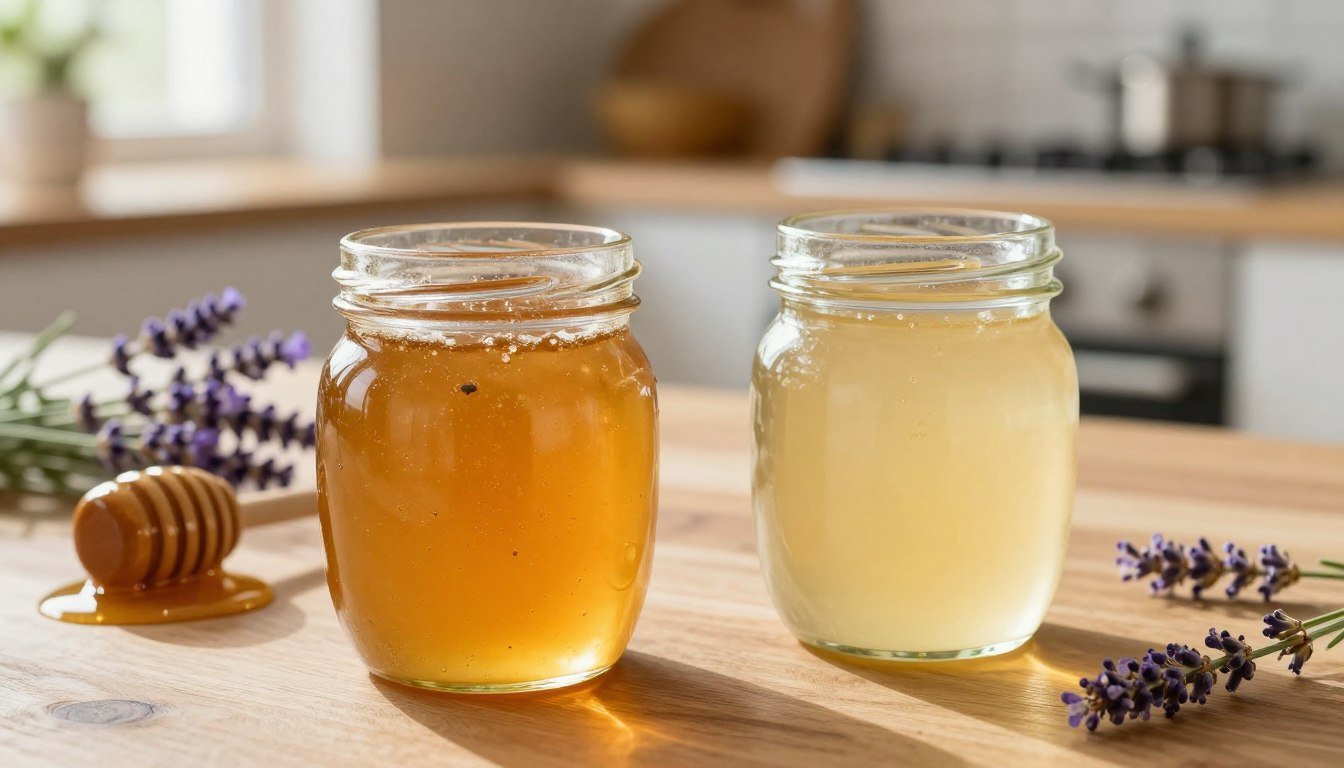
Understanding the difference helps beekeepers control the clarity and character of their product. When you pull frames and use an extractor, liquid often carries wax, bee parts, and other debris that need attention.
The choice of a filter or strainer determines how much pollen and particles remain. Hobbyist filters usually range from 200 to 600 microns, while pollen grains average about 25 microns.
Proper straining keeps large debris out but preserves the flavor and natural benefits of the jar. Many beekeepers let honey settle in a tank, then use a mesh or plastic tool to finish filtering.
Learning the processing steps and choosing the right equipment gives you control over the final product. With simple tools and good technique, you can balance clarity and natural content for the market or family use.
Key Takeaways
- One clear choice affects how much pollen and debris stay in the jar.
- Typical hobbyist filters sit in the 200–600 micron range; pollen is around 25 microns.
- Use an extractor, tank, and a good strainer to manage clarity.
- Selecting mesh, plastic, or metal filters shapes the final product.
- Proper processing keeps flavor while improving presentation.
Understanding Coarse Strain vs Fine Strain Honey
Beekeepers choose different filtering methods to shape clarity and keep key nutrients intact. This decision affects jar appearance, texture, and the amount of pollen that stays in the product.
Why pollen matters: Pollen acts like a geographic fingerprint and adds trace nutrients. Dr. Richard Carroll at The University of Alabama highlights pollen’s role in tracing origin and flavor.
Most beekeepers remove large debris but aim to keep natural pollen suspended for consumers who want a raw option. A correct filter setup helps balance a clear look with preserved elements.
Practical choices influence shelf appeal and perceived quality. Learn recommended filter sizes and standards from a concise guide on filter sizes and review grading details at grading standards.
- Goal: Remove wax and debris.
- Keep: Natural pollen and enzymes.
- Result: A product that meets customer expectations for raw, unprocessed quality.
The Role of Straining in the Extraction Process
After extraction, straining acts as the practical line of defense against comb fragments and hive debris. It protects the product and sets the stage for clean bottling.
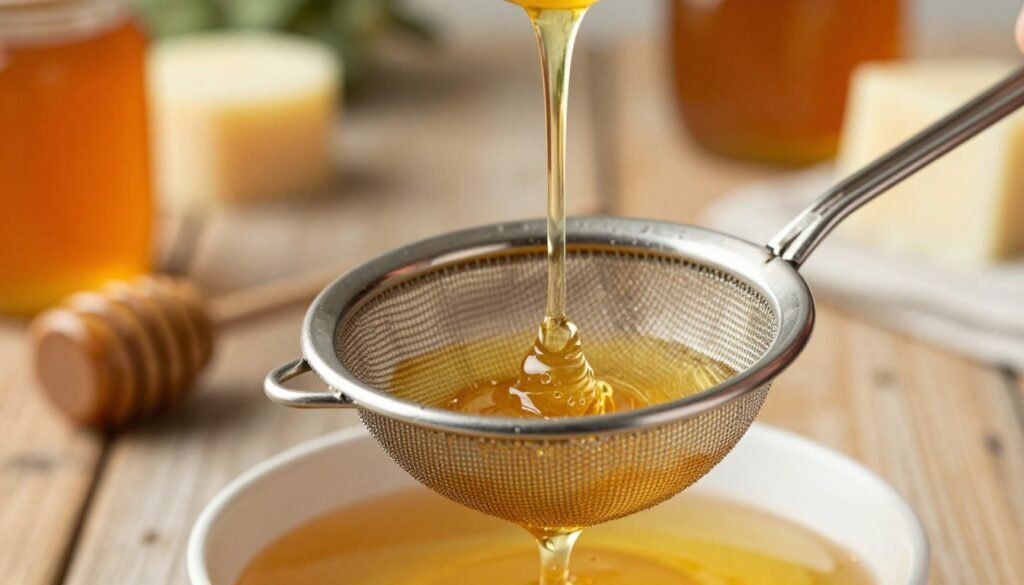
During extraction, an extractor spins frames and releases wax cappings, bee parts, and wood splinters into the tank. A coarse sieve (1000–2000 microns) first removes large debris without slowing the flow.
The Importance of Removing Debris
Removing large materials prevents grime from settling in jars and reduces early crystallization. Many beekeepers use a double-sieve setup: a coarse pre-filter followed by a finer mesh to catch smaller particles.
- Use a quality honey filter or honey strainer to keep the product clean.
- Plastic or metal filter options withstand regular use and clean easily.
- Proper control of the straining process preserves natural enzymes and pollen.
Maintaining Honey Purity
A good honey filter removes unwanted materials while retaining beneficial pollen and enzymes. That balance yields a high-quality product that customers trust.
| Step | Typical Equipment | Purpose |
|---|---|---|
| Extraction | Radial or tangential extractor | Release honey from frames |
| Pre-strain | 1000–2000 micron sieve | Catch large debris (wax, wood, bee parts) |
| Fine filter | Mesh or nylon filter | Remove small particles; preserve pollen |
| Bottling | Tank and tap | Move clean product to jars |
Decide how much filtering fits your market and use. For more on why this step matters, see why straining matters.
Why Micron Size Matters for Honey Quality
Micron size directly shapes the clarity and character of the final jar. A simple number controls which particles pass and which remain trapped by your filter.
Key measurements help visualize the scale: pollen grains average about 25 microns across, while a human hair is roughly 70 microns thick. The common retail benchmark is 200 microns for a brilliant, jar-ready result.
- 200 microns is the industry standard for clear, retail-ready product.
- Because pollen grains are about 25 microns, most standard filters allow beneficial pollen to pass.
- Beekeepers favor filters larger than 400 microns when preserving raw pollen content.
- Using multiple filters of varied micron sizes balances clarity and natural content.
- Smaller micron counts deliver finer clarity but can remove trace elements that define origin.
Choose your honey filter and setup intentionally. For tool recommendations aimed at preserving raw characteristics, see this guide to the best honey filters for raw honey.
Defining Coarse Straining Methods
A rugged pre-filter step clears heavy debris before delicate filters see any flow.
Begin the extraction process by routing honey from the extractor through a 600 microns mesh. This removes large wax cappings, bee parts, and wood fragments without slowing transfer to the tank.
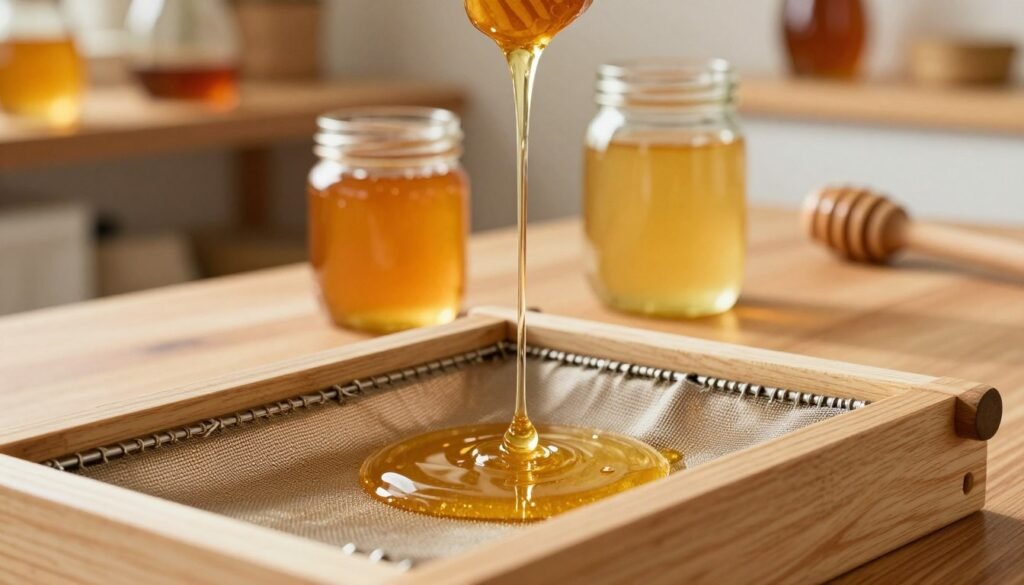
Benefits of a Pre-Filter Pass
Save time and protect equipment. A pre-filter prevents finer filters from clogging during busy harvests. That keeps the workflow moving from frames to jars.
- Use a plastic or metal strainer as the first tool to catch bulk debris.
- Keep natural pollen in the product by choosing a 600 microns mesh.
- Process in a dedicated tank to speed up extraction and reduce handling.
- A pre-pass lowers the need for heat and helps preserve natural enzymes.
“A staged filtering approach reduces clogging and preserves the rustic qualities many customers seek.”
Every beekeeper should include a reliable honey filter and a durable strainer in their equipment list. For tips on finishing and packaging, see packaging and labeling.
Defining Fine Straining Methods
To get museum‑quality jars, beekeepers add a final filter step that sweeps away tiny wax specks and clouding particles.
Industry practice favors a 200 microns mesh as the last pass. This level removes visible particles while keeping most pollen grains intact.
A common workflow uses a 600 microns pre-pass to protect the fine mesh and keep flow steady from the extractor. Then operators run the product through a 200 microns honey filter to polish jars for retail or competition shelves.
Good filtering removes tiny wax and debris without stripping natural pollen and enzymes. That balance preserves flavor and the product’s traceable notes of origin.
“A controlled final pass delivers clarity while keeping the character consumers seek.”
- Use staged meshes to reduce clogging.
- Choose durable equipment that cleans easily.
- Match mesh size to your target clarity and market.
For a deeper look at straining equipment and technique, see our guide to the honey strainer.
The Impact of Temperature on Straining Efficiency
Temperature controls how smoothly jar-ready honey moves through mesh during the finishing pass. Proper warming reduces clogging and keeps flow steady through a fine filter.
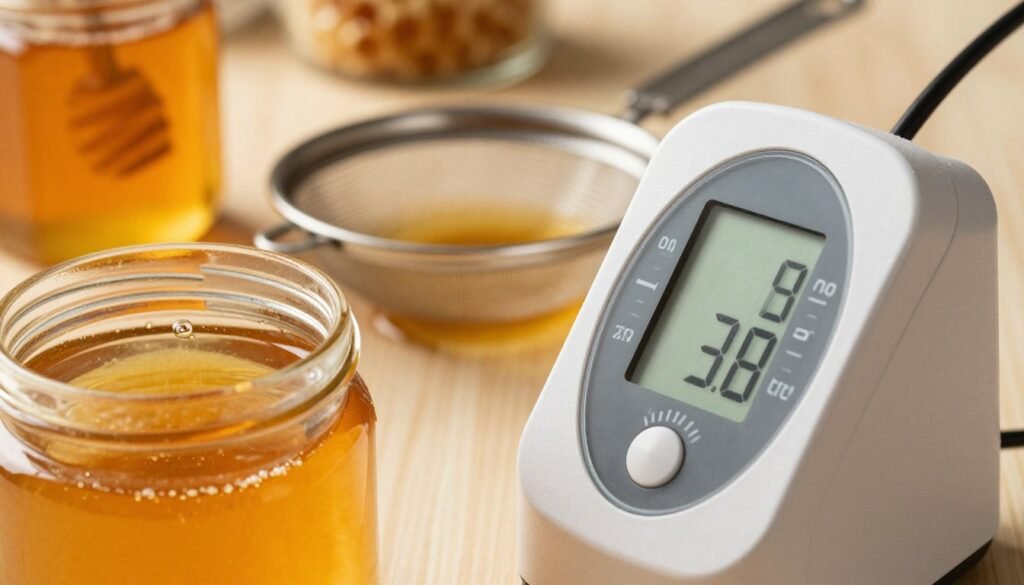
Managing Viscosity
Cold product is thick and will barely pass a 200 microns mesh. Beekeepers gently warm tanks to about 95°F (35°C) to improve flow.
That temp lets a good honey filter work efficiently. It also helps the honey strainer and other filters move large batches without frequent stops.
Avoiding Overheating
Excessive heat can damage enzymes and natural aromas. Monitor warming equipment to keep control and protect pollen and delicate particles.
- Use a jacketed tank or warming cabinet for steady heat.
- Keep the extractor output warm, not hot, before filtering.
- Check mesh and microns to match temperature and flow needs.
| Task | Recommended Temp | Benefit |
|---|---|---|
| Pre-filtering | 85–90°F | Speeds removal of wax and debris |
| Final filtering | 95°F (35°C) | Allows smooth pass through mesh; reduces clogging |
| Avoid overheating | <110°F | Protects enzymes, aromas, and pollen |
Good temperature control is the secret to efficient filtering and a product that keeps the natural qualities bees put into the jar. For extraction and storage tips, see how to extract and store raw.
Preserving Natural Pollen and Enzymes
Keeping natural components intact starts with careful choices during every pass from extractor to tank.
Preserving natural pollen and enzymes is what separates raw jars from overprocessed products. Beekeepers aim to remove comb fragments and hive debris while retaining the tiny particles that give origin and value.
Understand the size of pollen grains to pick filters that let beneficial material pass. During extraction, avoid filters that are so fine they strip the jar of its character.
Temperature matters. Gentle warming keeps enzymes active and reduces clogging without compromising nutrition. Handle flow from the extractor slowly and monitor heat to protect delicate compounds.
- Goal: Clean from debris, not sterilize.
- Keep: pollen and natural enzymes for a nutrient-dense product.
- Practice: staged filtering and controlled warming.
“Protecting pollen is a hallmark of responsible beekeeping.”
| Priority | Action | Benefit |
|---|---|---|
| Preserve pollen | Use larger-micron finishing meshes | Retains trace origin markers |
| Protect enzymes | Warm to 90–95°F, avoid overheating | Maintains aroma and nutrients |
| Remove debris | Pre-filter after extractor | Speeds bottling and reduces waste |
For more on how filtering affects pollen content, read this brief guide on pollen and filtration.
Choosing the Right Equipment for Your Apiary
Match tools to scale and goals. Small operations value low-cost, reusable options. Larger apiaries need rugged gear that cleans quickly and handles high flow.
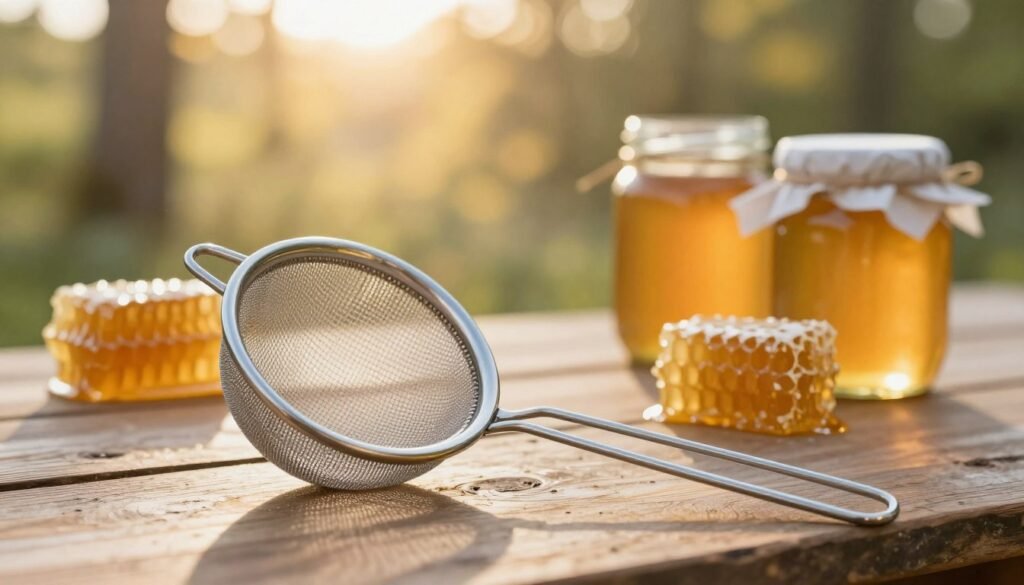
Nylon Filter Bags
Nylon honey bags are affordable and perfect for small batches. They let beekeepers keep beneficial pollen while catching comb and wax.
Use a nylon honey strainer after the extractor to protect tanks and reduce cleaning time. These plastic-friendly bags fold small and store easily between harvests.
Stainless Steel Sieves
Stainless steel filters suit commercial apiaries. They resist corrosion, sanitize quickly, and stand up to constant use.
Many operations run a 600 microns pre-pass on a steel sieve, then finish with a finer mesh for retail clarity.
Double Sieve Systems
A double-sieve system pairs a coarse top mesh with a fine bottom mesh for fast, reliable straining. This setup keeps flow steady into the tank and protects final filters from clogging.
- Benefits: faster extraction, less waste, and consistent product clarity.
- Tip: combine nylon and stainless tools to match volume and budget.
| Equipment | Best For | Key Feature |
|---|---|---|
| Nylon filter bag | Small-scale beekeeping | Reusable, retains pollen, low cost |
| Stainless steel sieve | Commercial apiaries | Durable, easy to sanitize |
| Double-sieve setup | All volumes | Coarse pre-pass + fine finish for clarity |
“Invest in the right strainer and filter setup to save time and protect product quality.”
Common Mistakes During the Filtering Process
A misplaced filter or dirty mesh can undo hours of careful extraction.
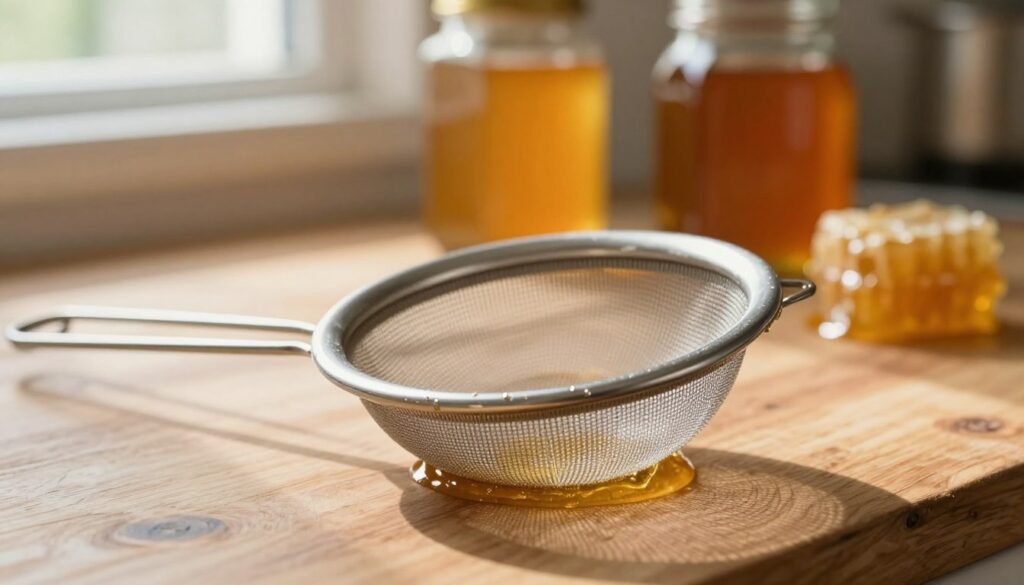
Many beekeepers skip basic cleaning of a nylon honey strainer. Residue builds up and risks contamination. Clean filters between runs and inspect the mesh closely.
Forcing cold product through a fine honey filter leads to clogging and damaged texture. Warm tanks gently and use an appropriate mesh to keep flow steady.
- Don’t rely on a single pass — a double-sieve setup saves time and prevents blockages.
- Choose the right size: too coarse lets wax and debris through; too fine strips pollen and character.
- Avoid non-food-grade plastic tools; they can leach during straining.
| Mistake | Effect | Quick Fix |
|---|---|---|
| Dirty nylon honey strainer | Contamination, off-flavor | Clean with hot water and food-safe detergent |
| Forcing cold through fine filter | Clogged filter, slow flow | Warm to ~95°F, use staged filters |
| Skipping settling | More debris at final pass | Let product rest in tank before filtering |
Learn from experienced beekeepers and refine your technique. If you’re dealing with persistent problems, read this forum discussion on common difficulties in difficulties straining.
Conclusion
A clear finishing plan turns good extraction into a market-ready product.
Mastering the difference between coarse and fine steps is the key to producing high-quality honey that customers value. Choose the right equipment, from a reliable nylon honey strainer to a sturdy extractor, and match mesh to your goals.
Focus on preserving natural enzymes and pollen while keeping jars clean. The extraction and subsequent straining process reflect your standards in every jar of raw honey.
For essential supplies and practical gear, check this guide to harvesting tools and equipment at essential supplies for a successful honey. With the right choice and care, your products will show the best of your beekeeping work each season.
FAQ
What is the main difference between coarse and fine honey straining?
Coarse straining removes large debris like wax cappings, bee parts, and chunkier particles using a wider mesh such as 600 microns. Fine filtering uses tighter mesh (around 200 microns or finer) to remove smaller particles and produce clearer, more shelf-stable honey while retaining desirable components when chosen carefully.
How does straining fit into the extraction process?
Straining is performed after frames are spun in an extractor and before bottling. It protects pumps and tanks from debris, improves clarity for retail, and prepares honey for settling and packaging. Many beekeepers run a coarse pass first, then a finer filter to control particulate size.
Why is removing debris important during processing?
Removing large bits of wax, propolis, and hive fragments prevents blockages in equipment and reduces cloudiness. It also lowers the chance of fermentation by reducing trapped moisture and solids that can harbor yeast.
Will filtering remove pollen and enzymes from my product?
The level of pollen and enzyme removal depends on filter micron size and method. Coarser filters preserve most pollen and enzymes, while very fine filters or heated processes can strip out pollen grains and some enzymes, altering flavor and raw attributes.
What micron sizes are commonly used and what do they remove?
Common meshes include about 600 microns for initial straining to remove cappings and wax, and around 200 microns for a second pass to eliminate finer particles. Smaller than 200 microns will remove most pollen and create very clear honey.
How does temperature affect filtering efficiency?
Warmer honey flows easier, so gentle warming (not exceeding 95°F/35°C) reduces viscosity and speeds filtration. Excessive heat risks degrading enzymes and flavor, so avoid overheating while aiming for a balance between flow and product quality.
What equipment options should small-scale beekeepers consider?
Popular choices include nylon filter bags and stainless steel sieves. Nylon is affordable and available in many micron ratings, while stainless steel offers durability and easy cleaning. Double sieve systems let you combine pre-filtering and fine filtering for better control.
When is a pre-filter pass beneficial?
A pre-filter removes bulk debris before finer filtration, preventing clogging and extending the life of fine meshes. Many operations use a 600-micron pre-filter ahead of a 200-micron or finer filter to maintain flow and clarity.
Can filtering change the natural characteristics of raw honey?
Yes. Gentle filtering preserves much of the raw profile, including pollen and enzymes, while aggressive or ultra-fine filtering can reduce pollen content, affect aroma, and make the product closer to commercial clear honey.
What common mistakes should be avoided during filtering?
Avoid filtering at too-high temperatures, using overly fine mesh too early, and skipping pre-filtration. Poor cleanliness, forcing flow under pressure, and not checking filter integrity can introduce contamination or damage equipment.
How do I choose between nylon and stainless steel filters?
Choose nylon for cost-effective, disposable or replaceable options available in many micron sizes. Choose stainless steel for long-term durability, easy sanitation, and repeated use in larger operations. Match material to scale, cleaning practices, and desired clarity.
Will finer filtering extend shelf life?
Finer filtering reduces particulate matter that can harbor yeast and moisture pockets, which can lower fermentation risk and improve perceived shelf life. However, proper storage and moisture control remain essential.
Are there regulations or labeling considerations when filtering raw products?
Some markets require disclosure if honey is ultra-filtered and pollen removed, since pollen is used to verify origin. Check local labeling rules and buyer expectations if you plan to market raw or single-origin products.
How can I preserve pollen and beneficial components while improving clarity?
Use a two-stage approach: a coarser pre-filter to remove large debris, gentle warming to improve flow, and a modest fine filter (around 200 microns) to clear tiny particles while leaving most pollen intact.