Beekeepers rely on precise measurement to decide when frames are ready for harvest. Timing matters: bees cap liquid stores at the end of a nectar season to signal readiness.
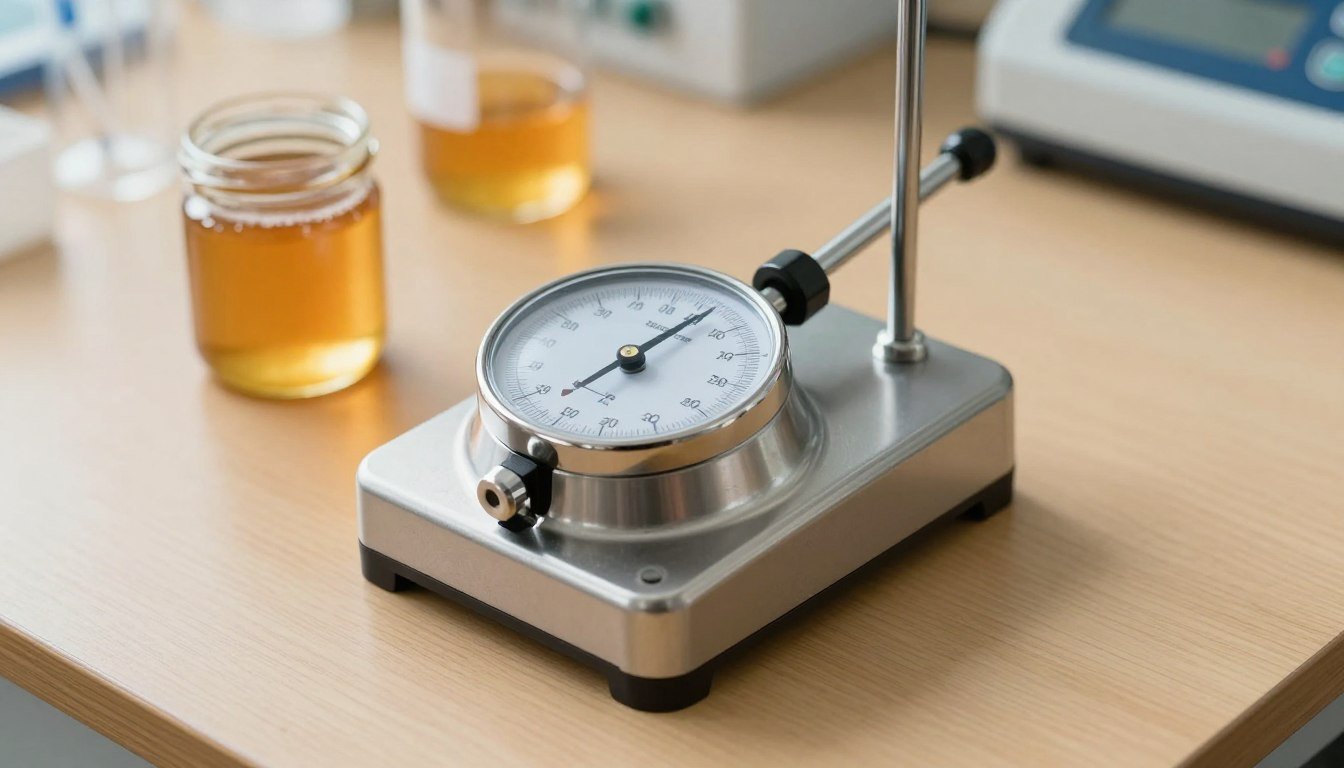
The simple tool measures how light bends through a small sample, revealing water content and sugar balance. Proper readings help avoid fermentation and protect quality for sale or storage.
With basic calibration and care, a reliable device gives quick, repeatable results. For step-by-step digital guidance, see the SmartRef overview and practical sampling tips from experienced beekeepers.
Key Takeaways
- Use a refractometer for fast, reliable water content measurement.
- Harvest when capped frames show target readings to prevent spoilage.
- Proper sample prep and calibration keep results accurate.
- Digital devices and apps simplify logging and Brix conversion.
- Consistent checks protect shelf life and maintain honey quality.
Why Moisture Content Matters for Honey Quality
Small differences in water content can turn premium nectar into spoiled syrup. This is why beekeepers must watch the water content closely before extraction.
The risk of fermentation rises when water rises above safe levels. Microorganisms multiply in wet jars, causing bubbling, off-flavors, and lost value. That is why bees spend energy drying nectar in the hive by adding enzymes and fanning with wings.
The Risks of Fermentation
Honey with high water levels often ferments and becomes suitable only for baking rather than direct sale. Regular checks prevent spoilage and protect reputation for quality.
- If water content is too high, microorganisms can multiply and spoil jars.
- Bees naturally reduce water, but producers must verify maturity before harvest.
- Different types have different safe ranges; verify for each varietal.
Ideal Moisture Ranges
The widely accepted ideal range is 17%–18%. It is generally recommended the level not exceed 20% for stability and shelf life.
High-quality tools help. Use a reliable refractometer to check Brix and convert readings into water percent. For practical guides on checking levels and drying frames, see this field guide.
For advice on choosing accurate instruments and understanding humidity effects during curing, consult this refractometer review and the article on humidity effects.
How to Test Honey Moisture with a Refractometer
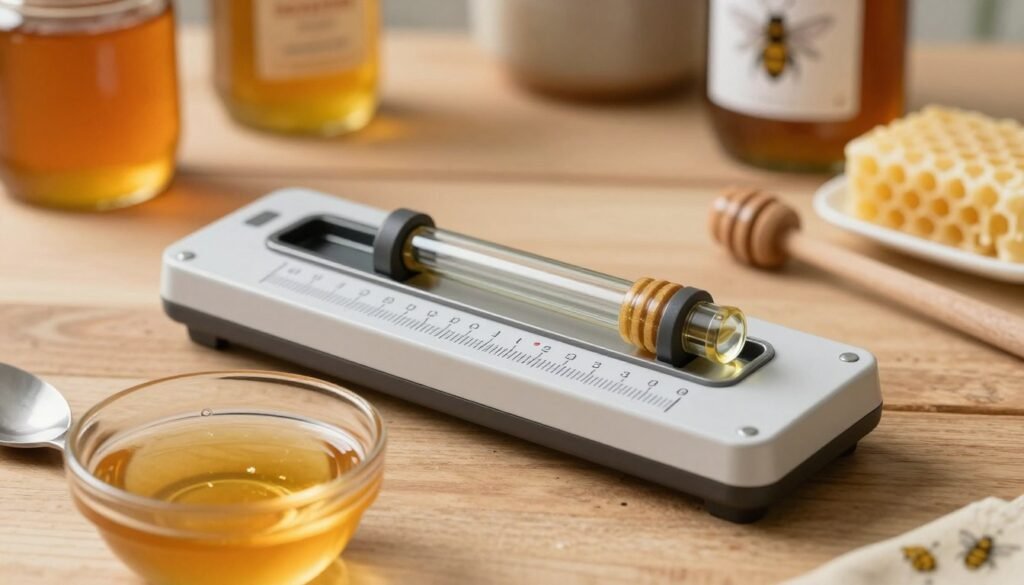
Place a tiny drop on the instrument plate and watch the internal scale for a clear reading. Cover the prism fully so the liquid forms an even layer.
Refraction is the reason this works: light bends as it passes through the sample and prism, and that bend correlates to sugar concentration. The device shows a Brix value on its scale, which converts to water percent for quality checks.
Choose a reliable model. Dadant & Sons sells pocket and standard options, and the Atago Master Honey Refractometer delivers precise readings that many beekeepers prefer. Keep the prism clean and calibrate before use so readings remain accurate.
- Place the drop on the plate and close the cover.
- Allow the light path to stabilize, then read the scale.
- Note temperature, then convert Brix to percent water as needed.
| Model | Scale Type | Calibration | Typical Accuracy |
|---|---|---|---|
| Atago Master | Brix digital/analog | Adjustable, user-cal | ±0.1% water |
| Dadant Pocket Digital | Digital Brix | Auto and manual | ±0.2% water |
| Dadant Standard | Analog Brix scale | Manual | ±0.3% water |
| Typical Field Tips | Small drop, clean prism | Calibrate often | Account for temperature |
For practical forum guidance, see this step-by-step discussion. For related purity checks and home techniques, consult this purity guide.
Best Practices for Accurate Readings
Consistency in sample handling and device care gives repeatable, trustworthy readings. Follow a short routine before each measurement so the scale reflects true content.
Calibration Procedures
Calibrate every session. Use distilled water or a certified standard and adjust the scale until the reading matches the known value. Repeat calibration if temperature shifts.
If technical support is needed, contact Dadant & Sons at 1-800-234-3368 for guidance on standards and parts.
Homogenizing Your Sample
Stir the honey for at least 3 minutes and pass it through a 0.5 mm sieve before placing any drop on the plate. If crystallized, liquefy in a water bath at 40–50 °C first.
Ensure the amount covers the plate fully without excess. Proper homogenizing yields stable Brix readings and accurate water percent.
Cleaning and Maintenance
- Wipe the plate and prism with a damp cloth after every use.
- Check the prism for scratches that can distort light and ruin readings.
- Store devices in a dry case and verify calibration often.
For drying and level guidance, see this moisture content guide and tips on avoiding overheating during extraction at avoid overheating during extraction.
Conclusion
Consistent measurement lifts your harvest from guesswork into reliable quality control. , Mastering the refractometer is a transformative step for any beekeeper focused on premium production.
Regular checks of moisture content protect jars from fermentation and preserve flavor and color. Proper calibration, careful sample prep, and steady temperature deliver accurate readings and repeatable percent values.
Invest in quality refractometers and keep a simple routine. For practical guides on measurement methods, consult this moisture measurement methods, an in-depth guide to refractometers, and useful at-home checks for field decisions.
FAQ
What is the simplest way to measure moisture in honey?
Place a few drops of a well-mixed honey sample on the refractometer prism, close the cover plate, aim the instrument toward a light source, then read the moisture or percent water value from the scale. Use a digital or optical refractometer calibrated for sugar solutions and convert Brix to moisture if necessary.
Why does moisture level affect honey quality?
Higher water content raises the risk of fermentation, shortening shelf life and altering flavor and aroma. Low moisture keeps honey stable, viscous, and clear. Beekeepers monitor levels to ensure marketable, safe product and to decide whether to extract, bottle, or dry frames further.
What moisture range is ideal for storage and sale?
Aim for 16–18% water content for long-term stability and to meet most buyer standards. Up to 20% may be acceptable for some local sales, but values above 18% risk yeast activity, especially if stored warm or exposed to humidity.
How often should I calibrate my refractometer?
Calibrate before each major testing session, or daily if you test many samples. Use distilled water for optical units (should read 0% Brix) or a standard calibration fluid specified by the manufacturer, and follow the device manual for adjustments.
Can temperature affect readings and how do I correct for it?
Yes. Honey refractometry is temperature-sensitive. Many modern refractometers include automatic temperature compensation (ATC). If yours lacks ATC, apply the manufacturer’s correction table or test samples near the instrument’s reference temperature (often 20°C / 68°F).
How should I prepare a honey sample for testing?
Homogenize by stirring or briefly heating to about 35–40°C (95–104°F) to reduce air bubbles and crystallization, then let it cool to testing temperature. Avoid overheating; excessive heat can alter sugar composition and give false readings.
How much sample is needed for an accurate measurement?
Only a few drops that fully cover the prism are required. Ensure no air gaps or crystals remain on the surface. Larger volumes aren’t necessary and can make cleanup harder.
What maintenance does a refractometer need?
Wipe the prism with a lint-free cloth after each use and clean with distilled water or isopropyl alcohol for sticky residues. Store in a padded case away from direct sunlight. Replace batteries and recalibrate periodically per the manufacturer’s guidelines.
How do I convert Brix readings to percent water content?
Many refractometers display moisture or water percent directly when set for honey. If you get a Brix value, use a honey-specific conversion table or calculator to determine water content. Some laboratories and beekeeping guides provide these conversion charts.
What errors should I watch for that give unreliable readings?
Common issues include dirty or scratched prisms, air bubbles, unmixed or crystallized samples, incorrect temperature, and miscalibration. Address these before trusting results and repeat the measurement to confirm consistency.
Are digital refractometers better than analog for beekeepers?
Digital units often offer faster, easier readings and built-in temperature compensation, which reduces user error. Optical refractometers are durable and cost-effective. Choose based on testing volume, budget, and preference for portability versus precision.
Can I test honey straight from the hive frames?
Yes, but extract a small comb sample and liquefy or press it to obtain a representative liquid. Ensure the sample is free of debris and fully mixed before placing drops on the prism. Samples with high pollen, wax, or propolis residues may require filtering for reliable results.
What should I do if honey tests above recommended water content?
Consider additional curing on the hive or controlled drying with a dehumidifier. For extracted honey, use gentle warming and moisture reduction methods like a fan-assisted heater or commercial honey dehydrators. Labeling and selling locally with buyer disclosure is another option if within safe limits.