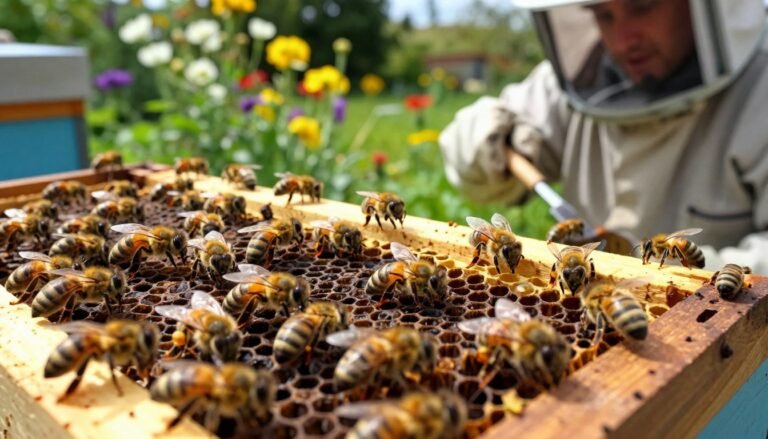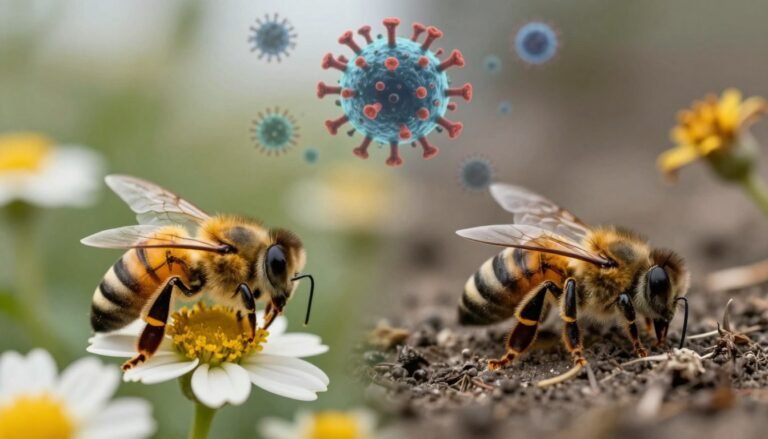
The puzzling appearance first noted by Aristotle on Lesbos over 2,300 years ago still draws attention today. This article outlines why these honey bees matter to farms and gardens across the United States.
Managed honey bee populations now support up to 50% of global pollination for crops. That link between pollination and food makes understanding this condition urgent for modern beekeepers.
We will explore how the bee develops its distinct look and why this pattern has become a focus in research on bee health. By combining historical records with current science, readers will get a clear overview of the problem’s scope.
Understanding the biology behind these insects is a first step toward safeguarding honey production and global food security. This section sets the stage for deeper analysis of trends, risks, and practical steps for those who manage hives.
Key Takeaways
- Aristotle recorded these unusual bees more than 2,300 years ago.
- Managed honey bees provide critical pollination for many crops.
- The article compares historical notes with modern research.
- Understanding bee health is vital for food and honey supply.
- Early biology insights help beekeepers protect their hives.
Historical Observations of Bee Paralysis
Historical records offer a timeline for a troubling hive disorder that predates modern science. Early observers noted the same striking signs that field researchers now link to chronic bee paralysis.
Aristotle’s Early Records
Aristotle wrote about small, hairless intruders in hives on Lesbos nearly 2,300 years ago. His notes describe individuals that matched later clinical descriptions of bee paralysis.
“Small, hairless thieves in the hive, bold among the combs.”
Evolution of Naming Conventions
Over centuries, beekeepers used local names for the same problem. Misidentification of the colony ruler persisted until the 17th century.
- Charles Butler corrected the idea that the queen was a king in 1634.
- Regional names include little blacks (UK), maladie noire (France), and schwarzsucht (Germany).
| Region | Historical Name | Notes |
|---|---|---|
| Greece | Ancient descriptions | Early records matching chronic bee reports (2300 years) |
| United Kingdom | little blacks | Common vernacular among beekeepers |
| France / Germany | maladie noire / schwarzsucht | Names reflect physical signs in colonies |
These accounts show that honey bee populations and beekeeping communities have tracked this disease for over two millennia.
Defining the Black Shiny Bees Syndrome Causes
Researchers now trace a distinct hive pattern to a viral process that strips worker hairs and alters colony dynamics.
Defining this condition requires a focused look at viral pathology. When viral load rises, infected individuals develop the classic hair loss on the abdomen. That loss gives adult workers a glossy, greasy look during inspection.
Scientific consensus points to chronic bee paralysis as the underlying disease. Labs detect high viral titers in affected hives when colony health falls below critical thresholds.
Experts work to distinguish this syndrome from mites, nutritional stress, and other infections. Clear diagnostic criteria help avoid misclassification and protect honey production.
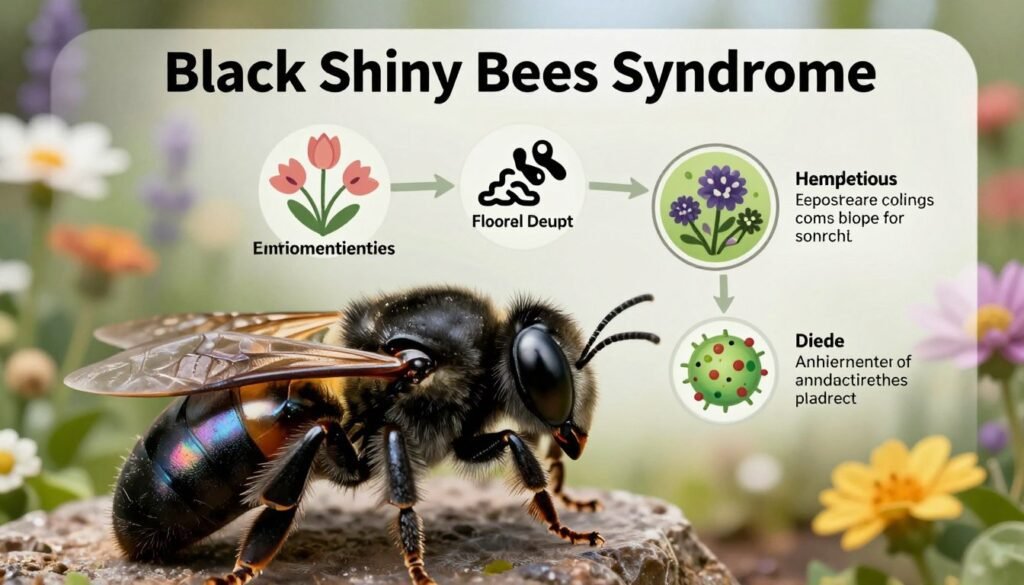
Isolating triggers — viral strain, colony stress, and environmental pressure — lets scientists assess impacts on survival and productivity. Better detection supports targeted management and improved hive resilience in the United States.
Clinical Symptoms and Physical Manifestations
Beekeepers usually spot the problem first during routine hive checks when workers look markedly altered. Early recognition helps manage spread and protect honey production.
Physical Appearance of Affected Bees
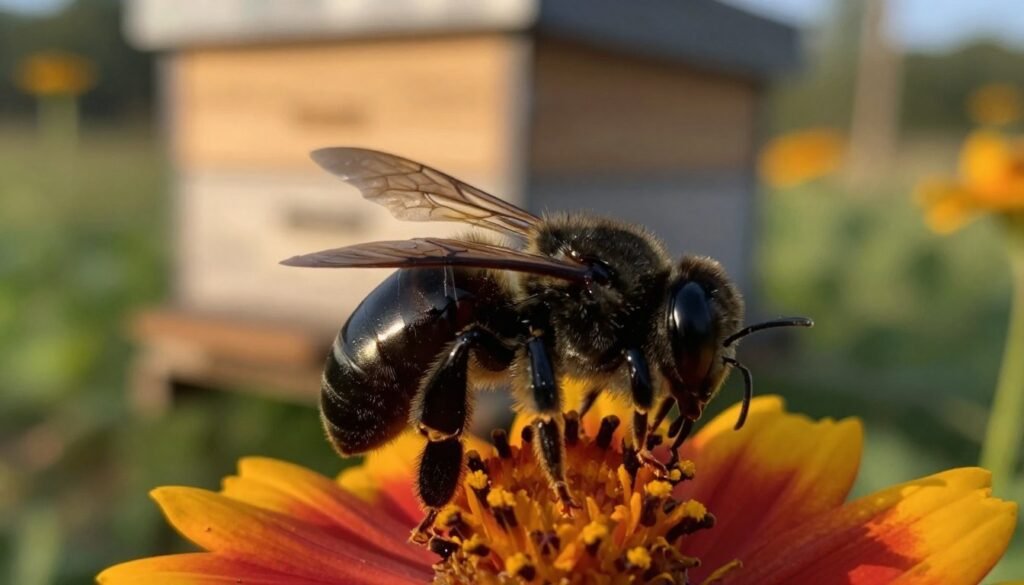
Affected worker insects lose hair on the abdomen and take on a glossy, greasy look. Inspectors notice these individuals on top bars or near the entrance.
Severe abdominal bloating often accompanies hair loss and makes movement difficult. These features are hallmarks of chronic bee paralysis in the field.
Behavioral Changes
Another common sign is abnormal wing trembling and shivering. This trembling reduces flight ability and causes many workers to fall from normal tasks.
Beekeepers frequently first find piles of dead bees beneath the hive entrance. Large losses can occur quickly, though the colony itself sometimes survives the initial outbreak.
- Flightless workers: unable to return to foraging.
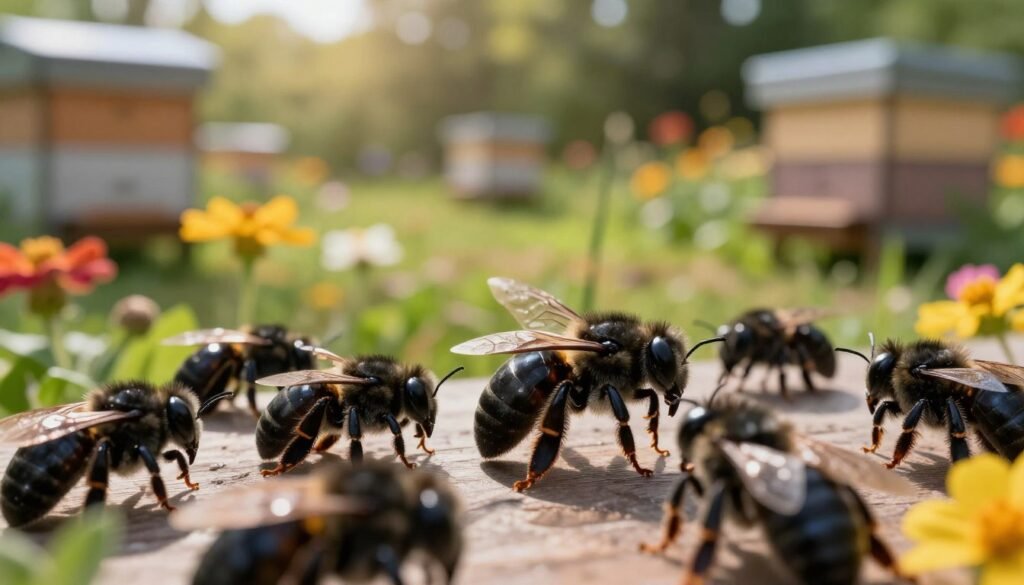
- Accumulations: symptomatic individuals cluster outside the colony.
- Winter risk: surviving colonies may struggle to rebuild for honey flow and cold months.
The Role of Chronic Bee Paralysis Virus
Experimental tests showed that a nonbacterial agent could reproduce the hallmark signs seen in affected hives.
Burnside’s work in the 1940s was pivotal. He used bacterial-free extracts in caged honey bee trials and recreated paralysis and hair loss. That experiment shifted thinking toward a viral etiology for the disease.
Two decades later Leslie Bailey isolated and described the first two viruses from honey bee tissue, including the chronic bee paralysis virus (CBPV). His work gave labs a target for molecular study and field diagnosis.
Infected individuals often carry active virus for about six days before clear symptoms appear. During that window, infected workers can spread the infection across the colony and increase viral load.
“Research into CBPV has been instrumental in explaining how the virus moves through colonies and why severe physical changes follow infection.”
High viral titers can push a colony toward collapse. Understanding CBPV and the bee paralysis virus family helps beekeepers detect early infection and reduce losses in managed hives. For deeper molecular context, see this key study on viral spread.
Distinguishing Between Different Viral Syndromes
Field and lab teams categorize presentations to guide diagnosis and management. Clear labels help vets and beekeepers decide when to sample and when to isolate hives.
Comparing Type One and Type Two Symptoms
Type One shows the classic hairless workers with a glossy abdomen. Inspectors often find many affected individuals clustered near the entrance.
Type Two features severe wing trembling and marked abdominal bloating. Affected honey bee workers struggle to fly and may fall from combs.
Both presentations can appear in the same colony. Historical and experimental work from the 1960s found similar viral loads in both groups, indicating a single agent can produce different signs.
“Laboratory evidence supports that varied clinical pictures reflect the same underlying viral infection.”
| Feature | Type One | Type Two |
|---|---|---|
| Primary sign | Hair loss and glossy abdomen | Wing trembling and bloating |
| Behavioral impact | Reduced foraging, clustering outside | Flightless, severe tremor |
| Associated agent | chronic bee paralysis / cbpv | chronic bee paralysis / cbpv |
| Diagnostic note | High virus titers detectable | High virus titers detectable |
Practical point: Distinguishing presentations aids targeted sampling for bee paralysis virus and other tests. Rapid detection helps limit spread and protect honey production.
Why the Disease is Considered an Emerging Threat
Surveillance and beekeeper reports show the condition moving from rare events into sustained outbreaks. This trend raises alarm for commercial and backyard operations across the United States.
Analyzing the Exponential Increase in Cases
Incidence and range have grown rapidly. Once sporadic, chronic bee paralysis now appears in more districts and climates. Researchers link this rise to a mix of management, movement, and environmental pressure.
Strong colonies do not guarantee safety. High-density apiaries and confined transport can hasten transmission of the virus among colonies. That makes large operations a focal point for containment.
Scientists are testing which factors drive the surge. Their findings will guide targeted strategies to protect hive health and maintain honey production.
“Understanding why this disease is re-emerging lets us design better management and reduce large-scale losses.”
Analyzing the Exponential Increase in Cases
Data from routine inspections reveal a sharp rise in reported hive infections across England and Wales over a ten-year period. Review of nearly 80,000 apiary visits from 2006 to 2017 shows no recorded cases in the first year, followed by steady and then exponential growth.
Key findings include broad geographic spread and a marked difference between commercial and amateur operations.
- Between 2007 and 2017, reported cases increased rapidly, signaling true emergence rather than isolated events.
- By 2017, reports covered 80% of English and Welsh counties, demonstrating wide incidence across regions.
- Commercial apiaries experienced almost double the disease compared with amateur apiaries, especially in the last three years of the study.
This open access analysis appears in Nature Communications and offers clear evidence that the virus is a growing threat to bee health and honey production.
“The dataset provides strong, spatially extensive evidence of a genuine increase in cases over the study period.”
For detailed methods and raw data, consult the full report on chronic bee paralysis.
Spatial Clustering and Localized Outbreaks
Spatial mapping reveals that infections cluster tightly around local apiaries rather than spreading uniformly across regions.
Patterns of disease spread show significant clustering at distances up to 40 kilometers within a single year. This clustering is clear in the data from routine inspections across england wales and other regions.
Clusters form during the active beekeeping season and then fade. In many cases the same area does not show high incidence in the next year. That pattern suggests outbreaks can burn out within a season and then be reintroduced elsewhere.
Patterns of Disease Spread
The lack of consistent spatiotemporal clustering means the problem does not move as a simple invasion front. Instead, pockets of chronic bee paralysis appear in scattered locations. This makes tracking the virus and predicting future cases harder.
“Localized outbreaks require targeted actions at the apiary level to limit spread to neighboring colonies.”
Practical takeaway: focus surveillance and rapid response at clustered sites. Timely, local intervention reduces the number of affected hive and lowers risk to nearby honey bee operations.
The Impact of Commercial Beekeeping Operations
Commercial hive operations can alter transmission dynamics for infectious agents in honey production. Large apiaries concentrate many strong colonies in one place. That setup raises the number of contacts and the risk of spread.
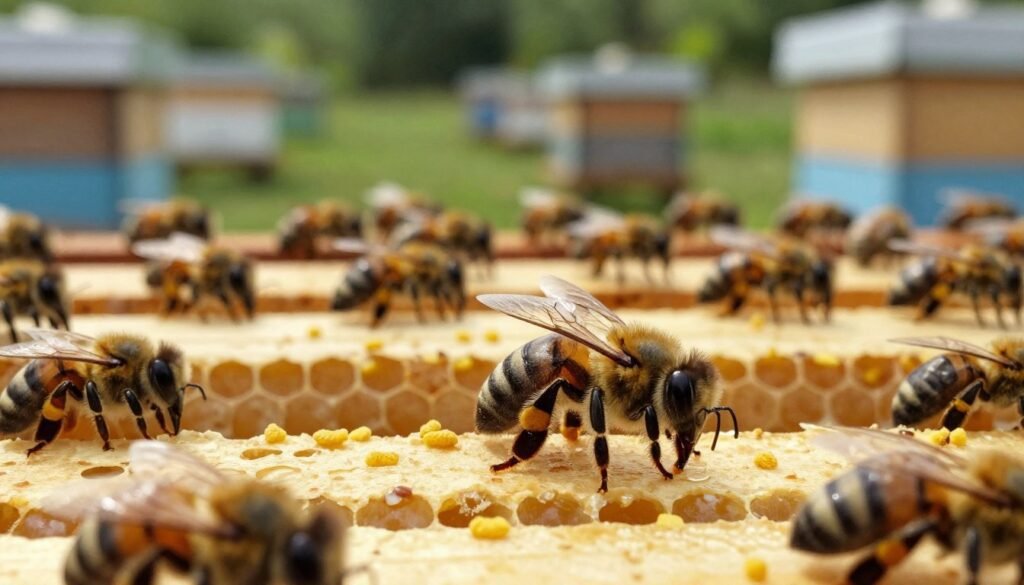
Data show apiaries run by bee farmers had a 1.5 times greater risk of recording chronic bee paralysis compared with smaller amateur sites. From about 2014 onward, the gap in incidence widened in england wales surveys.
The scale of operations and specific nectar sources used by farmers can create ideal conditions for the virus to move quickly. Strong colonies prepared for early pollination are especially vulnerable to rapid transmission.
- Higher density: more contacts between individuals speeds spread.
- Frequent movement: transporting colonies increases cases across regions.
- Production risk: a single outbreak can affect honey yield across a farm.
“Managing large-scale operations requires tailored mitigation to protect the entire honey production cycle.”
Effective response combines surveillance, targeted sampling, and biosecurity steps at the apiary level to limit further disease and preserve hive health.
Evaluating the Link to Honey Bee Imports
Movement of queen stock across borders has reshaped how infectious agents appear in local hives.
Importation Risks
Between 2007 and 2017, more than 130,000 honey bee imports entered the region. Ninety percent of that number were queen bees. This large volume raises obvious biosecurity concerns for apiary managers in the United States.
Research shows apiaries that imported honey bee stock in the two years before inspection had a 1.8 times greater risk of recording chronic bee paralysis. That link does not prove importation is the direct cause of higher incidence.
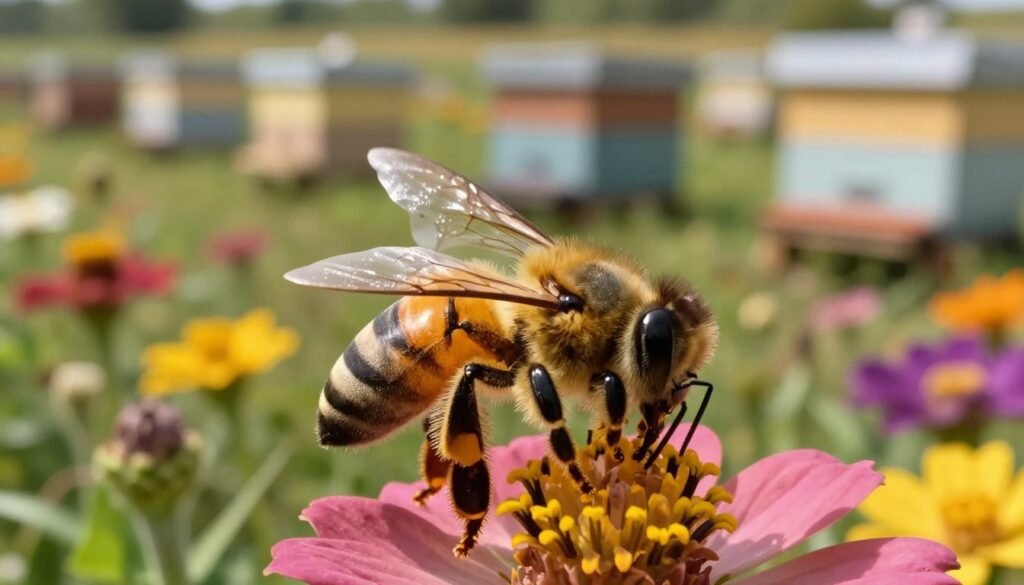
Distinguishing Carriers from Susceptible Populations
Two competing explanations guide current work. Imported queens might carry a more virulent virus strain. Alternately, introduced stock could be more susceptible to endemic disease when moved into new apiary conditions.
Rigorous health screening of queens is essential. Improved testing at points of entry and before sale would reduce risk of spread and protect colonies already under stress.
“Distinguishing whether imports are carriers or simply vulnerable will shape future trade rules and on-farm biosecurity.”
Priority for future research: targeted molecular sampling of imported queens, combined with careful follow-up in recipient apiaries, to resolve the uncertainty and lower cases linked to trade.
Challenges in Identifying Environmental Risk Factors
Pinpointing environmental drivers of chronic bee paralysis is difficult because many local factors are not captured by routine surveys.
Variables like specific nectar sources, microclimate, and pesticide exposure often go unrecorded. That missing context hinders models that might link landscape features to outbreak risk.
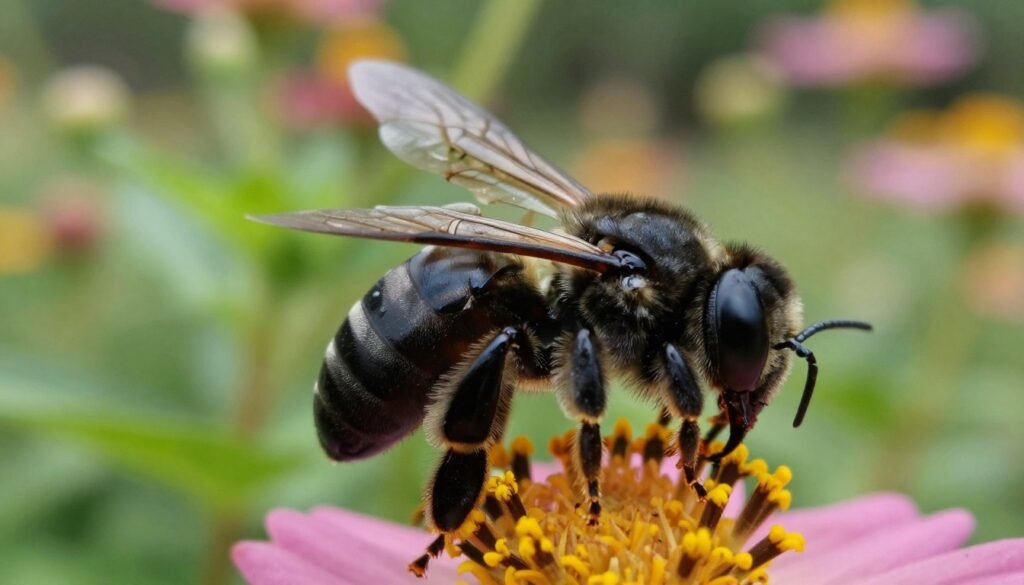
The disease is relatively rare and spatially clustered, so standard stats struggle to separate signal from noise. Small numbers of cases in a season make accurate error estimates hard.
Researchers must also account for coinfections and agrochemical stress, which can weaken bee health and amplify virus spread within colonies. Lab and field samples rarely include full toxicology or parasite screens.
- Data limits: existing records, including the 2007–2017 data, give a baseline but lack fine-grain metadata.
- Sampling design: more frequent, season-focused sampling of hives and local forage will improve inference.
- Next steps: integrate weather, land-use, and chemical residue data to understand how the virus moves through apiary networks.
“Better, targeted metadata is essential to reveal how environmental conditions influence incidence and spread.”
Misconceptions and Public Perception
Media reports often simplify complex hive health issues into dramatic headlines. This can create public panic that does not match field data.
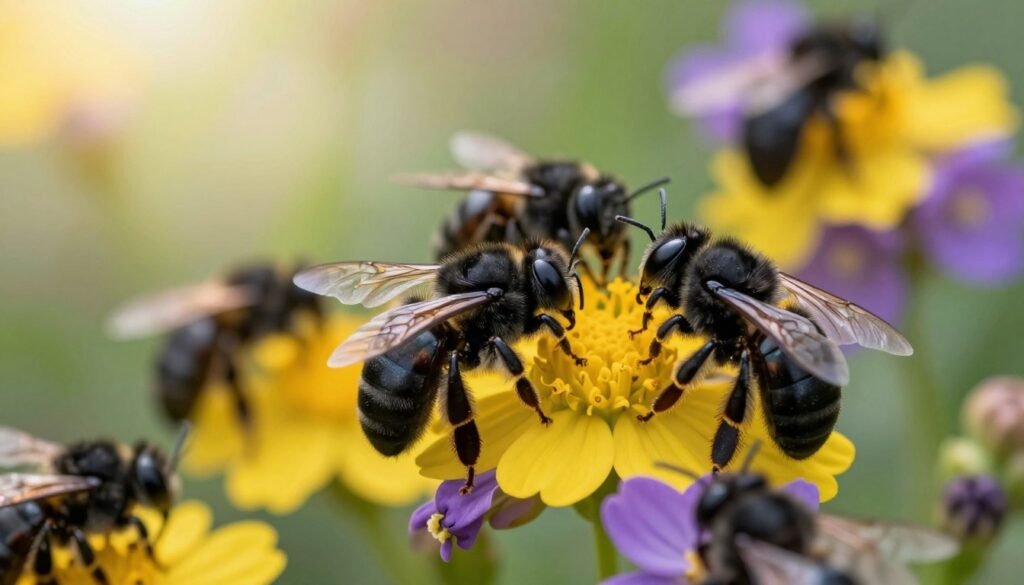
False claims — such as linking the condition to 5G or radiation — circulate widely on social platforms. These ideas distract attention from verifiable risk factors and can lead to poor choices by hobbyists and professionals.
Community trust matters. Relying on peer-reviewed studies and extension recommendations helps keep management focused on real threats. Accurate guidance supports both small apiaries and larger honey production efforts.
| Misinformation | Typical Claim | Evidence-based Response |
|---|---|---|
| Tech myths | 5G or radiation kills bees | No credible data; studies point to pathogens and management issues |
| Exaggeration | All bees are disappearing | Some declines exist, but losses are complex and localized |
| Quick fixes | Home remedies will save hives | Follow vet guidance and lab diagnostics for effective action |
Practical takeaway: This article urges readers to verify claims and support research-driven responses. Clear information helps direct funds and effort to interventions that protect bee health and sustain honey supplies.
Current Research and Scientific Methodology
Modern labs combine field sampling with molecular tests to trace viral spread in apiaries.
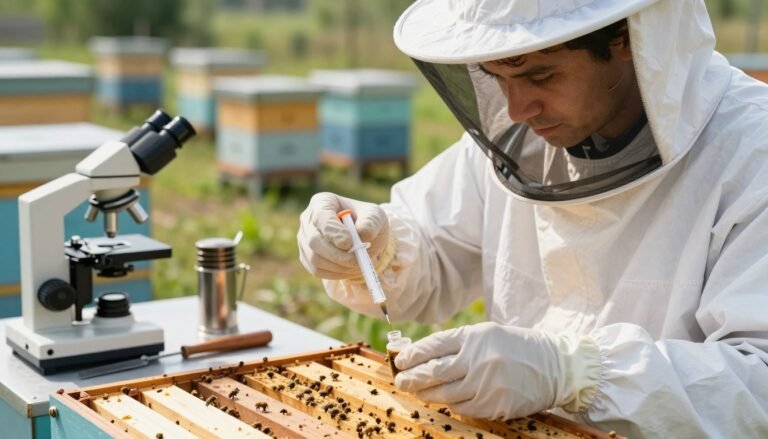
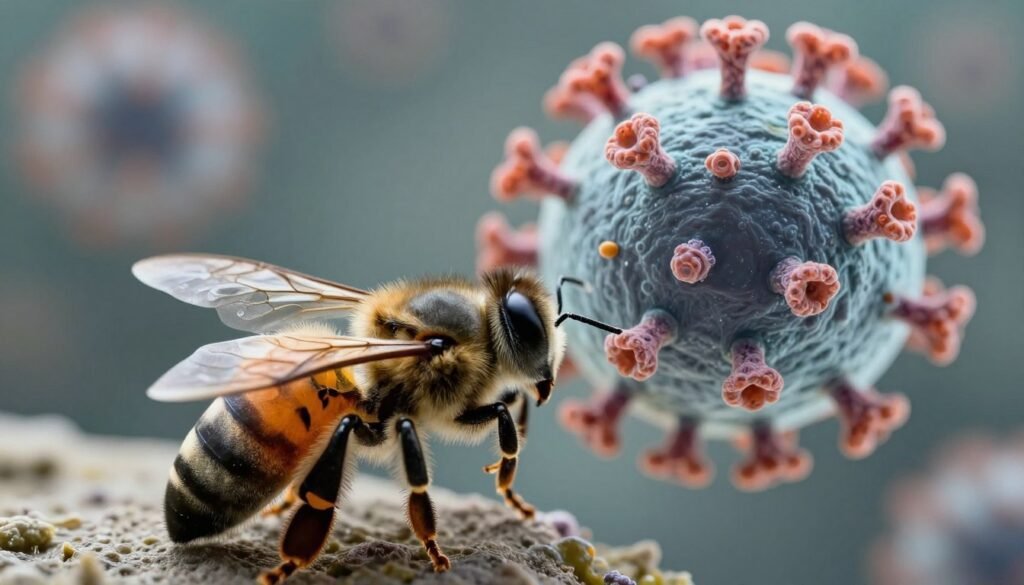
Researchers use RT qPCR assays to detect the bee paralysis virus in both symptomatic and asymptomatic colonies. These assays are highly sensitive and work on small tissue samples taken from worker insects and the queen when needed.
Quantification matters. One open access study sampled across England and Wales and found symptomatic bees carried about 235,000 times more virus than healthy ones. That clear data link supports the role of CBPV as the primary driver of observed symptoms.
Field teams follow strict sampling protocols to avoid contamination. Lab results are paired with hive inspections to match clinical signs with measured viral load. This approach strengthens evidence and helps track cases over time.
“Combining RT qPCR with coordinated sampling gives reliable evidence that the virus explains the clinical picture seen in many colonies.”
Ongoing research monitors samples for new strains and tracks infection in queen stock. Continued, standardized sampling will inform interventions that protect honey bee colonies and improve overall bee health.
| Method | Target | Key finding | Implication |
|---|---|---|---|
| RT qPCR assays | bee paralysis virus / CBPV | 235,000× higher viral load in symptomatic bees | Confirms virus as main cause of symptoms |
| Regional sampling | samples from england wales | Symptomatic and asymptomatic colonies tested | Maps spread and informs apiary response |
| Queen monitoring | queen samples | Screening for virulent strains | Reduces risk from imports and breeding |
| Longitudinal surveys | hive and colony data | Case trends over years | Guides policy and best practices |
Future Directions for Bee Health Management
Better diagnostic tools and clearer biosecurity rules will guide beekeeping practices in coming years. Practical, evidence-led steps can reduce risk to a colony and to entire apiary networks.
This article calls for focused research on queen imports and on how commercial operations change transmission dynamics. Targeted sampling of queen stock will clarify whether movement of stock spreads more virulent strains.
Scientists will use the england wales data to build improved monitoring tools. Open access publications will speed sharing of results with hobbyists and producers across the United States.
- Short term: enhance screening and on-farm biosecurity to limit spread.
- Medium term: deploy faster diagnostics and standardized sampling protocols.
- Long term: combine management, genetics, and surveillance to strengthen colonies against viral threats.
“Coordinated data and open access research will let beekeepers act quickly and with confidence.”
Over the next year, integrating high-quality data with routine inspections should improve bee health outcomes and protect honey bee populations at scale.
Conclusion
Recent data make clear that the bee paralysis virus is an expanding risk to honey production and colony health. This article summarizes rising case counts over recent years and links the trend to commercial apiary practices and queen movement.
Understanding the paralysis virus and the typical symptoms helps focus resources on prevention and rapid response. Practical steps — sanitation, ventilation, and careful screening of queen stock — reduce transmission at the hive level.
Future research will refine how these viruses interact with environment and management. For practical prevention guidance, see preventing chronic bee paralysis. Coordinated action will help protect apiaries and sustain honey production.
FAQ
What causes chronic bee paralysis and how is it related to the so-called black shiny bee syndrome?
Chronic bee paralysis is caused primarily by the chronic bee paralysis virus (CBPV). Infected honey bees show rapid onset of paralysis, trembling, and flightlessness, followed by death. The term “black shiny bee syndrome” has been used descriptively for the glossy, dark appearance of affected individuals, but CBPV is the main identified pathogen behind these signs in many documented cases.
How long have observers recorded paralysis-like diseases in honey bees?
Records of paralysis-like conditions date back centuries. Aristotle and other early naturalists noted unusual paralysis and weakness in bees. Modern virology and field surveys since the late 20th century have provided clear links between specific viruses, such as CBPV, and these historical observations.
Are there different names or classifications for this condition?
Yes. Historically, names were descriptive and varied by region and language. Today, scientists use terms tied to the causative agents and symptom clusters, such as chronic bee paralysis, CBPV infection, or paralysis syndromes. Distinguishing by viral type and clinical presentation is now standard in research and diagnostics.
What are the common clinical symptoms of CBPV infection?
Typical symptoms include trembling, inability to fly, progressive paralysis of appendages, and a glossy dark appearance in some bees. Affected workers often die away from the hive or accumulate in front of the entrance. Symptoms can appear rapidly over days.
How do affected bees look physically and behave differently?
Physically, infected bees may appear darker and less fuzzy, with a polished sheen. Behaviorally, they show disorientation, tremors, impaired grooming, and reduced locomotion. These changes reduce their ability to forage and perform colony tasks, increasing mortality at the individual and colony levels.
What role does the chronic bee paralysis virus play in colony health?
CBPV directly harms individual bees and can reduce colony workforce when outbreaks are severe. Repeated or large-scale infections can stress colonies, lower honey production, and make hives more vulnerable to other threats. Monitoring and management reduce spread and long-term impact.
Are there different viral syndromes that cause similar paralysis symptoms?
Yes. Several viruses can produce paralysis-like signs in honey bees. Researchers often differentiate between symptom sets—sometimes labeled as type one and type two—based on presentation, speed of onset, and associated pathology. Laboratory testing is required to identify the specific viral agent.
Why is chronic bee paralysis considered an emerging threat in some regions?
The threat status follows observed increases in reported cases, wider geographic distribution, and detection in managed apiaries. Factors such as intensified beekeeping, colony movements, and greater diagnostic capacity have revealed higher incidence. This pattern raises concern for apiary health and commercial operations.
Have case numbers for CBPV increased in recent years?
Surveillance data from multiple countries show periods of rising case counts and clusters in certain years. Improved sampling, open-access research, and targeted studies between 2007 and 2017, for example, documented expanding incidence in some regions. Trends vary by country and beekeeping practices.
How does CBPV spread within and between colonies?
CBPV spreads through direct contact, contaminated surfaces, trophallaxis (food exchange), and exposure to infected debris at hive entrances. Foraging bees can carry the virus between apiaries. Localized outbreaks often show spatial clustering tied to apiary density and movement patterns.
Do commercial beekeeping operations increase the risk of outbreaks?
Large-scale operations can amplify transmission risk by moving colonies, concentrating hives, and increasing worker drift between colonies. High-density apiaries can facilitate faster spread, making biosecurity, monitoring, and strict hygiene practices essential for commercial producers.
Is the importation of honey bees linked to new outbreaks of paralysis viruses?
Importation can introduce novel viral strains or increase pathogen pressure. Risk depends on source health status, quarantine protocols, and screening. Distinguishing between imported carrier bees and susceptible local populations requires surveillance and molecular diagnostics.
What environmental factors influence CBPV outbreaks?
Identifying clear environmental drivers is challenging. Stressors such as poor nutrition, pesticide exposure, and climate extremes may lower immune resilience and raise susceptibility. However, direct environmental causation is difficult to prove without controlled studies.
What common misconceptions exist about paralysis in honey bees?
Misconceptions include assuming all dark, motionless bees are the same disease or that CBPV is always fatal at the colony level. Some public accounts conflate unrelated disorders. Accurate diagnosis requires observation, sampling, and laboratory tests rather than visual speculation alone.
What research methods are used to study CBPV and related syndromes?
Researchers use field surveillance, molecular assays (PCR), virus isolation, and controlled infection trials. Longitudinal studies and spatial analyses help reveal patterns of spread. Open-access datasets from national bee health programs improve comparative studies across years and regions.
What practical steps can be taken to reduce risk and manage outbreaks?
Implement regular hive inspections, practice good apiary hygiene, avoid unnecessary colony movements, and quarantine new stock. Promptly remove heavily affected colonies or frames and consult diagnostic labs for confirmation. Integrated management reduces transmission and supports colony resilience.
Are there treatments or vaccines available for CBPV?
No specific antiviral treatments or vaccines are currently available for CBPV. Management relies on prevention, good husbandry, and limiting conditions that stress colonies. Research into antiviral strategies and selective breeding for resistance is ongoing.