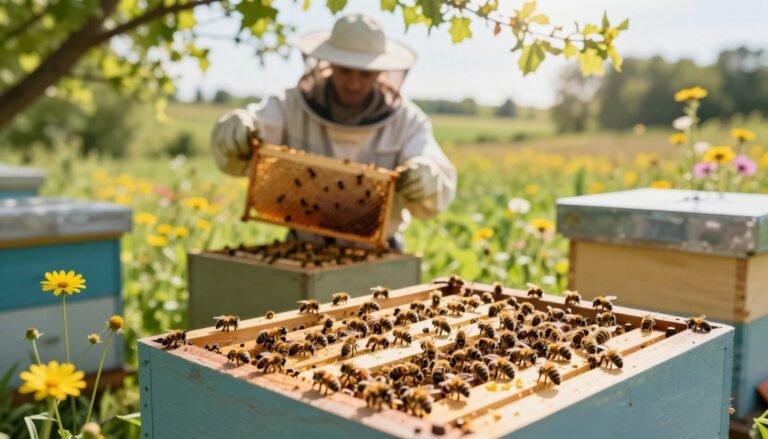
Spring is the time when beekeepers must watch their hives closely. Many colonies show signs of stress as weather and food resources change. Early detection helps protect honey production and overall colony health.
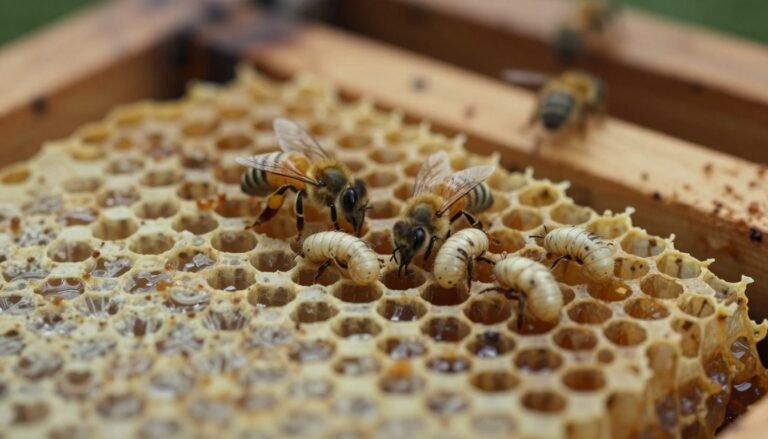
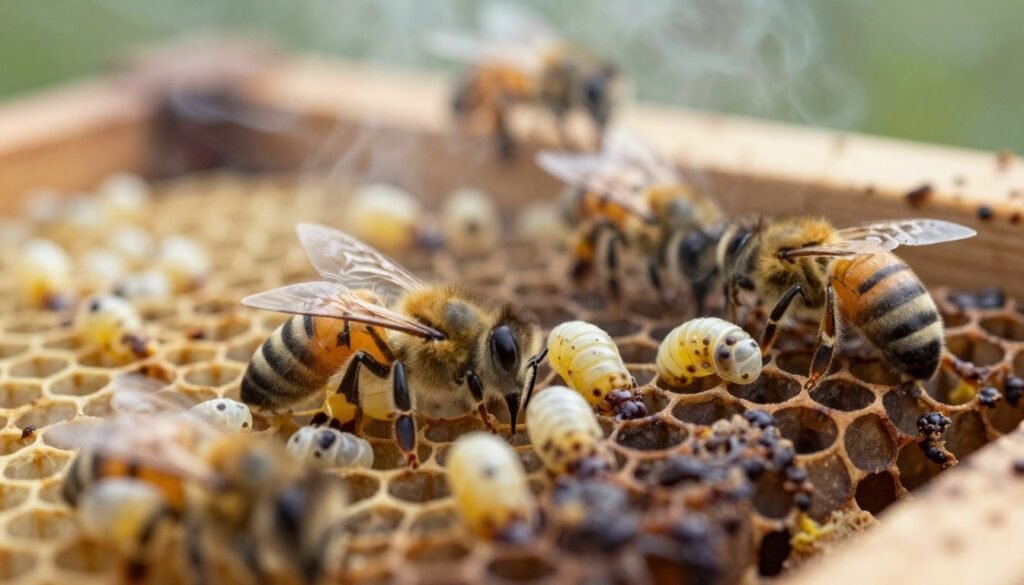
Infected larvae in cells can signal multiple problems. Nurse bees may struggle to feed developing larva, and a failing queen or poor weather can make symptoms more likely. Spotty patterns in the comb often prompt closer inspection.
Understanding the difference between viral infection and environmental chill is key for correct action. Practical steps—like checking cappings, adjusting feeding, and reviewing equipment—help limit spread. For a detailed guide on common brood conditions and signs, see brood condition resources.
Key Takeaways
- Monitor colonies in spring for spotty brood patterns and changes in larvae color.
- Distinguish infection signs from environmental stress to choose the right response.
- Good equipment, feeding, and timely inspection reduce disease risk.
- Nurse behavior, queen quality, and varroa pressure influence brood production.
- Document symptoms and act early to protect honey bee colonies and honey yield.
Understanding Sacbrood vs Chilled Brood
A quick look at cells and cappings can reveal whether larvae died from infection or a failure to stay warm. Viral cases arise when a pathogen prevents a larva from shedding its skin, while temperature-related losses happen when a small colony cannot keep eggs and larva at the right heat.
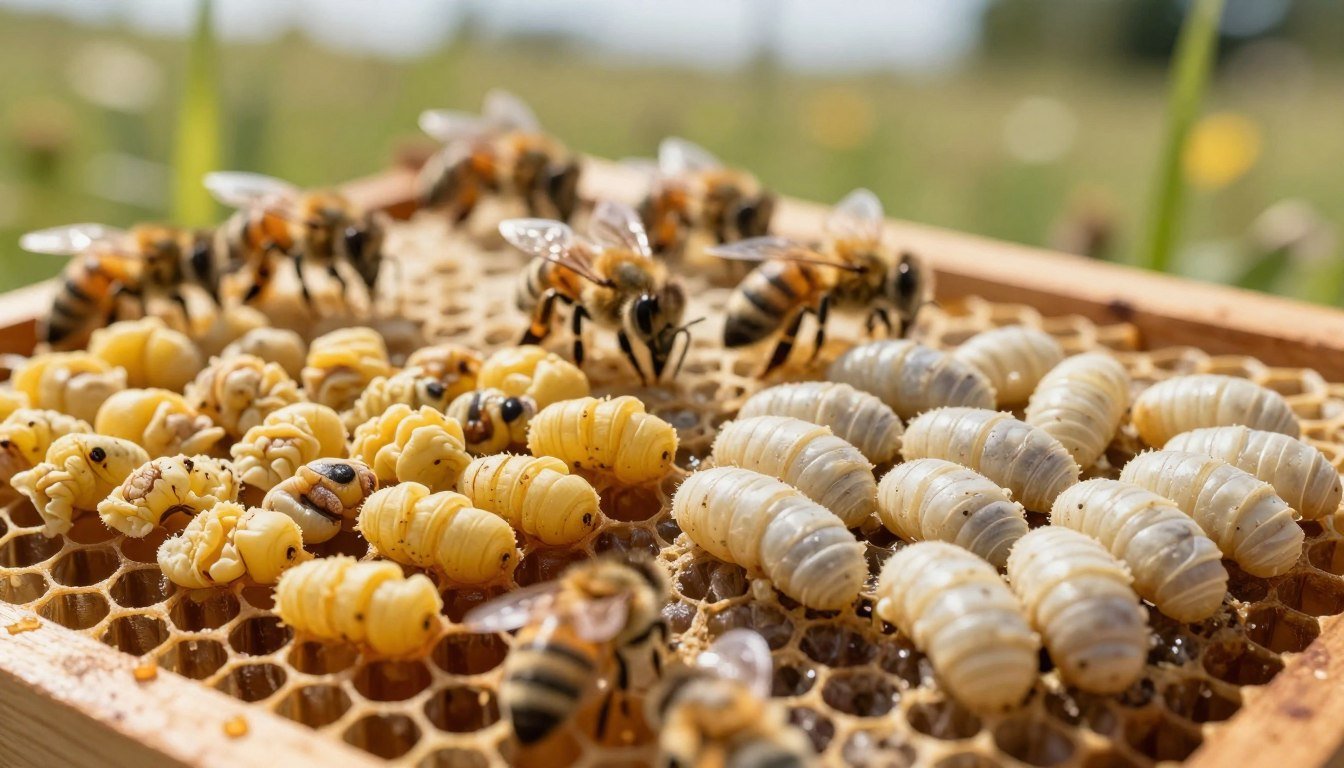
According to the University of Georgia, infected larvae change from pearly white to yellow and brown under sealed cells. In contrast, temperature-stressed larvae may appear off-color because nurse bees cannot cover all the comb during cold spring weather.
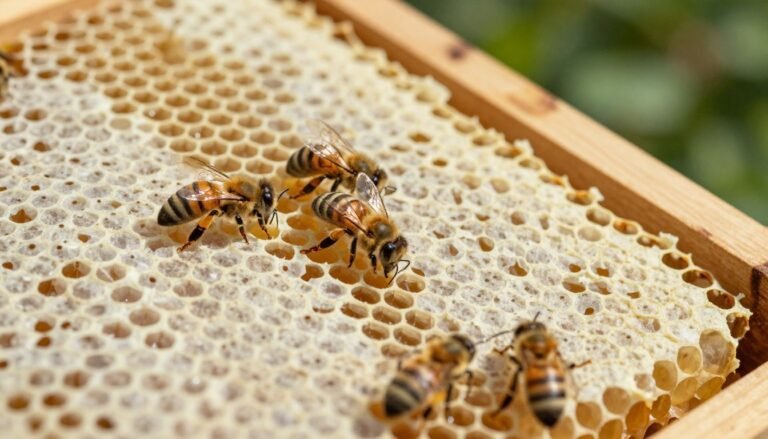
Beekeepers should inspect the queen’s laying pattern, watch for spotty comb and sunken cappings, and check adult bees for varroa mites. Proper equipment care—avoiding old shared comb—reduces the spread of fungal diseases like chalkbrood and other infections.
Effective feeding and steady brood production help colonies survive the shift into summer. For practical field ID of temperature-related losses, see this guide on identifying chilled patterns: identifying chilled brood.
Identifying Key Symptoms in the Hive
A careful look at frames and capped cells gives fast clues about what is wrong. Note posture, color, and where dead larvae appear on the comb.
Visual Cues for Sacbrood
Infected larvae often lie on their backs in a canoe-like posture after capping. The virus prevents the larva from shedding its skin, so a brown, fluid-filled sac may remain in the cell and can sometimes be removed with tweezers.
“Researchers in 2024 highlighted the brown, fluid-filled sac as a diagnostic sign.”
Watch adult bees and nurse bees for reduced care. Varroa mites and poor equipment hygiene can make disease worse.
Recognizing Chilled Brood Patterns
Temperature-related deaths cluster at the outer edges of the nest. Dead larvae may look pale and limp rather than fluid-filled.
Chalk-like mummies from the fungus Ascosphaera apis may show up white, gray, green, or black. Housecleaning worker bees often drop these on the landing board first.
For practical steps to prevent fungal spread, see how to prevent chalkbrood.
Environmental Factors and Colony Stress
Moisture and weak colony numbers often set the stage for disease in the comb. Poor ventilation and excess dampness promote fungal growth and make it hard for worker bees to keep cells dry.
A failing queen reduces population and weakens temperature control. When adult bees decline, nurse bees cannot cover all larvae, and food shortages limit royal jelly production.
High moisture can chill developing larva at the edges of the frame. This creates symptoms that mimic infection and increases the chance that infected larvae remain in the cell.
“Keeping hives well-fed and ventilated during cool, wet weather is key to preventing brood diseases.”
Place apiaries in dry sites and manage ventilation. Use feeders and pollen supplements when food is scarce. If you suspect widespread stress, consult detailed thermal pattern checks and recent colony collapse insights to guide interventions.
Managing Brood Diseases and Viral Infections
Practical steps—like modifying the brood cycle—limit virus transmission in hives. Early action focuses on stopping spread, protecting larvae and adult bees, and keeping colonies strong.
Breaking the cycle
Cage the queen for 14 days to pause egg laying and break transmission to new larvae. This reduces viral load and gives the colony a fresh start.
The “shook swarm” moves adult bees to clean foundation and removes contaminated comb reservoirs. Removing old combs also lowers long-term infection risk.
Hygienic traits and stock
Breed or buy hygienic bees that uncap cells and remove sick pupae. Selecting for this behavior builds resistance over time.
Learn more about breeding and tests at this guide to hygienic behavior in bee lines.
Ventilation and hive care
Keep hives dry and elevated to prevent moisture that encourages fungal issues like chalkbrood.
Follow regional protocols and veterinary advice for treatments; read the best management practices for regulated options.
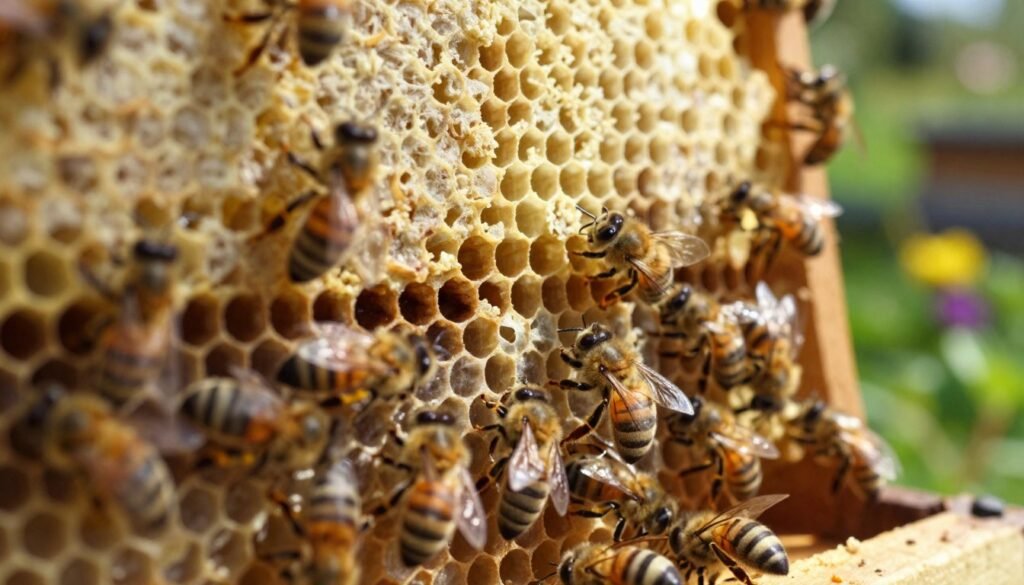
“Consistent monitoring of the queen and brood production cycle allows for timely interventions.”
Differentiating Other Common Brood Conditions
A focused diagnosis—looking for ropiness, sunken cappings, or tunneling—shortens response time. Start with simple checks at the cell and frame level to separate bacterial, viral, and pest problems.
American Foulbrood is caused by Paenibacillus larvae and often needs a field “ropiness” test. If the larval remains stretch about three quarters of an inch, notify authorities—AFB usually requires colony destruction under state law.
European Foulbrood lacks resistant spores and can sometimes be managed without burning comb. Parasitic Mite Syndrome (PMS) follows heavy varroa loads plus multiple virus infections and can cause adult bees to fail supporting the queen.
- Wax moths tunnel comb and uncap cells, creating “bald” patches but act mainly as scavengers.
- Black Queen Cell Virus targets developing queens and links to nosema pressure in spring.
- Differentiate sunken, perforated cappings of AFB from viral symptoms before acting.
“Always contact a state apiary inspector if you suspect American Foulbrood.”
For practical protocols and tool hygiene, consult regional disease management guidelines and learn how to sterilize hive tools to limit spread.
Conclusion
Healthy management is your best defense. Healthy bees and steady food stores give a colony the best chance to resist virus and fungal pressure. Regular checks of cells and larvae catch early warning signs before problems grow.
Prioritize hygienic queen stock, good ventilation, and timely feeding to reduce risks like chalkbrood. When symptoms are unclear, consult your local inspector and follow regional guidance.
For detailed diagnostic guidance and reporting procedures, see the ARS disease recognition handbook. Consistent care keeps colonies productive and protects honey yields into the season.
FAQ
What are the main differences between sacbrood and chilled brood?
These two conditions differ in cause and symptoms. One is a viral infection that affects larvae and produces fluid-filled sacs and discolored, stretched larvae. The other results from cold exposure or poor brood care, causing dead, curled larvae in cells with no clear signs of infection. Inspect cappings, larval posture, and odor to tell them apart.
How can I visually identify a viral larval infection in my hive?
Look for larvae that are elongated, discolored to a pale yellow-brown, and often held upright in the cell, sometimes forming a sac of fluid. Cappings may appear spotty or sunken. Nurse bees may remove infected larvae, so you may also see missing brood or small piles of uncapped dead larvae on the bottom board.
What patterns suggest cold-related brood loss rather than disease?
Cold-related loss often appears as random or clustered dead larvae, usually white to gray and curled inside cells. There is typically no foul odor, no fluid-filled sacs, and adult bee behavior shows reduced brood care during cold snaps. Check for gaps in the cluster and inadequate nurse bee numbers during spring or sudden weather changes.
Which environmental factors increase the risk of brood problems?
Low temperatures, poor ventilation, sudden weather swings, and overcrowding increase stress. Nutrition deficits from lack of pollen and nectar, pesticide exposure, and high varroa mite loads also weaken colonies and raise susceptibility to infections and chilled larvae.
How does hygienic behavior in worker bees help control larval issues?
Hygienic strains detect and remove diseased or dead brood rapidly, interrupting disease spread. Encouraging or selecting for hygienic colonies reduces virus prevalence and limits buildup of infected larvae. Good queen lines and breeding from productive, clean colonies support this behavior.
What practical steps break a brood disease cycle in an apiary?
Manage varroa mites, requeen with hygienic stock if needed, maintain strong nurse populations through feeding and brood breaks, practice good equipment sanitation, and isolate or replace heavily infected frames. Removing and replacing contaminated comb and rotating drawn comb over time also reduces pathogen load.
How important is hive ventilation for brood health?
Proper ventilation regulates temperature and humidity and reduces condensation that can chill brood or promote fungal growth. Ensure adequate entrance size, use screened bottom boards if appropriate, and avoid over-insulating in warm months. Balance ventilation with protection against cold drafts in winter.
Can other brood diseases be mistaken for viral or cold-related problems?
Yes. American and European foulbrood, mold infections like chalkbrood, and pesticide kill can mimic some signs. Foulbrood often produces abnormal odors, ropey larval remains, and different discoloration. When in doubt, send samples to a lab or contact your local extension service for diagnosis before taking major actions.
When should I call a local extension agent or bee inspector?
Seek help if you see widespread brood loss across multiple colonies, unusual odors, rapidly increasing dead brood, or suspect notifiable diseases. Early professional diagnosis prevents spread, guides legal requirements, and helps protect neighboring apiaries.
What immediate actions help a hive showing spotty brood and reduced production?
First, assess colony strength and varroa levels, provide supplemental feeding if pollen or nectar is scarce, improve ventilation and warmth if weather is cold, and remove badly affected comb. Monitor closely and consider requeening with a vigorous, disease-resistant strain to restore brood production.