Published March 31, 2026
Deciding the right number of openings for a beehive is one of the first choices beekeepers face. The entry design affects ventilation, colony defense, and moisture control all year long.
In summer, extra openings can ease airflow and help bees cool brood and stores of honey. In winter, though, too many openings increase heat loss and raise the risk of condensation on the floor that can harm the cluster.
Most practical setups favor a clear lower entrance for flights and waste removal and a screened bottom board or a small upper slot for backup ventilation. Learn trade-offs of an upper opening in cold months from this detailed guide on upper entrance beehive winter.
Good entrance management balances fresh air with warmth and limits moisture. Careful layout helps colonies keep steady temperatures, protect brood, and cut condensation risks during frigid temperatures. For region-specific winter tips, see winterizing beehives in northern states.
Key Takeaways
- One main lower opening usually meets flight and defense needs.
- Screened bottoms offer backup ventilation without large heat loss.
- Upper slots can vent humidity but may increase cold drafts.
- Control openings seasonally to protect brood and reduce condensation.
- Monitor colony behavior and adjust entry size to local climate.
Understanding the Role of Hive Entrances
Entrances act as the hive’s lungs, moving air in and out and shaping the colony’s internal climate. Proper openings help bees manage humidity and temperature so brood stays healthy and stores of honey remain stable.
Thermoregulation and Ventilation
Winter stress raises oxygen use; Southwick’s work shows oxygen consumption climbs as temperatures fall. Guarding thoracic heat matters too—Free and Spencer-Booth found bees need about 9–11°C to activate flight muscles for heating.
Smart ventilation through the entrance lets the colony reduce moisture and limit condensation. Proper airflow can make easier the task of keeping relative humidity above levels that support egg development.
Defense Against Pests and Robbers
Guard bees station at the opening to screen visitors and protect stores. The entrance is the colony’s first line of defense, balancing access for foragers with control against robbers and pests.
- Ventilation controls humidity and lowers condensation risk.
- Guards regulate traffic, keeping the brood warm and safe.
- Small, managed openings support survival through cold days.
For practical observation tips at the entrance, see entrance behavior notes. For detailed airflow strategies, consult this ventilation guide.
How Many Entrances Should a Hive Have for Optimal Health
Proper entry design balances warm shelter with enough air movement to keep brood and stores in good condition. Local climate and colony size determine the best setup.
Small colonies often do well with one clear entrance at the bottom. This supports flight activity, waste removal, and guard duties while limiting drafts in winter.
Larger colonies or stacked boxes may gain from an upper entrance for added ventilation and moisture control. Extra openings help reduce condensation but can increase heat loss and pest access.

- Balance fresh air and warmth to protect brood and honey.
- Monitor humidity and temperature; eggs need stable conditions.
- Each added opening raises the need for active guarding and inspection.
| Colony Size | Recommended Entrance | Benefit | Risk |
|---|---|---|---|
| Small | Single bottom | Simple defense, less heat loss | Limited ventilation |
| Medium | Bottom + small upper | Improved ventilation, less condensation | More draft, monitoring needed |
| Large or stacked | Bottom + upper entrance | Better air flow and moisture control | Higher pest and robbing risk |
For site and placement advice that complements entrance choices, see proper placement tips.
Managing Bottom and Top Entrance Configurations
Positioning the bottom and top openings sets the tone for season-long moisture control and temperature balance. A clear plan helps bees keep brood safe and reduces condensation risk in cold temperatures.
The Traditional Bottom Entrance
The classic bottom board with a clear bottom entrance gives foragers an easy way in and out of the brood box. Pairing this with a screened bottom board adds ventilation while limiting pests.
Beekeepers often fit an entrance reducer or mouse guard to protect the bottom opening during winter days.
Benefits of Top Entrances
Top or upper entrance openings can make it easier for bees to reach honey supers and vent warm, moist air upward. This can cut condensation and help control humidity in stacked boxes.
Use an upper entrance carefully in cold months since extra openings increase heat loss.
Risks of Multiple Openings
More entrances demand more guard bees. A weak colony may struggle during a summer nectar dearth and face higher robbing risk or swarm pressure.
“Multiple managed openings improve airflow but raise the need for strong defense.”
When using a queen excluder, make sure drones can leave the hive during swarm events. For practical tips on seasonal ventilation, see beehive ventilation hacks.
Seasonal Adjustments for Beehive Entrances
Adjusting openings by season keeps brood warm and reduces condensation risks on the bottom board.
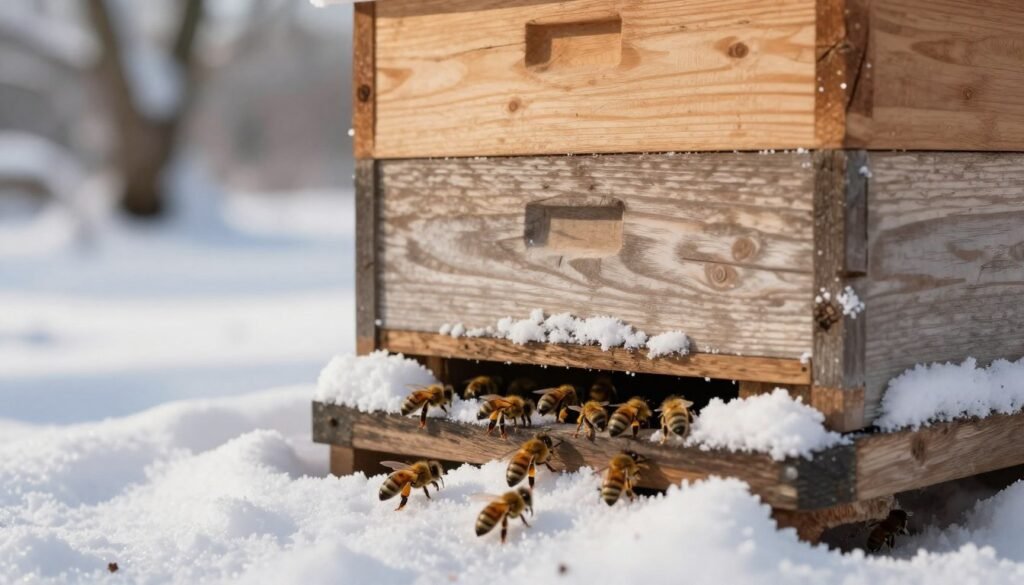
Winter care focuses on steady temperature and moisture control. Toomemaa (2012) noted that moisture often condenses on the floor or exits through the lower opening in well-insulated boxes. That means the bottom entrance must stay clear so damp air can leave and not drip on the cluster.
Beekeepers should check the bottom entrance during cold days and remove blockages made of dead bees. Adding a screened bottom board can give passive ventilation without a large heat loss. An upper entrance can help pull moisture up, but it can also raise consumption of honey as bees work to keep temperatures steady.
Practical winter checklist
- Keep bottom entrance clear for airflow and waste removal.
- Use screened bottom board to limit pests while letting air pass.
- Consider a small upper entrance to reduce condensation, watching honey stores.
| Condition | Recommended Opening | Benefit |
|---|---|---|
| Well-insulated, strong colony | Bottom + small upper entrance | Reduces condensation, improves ventilation |
| Weak colony, low stores | Single bottom entrance | Less heat loss, simpler defense |
| Indoor wintering at stable temps | Minimal openings | Energy conservation (Heinrich: ~41°F) |
Make sure to leave adequate honey per local guidelines (many U.S. states suggest ~35 pounds) before tightening openings for cold months. For seasonal planning and local dates, consult the beekeeping calendar and this ventilation and expansion guide for further steps.
Conclusion
Managing entrance openings directly shapes colony ventilation, defense, and long-term health.
Balanced air flow keeps moisture and humidity in check while guards protect stores and deter robbing. Adjust openings by season so bees can leave hive for cleansing flights and so the box stays dry in winter.
Monitor the colony for signs of damp comb or pest pressure and tweak the entrance setup to protect honey and brood. For practical tips on entrance management, see this entrance management guide.
Careful tweaks, local observation, and steady beekeeping will help your bees thrive through changing weather and resource cycles.
FAQ
What is the ideal number of hive entrances for a healthy colony?
Most beekeepers use a single main entrance with an additional screened or upper opening available when needed. A single well-sized opening supports forager traffic, reduces robbing risk, and simplifies hive defense. Add an auxiliary entrance temporarily for ventilation or during heavy nectar flows, then close it when not required.
Why do entrance openings matter for thermoregulation and ventilation?
Airflow affects temperature and humidity inside the brood area. Proper ventilation prevents condensation and mold while allowing bees to maintain brood nest temperatures year-round. A bottom entrance combined with a screened board or a small top vent helps move moist air out without creating drafts that cool the cluster.
How do entrances influence defense against pests and robbers?
A single controlled opening makes it easier for guard bees to monitor traffic and repel robber bees, wasps, or hornets. Multiple wide openings increase vulnerability. Use entrance reducers, screened bottom boards, or narrowed slots during nectar dearths and late summer to minimize intrusion.
When is it beneficial to add a screened bottom board or secondary opening?
Install a screened bottom board for mite monitoring and extra ventilation during warm months. A temporary upper entrance or inner cover hole can improve heat escape and moisture control during spring buildup or when honey supers are heavy. Close or screen these openings before cold weather arrives.
What are the pros and cons of a traditional bottom entrance?
The bottom entrance offers natural flight access and helps bees remove debris. It supports brood rearing and foraging patterns. However, without screening it can allow mites, debris, and drafts. Use entrance reducers and screened bottoms to mitigate downsides.
What benefits do top entrances provide?
Top entrances allow warm, moist air to exit and can reduce condensation in cold months. They ease super removal during nectar flows and provide an alternate traffic route when lower entrances are blocked. Rely on screened or adjustable top vents to avoid cold drafts on the cluster.
What risks come with multiple open entrances?
Multiple permanent openings increase robbing risk, make guarding harder, and can create confusing airflow that chills brood. They also complicate pest control and mite monitoring. Keep extra openings temporary, adjustable, and protected with screens or reducers.
How should hive entrances be adjusted for winter moisture control?
Reduce entrance size before sustained cold to limit drafts and conserve heat. Provide minimal upper ventilation—such as a small capped vent or quilt box—to let moisture escape without exposing the cluster. Use insulation or wrap strategically while ensuring bees can clear condensation.
Does adding entrances help when colonies swarm or during heavy honey flows?
During heavy flows, a second temporary opening can ease traffic and reduce congestion at the landing board. For swarming, ensure clear, single-direction access to help scouts and returning foragers. Close extras after the flow ends or after swarm season to restore defense.
Are queen excluders affected by entrance choices?
Entrance configuration has little direct effect on queen excluder function, but airflow and traffic patterns can influence worker movement between boxes. Maintain correct excluder placement and use entrances that allow easy access for workers while limiting opportunities for drifting and queen movement.