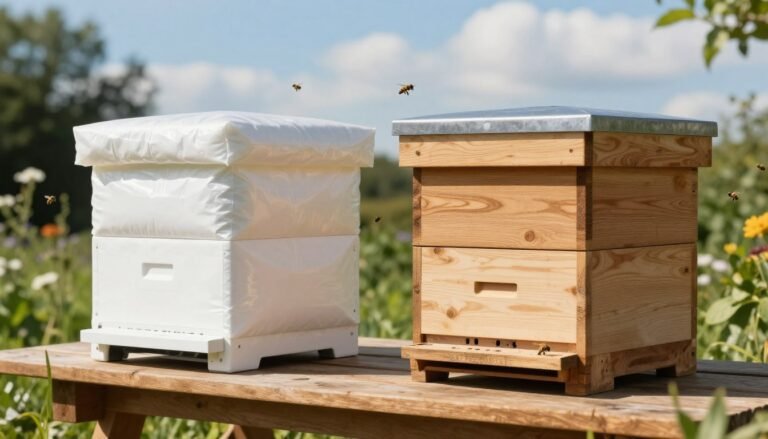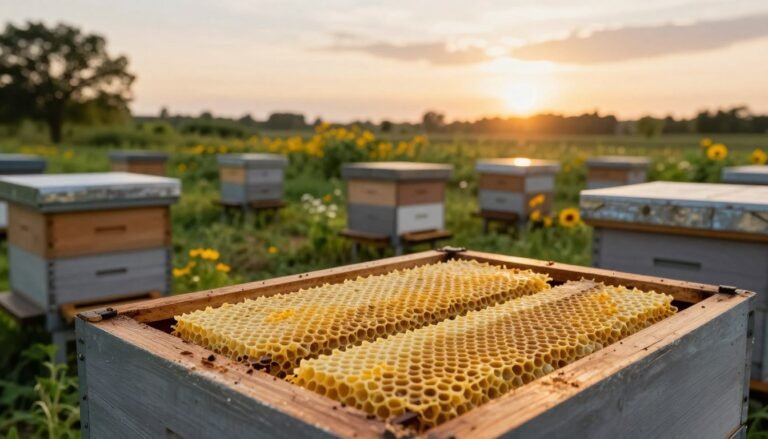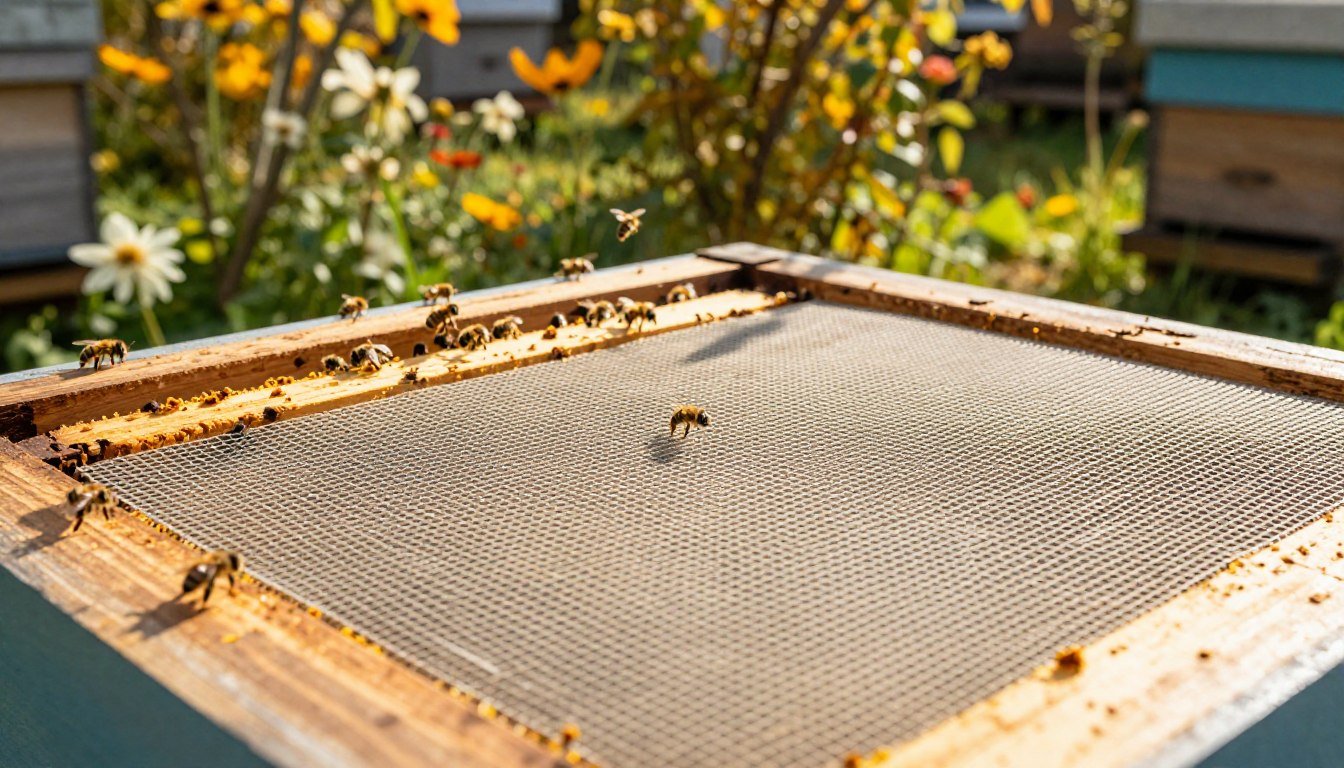
David & Sheri Burns of Long Lane Honey Bee Farms in Central Illinois stress that choosing the right base for a hive can change outcomes during cold months. New beekeepers must learn how a simple change affects moisture, ventilation, and mite control.
Debate has lasted for many years about whether to use a solid bottom or a screen bottom. Some people favor warmth from a solid bottom, while others value the airflow and moisture reduction that a screened bottom provides.
Managing mites and reducing condensation are key to helping colonies survive late cold snaps and the shift to spring. Practical guides, such as notes on the Winter-Bee-Kind and hive care, offer useful tactics; see a concise primer on winter tools and candy boards at Winter-Bee-Kind guidance and tips to prepare hives from winterizing beehives.
Key Takeaways
- Board choice influences moisture and ventilation during cold days.
- Screen options can lower condensation and aid mite management.
- Local climate and hive condition guide the best choice for your bees.
- Practical tools like candy covers help feed and reduce moisture near the cluster.
- Watch hive behavior over years to find what benefits your colonies most.
Understanding Hive Bottom Boards
The foundation under a hive matters for airflow, hygiene, and how quickly colonies ramp up brood come spring. Good choices cut problems and make care easier for beekeepers across differing climates.
Comparing Solid and Screened Options
Solid bases are often cheaper and simpler to build. They retain warmth and can encourage earlier brood production by keeping the hive warmer during cool spells.
Screened options let mites and debris fall through, reducing cleaning work and helping hive hygiene. They also improve ventilation, which is a clear benefit for bees in hotter areas.
“A screened base allows for better airflow and helps with mite control when combined with good management,” note experienced beekeepers.
Benefits of Proper Airflow
Air movement helps control moisture and keeps honey and brood in good condition. Poor ventilation can create a stuffy box that stresses the colony and invites problems.
Many people try both types to see what works for their frames and local area. For a side-by-side look at options, check this comparison of solid and screened designs and read a detailed guide on hive ventilation strategies.
| Feature | Solid Base | Screened Base |
|---|---|---|
| Cost / Build | Lower cost, easier DIY | Higher cost, needs mesh or inserts |
| Ventilation | Reduced air flow | Improved air movement |
| Mite & Debris Control | Debris stays inside box | Mites fall through; cleaner bottom |
The Debate Over Using a Screened Bottom Board in Winter
David & Sheri Burns ran a simple trial at Long Lane Honey Bee Farms that speaks to a common beekeeping question: should you close a screened bottom board in winter? Their tests compared three colonies with covered screens and three with open screens.
The result was stark. All three colonies with covers failed. The farm now leaves the screen open through cold months.
Why does this matter? Cold air sinks and warm air rises, so an open base rarely chills the cluster as much as trapped moisture does. Open airflow reduces condensation that can drip and chill bees.
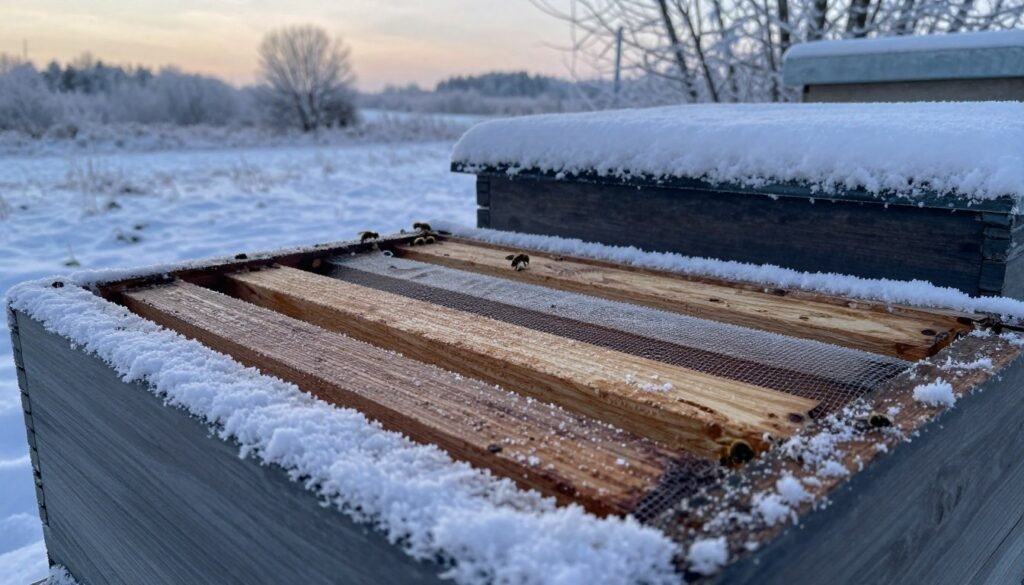
Practical takeaway: an open screen helps ventilation, lowers moisture, and can aid mite management when combined with good practices. Bees generate heat by vibrating their muscles and usually keep the cluster warm despite an open gap.
“We found covering the screen led to the loss of all three test colonies,” — Long Lane Honey Bee Farms.
- Keep the screen open to reduce condensation and stale air.
- Consider local climate and personal opinion when choosing a solid bottom or screen bottom cover.
- Monitor hives and adapt—what works one year may need adjustment the next.
Managing Moisture and Ventilation for Colony Survival
Moisture control often decides whether a hive weathers cold months or struggles through them. Condensation forms when warm air from the cluster meets the cold inner cover or top cover. That moisture can drip down and chill the brood.
Even a small bit of water on the cluster reduces bees’ ability to maintain temperature. David & Sheri Burns stress that dry conditions help colonies survive low temperatures.
The Role of Condensation Control
Use absorbent devices like a Winter-Bee-Kind to catch droplets and give the colony food. Proper ventilation through a screened bottom board moves air and reduces damp pockets.
Manage the entrance so air flows but no direct draft hits the cluster. Clearing the entrance and keeping the cover breathable balances warmth and humidity.
- Tip: Check for moisture on the inner cover during mild days.
- Tip: Combine a solid bottom or screen options with good airflow choices that suit your local hives.
For more on preventing damp problems, see this guide to managing hive moisture and advice for handling wet climates at managing hives in wet climates.
Essential Winter Feeding and Insulation Strategies
A well-timed feeding and snug insulation can make the difference between hive survival and loss.
Using candy boards for nutrition
Winter-Bee-Kind is a one-piece candy board that combines food, ventilation, and light insulation for the hive. Each unit holds about five pounds of sugar mixed with pollen powder for protein. Place a candy board on top of the box between October and March and check every three weeks to confirm stores.

Preventing robbing during fall feeding
Feed carefully to avoid robbing. Use a two-to-one sugar-to-water syrup and avoid front-facing Boardman feeders. Instead, position feeders on stands away from the entrance. Complete any hive opening on a warm day and work briskly—aim for one to two minutes to keep the hive sealed.
Protecting the cluster from wind
Wind blocks help if hives sit 6 to 8 inches off the ground. Build a simple shield or use a wind fence to reduce drafts that can chill the cluster. If you use two deep bodies, place the candy unit on the top body so bees access food directly above the cluster.
Note: The Winter-Bee-Kind replaces the inner cover and gives an upper exit that supports airflow while keeping food close to the bees.
| Task | Recommendation | Timing / Check |
|---|---|---|
| Candy installation | Place on warm day; install quickly (1–2 minutes) | October–March; check every 3 weeks |
| Feeding syrup | Use 2:1 sugar to water for fall feeding | Late season, avoid peak robbing times |
| Wind protection | Build a wind block if hive raised 6–8 inches | Before cold gusts arrive; monitor during harsh weather |
David & Sheri Burns recommend the Winter-Bee-Kind for nutrition and insulation. For more on hive insulation and practical steps, read a useful guide on keeping hives warm at bee hive insulation and a detailed how-to on preparing hives at how to winterize beehives.
Best Practices for Seasonal Hive Adjustments
Small changes at the hive entrance and base often yield large survival gains for bees.
Manage the entrance with reducers when you install a new nuc or package. This helps the colony settle and stops robbing while they orient to the site.
Use the Flow hive’s two-position screen to vary ventilation and pest control as the season changes. Move it to the closed position during heavy robbing risk and open it when extra airflow is needed.
Watch bee behavior: bearding at the entrance signals a need for more ventilation on hot days. Add a simple wind block or place a brick on the cover to stop cold gusts from curling up and chilling the cluster when temperatures fall.
Seal and protect the hive before extreme cold arrives. Secure the top cover, check the inner cover, and adjust the base type between solid and screen options to meet current needs.
- Monitor entrances and adapt quickly.
- Restrict access for new colonies to reduce stress.
- Keep ventilation balanced to protect honey and brood.
“Managing the entrance of the hive is a key part of seasonal adjustments for your bees.”
For guidance on whether to close a screen bottom during cold months, see should a screened bottom board be.
Conclusion
Practical choices at the hive — entrance, cover, and base — shape survival more than any single gadget. Successful overwintering of bees hinges on steady checks, proper ventilation, moisture control, and timely nutrition throughout the cold months.
Whether you use a solid bottom or a screen bottom, adapt your management to local climate and hive condition. David & Sheri Burns showed that an open screened bottom board can reduce moisture and support colony health, but results vary by area and frames.
Monitor food stores, keep the entrance clear, and adjust the inner cover and top as weather and brood needs change. For broader survey data on use and outcomes, see the screened bottom boards study.
Stay observant, be flexible, and your hives will have the best chance to thrive come spring.
FAQ
Are screened bottom boards safe for hives during cold months?
Screened bottom boards can improve ventilation and help reduce pests like Varroa mites, but their use depends on local climate and hive insulation. In colder, damp regions, many beekeepers prefer a solid floor or temporarily block the screen to retain heat and limit drafts. Use a slide-in insert or an inner cover with a block to switch between airflow and protection as conditions change.
What are the main differences between solid and screened options?
Solid floors trap warmth and help maintain a stable cluster temperature, which reduces energy use by the bees. Screened floors increase airflow and can lower condensation and mite loads. Choose based on colony strength, available honey stores, and local winter temperature and moisture patterns.
How does proper airflow benefit a hive during the cold season?
Good airflow removes moist air and helps prevent condensation on comb and frames. Dry conditions reduce mold and brood chill. However, too much cold draught can force bees to cluster tighter and burn more honey. Balancing ventilation with insulation is key.
Should I leave the screen open all winter or close it at night?
Many beekeepers leave the screen closed during the coldest weeks, then open it in milder periods to vent moisture. Practical options include using a removable insert or sliding cover so you can adapt to sudden temperature shifts without major hive handling.
How can I manage condensation inside hives effectively?
Raise the moisture level away from the cluster by adding a small upper entrance, using breathable insulation like wood or corrugated plastic, and ensuring a slight roof ventilation. Avoid plastic liners that trap moisture directly over the cluster. Regular checks in mild weather help you adjust ventilation before problems arise.
Are there feeding strategies that help colonies survive scarce months?
Provide ample stores before temperatures drop. Heavy feeder options include fondant or a candy board placed above the cluster, which reduces movement and energy use. Supplemental patties and emergency fondant can sustain small colonies through brief dearths.
How do I prevent robbing when feeding in the fall?
Feed at dusk, use entrance reducers, and apply heavy syrup or patties inside the hive to limit attractants outside. Avoid large open feeders that draw other bees and wasps. Close inspection and quick, discreet feeding lower the risk of robbing.
How can I protect the cluster from cold wind and drafts?
Face hive entrances away from prevailing winds, add a windbreak like a fence or hedge, and use an insulated outer wrap if winters are severe. Ensure the entrance remains clear for bee traffic and ventilation while minimizing direct wind exposure.
When should I adjust hive configuration for the season?
Reduce the hive footprint and remove empty supers as brood rearing declines. Consolidate frames so the cluster can access stores easily. Make adjustments during mild daytime temperatures to avoid exposing bees to deep cold.
Will using a screened floor reduce mite levels enough to skip other controls?
No. While screens can help dislodge some mites and improve monitoring, they are not a standalone treatment. Combine screens with integrated pest management: regular mite checks, chemical or biotechnical controls when needed, and good hive hygiene for best results.