Accurate diagnostics start with proper sample collection. The OSU Honey Bee Lab offers essential pathogen testing for beekeepers across the United States. Clear, careful preparation helps labs provide reliable results for colony health.
This web page outlines practical steps for collecting and labeling material, including leaving your contact information and hive identification number on the paper form. Each submission strengthens regional knowledge about the current state of honey bee health.
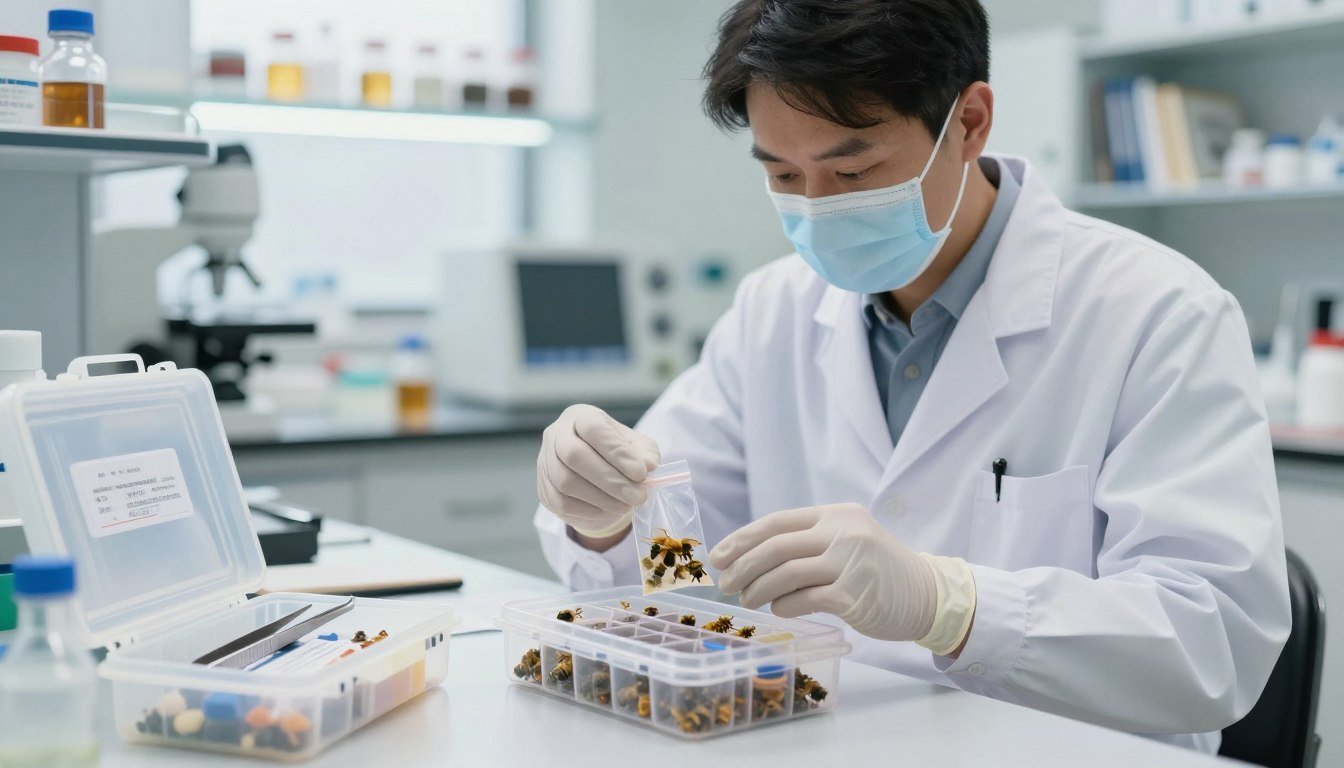
When preparing specimens, preserve bees in alcohol and use leak-proof containers. Follow the lab’s handling notes so staff can process your submission efficiently and return useful information about your hive.
For detailed guidance and mailing specifics, consult the diagnostic page at OSU Honey Bee Lab diagnostics. Properly prepared material helps researchers and keeps your apiary safer.
Key Takeaways
- Collect and preserve specimens promptly for accurate testing.
- Include your contact information and hive number on the paper form.
- Use leak-proof containers and follow packing recommendations.
- Each submission improves understanding of regional honey bee health.
- Refer to the OSU diagnostic web page for mailing and sample details.
Essential Preparation for Bee Disease Diagnosis
Before you request testing, confirm the colony’s condition and contact your local apiary inspector for guidance. That call can clarify which tests are most useful and may save time at the bee lab.
Professional disease diagnosis identifies pathogens that threaten survival. The USDA Bee Lab and related agricultural research center offer specialized testing that acts as formal proof of specific health problems. Accurate results depend on following lab protocols and documenting hive signs.
A clear field record should note colony state, recent treatments, and observed symptoms. These details strengthen disease diagnosis and help labs prioritize testing. If you have previously sent USDA material, include any prior case numbers or reports.
- Call an apiary inspector for local context.
- Follow USDA protocol for reliable testing.
- Keep concise records that serve as proof during review.
For procedural steps and submission forms, consider resources to submit a specimen, or review broader apiary sourcing at buying packaged bees.
How to Bag and Send Bee Samples to a Lab
Collecting the right number of workers and preserving their condition are critical for reliable test results.
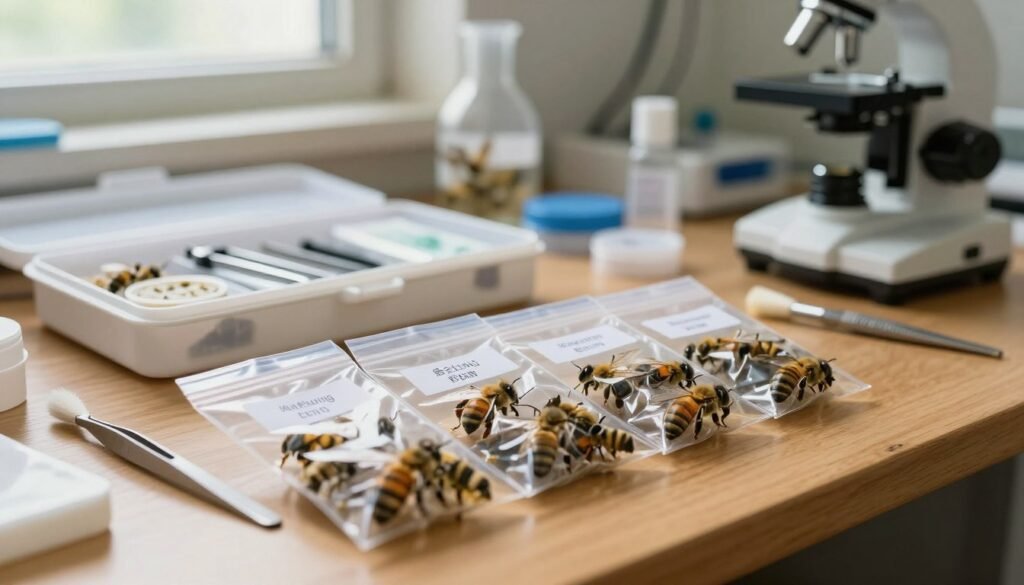
Selecting live workers
Gather at least 120 live workers from a brood frame; some protocols note 100 bees for certain counts. If you plan mite testing, consider an extra 300 workers from a separate brood frame.
Place workers in a clean container and label it with the hive number and date using a permanent marker. Include brief information about recent treatments and visible signs on the paper form.
Collecting dead or dying bees
If bees died in a killed hive, collect dying bees from the cluster rather than the bottom board. This gives a better picture of colony health than debris alone.
If you also send a brood sample, cut roughly 15cm x 15cm of comb and wrap it in paper to prevent damage. Pack all material in a sturdy box for transport and follow lab diagnostics for submission instructions and final checks.
Preserving Samples for Accurate Testing
Rapid preservation in the field prevents degradation that can skew testing outcomes.
Use 70% isopropyl alcohol as the standard preservative. Place collected workers into clean, leak-proof vials and pour enough alcohol so specimens are fully covered. This step helps when the lab test comes back.
For Nosema checks, the alcohol keeps spores intact during transit. If brood is included, exclude honey or nectar; those substances can interfere with results.
Containers, sealing, and cleanliness
Seal containers tightly to prevent leakage of alcohol during shipping. Clean, unused jars reduce contamination risk and improve the final report.
“Immediate fixation preserves the diagnostic signal and helps labs deliver reliable findings.”
| Item | Recommendation | Why it matters |
|---|---|---|
| Preservative | 70% isopropyl alcohol | Maintains sample integrity |
| Containers | Leak-proof, clean vials | Prevents contamination and spills |
| Brood handling | No honey or nectar | Avoids test interference |
Shipping Protocols for Safe Delivery
A sturdy parcel and clear paperwork are the final steps that protect diagnostic value.
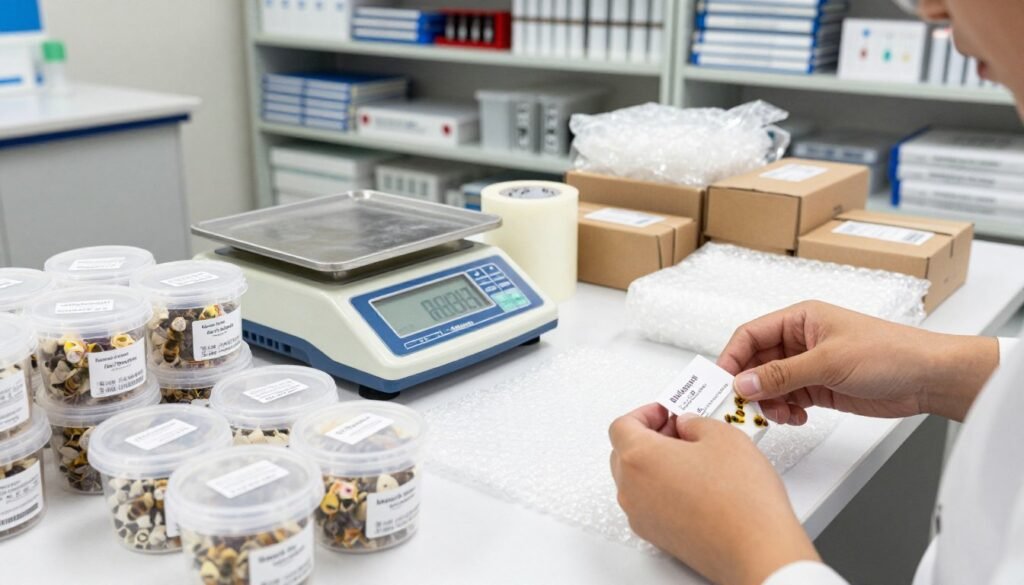
Packaging with Dry Ice
Ship via FedEx or UPS Overnight so the lab receives material soon possible. Do not include more than 5 lbs. of dry ice per box to meet hazardous materials rules.
Pack the vial or container snugly in the box so nothing shifts. Add cushioning around each glass or plastic container and seal edges well.
Including Necessary Documentation
Include your name, email address, and phone number on the paper form. Add the hive number, brief colony notes such as honey stores or brood patterns, and any treatment history.
“Clear contact information speeds follow-up and improves diagnostic utility.”
Choosing the Right Carrier
Use overnight courier service and mark the parcel per carrier instructions. Ship to the OSU Honey Bee Lab at 2750 SW Campus Way, ALS 4017, Corvallis, OR 97331.
Review carrier limits and packaging rules on the shipping rules page before you submit samples. If you also want guidance on selling product from healthy hives, see selling honey legally.
Conclusion
Clear labeling matters. Clear labeling and concise paper records make the difference between useful data and wasted effort. Include your name, contact details, hive number and brief notes so the lab can process your submission quickly.
Following these steps helps specimens reach the bee lab in the best condition for accurate testing. Use the USDA Bee Lab and your local apiary inspector as resources when you prepare and submit samples. Regular testing gives proof of colony health and supports long‑term yard management.
For additional sampling tips and an in-depth Nosema approach, see the Nosema sampling guide. Check the official web page before you submit samples and keep monitoring your honey bee colonies for lasting results.
FAQ
What is the first step for preparing a submission for disease diagnosis?
Collect information about the apiary: state, county, owner contact, hive ID or box number, number of affected colonies, and a short description of symptoms (dead, dying, brood problems, unusual behavior). Include recent treatments, forage and honey harvest details, and whether an apiary inspector has already visited. Clear, concise records speed up lab triage.
Which worker bees should I choose for diagnostic testing?
Select about 100 adult workers from the brood area or near symptomatic frames. Prefer live or recently dead workers with typical signs of illness. Avoid foragers collected away from the hive because they may not represent colony health. Keep separate lots for different hives.
How do I collect dead or dying workers for submission?
Gently scoop up moribund or freshly dead workers with clean tools into a paper envelope or small rigid container. Do not crush specimens. For multiple hives, label each container with the hive number and date. If you find many dead on landing boards, note that in your documentation.
Should I use alcohol for preserving specimens? If so, what kind?
Yes. Preserve samples in 70–95% ethanol or isopropyl alcohol for many pathogen tests. Place bees in a leak-proof vial filled with alcohol so they are fully submerged. Label the vial with the same hive ID and date used on your paperwork.
What containers work best for preserved and live specimens?
Use screw-cap plastic vials or small jars that seal tightly. Avoid thin plastic bags for alcohol-preserved bees. For live transport, use ventilated rigid containers with a small amount of damp cloth to reduce desiccation and prevent overheating during transit.
How many workers are required for routine laboratory tests?
Many diagnostic labs request approximately 100 adult workers per sample to ensure reliable results for parasites and some pathogens. Check the specific lab’s guidance, since requirements vary for brood, mite counts, or molecular diagnostics.
Is it necessary to include brood or honey in the submission?
Only include brood or honey when requested. Brood should be fresh and in a small rigid container. Honey or comb must be well-wrapped and clearly labeled. Unsolicited items can complicate testing and shipping.
What paperwork should accompany the package?
Provide a completed submission form with owner name, address, phone, email, apiary location, hive IDs, sample types, number of bees, collection date, symptoms, recent treatments, and any inspector reports. Include a copy of your contact info inside the box in case external labels are damaged.
Are there specific labeling requirements for each sample?
Yes. Each vial or container should show the hive ID, date, and sample type. Use indelible ink on the label and on a small piece of paper inside the vial if possible. Consistent labeling prevents sample mix-ups during processing.
How should I package samples for shipment to prevent leaks and damage?
Place sealed vials in leak-proof secondary bags or wrapped in absorbent material. Pad them with cushioning in a sturdy box so containers cannot shift. Keep preserved and live samples separate. Include a clear inventory sheet on top of the contents.
Is dry ice required for sending specimens?
Most routine diagnostic submissions do not require dry ice. Use frozen shipping only when the lab explicitly requests frozen tissue for particular tests. If dry ice is required, follow carrier rules for dangerous goods and label the package correctly.
Which carriers accept diagnostic bee shipments and what should I check?
Major carriers like UPS, FedEx, and the U.S. Postal Service accept diagnostic samples when properly packaged and labeled. Verify each carrier’s rules for biological samples and any restrictions on alcohol or dry ice. Choose overnight or expedited services to minimize specimen degradation.
How quickly should samples reach the lab for best results?
Ship samples so they arrive within 24–48 hours whenever possible. Fast transit reduces decomposition and preserves diagnostic integrity. Inform the lab of the shipment tracking number and anticipated arrival time.
Do I need permission or permits to send materials to a federal laboratory like USDA or ARS?
Check the receiving institution’s submission policy. Many USDA or Agricultural Research Service labs require preauthorization or a completed submission form. Contact the lab or your state apiary inspector before shipping to confirm requirements.
What should I do if a hive collapses or many workers died suddenly?
Preserve representative samples immediately and contact your state apiary inspector or local cooperative extension. Rapid collection and transmission of samples, along with detailed notes on recent events and treatments, help determine cause and limit spread.
How will I receive test results and what turnaround time can I expect?
Labs typically email results and may send a detailed report with findings and recommendations. Turnaround varies by test complexity—simple screens may take days, while molecular or culture work can take weeks. Ask the lab for an estimated timeline when you submit.
Can I submit samples directly or should I work through an inspector?
Both are possible. Many labs accept direct submissions from beekeepers, but collaborating with a state apiary inspector or extension specialist can streamline diagnostics, provide field context, and help interpret results.
What fees are involved for diagnostic testing and shipping?
Lab fees vary by test and institution; USDA and university labs often list costs on their websites. Expect separate charges for shipping. Confirm fees and payment methods before sending samples to avoid delays.
How should I prepare samples when multiple hives show different symptoms?
Submit separate, clearly labeled samples for each affected hive. Provide a brief note describing differences in symptoms for each sample. This helps the lab correlate findings with clinical signs.
What happens if a sample arrives damaged or leaked in transit?
Inform the receiving lab immediately and provide tracking details. They will advise whether re-sampling is needed. Proper packaging, absorbent materials, and secure sealing minimize these risks.
Where can I find sample submission forms and detailed instructions?
Visit the diagnostic laboratory’s official website—examples include university extension labs, USDA Animal and Plant Health Inspection Service, or ARS pages—for forms, instructions, addresses, and contact emails. If unsure, contact your state apiary program for guidance.