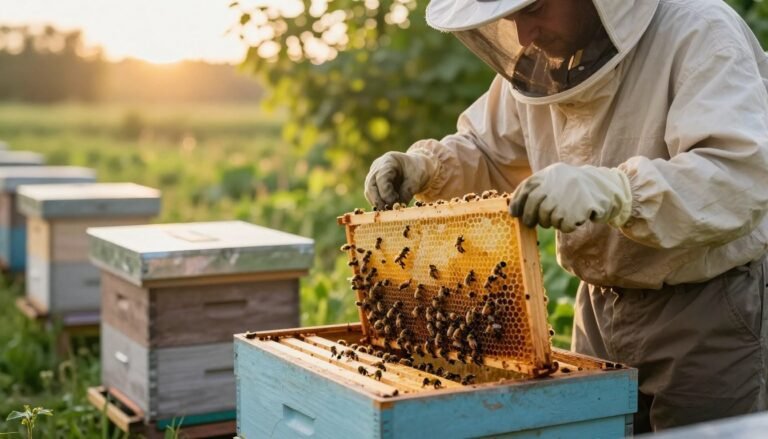
Bill Hesbach, an Eastern Apicultural Society Certified Master Beekeeper, developed seasonal management guidelines to help backyard beekeepers keep colonies healthy.
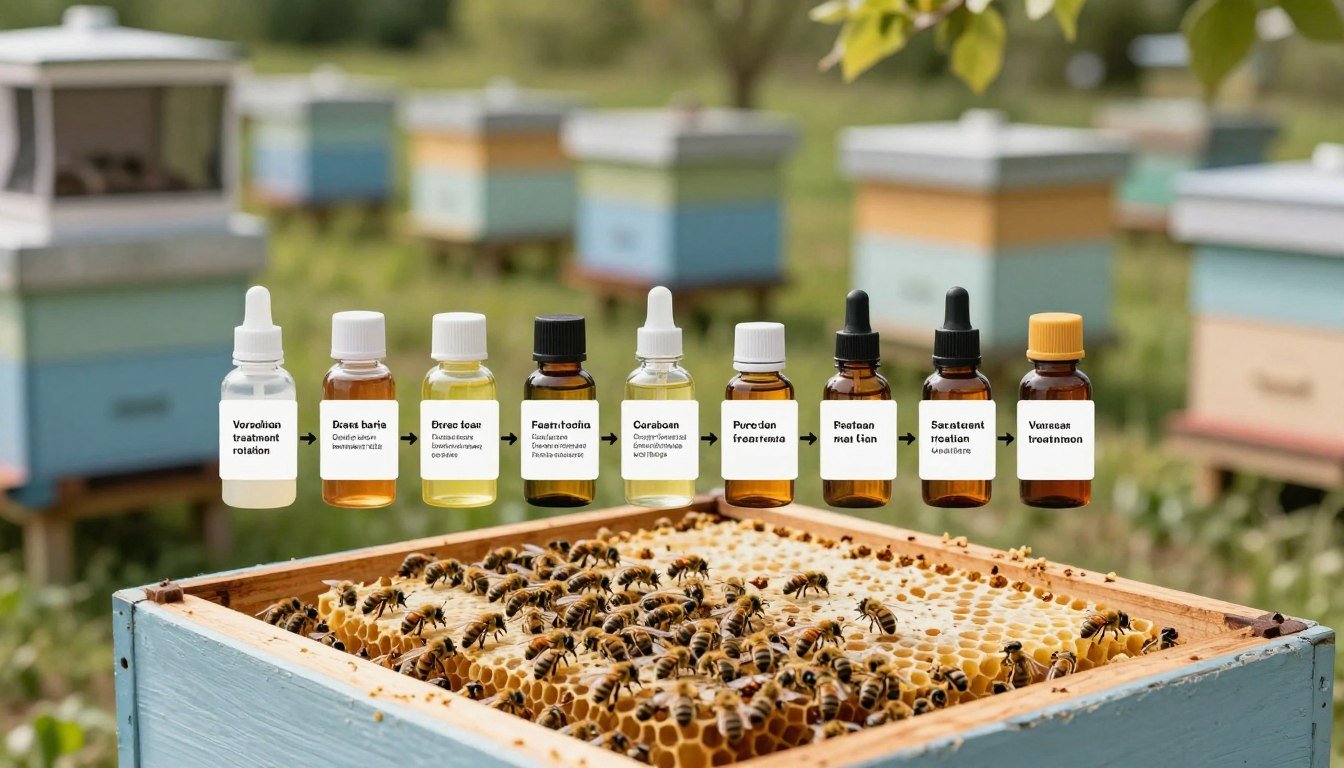
Proper varroa treatment rotation strategy is essential to protect bee health and avoid chemical resistance in the hive.
Using the same product over and over can let mites become resistant. Alternate products with different modes of action to reduce this risk and keep honey safe.
This guide covers timing and safe use of oxalic acid, formic acid, and other methods across the year. It also shows how to monitor mite population with a sticky board or alcohol wash.
Follow proven practices and use proper equipment to maintain efficacy and protect brood and colony productivity.
Key Takeaways
- Rotate products to prevent resistance and protect hive health.
- Monitor mite levels regularly with sticky boards or washes.
- Use oxalic acid and formic acid at recommended times and temperatures.
- Alternate modes of action to preserve product efficacy.
- Refer to expert seasonal guidelines from trusted sources like Bill Hesbach.
- Learn natural options and complementary methods at natural remedies for varroa mites.
Understanding the Threat of Varroa Mite Resistance
Repeated reliance on a single chemical can pave the way for hardy mites to take over your hives. This section explains how genetic selection and repeated application erode efficacy and endanger honey and brood.
The Mechanics of Resistance
When one product is used repeatedly, a small number of surviving mites carry genetic traits that let them survive the chemical. Those survivors breed with each other and pass on resistance.
Over time, the resistant segment grows until the product no longer controls the mite population in your colony.
The Danger of Repetition
The current circulation of amitraz-resistant strains in U.S. apiaries shows this risk is real. Beekeepers who use the same mode of action for three or more years face much higher resistance risk.
“By failing to vary control methods, you select for the strongest mites and invite rapid spread across your apiary.”
| Consequence | What Happens | Impact on Hive |
|---|---|---|
| Genetic selection | Survivors breed | Reduced efficacy of product |
| Population shift | Resistant mites dominate | Higher brood loss risk |
| Apiary spread | Resistance spreads | Multiple hives at risk |
- Key point: Monitor mite population and vary your control approach to protect honey and colony health.
The Science Behind an Effective Varroa Treatment Rotation Strategy
Altering chemical and nonchemical approaches across the year resets selection pressure on mite populations. This prevents any single resistant genotype from dominating over multiple generations.
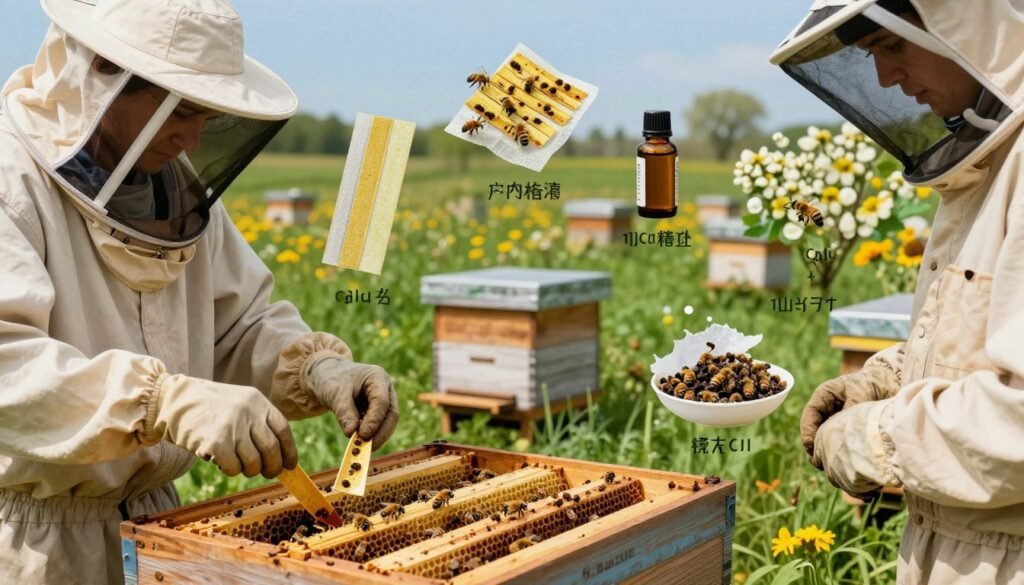
Every control method hits a specific biochemical target. By switching modes of action, you remove mites that survived the last application and keep overall efficacy high in the hive.
“Switching the mode of action disrupts the mites’ ability to adapt to a single chemical, which is proven to work.”
- No cross-resistance: A mite resistant to amitraz often remains susceptible to other modes of action.
- Population reset: Rotation prevents one resistant line from becoming the dominant population.
- Long-term health: Structured plans keep brood and honey safe and protect colony productivity year after year.
| Mode of Action | Biochemical Target | Cross-Resistance Risk | Primary Benefit |
|---|---|---|---|
| Amitraz-class | Octopamine receptors | Low with other classes | Fast knockdown of adult mites |
| Organic acids (acid vapors) | Respiratory and metabolic pathways | None with amitraz | Safe for honey when used correctly |
| Essential oils / terpenoids | Neuromodulation and cell membranes | None with acids or amitraz | Complementary, brood-friendly option |
For practical options and a clear list of methods, see mite control methods.
Identifying the Four Primary Modes of Action
Not all control products work the same; identifying their unique modes of action is vital. This helps you match a product to colony status, brood presence, and seasonal goals.
Amitraz and Octopamine Receptors
Amitraz targets octopamine receptors and delivers fast knockdown during heavy brood-rearing. It requires a 42-day application window and must not be used with honey supers present.
Organic Acids and Contact Action
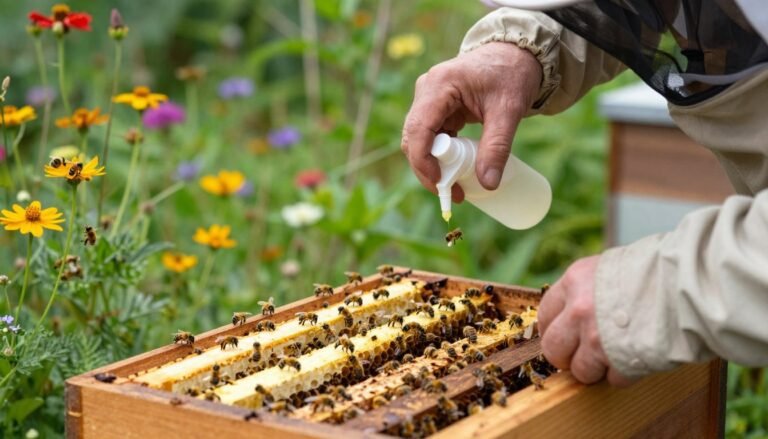
Oxalic acid works by contact and is most effective when brood is minimal. Vapor protocols can extend its use into active seasons, but timing and equipment matter for safe, effective use.
Vapors: Formic Acid and Terpenoids
Formic acid vapors can penetrate capped brood but need temperatures between 50 and 85 degrees for reliable efficacy.
Terpenoids such as thymol act as essential-oil vapors and work best when daytime highs stay above about 59°F.
Beta-Acids and Softer Contact Options
Products like HopGuard use beta-acids for a gentler contact effect. By alternating across these four groups, you reduce the chance a single resistance mechanism dominates your apiary.
Seasonal Management for Package Bees and Nucleus Colonies
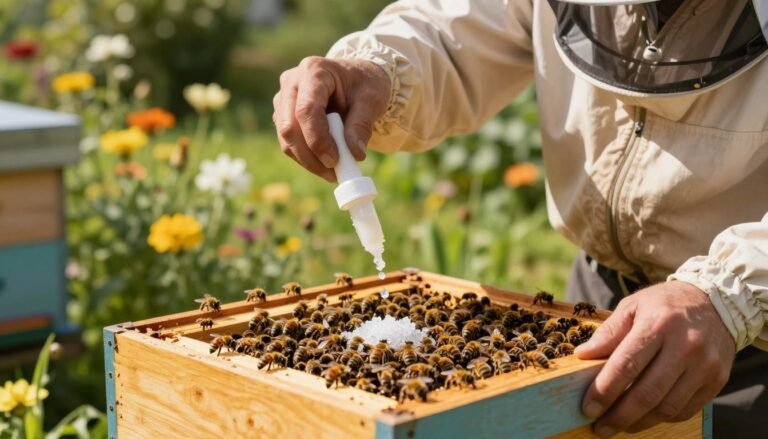
When you install a three‑pound package, plan early actions before brood builds. You can use oxalic acid vaporization or an oxalic dribble while brood is minimal, provided label temperatures and safe equipment use are followed.
Nucleus colonies often arrive with brood. Wait until a nuc holds about six brood frames before applying formic acid. For newly established colonies, allow roughly six weeks after installation to reach strength for a 14‑day Formic Pro application.
For faster options, Mite Away Quick Strips work over a 7‑day window once the hive shows sufficient population. HopGuard3 is a good choice for nucs in May–June when daytime highs reach at least 50°F.
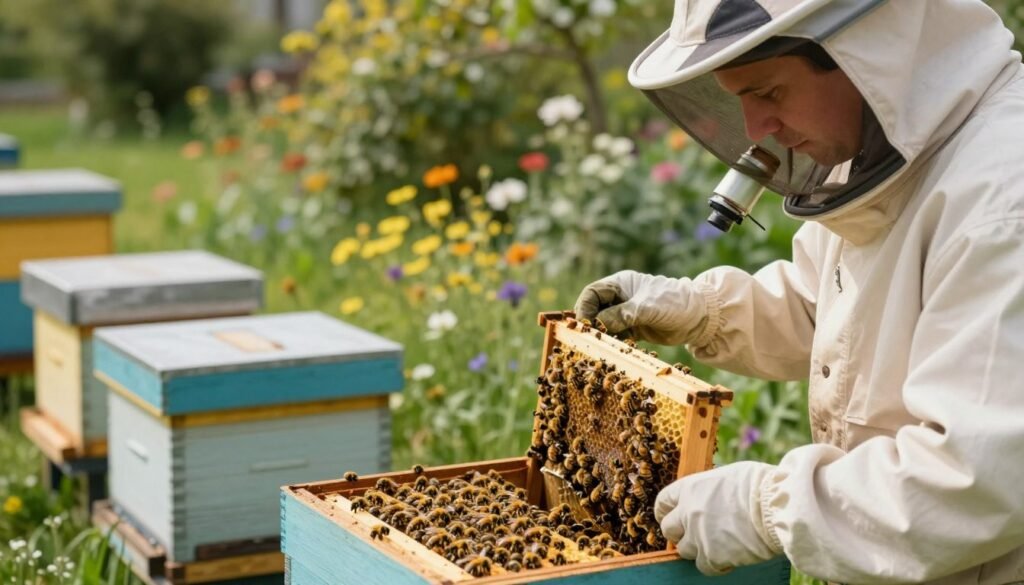
| Colony Type | Recommended Option | Timing / Notes |
|---|---|---|
| 3‑lb package | Oxalic vapor or dribble | Before brood; follow label temperature limits |
| New nuc with brood | HopGuard3 or wait 6 weeks then Formic Pro | HopGuard3 in May/June at ≥50°F; Formic Pro needs colony strength |
| Growing colony | Mite Away Quick Strips | 7‑day window after sufficient adult population |
Inspect every hive 7–10 days after any application. Check that the queen is laying and the colony is healthy. Consistent attention to season, brood stage, and safe equipment keeps honey and bees productive.
For seasonal guidance on colony growth and management, refer to colony growth and seasonal management.
Best Practices for Overwintered Hive Populations
Dawn inspections in early spring set the season’s tone. Check for signs of queen vigor and sudden adult losses before honey flow begins.
Early Spring Assessment Techniques
Sticky-board monitoring: run a three-day drop in early March to spot colonies with unusually high mite counts. This simple test flags hives that need prompt action.
If counts are high, consider brood reduction or isolating the colony to slow virus spread while you plan control steps.
- Late November–December: use oxalic acid vapor or an oxalic dribble when the colony is broodless to remove residual mites.
- April: apply a 14-day Formic Pro or a 7-day Mite Away Quick Strips cycle for overwintered colonies before major nectar flows.
- June: a second formic acid application helps maintain low counts—avoid if you have harvestable honey supers.
Keep equipment serviceable. Clean, calibrated gear and proper dose timing preserve efficacy and reduce risk of resistant mite populations.
| Time | Action | Purpose |
|---|---|---|
| Late Nov–Dec | Oxalic vapor or dribble | Remove mites when broodless |
| Early March | 3‑day sticky board check | Detect high spring counts |
| April–June | Formic Pro / MAQS and follow-up formic | Maintain low counts through spring and early summer |
Follow a disciplined program of monitoring and timely application to keep colonies productive and honey safe. For a seasonal checklist, consult the seasonal proactive schedule.
Monitoring Efficacy and Tracking Treatment History
Measuring pre- and post-application counts gives the only objective view of how well a product worked.
Use this formula: ((pre-count – post-count) / pre-count) x 100. A result above 90% indicates success. If the figure falls below 80%, investigate possible resistance, application error, or reinfestation.
Alcohol washes are best used after an application to verify efficacy. They are not a standalone threshold tool but are a practical field method to confirm that mites declined.

Monitor mite counts every 3–4 weeks during the active season. Keep concise records of every product, EPA registration number, date, and brood status. State apiarists expect these logs during inspections.
“Comparing pre- and post-counts proves whether your chosen control protected your honey bees.”
| Measure | When | Why it matters |
|---|---|---|
| Pre-count (sticky board or wash) | Before any application | Establishes baseline for efficacy |
| Post-count (7–14 days after) | After application | Calculates percent efficacy |
| Records | Ongoing | Shows modes of action used in last 12 months |
Track history to see which mode action classes you used and to plan future choices. For genetics-focused research on resistance and long-term apiary health, read more about breeding advances at the future of resistant bee genetics.
Common Pitfalls to Avoid in Your Apiary
Confusing label names with active ingredients invites unseen resistance to grow in your hives. Beekeepers often think a new brand equals a different chemical, but that is not the case. Always verify the active ingredient before you switch.
Mistaking Brand for Chemistry
A brand change is not a chemical change. If the active ingredient stays the same, you have not achieved a true rotation. This mistake speeds the rise of resistant mites.
Inconsistent Application
Underdosing or uneven application can do more harm than good. Sublethal exposure lets survivors breed and lowers long-term efficacy.
- Never use harsh old chemicals like Apistan (tau-fluvalinate) or Checkmite (coumaphos) in your apiary.
- Verify past usage so the next product uses a different chemical pathway.
- Follow label directions and maintain consistent application practice for each hive.
| Pitfall | Consequence | Fix |
|---|---|---|
| Switching brands only | False sense of rotation; growing resistance | Check active ingredient; choose different mode of action |
| Underdosing or uneven application | Survivors breed; reduced product efficacy | Measure doses; train helpers; document each application |
| Using retired, harsh chemicals | Chemical residues in honey; long-term hive harm | Avoid Apistan/Checkmite; select approved, safer options |
Bottom line: avoid shortcuts. Good records, correct dosing, and true chemical changes keep your colony healthy and your controls effective.
Conclusion
A clear, yearlong plan helps beekeepers protect colonies and slow mite adaptation. Implement a simple, systematic treatment schedule that balances different modes of action to limit resistance and keep honey safe.
Alternate products such as oxalic acid, formic acid and thymol-based options across the season. Verify active ingredients before you switch brands and record every application to guide future choices.
Monitor efficacy with a sticky board or an alcohol wash after each application. Use good equipment and consistent timing to protect brood and maintain low hive populations.
Start your plan today and learn more from a trusted yearlong source: yearlong mite management plan.
FAQ
What is the best way to prevent mite resistance in my hives?
Rotate products that use different modes of action and avoid repeating the same active ingredient year after year. Combine chemical tools like amitraz-based strips with non-chemical options such as oxalic acid sublimation or formic acid pads when appropriate. Track every application in a hive log so you can plan alternation and reduce selection pressure on mite populations.
How often should I check mite levels during the season?
Monitor monthly in spring and summer, and more frequently during peak brood periods. Use sticky boards, sugar shakes, or alcohol washes to estimate infestation. If counts rise above recommended thresholds, act quickly with an appropriate control option to prevent explosive population growth.
Can organic acids like oxalic and formic replace synthetic products entirely?
Organic acids are powerful tools but they work best as part of an integrated approach. Oxalic acid vaporization targets phoretic mites when brood is low, while formic acid can penetrate brood cappings and reduce reproducing mites. Combine these with other chemistries or non-chemical methods for broad, durable control.
When is oxalic acid most effective and what methods should I use?
Oxalic acid works best during brood-free windows—typically late fall or early winter in temperate climates. Sublimation (vapor) gives the best penetration and efficacy, while dribble or spray methods require careful dosing and warm, dry conditions. Follow label instructions and wear proper PPE.
How do I choose products to avoid cross-resistance?
Select tools with different active ingredients and documented modes of action. For example, alternate an amitraz product with an organic-acid application or a formic pad. Avoid switching between brands that share the same chemistry; read labels and technical sheets to verify the active ingredient.
What are signs that a product has lost efficacy in my apiary?
Rapid rebound in mite counts after treatment, persistently high infestation despite correct application, and unusual colony losses are red flags. Confirm application technique and environmental factors first, then consider changing chemistry and consulting extension services or a commercial lab for testing.
How should I manage newly established nucleus colonies and packages?
Assess mite levels early and treat proactively if counts exceed thresholds. Use gentle options suitable for small colonies—oxalic acid during broodless phases or low-dose formic applications where labeled. Maintain good nutrition and minimize stress to help colonies withstand control measures.
Are essential oils and thymol reliable for long-term control?
Thymol and other terpenoids can reduce mite loads and are useful within an IPM plan, but their performance varies with temperature and colony size. Use them as part of rotation and monitoring, not as the sole method, to avoid relying on a single approach that may lose effectiveness.
What recordkeeping practices help improve management decisions?
Keep a simple log for each hive noting dates of inspections, mite counts, products used (brand and active ingredient), dosages, and weather. This history reveals patterns, helps time applications, and supports decisions that prevent resistance and maintain efficacy.
How do seasonal considerations affect product choice and timing?
Choose applications that match brood status and temperature. Use brood-penetrating options like formic acid during heavy brood periods, and oxalic vapor when brood is minimal. Avoid treatments that stress bees during extreme heat or cold, and plan a full-year calendar to alternate chemistries.