Last Updated August 26, 2026
Good entrance management keeps colonies healthy and productive. A strong colony often shapes its own opening with propolis to balance traffic and airflow. But a temporary tool can help during robbing, cold snaps, or when a nuc is weak.
This guide gives a clear, practical view of choices for U.S. beekeepers. You’ll learn when to use a short-term device, when to rely on bees, and how too-small or too-large openings can harm ventilation or invite robbers.
Expect step-by-step options, from a simple metal guard made from hardware cloth or roof flashing to custom wooden shims for narrow or angled designs. Tools and parts are commonly found at local hardware stores.
Make decisions by watching traffic, defense behavior, and weather. For a hands-on reference, see this helpful resource on entrance tools and designs: beehive entrance options.
Key Takeaways
- Strong colonies often self-manage their opening with propolis; use tools only as needed.
- Small openings help defense but can reduce airflow and risk overheating or condensation.
- DIY metal guards and wooden shims are practical, low-cost solutions stocked locally.
- Adjust management by season, colony size, and local robbing pressure—observe often.
- Balance defense, ventilation, and traffic to support long-term colony stability.
Why Manage the Hive Entrance: Purpose, Risks, and When “Hands‑Off” Works
Controlling the front of a beehive is a short‑term strategy to help colonies when population, season, or robbing pressure changes. The core goals are simple: improve defense, keep traffic flowing, and manage airflow for brood and stores.
An entrance reducer is a targeted tool to make guarding easier for new packages, nucs, or recovering colonies. It concentrates guard activity and can help retain heat in cold weather.
“Use a reducer as a temporary measure — not a permanent fix.”
Entrance management basics: defense, ventilation, and traffic flow
Reduced openings improve defensibility against robbing honeybees, wasps, and pests. They also slow incoming traffic so a weak colony can handle guards and foragers.
But smaller openings restrict ventilation. That can cause overheating and internal moisture buildup. Over time, poor airflow stresses colony health and can reduce honey production.
Many strong colonies do better with a hands‑off approach. Bees use propolis to adjust a hive entrance to balance protection and air exchange. Watch activity through the year and adjust equipment and type of opening to match real conditions.
For more on airflow choices and risks, see this beehive ventilation guide.
Best hive entrance reducer alternatives and how they compare
A practical plan balances the colony’s own propolis work with targeted tools when needed.
Propolis acts as a living, adjustable barrier. Bees add or remove sticky seal to tune the opening for defense and ventilation. This natural adjustment often beats fixed hardware for long‑term health.
Build colony strength next. A strong queen, ample stores, and regular mite control give bees the guard force to handle a full opening. Good management reduces reliance on an entrance reducer.
Open openings improve airflow and forager flow. That helps moisture control and honey production. But wide views can invite robbing and wasp pressure when a colony is weak.
When to use a temporary reducer
Use a short-term device during sudden robbing or heavy wasp activity. Remove it once the threat fades to restore ventilation and traffic.
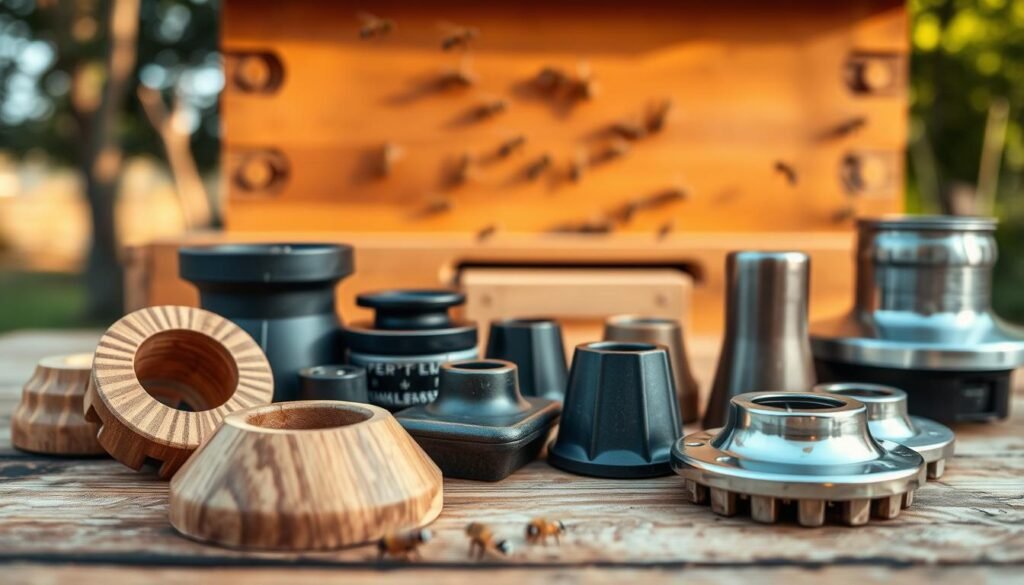
“Watch fighting at the front, bearding, and congestion to decide what to do.”
| Option | Primary benefit | When to use |
|---|---|---|
| Propolis self-seal | Natural ventilation balance | Stable, strong colony |
| Temporary metal or wood insert | Quick defense boost | Robbing or wasp outbreaks |
| Open full opening | Best airflow and forager throughput | Peak nectar flow, low robbing risk |
| Ongoing management | Long-term colony health | After queen/work improvements |
- Prioritize colony strength and monitoring.
- Use tools briefly; return to natural regulation when safe.
How to implement alternatives step‑by‑step
A few common tools and simple cuts let you turn hardware cloth or flashing into a reliable guard for controlled airflow. The goal is a compact, safe piece that excludes rodents while keeping bee traffic moving.
DIY metal guard and mouse guard
Materials: hardware cloth or roof flashing cut to the width of the beehive opening, tin snips or wire cutters, push pins or a staple gun, and pliers.
Cut, fit, secure
- Cut the metal to span the full opening. Fold sharp edges under for safety.
- Snip two short flaps near each end and bend them outward to form two 3/8‑inch tall, 1–2‑inch wide openings. This prevents trapping bees.
- Align the flaps with the hive entrance and secure evenly with staples or push pins so the piece doesn’t rattle.
Wood options and quick fixes
Use a 1×1 piece wood shim sanded to fit, or flip a dual‑position block for two opening sizes. Paint stir sticks or a short cord make temporary gates.
Fitting narrow or angled boxes
For Flow‑style or angled entrances, sand a 1×1 to about 9 mm inside and 10.5–11 mm outside so it seats snugly. Test before final fastening.
“Check openings often for burr comb, propolis, or debris and adjust for traffic during honey flows.”
| Task | Key spec | Why it matters |
|---|---|---|
| Cut to width | Full opening span | Prevents gaps and rodent access |
| Make two flaps | 3/8″ tall × 1–2″ wide | Allows worker and drone passage without traps |
| Secure | Staples or push pins | Stops rattling and possible gaps |
| Wood shim option | Sand to fit (9 mm / 10.5–11 mm) | Fits narrow/angled boxes like Flow |
Handle cutters and staplers with care and test the fit before final installation. For more design ideas and equipment choices, see this practical guide.
Seasonal and situational decisions in the United States
Seasonal shifts and sudden events should drive how you size and protect the front of a beehive throughout the year.
Winter vs. spring‑summer: heat retention, condensation, nectar flow, and traffic
Winter: Smaller openings can help conserve heat and shield the cluster. Still, make sure ventilation is adequate to prevent condensation that chills bees and damages brood.
Use a metal mouse guard made from hardware cloth or a commercial unit to stop rodents while allowing airflow. Check that flaps and holes stay clear after storms and snow.
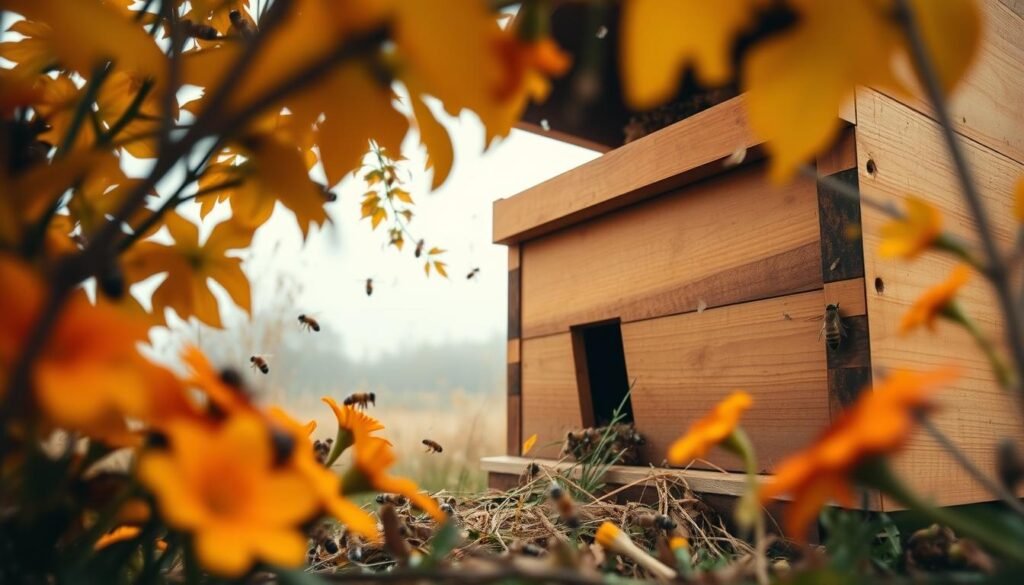
Mouse risk, robber screens, and when to remove or widen entrances
Spring and summer: As nectar flow ramps, widen or remove a reducer so foragers can move freely. That reduces congestion and supports honey production during peak flow.
Respond to robbing by temporarily narrowing the opening, then restore it once pressure eases. Handle changes incrementally—open a little, watch traffic, then open more if needed.
“Adjustments should reflect colony strength and current conditions, not just the calendar.”
| Situation | Action | Why it matters |
|---|---|---|
| Cold snap / deep winter | Smaller opening + mouse guard | Retains heat while keeping rodents out |
| Severe weather (wind/snow) | Shield with a wood piece; keep holes clear | Reduces drafts without blocking airflow |
| Nectar flow / spring surge | Widen or remove reducer | Prevents traffic jams and boosts honey stores |
| Robbing events | Temporarily narrow opening | Concentrates guards and reduces loss |
Coordinate entrance work with inspections, super additions, and mite checks. In colder regions, keep guards longer into spring; in warm areas, favor airflow sooner. Always base choices on the colony’s strength and local conditions to protect momentum through the year.
Conclusion
Successful beekeeping treats the opening as adjustable gear—used only when the colony cannot self‑regulate.
Strong colonies often seal and size their own passage with propolis, so trust bees to balance ventilation and traffic when they can.
When a smaller opening is needed, choose simple, inspectable equipment. A short wood shim or a folded metal guard gives quick defense without long‑term harm.
Fold metal openings outward, hook and secure pieces evenly, and make sure any block fits snugly so bees pass freely and debris stays out.
Use a tighter setting in deep winter or during robbing, then widen for spring flows to support honey collection and forager throughput.
Watch the colony daily for crowding, fighting, or moisture. Align entrance choices with mite checks, feeding, and other beekeeping tasks to keep the beehive resilient.
FAQ
What is the purpose of managing the hive entrance and when can I leave it alone?
Managing the opening helps control traffic, improve ventilation, and reduce pest access. Good colonies often adjust with propolis and guard bees, so hands‑off works in strong, healthy colonies during stable weather. Intervene when you see signs of robbing, mice, or severe cold dampness.
How do I use a propolis barrier as a natural sizing solution?
Bees seal and narrow openings with propolis to match colony needs. Encourage this by maintaining colony strength: adequate food, a productive queen, and low mite levels. Don’t scrape out their work unless it creates a hygiene or airflow problem.
When is a temporary restrictor still useful even for a healthy colony?
Use a temporary restrictor during intense robbing pressure, sudden cold spells, or when introducing new frames and packages. Short‑term restriction helps guards defend stores and reduces stress on foragers without long‑term harm to ventilation.
What are simple DIY metal guards I can make with hardware cloth or flashing?
Cut a small piece of hardware cloth or roof flashing to span the opening, fold edges for stiffness, and staple or pin it to the board. Create 3/8‑inch holes or slots so bees pass but mice and larger pests cannot. Ensure no sharp edges trap bees.
What tools and materials do I need for a basic entrance screen project?
Keep it simple: 1/4–1/2‑inch galvanized hardware cloth, tin snips or metal cutters, a staple gun or push pins, pliers, and optionally a file to remove burrs. For wooden shims use scrap wood, a saw, sandpaper, and outdoor‑grade staples or screws.
How do I size openings to avoid creating bee traps or airflow problems?
Aim for about 3/8 inch per hole or a single slot that allows steady two‑way traffic. Avoid deep narrow tunnels; use shallow slots or short screens so bees can see daylight and escape easily. Check after installation and adjust if congestion or crushing appears.
Can I use paint stir sticks or small wooden shims as a quick fix?
Yes. Trim and stack sticks or shims to form a short, narrow barrier, then staple or screw them to the bottom board. Seal gaps that allow mice. Wooden fixes are easy to change and work well in mild conditions but may rot over time if untreated.
How do I handle nonstandard entrances like Flow hives or angled bottom boards?
Measure the opening, then cut screens or shims to match curvature or angle. Sand edges for a snug fit and test alignment so the guard sits flush. Use flexible flashing for curved profiles and ensure mounting doesn’t obstruct frame movement or inspection access.
What are the trade‑offs between a wide open entrance and a reduced opening during nectar flow?
Wide openings boost airflow and allow heavy forager traffic during bloom, reducing heat buildup. But they increase robbing risk and allow pests easier access. Monitor colony strength and nearby apiary activity; widen in peak flow, narrow if robbing starts.
How should I adjust openings for winter versus spring and summer?
In winter, minimize cold drafts and block large holes while keeping ventilation to prevent condensation. In spring and summer, open more for ventilation and forager throughput. Remove or modify guards as brood rearing and nectar flow change.
When are mouse screens or robber guards necessary, and how do they differ?
Mouse screens are fine‑mesh barriers installed in cold months to stop rodents; they focus on small pests. Robber guards are designed to reduce robber bee access and concentrate traffic to defendable points. Use mouse screens in fall/winter and robber guards during high robbing risk.
Will reducing the opening increase moisture and condensation problems?
It can if you overly restrict airflow. Balance by providing a small top ventilation or using inner cover feelers to allow moisture escape. Inspect for damp bedding or mold and adjust openings to restore adequate cross‑ventilation.
How often should I check and adjust my entrance solutions through the year?
Inspect at each apiary visit: monthly during winter and weekly to biweekly during active seasons. Watch for signs of traffic congestion, dead bees at the portal, increased robbing, or pests. Make incremental changes rather than large abrupt alterations.