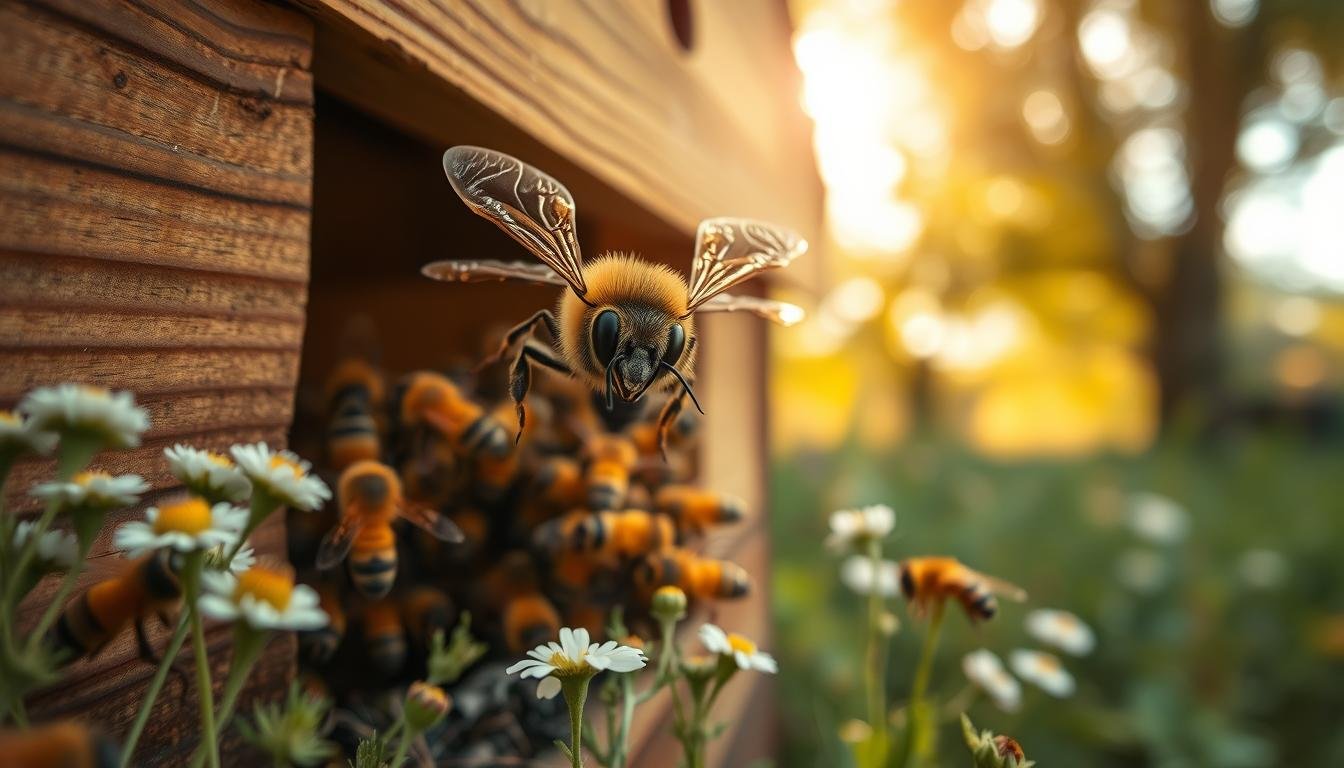
This short guide explains the common causes behind a hive that flips temperament in a single day and offers clear steps to fix it.
Late summer and early fall often bring defensive shifts as forage shrinks and life cycles end. Poor weather such as wind or clouds raises guard behavior, while calm, sunny conditions keep a colony calmer.
Inspection stress can make a hive cranky for days. Using a smoker, steady handling, and picking the best time of day reduces distress. If temperament stays poor, re-queening with a gentle, mated queen often resets things.
Predators, vibrations, and a single injured bee can trigger alarm pheromones that call more workers to defend. For immediate safety, do not swat if a bee bumps you; calmly move indoors or to a vehicle.
In this piece you will learn how to diagnose causes fast, use quick fixes at the hive, and plan long-term steps to protect people and boost honey production.
Key Takeaways
- Seasonal scarcity, weather, inspections, and queen status drive sudden defensiveness.
- Work hives in calm, sunny conditions and use a smoker to lower stress.
- Retreat calmly if a bee signals; swatting can escalate stings.
- Re-queening is a common, lasting fix for poor temperament.
- Prompt sting care and swift retreat reduce alarm pheromone spread.
Understanding sudden bee aggression in context
Rapid swings in temperament often trace to immediate triggers like wind, low forage, or a rough inspection.
Most beekeepers report that a calm, sunny day keeps a hive easier to work. Cloud, wind, or rain raises defensive behavior fast. A single disruptive visit can sensitize a colony for days, so pick late morning to early afternoon when weather is stable.
Distinguish situational triggers from structural drivers. Short-term causes include weather swings, vibrations, and predators. Deeper issues include queen temperament, queenless intervals, or mixed genetics. These structural factors shape how a colony reacts to normal stimuli.
- Log events and time of day to spot patterns.
- Watch nectar flows; dearths raise protective response.
- Consider re-queening if genetics or queenless stress persist.
| Trigger | Typical effect | Quick action | Follow-up |
|---|---|---|---|
| Weather shift | Higher flight activity, defensiveness | Delay work, wait for sun | Record conditions |
| Inspection disturbance | Short-term crankiness | Use smoker, gentle handling | Space future checks |
| Queen issue or genetics | Persistent edge in behavior | Plan re-queening with gentle stock | Monitor for improvement |
Search intent and what you’ll learn in this how-to guide
Purpose: This short guide helps homeowners and the active beekeeper spot the specific things that make a nest seem defensive and follow tested tips to fix the problem.
Learn how to assess the likely reason for a defensive day and pick the best time and day for low-stress work. You’ll get field-ready inspection methods, smoker technique, and clear signs that re-queening may be needed.
- Home safety: what to do if a bee bumps you, how to retreat without escalating, and safe places to shelter.
- Sting care: scrape the stinger, apply a cold compress, use OTC pain relief or topical anti-itch, and try a baking soda paste for relief.
- Prevention: stage work to limit vibrations and odors, avoid cloudy or windy days, and use a smoker sparingly.
What you’ll gain: concise troubleshooting flows that link cause to corrective action, plus step-by-step behaviors for both pros and at-home responders. For broader hive management, see a detailed beekeepers’ expansion tips.
Seasonal surges: why late summer and early fall ramp up aggression
As late summer shifts into early fall, colonies feel intense pressure as stores decline and guard activity rises. This short transition often brings more confrontations near the entrance and more stings reported by people working outdoors.
Life-cycle pressure and dwindling resources
By late summer the brood cycle finishes and workers focus on storing what remains. Reduced nectar and a short dearth push a colony to protect honey tightly. That protection causes higher alarm responses on busy foraging days.
Difference between honey bees, yellow jackets, and wasps in peak season
Honey bees defend a hive and usually target threats near the entrance. Yellow jackets and paper wasps, however, scavenge and can be more aggressive around food and trash. Removing exposed sweets cuts most wasp problems.
Practical steps to reduce encounters during peak days
- Plan yard work during cooler time windows and avoid the hottest days.
- Keep distances from flight lines and give the hive a wide berth to limit guard reactions.
- Feed during a dearth to stabilize stores and reduce robbing between hives; see seasonal tasks for timing: seasonal beekeeping tasks.
- Minimize vibrations and outdoor attractants like open soda or BBQ proteins.
Weather swings and temperament: how bad weather makes bees cranky
Shifting fronts and dark skies often make colonies much more defensive than a clear, warm morning. Calm, sunny conditions let foragers work steadily and keep guards relaxed. Clouds, wind, or rain compress activity into short bursts and raise tension at the entrance.
Cloudy, windy, rainy conditions versus sunny, calm days
On unsettled days, foraging stops and many workers crowd near the hive. That crowding increases encounters and triggers alarm signals.
Sunny, calm weather spreads out flights and lowers encounters. A brief puff of smoke at the entrance can help if the sky clears before you open frames.
Choosing the right day to approach hives
Pick late morning to early afternoon on bright days when foragers are out. Check the forecast and postpone nonessential work when fronts bring gusts or drizzle.
- Fewer vibrations and quick, efficient checks reduce risk on marginal weather.
- Prep tools and frames in advance so time at the hive is minimized.
- Record days and conditions to refine your local timing strategy for calmer access.
- Note: barometric shifts can change temperament temporarily; reassess after the system passes.
“A short, planned visit on a good day beats repeated attempts during a front.”
Hive inspections and disturbances: minimizing defensive responses
A planned visit on a sunny late-morning can keep a hive calm and make inspections faster. Pick late morning to early afternoon on bright days when most foragers are out. Avoid cloudy, windy, or rainy conditions that compress activity and raise tension.
Optimal time of day for work
Best window: late morning to early afternoon. At this time a colony has fewer workers at the entrance and checks move quickly. Beekeepers should confirm local flight patterns over several days.
Post-inspection cool-down period
Thorough handling can leave a colony edgy for a day or two. Close up promptly, minimize repeated visits, and allow a cool-down period after intense checks. If the hive stays defensive, pause nonessential tasks and monitor behavior the next day.
Why smoking the bees helps calm the colony
A few controlled puffs of smoke mask alarm pheromones and prompt bees to feed on stores. This shifts their focus and reduces rapid recruitment. Use smoke sparingly—overuse adds unnecessary stress.
- Stage tools and frames before opening to limit time the hive is open.
- Use gentle motions, avoid crushing a bee, and keep boxes aligned to cut alarm signals.
- Enter with a clear goal and exit quickly; if agitation rises, close up and return later.
- Debrief after each session to note what triggered agitation and improve technique.
“If the colony signals to stop, respect that feedback and return another day.”
Nectar dearth, drought, and starvation as triggers
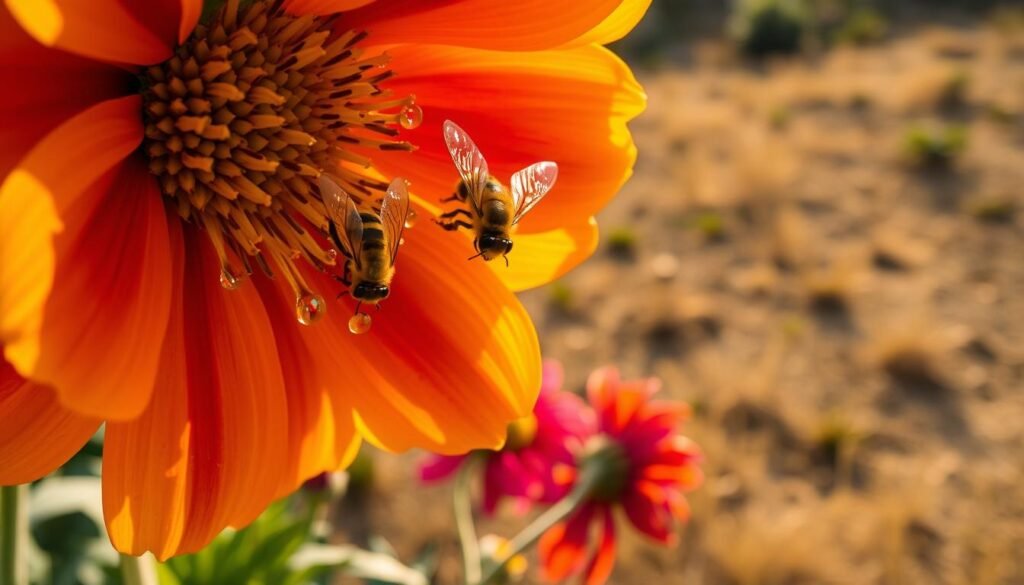
During droughts, limited food and water tighten a colony’s tolerance for disturbance. Starvation and thirst make bees irritable and raise guard activity at the entrance.
Feeding during dearths
When nectar supplies fall, add syrup to stabilize stores. Use a 2:1 sugar-to-water mix in late season and 1:1 during active flows. Place internal or entrance feeders so the hive can access food without crowding the opening.
Feeding strategies that limit robbing
- Feed small amounts and close feeders at dusk to avoid attracting other colonies.
- Rotate feeder placement between boxes to reduce entrance congestion.
- Monitor hive weight and visible honey stores to spot stress before it becomes a crisis.
Providing water sources to prevent stress
Clean, nearby water helps cooling, brood care, and reduces needless flights. Offer shallow dishes with stones or floating corks so bees can drink safely.
“Timely feed and steady water often calm a nervous hive and stop robbing spirals.”
Beekeeper notes: log start and end dates of dearths to build a local calendar. Quick, careful feeding during extreme scarcity will often lower agitation and protect honey stores.
Predators around the hive and how they escalate defensiveness
Nighttime visitors at the hive can prime a colony to defend all through the following day. Small mammals and nocturnal pests force workers to sit near the entrance and raise alarm sensitivity.
Skunks, bearding, and why hot nights matter
In summer, many colonies beard to cool the cluster. A bearded hive leaves more workers near the opening and invites skunks that feed one bee at a time.
Skunks withstand stings on their underside and will return repeatedly. That repeated wear trains guards to respond more quickly each morning.
Detecting activity and protecting entrances
- Look for disturbed grass, paw prints, scratch marks, or knocked equipment after dark.
- Install an entrance reducer and raise the hive on a sturdy stand to block small predators.
- Use perimeter deterrents like motion lights or low barriers and coordinate with neighbors to limit attractants.
Quick note: After a predator event, monitor the colony for a few days and avoid nonessential inspections. Fixing the root cause — predator pressure — often returns honey stores and temperament to normal.
Queen dynamics: temperament, queenless periods, and re-queening
A queen’s scent sets the tone for every worker in the hive. Genetics and pheromones she emits create a baseline temperament that the entire colony mirrors.
Mean queen equals mean colony
Genetic traits and the queen’s pheromone profile influence how workers react to threats. A naturally defensive queen produces bees that respond more strongly to disturbance. Selecting gentle stock reduces future incidents.
Signs and timeline of a queenless hive
Classic signs include rising agitation, disorganized brood, and many drones loitering. Over a few days egg patterns break down and guard behavior often spikes.
When and how to re-queen to reset behavior
Emergency cells can appear quickly, but a replacement must emerge, take mating flights, and resume laying. Expect several days to a few weeks before the colony calms.
Practical tips for re-queening:
- Introduce a gentle, mated new queen when temperament stays hot despite fixing other stressors.
- Install her protected in a cage or release strip to avoid rejection and handle frames gently during this time.
- Let the colony adjust; minimize inspections for several visits and reassess after workers are reared under the new queen.
“Re-queening a consistently hot hive is often the fastest path to restoring safe temperament.”
Aggressive genetics and cross-breeding concerns
Some colonies keep a high guard even on calm days; genetics often explain this steady edge.
How it shows: Aggressive genetics usually cause sustained defensiveness. A hive may react sharply in good weather and with light handling. That persistent response signals a deeper breeding issue, not a short-term stressor.
Africanized traits entering local gene pools
Virgin queens mate with local drones. If drone pools include Africanized lineage, traits can spread. Distance does not fully prevent this—local drone drift and imported stock move genes across regions.
Mitigation: introduce a mated queen with gentle stock
Immediate action: cull a hot queen and install a mated, gentle new queen from a reputable breeder. This reset has the fastest chance to change colony behavior.
- Source queens bred for calm temperament.
- Keep records of queen origin and performance.
- Evaluate colonies after a few brood cycles for improvement.
- Notify local beekeepers’ groups if hot colonies persist.
| Issue | Sign | Action | Timeline |
|---|---|---|---|
| Entrenched hot traits | High guard on calm days | Re-queen with gentle stock | Several weeks |
| Drone-mediated spread | Neighboring hives show edge | Coordinate with association | Ongoing |
| Poor queen performance | Erratic brood, defense | Cull and replace | Immediate to 1 month |
“Genetics set the baseline; good selection and prompt re-queening change the outcome.”
Human proximity and territorial cues: understanding “bump” warnings
A light tap from a flying worker often signals you have crossed an invisible boundary near a hive.
Define the “bump” as a guard bee’s tactile warning that you are too close to an entrance or flight path. Treat it as a first alert, not a random contact.
If a bee bumps you, withdraw calmly to shelter—indoors or into a vehicle—without flailing. Swatting or killing a bee risks releasing alarm pheromones that call more workers and can turn one contact into a multi-bee problem.
Colonies use scouts and guards to expand or shrink a territorial bubble by time of day and conditions. Repeated proximity incidents around a property may signal a placement problem and deserve adjustment.
- Watch entrance lines for a few minutes to map traffic and safe stand-off distances.
- Plan approaches so you don’t cross flight paths at low altitude.
- Keep children and pets farther back; unpredictable motion draws attention.
Learning these cues improves coexistence and reduces unnecessary defensive events.
Alarm pheromones and why swatting or killing backfires
A single alarm scent can flip a calm colony into full defense within minutes. When a bee stings or is crushed it releases a blend of pheromones that signals danger to nearby workers.
Chain reactions that attract more bees
The chemistry involves volatile compounds that travel on air and on clothing. Guards pick up the cue and recruit others to the entrance and surrounding area.
Crushing or killing a worker near the hive can mimic a sting and amplify the call. That turns one contact into a group response quickly.
Safe retreat strategies: where to go and why
If a bee bumps you, move calmly and fast in a straight line toward an enclosed space like a car or house. Do not swat; flailing releases more alarm cues.
- Avoid jumping into water — bees may wait and continue to attack when you surface.
- Remove dark or fuzzy clothing that looks like a predator if possible.
- Once inside, stay put until flying activity drops; reopen doors slowly later.
“Prioritize distance over finishing outdoor tasks if multiple bees circle you.”
Sting care: scrape the stinger out, apply a cool compress, and use acetaminophen or an NSAID for pain. Topical anti-itch or antibiotic cream helps prevent infection from a bee sting.
Prevention is best: keep paths away from the hive entrance and note flight lines. A single incident at the opening can start a chain reaction, so design access to avoid that problem.
Why Bees Are Aggressive Suddenly — the Top Reasons at a Glance
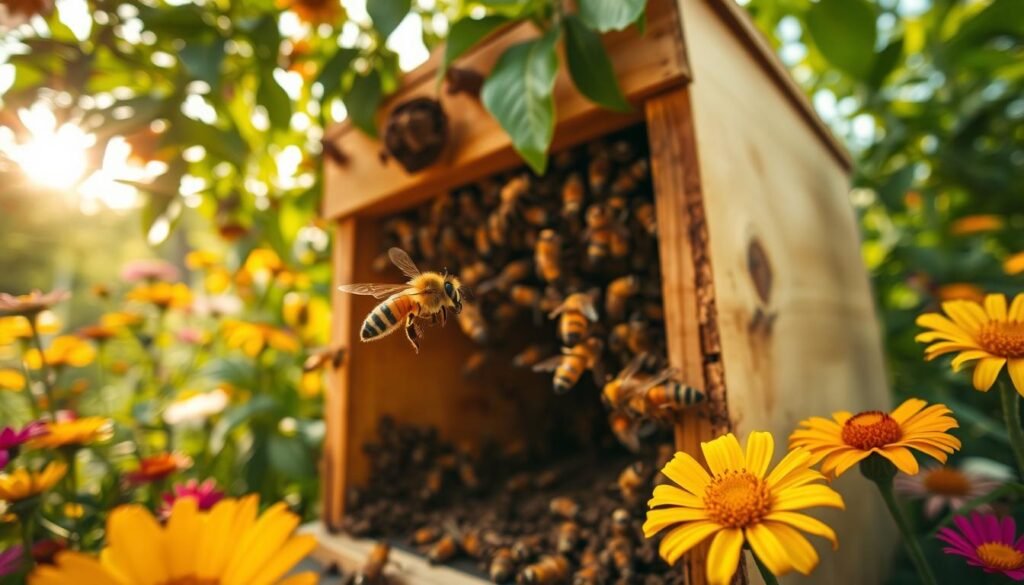
Most abrupt shifts in defensive behavior stem from a short list of environmental and hive stressors. Below is a compact checklist that links each trigger to quick mitigation for the property and the apiary.
Seasonal scarcity and life-cycle end
Reason: late summer food loss and summer heat increase guard duty.
Mitigation: feed with 2:1 syrup in late season and limit nonessential inspections.
Poor weather and barometric shifts
Reason: clouds, wind, and pressure swings compress flights and raise sensitivity.
Mitigation: postpone work until a calm, sunny window and note local weather patterns; see beekeeping in different climates for timing tips.
Hive manipulation and vibrations
Reason: rough handling, repeated checks, and sudden noise trigger alarm pheromones.
Mitigation: use gentle motions, short inspections, and a smoker sparingly.
Nectar dearth, drought, and hunger
Reason: low nectar or a dearth makes a colony protective of stores.
Mitigation: offer emergency feeds and secure water sources to calm activity.
Predators and nighttime harassment
Reason: skunks or pests at night prime guards for daytime defense.
Mitigation: check for signs, use entrance reducers, and deter predators.
Queen problems and aggressive genetics
Reason: a mean queen, queenless stress, or local drone traits can keep colonies on edge.
Mitigation: consider re-queening with gentle stock and monitor brood patterns closely.
Territorial triggers near the hive
Reason: blocked flight paths or repeated human approaches invite ‘bump’ warnings.
Mitigation: reroute paths, keep children and pets back, and map flight lines to avoid repeated incidents.
“Spot the trigger, apply the matching fix, and give the hive time to reset.”
How to approach hives safely: step-by-step field craft
Approaching a hive with calm intent and clear planning cuts risk and keeps inspections efficient. Prepare before you move wood or lift a lid. A short plan saves time at the hive and limits alarm signals from the colony.
Clothing, timing, wind, and angle matter.
Clothing, timing, wind, and approach angle
Dress in light-colored, smooth fabrics and wear a veil and gloves. These choices reduce visual threat and snagging that can crush a worker.
Pick late morning to early afternoon on a calm, sunny day. Enter from the side or rear with the wind at your back to avoid pushing flight lines toward you.
Move slowly, keep your shadow off the entrance, and avoid blocking known flight paths. If guards increase, pause and reassess—stop the visit if agitation grows.
Using a smoker effectively and sparingly
Use a smoker to mask alarm cues, but puff sparingly. Give a small entrance puff, wait a few seconds, then add light puffs under the cover as needed.
Stage tools and frames beforehand to shorten open-hive time. Efficient work reduces disturbance and helps the colony settle faster after you leave.
- Avoid strong scents like perfume or alcohol and keep noisy equipment away from the stand.
- Record wind, weather, and your approach notes so you can refine tactics for each apiary.
- Exit calmly and reassemble boxes carefully to prevent long-term agitation.
| Action | Why it helps | Quick tip |
|---|---|---|
| Light-colored clothing | Looks less like predators | Choose smooth fabrics |
| Wind at your back | Keeps flight lines away | Approach from side or rear |
| Sparse smoker use | Masks alarm pheromones | Small entrance puff, then wait |
“Good field craft reduces stings, preserves colony productivity, and makes every visit safer.”
What to do if stung: fast, safe removal and care
If a sting happens during hive work or in the yard, act quickly and calmly. Fast steps reduce venom spread and lower swelling so you can recover at home or get help if needed.
Scrape the stinger, don’t squeeze
Remove a stinger right away by scraping with a fingernail, the edge of a credit card, or wiping with gauze. Do not pinch or use tweezers; squeezing can push more venom into the skin.
Cold compress, pain control, and infection prevention
Apply a cold compress or ice pack for 10–15 minutes to limit swelling. Repeat during the day as needed.
For pain, use acetaminophen or an NSAID per label directions. Clean the site with soap and water, then apply a topical antibiotic like Neosporin and an anti-itch product such as Caladryl.
At-home remedies: baking soda, vinegar, toothpaste
Try a baking soda paste for relief from bee stings. Vinegar works better for some wasp stings; toothpaste can be a short-term option based on acidity claims.
- Avoid scratching the area to prevent infection.
- Drink water and rest if multiple sites are sore.
- Note the time of the sting and watch for spreading redness or unusual symptoms.
If symptoms go beyond a local reaction—widespread hives, breathing trouble, or swelling of the face—seek emergency care immediately.
Allergy awareness and emergency actions
Allergic reactions to stings can escalate within minutes, making quick recognition vital. A clear plan and the right medication at the right time save lives.
Recognizing anaphylaxis and using epinephrine
Key signs include difficulty breathing, swelling of the face or throat, widespread hives, dizziness, or fainting. These symptoms signal systemic involvement and need immediate action.
If someone has a known allergy, carry and use an epinephrine auto‑injector at the first sign of a systemic reaction. Do not wait for worsening; administer promptly and follow dosing instructions.
When to call 911 or seek urgent care
After giving epinephrine, call 911 at once — severe reactions can rebound. Do not drive yourself in a progressing reaction; EMS can provide airway support and additional medication.
- Use urgent care for escalating local reactions or multiple stings when breathing is normal.
- Avoid being home alone during high‑risk day periods if you have prior reactions.
- Get allergy testing and carry two doses of epinephrine if a clinician recommends it.
- Create an emergency plan with family and coworkers in yards or at home where bees are present.
After any significant incident, follow up with a healthcare provider to document the problem and update your plan.
For more on treatment and prevention, review a practical guide to bee and wasp sting care.
Yard and home practices to reduce bee conflicts
Simple yard adjustments can steer foraging traffic away from patios and play areas. These steps cut daily encounters and make the yard safer for family and visitors.
Manage food, scents, and water attractants
Seal and stash. Keep trash closed, cover food and drinks, and clean up sugary spills promptly to avoid drawing insects to outdoor meals.
Set a dedicated water station away from seating areas so bees choose a safe source and not your patio plants or birdbath.
- Seal garbage cans and secure compost to limit scavengers in late summer.
- Offer shallow water bowls with stones well away from doors and play areas.
- Choose low-fragrance plants and ask guests to skip strong perfumes during gatherings.
Plan garden work away from flight paths
Map flight lines from each hive and route walkways, seating, and play spaces outside those lanes.
Schedule trimming or mowing when foragers are farthest from the yard—often cooler days in spring or early morning.
- Keep kids and pets clear of hive entrances with visual markers or low fencing.
- Remove fallen fruit and cover sweet drinks during outdoor events to prevent wasp and bee attention.
- Coordinate with neighbors who keep hives so activity is staggered and congestion drops.
Small design and habit changes at home eliminate many frequent conflict days and make the yard comfortable for everyone.
Beekeeper checklist: quick fixes that calm hot colonies
Practical, repeatable steps let beekeepers stabilize restless colonies during nectar gaps. This short checklist focuses on simple field actions a beekeeper can use today to lower guard activity and protect honey.
Feed in dearth, add water, reduce disturbance.
Feed during a dearth to steady stores; use internal feeders to limit robbing at the hive. Offer nearby water so workers can cool brood and cut needless flights.
Postpone nonessential work on windy or rainy days to avoid flaring guard behavior. Use a smoker sparingly during inspections to mask alarm cues and keep post-work testiness low.
Inspect for predators, re-queen if needed
Check stands at dusk for skunk marks or other predator signs and install entrance reducers or low barriers. Reducing night harassment often calms a colony by morning.
If a hive stays hot after fixes, evaluate queen quality. Re-queen with a gentle, mated queen to reset behavior and protect the beekeeper and the hives long term.
- Check equipment alignment: minimize crushing when you work to avoid releasing alarm odors.
- Balance space and ventilation: prevent congestion that raises testiness in a colony.
- Track problem patterns: log dates and triggers so you can preempt recurring issues across hives.
- Reassess after interventions: calmer flight lines and reduced guard posturing signal progress.
“Fast, simple fixes—feeding, water, predator checks, and re-queening—often stop escalation and restore normal hive traffic.”
Conclusion
A clear plan and simple habits cut most conflicts with a hive and keep people safe.
Plan work by day and time to match calm foraging windows, avoid poor weather, and use a smoker sparingly. Feed during dearth, offer nearby water, and check for predators to reduce guard pressure.
If a bee bumps or pursues you, retreat calmly to shelter. For stings, scrape the stinger, apply a cold compress, and follow standard aftercare.
When a colony stays hot despite fixes, re-queening with a gentle, mated new queen often resets temperament. Small yard changes and steady logging of conditions help every beekeeper tailor steps by hive and season.
Work confidently, protect people, and support healthy, productive colonies.
FAQ
What causes sudden aggression in a hive during late summer?
Several factors converge in late summer: colonies face life-cycle pressure as worker numbers shift, nectar sources decline, and drones increase. Dearths and heat stress make the colony defensive, and predators or bad weather can heighten alertness. Addressing food and water needs and minimizing hive disturbance helps calm the bees.
How does weather change bee temperament?
Cloudy, windy, or rainy conditions stress bees and limit foraging. Low barometric pressure before storms can make them irritable. Sunny, calm days encourage normal activity and reduce defensiveness, so choose those windows for hive work.
When is the best time of day to inspect a hive to avoid provocation?
Mid-morning to early afternoon on a warm, calm day is ideal. Most foragers are out, reducing hive congestion. Avoid inspections at dusk, dawn, or during cool, wet, or windy periods when bees act more defensively.
Why does smoking calm a colony and how should I use a smoker properly?
Smoke masks alarm pheromones and triggers feeding behavior, which distracts bees. Use gentle, steady puffs at the entrance and top of the brood box. Over-smoking causes stress; use only enough to reduce aggression and give yourself time to work.
How does a nectar dearth affect colony behavior and what feeding strategies work?
A dearth reduces forage, leading to hunger and heightened defensiveness. Provide sugar syrup or fondant as short-term feed, and place feeders inside the hive when weather permits to reduce robbing. Feed early morning and monitor for signs of robbing.
Can lack of water make a hive aggressive and how do I supply water safely?
Yes—bees need water for cooling and brood care. When natural sources dry up, bees get stressed. Provide shallow water stations with floating corks or stones near—but not right at—the apiary to prevent competition and reduce territorial behavior.
How do predators like skunks and raccoons influence hive defensiveness?
Nighttime predators disturb bees at the entrance, prompting defensive guarding and bearding during the day. Protect entrances with hardware cloth, elevate hives, and use motion-activated lights or fencing to deter mammal visitors.
What signs indicate a queen problem that could make a colony irritable?
Signs include spotty brood pattern, drone-laden frames, erratic laying, or sudden aggression. A queenless or failing queen leads to social stress. Inspect for queen cells and consider re-queening with a mated, gentle stock if issues persist.
How do aggressive genetics enter a local population and what mitigation helps?
Drones from nearby feral or Africanized stocks can mate with queens, introducing defensive traits. Mitigate by re-queening with gentle, locally adapted queens, practicing good apiary placement, and replacing aggressive colonies promptly.
Why do alarm pheromones make situations worse if someone swats at a bee?
Swatting releases alarm pheromones that signal danger and recruit more guards. That creates a chain reaction. Instead, move away calmly, cover your face, and seek shelter to reduce escalation.
What immediate steps should I take after a sting?
Scrape the stinger out rather than squeezing to avoid injecting more venom. Apply a cold compress, take an over-the-counter pain reliever or antihistamine if needed, and keep the site clean to prevent infection. Monitor for worsening symptoms.
How do I recognize anaphylaxis and when should I call 911?
Watch for difficulty breathing, swelling of the face or throat, rapid pulse, dizziness, or loss of consciousness. If these appear, use epinephrine immediately if available and call 911—this is a life‑threatening emergency.
What yard practices reduce conflicts with colonies near my home?
Remove open food and sweet drinks, cover trash, limit strong floral or sweet-scented products near play areas, and locate water stations away from high-traffic zones. Plan gardening and outdoor activities away from known flight paths.
What quick fixes calm a hot colony for beekeepers?
Feed during dearths, provide water, reduce unnecessary inspections, repair comb damage, block small entrances against robbers, and consider temporary smoke during brief checks. If aggression persists, evaluate queen status and genetics.