Last Updated August 26, 2026
Turn your yard, balcony, or community plot into a safe haven by choosing a mix of flowering species that attract bees and other beneficial insects. Habitat loss has cut bee numbers in many regions, so thoughtful plant choices and simple features help rebuild local forage and nesting sites.
Flowers that bloom from spring through fall—like bee balm, coneflower, asters, and Joe Pye weed—give steady nectar and pollen. Sun-loving, single blooms in blue‑purple tones are easy targets for bees and boost visit rates.
Combine native and non-native species, cluster blooms, and add bare soil patches, hollow stems, and shallow water dishes to keep bees on site. Practice chemical-free care and match bloom times to support foraging cycles across North America.
For a practical plant list and season-by-season tips, see this short guide to the best choices and maintenance practices at best plants to support pollinator bees.
Key Takeaways
- Choose a mix of single, open flowers that bloom across seasons to attract bees.
- Focus on blue‑purple, daisy‑like blooms and full‑sun placement for more nectar.
- Provide simple habitat features: bare soil, hollow stems, and shallow water.
- Prioritize chemical‑free care to protect bee health and beneficial insects.
- Cluster blooms and match plant timing to keep foraging continuous.
Why Pollinator Gardens Matter Right Now
Residential green spaces now act as critical refuges where shrinking bees can find food and shelter. Habitat loss is a primary driver of bee declines, and small plots stitched through neighborhoods create stepping stones that support local wildlife.
Richly planted beds with varied heights, bloom times, and flower shapes host diverse pollinators and other beneficial insects across the season. Mixing native plants with select high-nectar non-natives fills gaps in forage and extends nectar availability.
https://www.youtube.com/watch?v=-GgVMRtYoBU
Sun exposure matters: most bee-attracting flowers need at least a half day of direct sun to produce abundant blooms and nectar. Replace parts of turf with Dutch white clover or creeping thyme, and add herbs like rosemary and thyme to boost food for pollinators.
- More pollinators mean better fruit set on home vegetables and small fruits, and more food for birds and wildlife.
- Avoid pesticide-treated and systemic products; they harm adult bees and larvae even at low doses.
- In North America, private gardens are a key part of creating habitat corridors that reconnect fragmented landscapes.
What Makes a Flower Truly Bee Friendly
A truly helpful bloom supplies both high-energy nectar and protein-rich pollen so bees can thrive.
Nectar fuels adult foraging with carbohydrates while pollen provides protein and fats for brood. Aim to offer both rewards across the season by overlapping bloom times and mapping beds by primary reward.
Bees see blue and purple best and use ultraviolet nectar guides to find rewards quickly. Long-tongued species prefer tubular flowers, while short-tongued bees favor open disks in the daisy family.
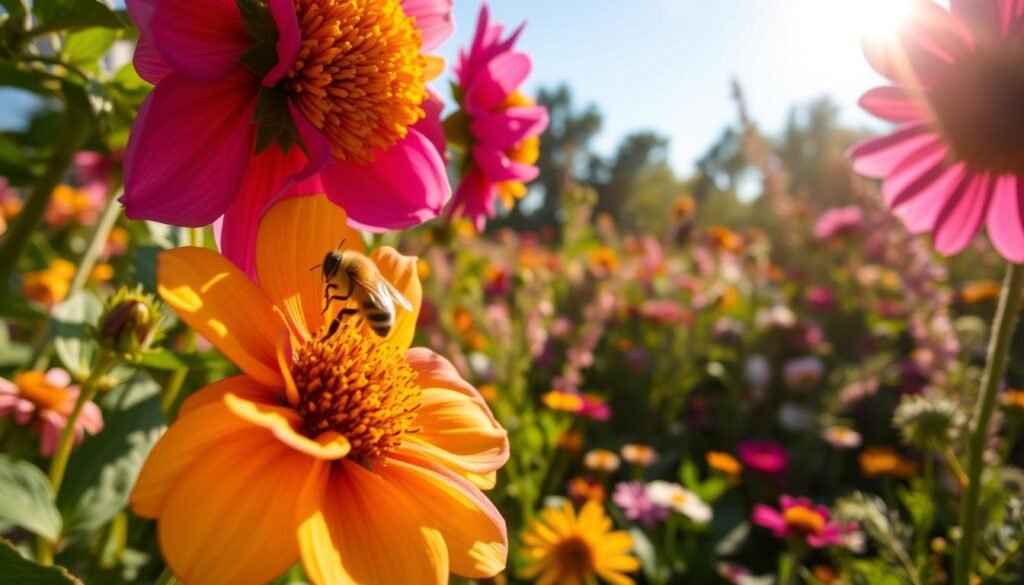
Choose single blooms over double forms; doubles often hide nectar or are sterile. Add a variety of types and sizes so sweat bees, miners, and bumblebees all find suitable food.
- Balance nectar and pollen supplies seasonally.
- Favor blue‑purple hues and single, open flowers.
- Include tubular and daisy family options to serve many species.
| Feature | Benefit | Example |
|---|---|---|
| Nectar (carbs) | Fuels adult flight and foraging | Salvia, borage |
| Pollen (protein) | Supports larvae and colony growth | Coneflower, asters |
| Flower shape | Matches bee tongue length | Tubular vs open disk |
| Form (single) | Accessible rewards | Single zinnia, single sunflower |
For more on flower choices that attract bees, see a practical guide at flowers that attract bees or review regional native options at native plant guide.
Designing a Bee-Safe Garden Habitat
A thoughtful layout that includes nesting spots, water, and sun will support more wild bees. Small design choices make a big difference in any garden or balcony plot. Focus on shelter, a safe water source, and sunny placement to help native bees and other beneficial insects.
Nesting and shelter: bare soil, hollow stems, and bee hotels
Leave tiny patches of bare, unmulched soil so bumblebees and ground-nesting species can make nests. Keep some dead stems and small logs; many solitary bees use hollow stems and wood cavities.
Add a durable bee hotel or a bundled reed block to widen nesting options. Clean or replace tubes each season to lower parasite buildup.
Water sources: shallow dishes, stones, and birdbaths
Provide a wide, shallow dish or a rock-lined birdbath as a steady water source. Scatter pebbles so bees can land and sip without risk of drowning.
Sun exposure and placement: full sun beds and balcony containers
Site pollinator beds in full sun where possible; most flowering plants need at least half a day of sun to produce nectar. If beds are shaded, cluster containers on sunny patios or balconies and rotate them to follow light.
- Plan structural layers—shrubs, perennials, and ground cover—so leaves and stems block wind and offer shelter.
- Delay spring cleanups; cut back stems in late winter, leaving 8–12 inches for overwintering nests.
- Keep the area chemical-free and use gravel paths to avoid soil compaction near nest sites.
Top Bee-Friendly Plants to Grow This Season
A smart planting palette pairs long-blooming perennials with quick-start annuals to support bees across the season.
Perennial powerhouses such as bee balm, coneflower, catmint, lavender, and aster give sustained nectar and pollen over months. Bee balm’s two-lipped blooms draw many bee species, while catmint and lavender extend blooms from spring into fall.
Native North American standouts
Include joe pye weed in moist spots; its vanilla-scented heads attract visits. Goldenrod and anise hyssop provide late-season spikes that bulk up reserves before winter.
Annual all-stars and season extenders
Open-pollinated sunflowers and zinnias supply easy nectar access. Cornflower and borage refill nectar quickly, keeping activity high through summer.
- Early spring lifelines: crocus, hellebore, willow, maple help spring foragers.
- Late-season fuel: asters, goldenrod, sedum top up energy late in fall.
| Category | Key species | Best site |
|---|---|---|
| Perennials | bee balm, coneflower, lavender | well-drained, full sun |
| Natives | joe pye weed, anise hyssop, liatris | moist to average soil |
| Annuals | sunflowers, zinnias, borage | quick to bloom, reseed |
Tip: Plant single, open blooms and group species in drifts of three to five to increase visual impact and help bees locate nectar. A mix of color and shape will attract a wider family of visitors and boost seasonal nectar rewards.
Bee-Friendly Garden Plants for Pollinators: Native Picks by Region
Choose regional natives that fit wet meadows or dry prairies to give bees steady food and shelter. Matching species to site moisture and light lowers inputs and boosts visits by native bees.
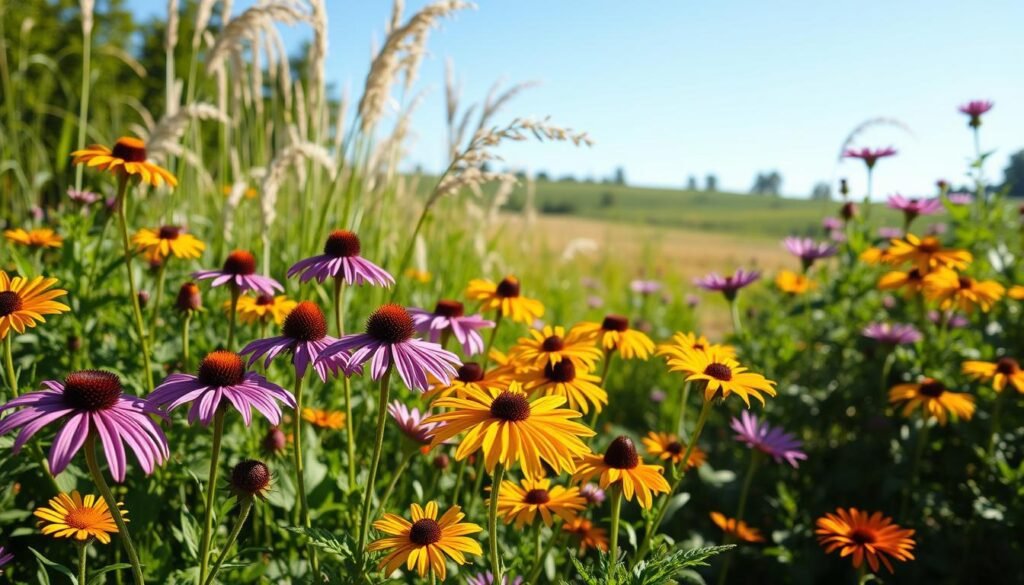
Moist meadow and rain garden allies
Wet corners: Joe Pye weed, turtlehead, swamp milkweed, and boneset thrive in damp spots. These selections offer reliable nectar and leave hollow stems that aid overwintering.
Design tip: Group wet-loving species in drifts so flowers read as a single block and bees can move efficiently between blooms.
Dry and sunny prairie choices
Sunny beds: Purple coneflower, butterfly weed, yarrow, and blazing star (liatris) tolerate drought and shine in full sun. Their varied types—disks, spikes, and clusters—serve different tongue lengths.
Stagger heights in mixed borders, blend shades and flower shapes, and leave stems and seedheads through winter to shelter larvae and feed birds. These native north america selections support regional insects while cutting water and fertilizer needs.
Season-Long Bloom Plan for Continuous Nectar
Plan seasonal color in layers so nectar appears without gaps from late winter through fall. A mapped sequence of bloom times keeps bees fed and helps gardeners avoid food shortages in the yard.
Late winter to early spring starts with snowdrops, crocus, early maples and willows, plus dandelions as an informal stopgap. These early flowers are vital source points when few other blooms exist.
Summer abundance
Stack midseason color with bee balm and lavender to provide steady nectar. Add sunflowers and zinnias for large, easy-access flowers that sustain many bees.
Fall reserves before winter
Finish the year with asters, goldenrod, and sedum so bees can build reserves before winter dormancy. Include joe pye weed and anise hyssop to extend nectar into late summer and reduce gaps during drought.
- Overlap blooms: aim for 2–3 concurrent species during transitions.
- Place nectar-rich species near paths to ease observation and maintenance.
- Track a bloom calendar each year and swap underperformers for quick annuals if needed.
- Reserve at least one native bee specialist in each time slot to serve generalist and specialist species.
| Season | Key species | Benefit |
|---|---|---|
| Late winter–early spring | snowdrops, crocus, maples, dandelion | Early nectar and pollen to kickstart foragers |
| Summer | bee balm, lavender, sunflowers, zinnias | Long bloom periods and easy access to nectar |
| Late summer–fall | joe pye weed, anise hyssop, asters, goldenrod, sedum | Extended nectar into fall; builds reserves before winter |
Small-Space and Container Ideas to Attract Bees
Containers and tiny balcony beds can deliver big rewards when you choose high-nectar species and site them where they get full sun. Even a few pots make a visible food source that draws steady visits from native and managed bees.
Balcony boxes: Build compact pollinator planters using catmint, dwarf sunflowers, creeping thyme, and zinnias to keep blooms coming in tight spaces. Layer short and tall stems so flowers are easy to spot and reach.
Edible containers: Grow blueberries (acidic mix), chives, and sage so your pots yield food and forage. Herbs like rosemary and thyme add scent, nectar, and useful leaves for the kitchen.
- Prioritize full sun placements and rotate containers to follow light on balconies.
- Add a shallow saucer with pebbles among pots to give safe drinking spots.
- Deadhead blooms, refresh potting mix yearly, and use breathable containers to keep roots healthy and nectar flowing.
Mix herbs with annuals to increase visits from bees and other beneficial insects. For a focused list of starter choices that support honeybees and native species, see this practical guide at best plants for honeybees.
Color, Shape, and Variety: How to Attract Different Bee Species
Use contrasting shades and repeatable patterns to create clear visual routes that bees learn quickly.
Bees perceive color best in blue to purple tones and follow ultraviolet nectar guides. Long‑tongued species favor tubular and spire shapes, while short‑tongued bees prefer open disks in the daisy family.
Single blooms outperform doubles because they give straightforward access to nectar pollen. Size matters too: small clustered florets often draw honeybees while larger platforms suit bumblebees and larger native bees.
- Weight the palette toward blue‑purple color, then add whites and yellows to widen appeal.
- Mix flower types—tubes, spires, umbels, and daisy family disks—to match tongues and landing styles.
- Repeat color blocks along borders so flowers attract bees consistently and bees butterflies track routes.
- Layer heights and bloom forms to help bees navigate and feed across the season.
| Design Element | Why it works | Quick examples |
|---|---|---|
| Blue‑purple color | High visibility; UV guides enhance detection | Salvia, catmint |
| Daisy family disks | Accessible pollen and landing platform | Coneflower, single zinnia |
| Tubular flowers | Feed long‑tongued bees efficiently | Bee balm, penstemon |
Common Mistakes That Repel Bees
Common missteps can unintentionally drive away the very insects we want to attract. Simple choices—like buying pretreated stock or picking showy doubles—cut nectar and pollen rewards and raise risk to visitors.
Pesticides, especially systemic products, linger inside tissues and nectar. Avoid pretreated nursery stock and “all-in-one” mixes that list systemic insecticides. These chemicals harm adult bees and developing brood.
- Avoid buying pretreated stock—systemics move into flower tissues and can poison bees and other beneficial insects.
- Skip broad‑spectrum sprays. If you must treat, select targeted, eco‑friendly options and apply at dawn or dusk when activity is low.
- Don’t pick double or pollenless hybrids. They often lack accessible nectar and mislead visiting bees and other beneficial insects.
- Resist fall blanket spraying. Spot-treat issues and focus on cultural prevention instead.
- Use IPM: hand-pick pests, encourage predators, and boost plant vigor before chemicals.
Read labels and plant tags carefully. Choose open‑pollinated or heirloom varieties when possible. Keep simple records of pest issues and responses to refine practices that protect nectar pollen resources and steady bee activity.
| Mistake | Why it harms bees | Better option |
|---|---|---|
| Pretreated/ systemic stock | Chemicals persist in nectar and pollen | Buy untreated nursery stock; ask staff |
| Double‑flower cultivars | Cover or remove reproductive parts | Choose single‑flower forms with open disks |
| Blanket chemical spraying | Kills beneficial insects and disrupts food chains | Use IPM, spot treatments, and natural predators |
For a deeper look at common errors and fixes, see this guide on why your pollinator garden isn’t attracting.
Easy Maintenance Tips for Thriving Pollinator Gardens
A few smart chores each month will keep beds bursting with blooms that feed bees.
Cluster plantings of three or more speed up foraging and create bold displays that are easy to care for. Group similar flowers and leave drifts so bees can move quickly between sources.
Use succession sowing for annuals like zinnias and cornflower, and deadhead perennials to extend bloom. Add a reliable nectar plant such as anise hyssop to each bed for steady midsummer supply.
- Keep beds in full sun where many bee‑attractive plants thrive.
- Mulch 2–3 inches to save water and protect soil life, but leave small bare pockets for ground‑nesting species.
- Water deeply and less often to build strong roots; stressed plants cut back on floral food.
- Commit to zero synthetic insecticides; use IPM and organic methods so flowers stay safe nectar sources.
| Task | Why it helps | When |
|---|---|---|
| Cluster planting | Speeds foraging; looks better | Planting time |
| Succession sowing | Keeps blooms coming | Every 2–4 weeks |
| Mulch & water | Conserves moisture; supports soil life | Spring and summer |
| Avoid synthetics | Protects bees and beneficial insects | Year‑round |
Audit each part of your site—sun, shade, wet, dry—and match species to microclimates. Small, regular efforts yield lots of reliable visits and make it easy for gardeners to attract bees. Learn more about practical care at pollinator gardening.
Conclusion
Planting a seasonal sequence—early trees, summer perennials, and autumn asters—ensures continuous nectar and pollen.
Start small: pair diverse flowers with simple habitat features—bare soil, hollow stems, and a shallow water dish—to support bees from late winter into fall.
Choose by color and shape: blue‑purple tones and open disks help bees locate nectar quickly. Put sun‑loving species like balm, anise hyssop, coneflower, lavender, zinnias, and sunflowers in full sun and in drifts to boost visits.
Match plants to site parts: Joe Pye weed suits wet spots; yarrow and liatris perform in dry, sunny borders. Delay leaf and stem cleanup to protect native bees through winter.
Avoid systemics and buy untreated starts so your flowers stay safe food sources. Learn more practical tips in this short list of beekeeping resources.
FAQ
What are the best plants to attract bees and other beneficial insects?
Choose a mix of perennials, natives, and annuals that bloom at different times. Excellent perennial choices include bee balm, coneflower, catmint, lavender, and asters. Native North American options like Joe Pye weed, goldenrod, anise hyssop, and liatris support local native bees. Annuals such as sunflowers, zinnias, and borage provide quick-season nectar.
Why do pollinator habitats matter right now?
Pollinator numbers are declining from habitat loss, pesticide use, and climate pressures. Creating flower-rich spaces supplies essential nectar and pollen, supports food crops, and boosts biodiversity for bees, butterflies, and other beneficial insects.
What features make a flower especially attractive to bees?
Bees prefer flowers that offer accessible nectar and abundant pollen, especially single blooms over double hybrids. Blue and purple hues are highly visible to them; members of the daisy family and tubular shapes like bee balm and salvia are also favored.
How can I provide nesting and shelter for native bees?
Leave patches of bare, undisturbed soil for ground-nesting bees, keep some hollow stems from last season, and install simple bee hotels with varied tunnel diameters. Avoid excessive tilling and maintain brush piles or rock crevices for shelter.
What’s the best way to offer water to pollinators?
Use shallow dishes or birdbaths with stones or pebbles so bees can perch. Keep water clean and refill regularly. A slow-drip feature or a shallow saucer near blooms helps bees hydrate without risk of drowning.
How much sun do most pollinator-loving species need?
Most nectar-rich species thrive in full sun—at least six hours daily. Some natives tolerate partial shade; consider sun-loving beds for lavender, sunflowers, and zinnias, and shadier corners for early spring spring ephemerals and certain salvias.
Which early-spring flowers are vital to emerging bees?
Early sources like crocus, hellebore, willow catkins, and maples provide crucial nectar and pollen when few other blooms exist. Planting bulbs and early-flowering shrubs helps bridge the food gap in late winter and early spring.
How do I plan blooms so nectar is available season-long?
Create a succession of bloom periods: late winter to early spring (snowdrops, crocus, maples), spring-summer transition (anise hyssop, lavender), full summer (bee balm, sunflowers, zinnias), and fall (asters, goldenrod, sedum). Mix perennials and annuals to extend floral availability.
What native species work best in moist meadows or rain gardens?
Moist areas support Joe Pye weed, turtlehead, swamp milkweed, and boneset. These species tolerate wet soils and deliver high nectar rewards for bees and butterflies while stabilizing moisture-prone spots.
Which species suit dry, sunny prairie-style plantings?
Dry sunny sites favor purple coneflower, butterfly weed, yarrow, and blazing star (liatris). These drought-tolerant choices attract bumblebees and solitary bees and require minimal irrigation once established.
Can small spaces and containers support pollinators?
Yes. Use balcony boxes and containers with catmint, dwarf sunflowers, creeping thyme, and edible herbs like chives and sage. Ensure containers get sun, use well-draining mix, and water consistently during hot spells.
How does color and flower shape affect which bee species visit?
Different species have different foraging styles. Bumblebees and long-tongued bees favor tubular flowers, while short-tongued bees visit open, daisy-like blooms. Blue, purple, and white flowers often draw more visits because bees see those wavelengths clearly.
What common mistakes repel or harm bees?
Avoid using synthetic insecticides, buying pretreated nursery stock, and planting double or pollenless hybrids that look attractive but offer little food. Over-mulching that covers bare soil also removes nesting sites for ground-nesting species.
What low-effort maintenance keeps a pollinator area healthy?
Cluster plants, practice succession sowing, and deadhead selectively to encourage continuous blooms without removing seed heads that feed late-season insects. Use organic mulches, conserve water with drip irrigation, and stop using synthetic insecticides.
How can I support bees through the winter?
Leave some seed heads and stems standing to provide shelter and food for overwintering insects. Avoid aggressive fall cleanups; clear only invasive species. Provide a sheltered, undisturbed corner with leaf litter and brush for native bees to nest.
Are there specific annuals that provide high nectar and pollen quickly?
Yes. Zinnias, borage, cornflower, and sunflowers flower quickly and attract many bee species. They’re excellent choices to fill gaps while perennials establish and to boost summer nectar supplies.
Which authoritative resources can help me choose native species in North America?
Use state and regional resources like your local extension service, Native Plant Societies, and the Xerces Society. These groups provide region-specific plant lists and best practices to support native bees and wildlife.