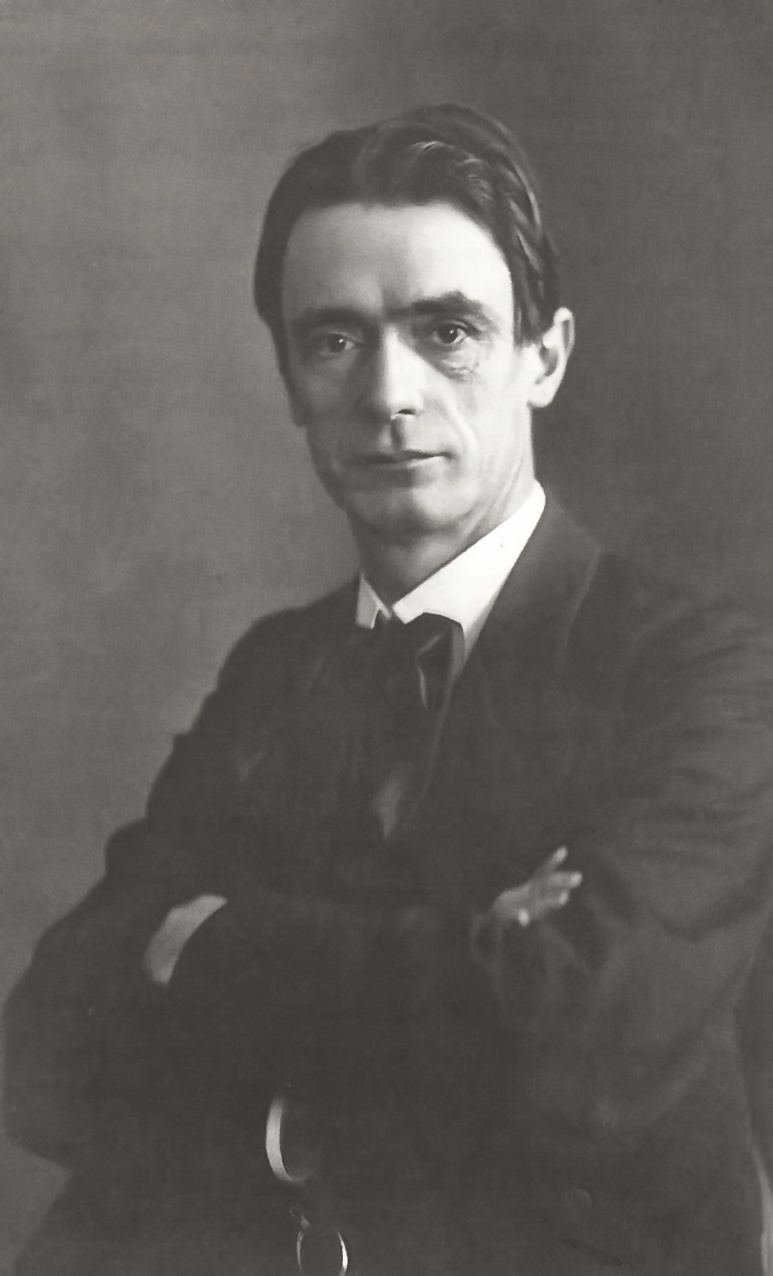
In late 1923, construction workers building the second Goetheanum in Dornach, Switzerland — several of them beekeepers themselves — kept asking philosopher and Anthroposophy founder Rudolf Steiner questions about bees. Steiner responded with a series of nine lectures, delivered between late November and late December 1923, that became the foundational text for the biodynamic beekeeping movement: a set of ideas still shaping Demeter-certified hive standards and distinctive natural-hive designs like the Sun Hive a century later.
Key Takeaways
- Rudolf Steiner delivered nine lectures on bees at the Goetheanum in Dornach, Switzerland, between late November and late December 1923, prompted directly by questions from beekeeper-construction workers.
- The lectures were published in English as Bees (Collected Works volume CW 351) and remain the foundational text underlying the modern biodynamic beekeeping movement.
- Biodynamic beekeeping today is formalized through Demeter certification standards, which set specific requirements around natural comb-building, minimal intervention, and colony welfare beyond what conventional organic certification requires.
- The Sun Hive, an egg-shaped, straw-built hive designed decades later by German sculptor Günther Mancke, is directly inspired by the bee-centered, “let the colony be a whole organism” philosophy Steiner’s lectures articulated — this site’s existing English-language Sun Hive article covers the hive’s design but not this Steiner/biodynamic-movement history behind it.
- Steiner is reported to have voiced concerns about the long-term consequences of mechanizing and artificially controlling practices previously left to the colony’s own natural processes — concerns biodynamic advocates have since connected to modern bee health challenges, though this connection should be understood as advocacy interpretation rather than a scientifically established causal claim.
Table of Contents
- A Brief Note on Anthroposophy
- The 1923 Bee Lectures: What Actually Happened
- What the Lectures Actually Cover
- From Lectures to a Movement
- The Demeter Standard for Beekeeping
- The Sun Hive Connection
- How Biodynamic Certification Differs From Organic
- How to Weigh Steiner’s Claims Today
- Frequently Asked Questions
A Brief Note on Anthroposophy
For readers unfamiliar with the term, Anthroposophy is the spiritual-philosophical movement Rudolf Steiner founded in the early twentieth century, encompassing education (Waldorf schools), medicine, architecture (the Goetheanum itself), and agriculture (biodynamic farming) alongside its beekeeping offshoot. Steiner’s framework treats the physical, observable world as inseparable from a spiritual dimension he claimed direct insight into, a foundational premise that sits outside what mainstream science treats as empirically testable. Understanding that broader context matters here specifically because Steiner’s bee lectures weren’t a standalone beekeeping manual — they were one application, among many, of a comprehensive worldview he’d already been developing and teaching for years before any beekeeper at the Goetheanum construction site ever asked him a question about hives.
The 1923 Bee Lectures: What Actually Happened
Rudolf Steiner regularly held informal talks for the workmen constructing the Goetheanum, Anthroposophy’s architectural and spiritual center in Dornach, Switzerland — a genuine construction-site tradition rather than a formal academic lecture series. Because a number of the workers were themselves beekeepers, their specific questions prompted Steiner to devote nine separate talks to bees between late November and late December 1923. These are documented and published today as Bees (Collected Works volume CW 351), available through publishers including SteinerBooks and the Josephine Porter Institute for Biodynamics, and remain in print exactly because they became the direct intellectual foundation for a beekeeping movement that persists a century later.
What the Lectures Actually Cover
Steiner’s bee lectures blend genuine natural-history observation about colony organization with Anthroposophical spiritual and philosophical framing — describing the colony as a unified, holistic organism (sometimes referred to by biodynamic writers using the German term “Bien” for the colony-as-whole-being) rather than a mere aggregate of individual insects. That framing is the direct intellectual root of biodynamic beekeeping’s central practical commitment: treating hive-level decisions — comb-building, swarming, queen-rearing — as processes to work with and support rather than mechanically override for the beekeeper’s convenience. It’s worth being precise that this is a philosophical and spiritual framework, not a peer-reviewed scientific one, and readers evaluating its practical claims should treat it accordingly, distinct from the evidence-based apiculture research covered elsewhere on this site.
From Lectures to a Movement
Contemporary biodynamic sources describe the lectures as having anticipated future consequences of “mechanizing the forces that had previously operated organically in the beehive,” including practices like artificial queen breeding — concerns that later biodynamic advocates have connected to modern colony health challenges.
It’s important to state clearly that this specific predictive claim is reported through biodynamic advocacy sources rather than independently verified as a precise, documented prediction with a specific timeframe — readers should treat it as a widely repeated characterization within the biodynamic movement rather than an independently confirmed historical fact. What is well documented is the lectures’ direct influence: biodynamic pioneers, including German beekeeper and Spikenard Farm co-founder Günther Hauk, have spent decades translating Steiner’s philosophical framework into specific, practical beekeeping methods — natural comb-building without pre-stamped foundation, swarm-based rather than purchased-package colony increase, and minimal chemical intervention.
The Demeter Standard for Beekeeping
Biodynamic beekeeping is formalized today through Demeter certification, the same organization that certifies biodynamic agriculture more broadly, which maintains a specific standard for beekeeping and hive products distinct from general organic certification. The Demeter beekeeping standard sets requirements beyond typical organic rules — including expectations around natural comb-building (bees drawing their own comb rather than working from wired plastic or wax foundation), colony increase through swarms or splits rather than purchased packages, and restrictions on routine chemical treatment — directly operationalizing the bee-centered philosophy Steiner’s lectures articulated a century earlier into an auditable modern certification framework.
The Sun Hive Connection
One of the more visible modern expressions of Steiner’s influence is the Sun Hive (“Bienenkorb” or “Haengekorb”), an egg-shaped, rye-straw hive designed by German sculptor Günther Mancke specifically to move away from what he described as the earthbound, cuboid geometry of standard box hives, toward a form more in keeping with a colony’s natural nest shape. This site’s existing Sun Hive article covers the hive’s design and construction in detail — but focuses on the hive itself, not the Steiner-lectures and biodynamic-movement history that directly motivated its creation, which is the specific gap this article fills. Mancke’s stated design goal — freeing bees “from a principle at once earthbound and cuboid, one that goes against every law of form” — is a direct, traceable continuation of Steiner’s original framing of the colony as a unified natural organism deserving housing suited to its own form, not merely to a beekeeper’s convenience.
How Biodynamic Certification Differs From Organic
Demeter’s beekeeping standard is a meaningfully different, and generally stricter, framework than USDA Organic honey certification, which in the United States currently has no formal national standard specific to honey at all — most “organic honey” sold domestically is certified under a foreign country’s organic program recognized through an equivalency arrangement, or under general USDA organic livestock-adjacent rules applied to bees. Demeter’s beekeeping standard, by contrast, sets specific, auditable requirements — natural comb-building without prestamped foundation, colony increase through swarms or splits rather than purchased packages — that go beyond what most organic certification schemes require anywhere, reflecting the underlying philosophical commitment to treating the colony as a self-organizing whole rather than simply restricting which chemical inputs are allowed.
How to Weigh Steiner’s Claims Today
Readers approaching biodynamic beekeeping for the first time should understand it as a distinct philosophical and spiritual tradition with real, documented historical roots and a genuine century-long practical legacy — not as an alternative scientific theory of bee biology competing with modern apicultural research on the same evidentiary terms. Its specific practical recommendations (swarm-based increase, natural comb, minimal intervention) overlap substantially with practices some conventional beekeepers also adopt for various non-biodynamic reasons, which is part of why the movement has retained a durable niche following well beyond strictly Anthroposophist circles, even among beekeepers who don’t share its underlying philosophical framework.
Frequently Asked Questions
How many lectures did Rudolf Steiner give on bees?
Nine, delivered at the Goetheanum in Dornach, Switzerland, between late November and late December 1923, published today in English as Bees (CW 351).
Why did Steiner lecture on bees specifically?
Several of the workmen constructing the Goetheanum were themselves beekeepers, and their questions directly prompted Steiner to devote a dedicated lecture series to the subject.
What is Demeter certification for beekeeping?
A specific biodynamic beekeeping standard, maintained by the Demeter certification organization, setting requirements around natural comb-building, swarm-based colony increase, and minimal chemical intervention beyond typical organic certification rules.
What is the Sun Hive and how does it relate to Steiner?
An egg-shaped, straw-built hive designed by German sculptor Günther Mancke, directly inspired by the bee-centered, colony-as-organism philosophy Steiner’s 1923 lectures articulated. Our separate Sun Hive article covers its physical design in detail.
Is biodynamic beekeeping scientifically proven?
It’s a philosophical and spiritual tradition rooted in Steiner’s Anthroposophical framework rather than a peer-reviewed scientific theory, though some of its specific practical recommendations overlap with practices adopted by conventional beekeepers for separate, evidence-based reasons.
Who translated Steiner’s ideas into practical modern beekeeping methods?
Biodynamic beekeeping pioneers including Günther Hauk, co-founder of Spikenard Farm, have spent decades developing specific practical methods based on Steiner’s original lectures.