Randy Oliver runs a genuinely commercial migratory beekeeping operation near Grass Valley, California, moving roughly a thousand to fifteen hundred colonies through almond pollination and honey production every year with his sons. He is also, without any university affiliation, one of the most cited independent sources on practical Varroa management in the English-speaking beekeeping world — a combination that makes ScientificBeekeeping.com and Oliver’s regular American Bee Journal columns unusual in a field where most rigorous applied research comes out of university or USDA labs rather than a working commercial apiary.
Key Takeaways
- Randy Oliver has kept bees as a hobbyist since 1966 and has entomology training, but runs ScientificBeekeeping.com and funds much of his own applied research independently rather than through a university or government position.
- His commercial operation near Grass Valley, California, runs an estimated 1,000–1,500 colonies with his sons, working almond pollination and honey production.
- His long-running, still-updated “Fighting Varroa” and “The Varroa Problem” series (first published in American Bee Journal starting around 2007) is one of the most widely referenced practical Varroa-management resources among working beekeepers.
- Oliver’s research approach emphasizes testing treatments and management practices directly against real-world colony outcomes on his own commercial operation, rather than relying solely on controlled small-scale lab trials.
- ScientificBeekeeping.com is run as a not-for-profit effort, funded by reader donations that go toward site maintenance, hired help, and research costs rather than commercial product sales.
Table of Contents
- Who Is Randy Oliver?
- A Commercial Beekeeper, Not Just a Researcher
- ScientificBeekeeping.com and the Varroa Series
- Oliver’s Research Approach
- The Oxalic Acid Shop-Towel Method
- His Influence on Practical Varroa Management
- Frequently Asked Questions
Who Is Randy Oliver?
Randy Oliver has been keeping bees, by his own account, since 1966, giving him roughly six decades of direct, continuous hands-on experience with the craft. He has formal entomology training but built his public reputation independently, outside any university or government research appointment, through a body of applied, practically-oriented Varroa and colony-health research he conducts on his own commercial operation and publishes freely online and in print. That combination — real scientific rigor applied directly to a working commercial apiary’s actual problems — is a large part of why his writing carries unusual weight among working beekeepers who are often skeptical of purely academic recommendations that haven’t been tested at commercial scale.
A Commercial Beekeeper, Not Just a Researcher
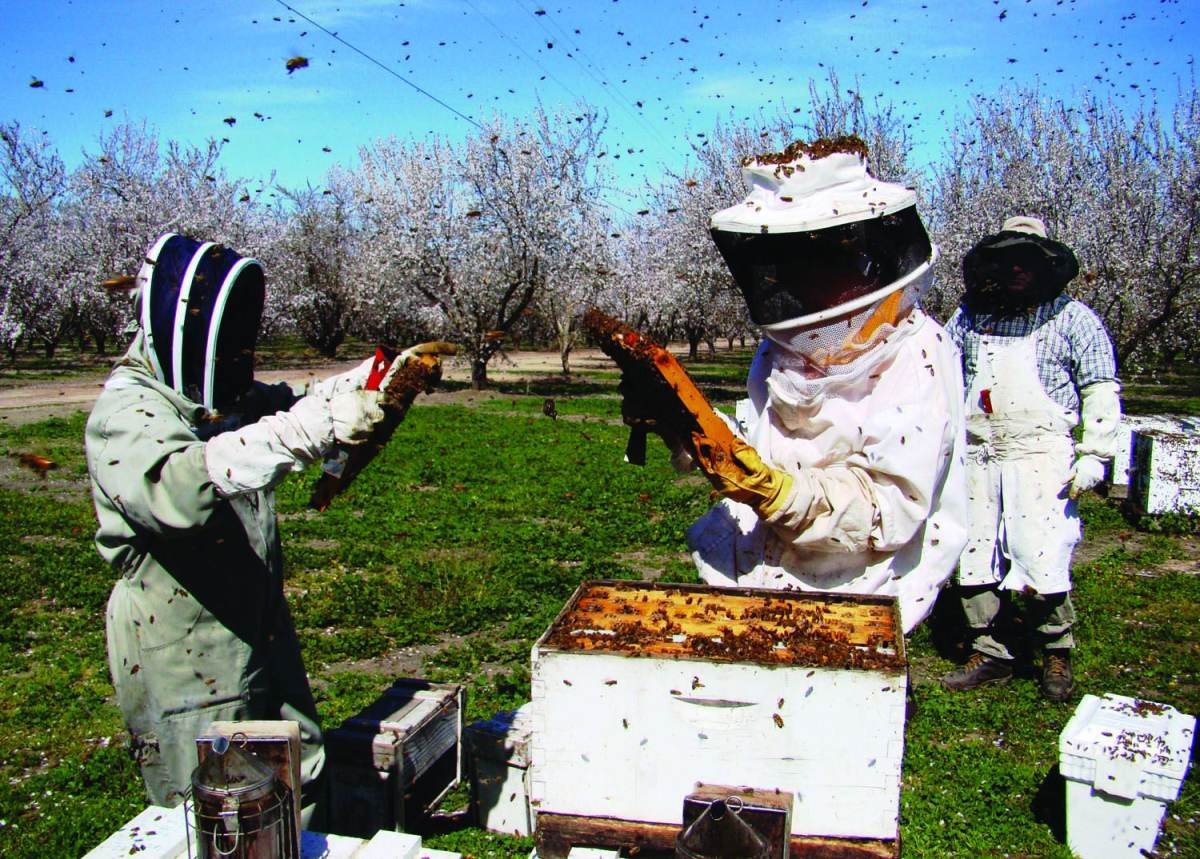
Oliver runs a genuine commercial migratory operation near Grass Valley, California, together with his sons, managing an estimated 1,000 to 1,500 colonies. The operation follows the familiar commercial rhythm of California beekeeping: colonies move for almond pollination contracts each February, then run honey production and colony-health management through the rest of the season. This isn’t a side project supporting his writing — it’s the actual, primary economic operation, which means every management practice and treatment he writes about has to work at real commercial scale and under real financial pressure, not just in a small research apiary insulated from the economics that shape most beekeepers’ actual decisions.
ScientificBeekeeping.com and the Varroa Series
Oliver publishes his research and analysis at ScientificBeekeeping.com, posting articles first in American Bee Journal and then archiving and updating them on the site as new evidence comes in — a practice he’s followed for close to two decades. His most influential body of work is the long-running “Fighting Varroa” and “The Varroa Problem” article series, which began appearing in American Bee Journal around February 2007 and has been periodically revised since. The series covers practical mite-population dynamics, treatment timing and rotation strategy, and how to interpret mite-count data in a way beekeepers can actually act on — distinct from and complementary to step-by-step treatment guides like our own coverage of oxalic acid vaporization and Apivar amitraz strips, since Oliver’s writing tends to focus on strategic decision-making across a season rather than a single product’s application steps.
Oliver’s Research Approach
Oliver describes his ongoing work as spanning roughly seven concurrent research projects at any given time, covering breeding for Varroa resistance, oxalic acid application methods, and robbing-screen design, among other practical management questions beekeepers actually face.
What distinguishes Oliver’s methodology from much academic apiculture research is scale and setting: rather than testing a single variable in a small, controlled research apiary, he frequently runs comparisons across meaningful portions of his own commercial operation, tracking real colony outcomes — survival, honey yield, mite loads — under the same conditions a working beekeeper actually manages colonies in. This isn’t a substitute for peer-reviewed, controlled research, and Oliver himself has never claimed it should replace it; it functions instead as a genuinely useful complementary source, translating and stress-testing academic findings against commercial-scale reality, and flagging where lab-derived recommendations do or don’t hold up once real-world variables like weather, forage, and labor constraints enter the picture.
The Oxalic Acid Shop-Towel Method
One of Oliver’s most widely adopted practical contributions is the oxalic acid and glycerin shop-towel method: dissolving oxalic acid into glycerin, soaking disposable shop towels in the mixture, and placing them directly in the hive, where bees chew the towels apart and distribute the slow-releasing oxalic acid throughout the colony on their own bodies over roughly a month-long period. The appeal is a single application delivering extended mite control without the repeated dribble or vaporization treatments many other oxalic acid methods require. It’s a genuinely significant example of a commercial beekeeper’s own practical field innovation reaching wide adoption well beyond his own operation, discussed and refined across beekeeping forums and association resources nationally. It’s also a good illustration of a broader point worth stating plainly: any specific application method needs to be legally registered for that use in a beekeeper’s own jurisdiction before use, exactly the same caveat that applies to any Varroa treatment, whether it’s an established option or one still working through the regulatory process.
Where He Stands on the Treatment-Free Debate
Oliver has been a consistent, public voice in one of modern beekeeping’s more contentious disagreements: whether beekeepers should aim for entirely treatment-free management, letting only naturally mite-resistant colonies survive, or manage Varroa actively with monitoring and rotated treatments. His position, expressed repeatedly across his writing, favors data-driven, monitored treatment over an absolutist treatment-free stance for most operations — arguing that untreated colonies at commercial or even typical hobbyist scale generally suffer higher losses and act as mite and virus reservoirs affecting neighboring apiaries, rather than reliably producing the kind of naturally resistant survivor stock research programs like Thomas Seeley’s Arnot Forest studies have documented in isolated wild populations. That said, he has also written extensively on breeding for genuine resistance as a long-term goal worth pursuing in parallel with active management, rather than treating the two approaches as strictly incompatible.
His Influence on Practical Varroa Management
Oliver’s writing is cited regularly across beekeeping forums, extension publications, and by other researchers specifically because it fills a real gap: translating dense academic Varroa research into management guidance a working beekeeper without an entomology background can actually apply, while still being grounded in genuine data rather than folk wisdom or product marketing. His ongoing willingness to revise his own past recommendations publicly as new evidence emerges — rather than defending an earlier position for its own sake — has also contributed to his credibility within a field where treatment recommendations have shifted substantially over the past two decades as resistance patterns and new products have changed the landscape. Oliver has also taken his research directly to beekeeping audiences through recorded webinars and association-hosted talks, including sessions organized by regional beekeeper wellness and extension programs, extending his reach well beyond readers of his own website and American Bee Journal columns to beekeepers who prefer a live or recorded presentation format over written technical material. For the full sweep of researchers and practitioners who’ve shaped modern Varroa management and beekeeping more broadly, see our roundup of famous people who kept bees.
Frequently Asked Questions
Is Randy Oliver a university researcher?
No. He has entomology training but conducts and funds his research independently on his own commercial beekeeping operation, without a university or government research appointment.
How many hives does Randy Oliver manage?
His commercial operation near Grass Valley, California, run with his sons, manages an estimated 1,000 to 1,500 colonies, working almond pollination and honey production.
What is ScientificBeekeeping.com?
Randy Oliver’s website archiving his research and American Bee Journal columns on practical Varroa management and colony health, run as a not-for-profit effort funded by reader donations.
What is the “Fighting Varroa” or “Varroa Problem” series?
Oliver’s long-running, periodically updated article series, first appearing in American Bee Journal around 2007, covering practical mite-population dynamics and treatment strategy for working beekeepers.
Does Randy Oliver sell Varroa treatment products?
His site is structured as a not-for-profit research and information resource funded by donations, not a product sales platform, though his writing does cover and evaluate commercially available treatments.
How is Randy Oliver’s research different from typical university Varroa studies?
He tests management practices directly at commercial scale on his own operation, tracking real-world colony outcomes, which complements — rather than replaces — controlled academic and USDA research.