The Xerces Society, the invertebrate conservation nonprofit whose research and citizen-science programs this site has cited repeatedly, is named after a butterfly that no longer exists: the Xerces blue, wiped out on San Francisco’s coastal dunes in the early 1940s by urban development — the first American butterfly species known to go extinct from human activity. Founder Robert Michael Pyle chose that name deliberately, on the other side of the world, as a permanent reminder of what inaction actually costs.
Key Takeaways
- Robert Michael Pyle founded the Xerces Society on December 9, 1971, while in Britain as a Fulbright Scholar studying Lepidoptera ecology and conservation.
- The name comes directly from the Xerces blue butterfly (Glaucopsyche xerces), extirpated from San Francisco’s coastal sand dunes in the early 1940s — believed to be the first American butterfly species lost to human-caused habitat destruction.
- Pyle settled on the name after attending a London lecture about Britain’s own large blue butterfly, then in serious decline, and recognizing that America had already lost its own comparable species — making “Xerces,” with its evocative X, a fitting permanent symbol for extinction rather than a hopeful mascot.
- The organization started with a narrow focus on butterfly conservation, but within roughly a decade broadened its scope to cover invertebrates generally, once it became clear how many other insect and invertebrate species needed the same kind of dedicated advocacy.
- Today the Xerces Society has grown into an organization with more than 50 staff and describes itself as running the largest pollinator protection program of its kind — a very different scale from the single founder who named it after a species he’d never get to see alive.
Table of Contents
- The Butterfly That Gave the Society Its Name
- A London Lecture, Half a World Away
- From Butterflies to All Invertebrates
- The Xerces Society Today
- Frequently Asked Questions
The Butterfly That Gave the Society Its Name
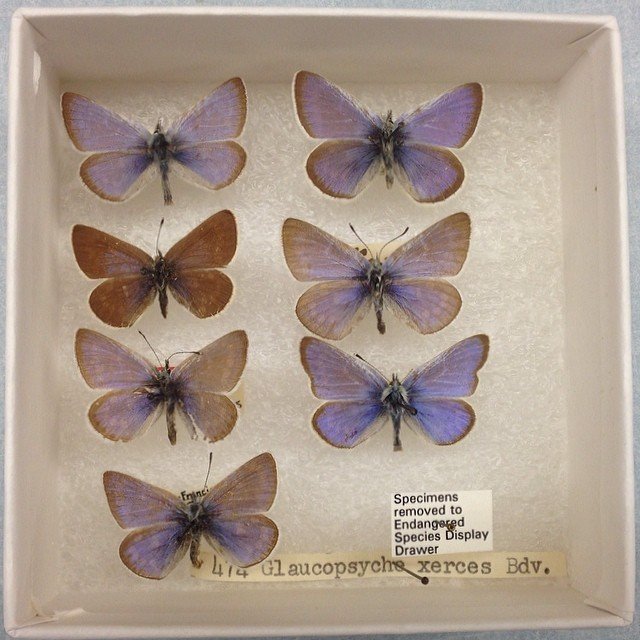
The Xerces blue (Glaucopsyche xerces) lived only on the coastal sand dunes of San Francisco’s Sunset District — a genuinely small, specific range even by the standards of localized butterfly species. Urban development steadily destroyed that dune habitat through the early 20th century, and the species was extirpated in the early 1940s, generally regarded as the first American butterfly species driven extinct by human activity. Preserved specimens, like the ones held today in the Field Museum of Natural History’s collections, are effectively all that remains of a species that once flew over what’s now some of San Francisco’s most densely built neighborhoods.
A London Lecture, Half a World Away
The connection between that long-gone California butterfly and a Pacific Northwest-based conservation nonprofit runs through Robert Michael Pyle, an American lepidopterist who founded the organization on December 9, 1971, while studying in Britain as a Fulbright Scholar. Pyle attended a lecture in London about the British large blue butterfly, which was then sliding toward its own extinction in the UK despite years of conservation attention. Listening to that lecture, Pyle made the connection to a species he already knew well from home: the Xerces blue, already gone from San Francisco for roughly three decades by that point. He settled on “Xerces” for the new organization’s name specifically because it worked as a permanent symbol of extinction rather than a generic, feel-good conservation-group name — a deliberate choice to keep a real loss in view rather than paper over it with something more comfortable.
From Butterflies to All Invertebrates
The Xerces Society began with a specifically lepidoptera-focused mission, reflecting Pyle’s own academic background — he went on to earn a Ph.D. in Lepidoptera ecology and conservation from Yale. Roughly a decade into the organization’s existence, though, the scope widened deliberately from butterflies specifically to invertebrates broadly, once it became clear that plenty of other insect and invertebrate groups faced comparable, under-addressed conservation problems with essentially no dedicated advocacy organization of their own. That expansion is exactly why a group named after one extinct butterfly is now among the most frequently cited sources on this site for topics that have nothing to do with butterflies at all — bumblebee status assessments, native bee identification, and pollinator-garden guidance, the kind of work reflected in this site’s own coverage of citizen science programs for pollinators and pollinator seed bombs, both of which draw on Xerces Society research and guidance.
The Xerces Society Today
More than fifty years after Pyle founded it in response to one small, specific loss, the Xerces Society has grown into an organization with more than 50 staff members, including prominent entomologists, and it describes itself as running the largest pollinator protection program of its kind. That’s a real, significant scale shift from a single founder naming an organization after a butterfly he’d never get to see alive — and this site’s own coverage of Franklin’s bumblebee covers a case where the Xerces Society’s modern advocacy work is directly, actively trying to prevent a second American pollinator extinction from following the same basic trajectory the society was originally named to memorialize.
Frequently Asked Questions
Why is it called the Xerces Society?
It’s named after the Xerces blue butterfly (Glaucopsyche xerces), extirpated from San Francisco’s coastal dunes in the early 1940s — the first American butterfly species known to go extinct from human activity. Founder Robert Michael Pyle chose the name as a deliberate, permanent symbol of extinction.
Who founded the Xerces Society, and when?
Robert Michael Pyle founded it on December 9, 1971, while studying in Britain as a Fulbright Scholar in Lepidoptera ecology and conservation.
What inspired the founding, specifically?
Pyle attended a London lecture about Britain’s own declining large blue butterfly and connected it to the Xerces blue, already extinct in California for roughly three decades by that point.
Did the Xerces Society always work on all invertebrates?
No. It started with a specific focus on butterfly conservation and broadened to invertebrates generally roughly a decade after founding, once it became clear how many other insect groups needed comparable advocacy.
Is the Xerces blue butterfly really extinct?
Yes. It’s generally regarded as the first American butterfly species driven extinct by human activity, lost from its only known range on San Francisco’s coastal dunes in the early 1940s.
For additional context, see the Xerces Society’s own history page.