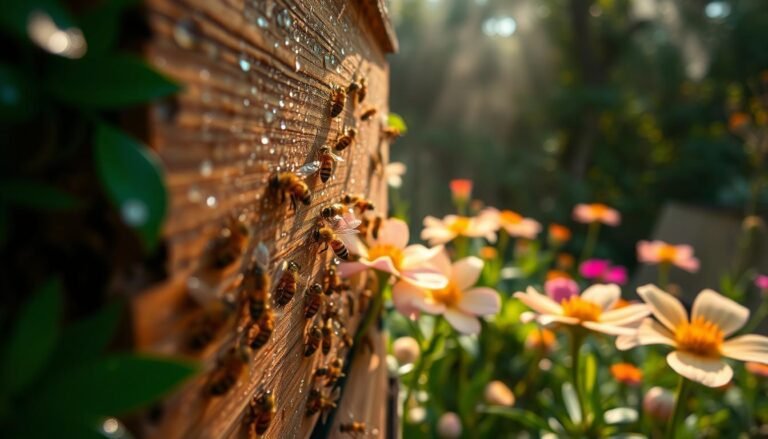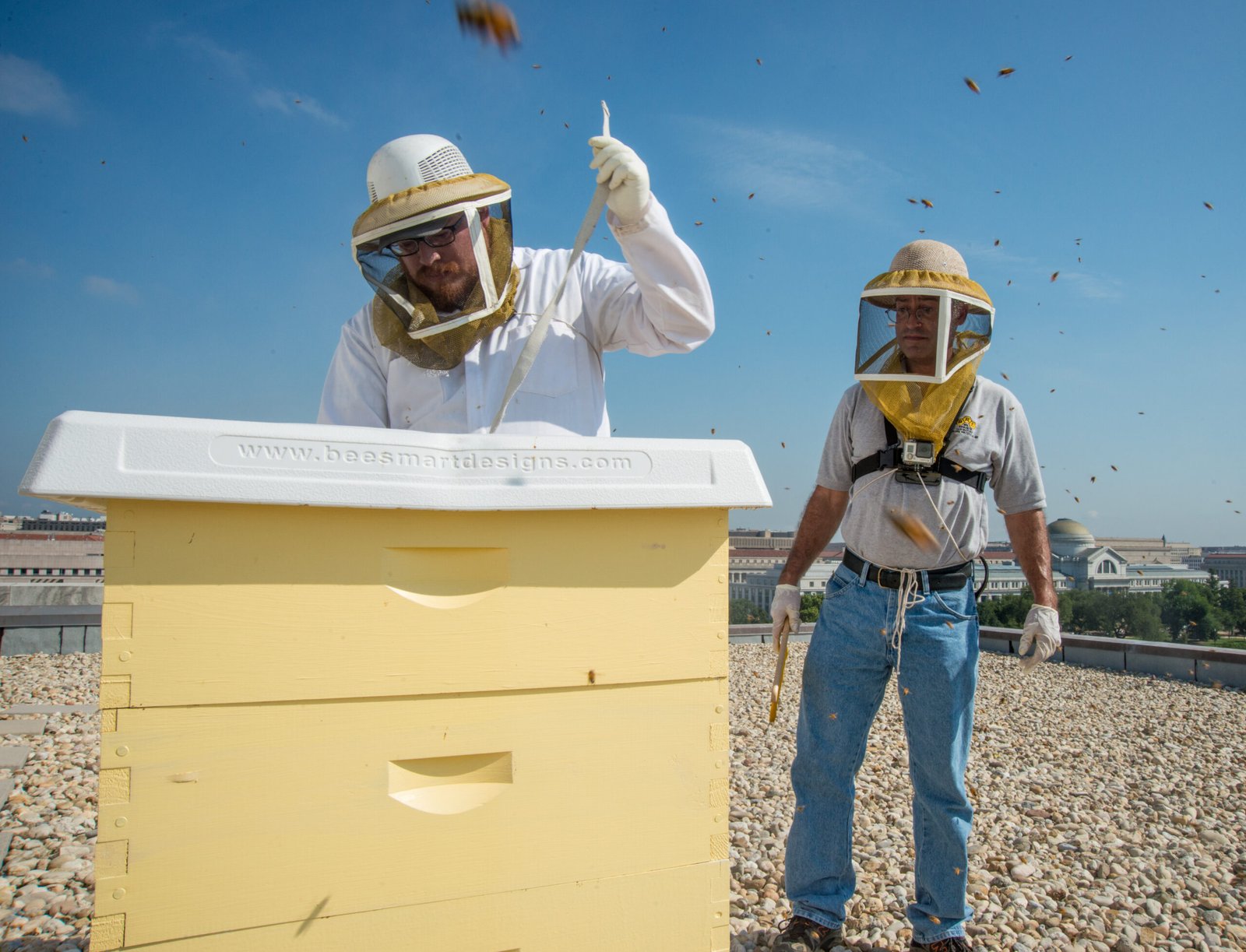
Bees showing up at your pool aren’t randomly wandering in — they’re there for the water, and understanding that changes how you solve the problem. Honey bees need a reliable water source to regulate hive temperature and prepare food for developing larvae, and a swimming pool is often the closest, most consistent water source around, chemicals and all. The fix isn’t eliminating the bees’ access to water; it’s giving them a better, more convenient option somewhere else, ideally set up well before they ever discover the pool in the first place. Once a colony has learned a water source works, that knowledge gets communicated to other foragers and can persist across an entire season, which is exactly why prevention beats correction whenever it’s possible.
This guide covers why bees are drawn to pools specifically, how to set up an alternative water source that actually competes for their attention, and the gradual relocation technique that works even after bees have already made your pool part of their routine. None of these solutions require harming the bees or calling in pest control – the goal throughout is redirecting a natural behavior, not eliminating it.
Key Takeaways
- Bees are drawn to pools for water, not aggression — they’re seeking a reliable source to regulate hive temperature and feed larvae.
- Chlorinated and saline pool water often contains minerals bees actively seek out, which is part of why pools can be more attractive than a plain garden hose or clean birdbath.
- An alternative water source needs to be set up before bees establish the pool as a habit, and it needs safe landing surfaces — bees can’t drink from open water without something to stand on.
- If bees have already made your pool a routine stop, gradually moving a temporary water source a few feet closer to your desired location each day can relocate the habit without conflict.
- The best long-term fix is prevention: set up a hive’s water source closer to the hive than any pool, before bees ever start foraging for water in the first place.
Table of Contents
- Why Bees Are Drawn to Your Pool Specifically
- This Isn’t Aggression — It’s Thirst
- Building a Water Source Bees Will Actually Use
- Where to Place It
- The Gradual Relocation Technique
- Temporarily Covering the Pool
- Other Attractants Worth Addressing
- The Real Fix: Get Ahead of It
- Frequently Asked Questions
Why Bees Are Drawn to Your Pool Specifically
Honey bees collect water for two main purposes inside the hive: helping regulate internal temperature during hot weather through evaporative cooling, and mixing it into brood food for developing larvae. A swimming pool offers a large, consistent, easy-to-find water source that essentially never dries up, even during the hottest and driest stretch of a summer dearth, and — somewhat counterintuitively — the chemicals in it may actually be part of the draw rather than a deterrent the way most homeowners initially assume. Bees are often attracted to specific minerals present in chlorinated or saline pool water, sometimes preferring it over a perfectly clean, unscented water source nearby. Sodium and magnesium concentrations in treated pool water appear to be part of the specific chemical draw, which helps explain why a plain garden hose left dripping in the corner of a yard rarely competes with a pool the way many beekeepers initially expect it to.
This Isn’t Aggression — It’s Thirst
Bees hovering near a pool or landing at the water’s edge aren’t behaving aggressively — they’re doing exactly what a healthy colony’s water foragers are supposed to do, which is find and return to a reliable source. Understanding this distinction matters, both for how effective your response will be and for how the bees themselves are likely to react, because it changes the solution: swatting at bees near a pool or trying to scare them off tends to be far less effective, and can provoke defensive behavior, compared to simply giving them a better place to be. A forager bee that’s been chased off a good water source will typically just return minutes later, or send other foragers back to the same spot, since the underlying colony-wide need for water hasn’t actually gone anywhere in the meantime. Bees also communicate the location of good resources to nestmates, so a single successful pool visit can turn into a recurring stream of foragers rather than a one-off encounter.
Building a Water Source Bees Will Actually Use
An effective alternative water source needs two things a plain bowl of water often lacks: something for bees to land on, and enough surface texture or debris that it reads as a “real” water source rather than a threat. A shallow dish — a plant saucer or pie plate works well — filled with water and packed with stones, marbles, or floating corks gives bees safe places to stand while drinking without risk of drowning, since bees genuinely can and do drown in open water they can’t land on safely. Somewhat counterintuitively to most homeowners, slightly murky water with some organic debris floating in it is often noticeably more attractive to bees than crystal-clear, filtered water, since it more closely resembles a natural puddle or pond edge that bees would encounter in the wild, rather than the artificially clean water most homeowners instinctively provide.
Where to Place It
Location matters as much as the water source itself. If you’re a beekeeper, the ideal spot is closer to your hives than any pool, hot tub, or neighbor’s water feature, since bees generally forage for water at the closest reliable source available rather than expending extra energy flying farther than necessary. A water source placed even a little closer to the hive than a neighbor’s pool is often enough to win out, since bees are fundamentally efficiency-driven foragers. If you’re not a beekeeper but have bees visiting from a nearby hive, placing the alternative source at the edge of your yard, well away from the pool and any area where people gather, gives bees a genuinely competitive option without requiring you to track down whose hive they’re coming from, which is often impossible anyway since foraging bees can travel a mile or more from their home colony in search of resources. Placing the alternative source in a sunny spot tends to help too, since bees generally prefer warmer water and a sun-warmed dish will often out-compete cooler, shaded pool water on that basis alone.
The Gradual Relocation Technique
If bees have already established your pool as a regular stop, a direct swap rarely works on its own — bees have good spatial memory and will keep returning to a familiar spot out of habit. Instead, place a temporary water source (the stone-filled dish described above) close to where bees are currently drinking at the pool, then move it a few feet farther away each day, gradually walking the water source to its permanent location over a week or two. This slow relocation lets foraging bees follow the water rather than losing it entirely and defaulting back to the pool out of familiarity. Moving the dish too quickly, in large jumps rather than small, patient daily increments, tends to break the scent and visual trail bees are following and sends them straight back to the pool instead of the new location.
Temporarily Covering the Pool
Covering the pool for a few days while you establish the new water source can help break the existing habit faster, particularly combined with the gradual relocation technique above. Removing pool access even temporarily forces foraging bees to actively search for a new source, and if your alternative is already in place and appropriately attractive, it becomes the obvious, uncontested replacement rather than one option competing against a pool that’s still readily available. A basic solar pool cover, or even a tarp weighted at the edges for a few days, is usually sufficient to break the routine without any real disruption to your own pool use once the covering period ends.
Other Attractants Worth Addressing
Water usually explains most pool-visiting bee activity, but it’s not the only draw. Spilled sugary drinks, dropped fruit, sticky popsicle wrappers, and flowering plants immediately around a pool deck can all pull bees into the same general area, compounding the impression that the pool itself is the sole attraction when it may only be part of the picture. Cleaning up sugary spills promptly and choosing pool-adjacent landscaping that’s less floral removes some of this secondary pull, making the water-source fix that much more effective on its own, since bees no longer have multiple competing reasons to linger around the pool deck in the first place.
The Real Fix: Get Ahead of It
For beekeepers, the most reliable long-term solution is prevention rather than correction: set up a dedicated water source for your hives before bees ever start actively foraging for water each new season, and keep it consistently closer and more convenient than any pool anywhere in the surrounding area. Our broader guide to bee water collection and its role in the hive covers what makes a water source genuinely attractive and reliable enough that bees never have a reason to look elsewhere, including how much water a colony actually needs on a hot day and how that demand shifts across the season. Beekeepers who also want to stay ahead of neighbor concerns more broadly should pair this with thoughtful hive placement generally, covered in our guide to safe distances between beehives and neighbors, since a well-placed hive with its own dedicated water source is far less likely to generate any pool complaints in the first place.
Frequently Asked Questions
Why are bees attracted to my pool specifically?
Bees need water to regulate hive temperature and feed larvae, and pool water sometimes contains minerals that bees actively seek out, making it more attractive than a plain water source.
Are bees drinking from my pool dangerous?
Generally no. Bees at a pool’s edge are foraging for water, not behaving aggressively, and swatting at them is more likely to provoke a defensive response than simply leaving them alone while you set up an alternative.
What makes an alternative water source actually work?
A shallow dish with stones, marbles, or floating material for bees to land on, placed closer to the hive or the yard’s edge than the pool, and ideally set up before bees establish a habit at the pool.
How do I move bees away from my pool if they’re already used to it?
Place a temporary water source near where they currently drink, then move it a few feet farther away each day until it reaches your desired permanent location.
Does covering my pool help?
Yes, temporarily. Covering the pool for a few days while your alternative water source is established helps break the existing habit faster.
FAQ
Why are bees attracted to my pool specifically?
Bees need water to regulate hive temperature and feed larvae, and pool water sometimes contains minerals that bees actively seek out.
Are bees drinking from my pool dangerous?
Generally no. Bees at a pool’s edge are foraging for water, not behaving aggressively, and swatting at them is more likely to provoke a defensive response.
What makes an alternative water source actually work?
A shallow dish with stones, marbles, or floating material for bees to land on, placed closer to the hive or yard’s edge than the pool.
How do I move bees away from my pool if they’re already used to it?
Place a temporary water source near where they currently drink, then move it a few feet farther away each day until it reaches your desired location.
Does covering my pool help?
Yes, temporarily. Covering the pool for a few days while your alternative water source is established helps break the existing habit faster.