Published September 2, 2026
Buying a bee suit for a child is a genuinely different task than buying one for an adult, and treating it as a simple smaller-sized version of adult gear is one of the more common, avoidable mistakes new beekeeping families make. Real fit, fabric, and closure requirements shift meaningfully when the wearer is a child, and getting those details wrong can mean the difference between a suit that actually protects and one that just looks the part. This guide covers what genuinely matters when buying a kids’ bee suit: proper fit and sizing, the sting-protection role of loose-fitting fabric, closures and veil design, fabric choices for smaller, faster-overheating bodies, and how to avoid costume-grade suits marketed as real protective gear.
Table of Contents
- Why Kids’ Bee Suits Aren’t Just Smaller Adult Suits
- Sizing: Age, Height, and Growing Room
- Why Loose Fit Actually Matters More for Sting Protection
- Closures: Ankles, Wrists, and the Veil Seal
- Fabric Choices and Heat Management for Kids
- The Costume-Suit Trap: What to Avoid
- Price Ranges and What You’re Actually Paying For
- Gear Alone Isn’t Enough: Supervision Still Matters
- Color Choices: Safety and Practical Considerations
- Common Mistakes
- Frequently Asked Questions
Why Kids’ Bee Suits Aren’t Just Smaller Adult Suits
A properly designed kids’ bee suit accounts for several genuine physical differences beyond simply scaling down an adult pattern: children generally have proportionally shorter torsos relative to limb length compared to adults, run hotter and dehydrate faster during physical activity, and are more likely to move unpredictably or bend and reach in ways that can pull a poorly designed suit tight against the skin at exactly the wrong moment. A suit built specifically for a child’s proportions and activity level, rather than a scaled-down adult cut, genuinely fits better at the closures that matter most for actual sting protection.
Sizing: Age, Height, and Growing Room
Most kids’ bee suits on the market are sized by a combination of age range (commonly bands like 3-6, 7-10, and 11-14 years) and height rather than by the more precise chest/waist measurements used for adult suits, which means checking a specific brand’s height and weight chart against your child’s actual measurements matters more than trusting an age label alone, since children vary considerably in build at the same age. Because children grow quickly and a bee suit is a genuine safety item rather than ordinary clothing, most experienced buyers deliberately size slightly generous rather than snug, both to extend the suit’s usable life across a growing season or two and because a slightly looser fit is, as covered next, actually an advantage for sting protection rather than a downside.
Why Loose Fit Actually Matters More for Sting Protection
A genuinely important, often-overlooked fact applies to both adult and kids’ bee suits but matters even more for children given their smaller frames: fabric that sits tight against the skin offers meaningfully less sting protection than fabric with real airspace between it and the body, since a honeybee’s stinger can generally reach through most suit fabrics when there’s no gap, but struggles to penetrate deeply enough to matter when fabric stands away from skin. This is precisely why a suit sized with genuine room to move, rather than a snug, tailored fit, is the safer choice for a child, and it’s a core reason experienced beekeepers consistently recommend erring toward a looser fit for young or first-time wearers specifically.
Does this mean an oversized adult suit could work for a child in a pinch?
Not safely; while looseness itself is good, an adult suit on a child creates dangerous gaps at the ankles, wrists, and neck seal where bees can actually get inside the suit entirely, which is a far greater risk than a snug fit, so “loose but properly sized for the child specifically” is the actual goal, not simply grabbing the smallest adult size available.
Closures: Ankles, Wrists, and the Veil Seal
The single most important safety detail on any kids’ bee suit, arguably more than fabric type or overall build quality, is whether the ankle, wrist, and neck-to-veil closures actually seal completely with the child wearing typical layers underneath and moving normally, since a single small gap at any of these three points is the most common way a bee actually gets inside a suit and stings the wearer. Look specifically for elastic or adjustable hook-and-loop closures at the ankles and wrists sized to cinch securely around a child’s smaller limbs (some adult-pattern suits simply don’t cinch tight enough on a child-sized ankle or wrist even in the smallest listed size), and a veil that’s permanently integrated into the suit as one continuous sealed unit rather than a separate piece attached with a zipper that a child might not fasten correctly unsupervised.

Fabric Choices and Heat Management for Kids
Children generally overheat faster than adults during physical activity, making heat management a genuinely higher priority consideration for kids’ suits than it typically is for adult gear, where sting protection or price often dominates the buying decision instead. Ventilated three-layer mesh suits, the same general technology covered in more depth in this site’s guide to choosing a bee suit for hot weather, offer real advantages for kids specifically in warm climates or during summer inspections, though they typically cost meaningfully more than standard cotton or poly-cotton suits. For families in cooler climates or doing only occasional, brief hive visits, a well-fitted standard cotton or poly-cotton suit remains a perfectly reasonable, more affordable choice, provided the closures and overall fit are genuinely correct.
The Costume-Suit Trap: What to Avoid
A real, worth-naming-explicitly risk exists in this specific product category: thin, costume-grade “kids beekeeper suit” products marketed primarily as Halloween costumes or imaginative-play outfits occasionally show up in the same search results as genuine protective gear, and these are not safe substitutes for an actual hive visit regardless of how similar they look in a product photo. Genuine kids’ beekeeping suits use real beekeeping-grade mesh or tightly woven cotton fabric specifically engineered and tested for sting resistance, while costume fabric is typically thin, loosely woven polyester chosen for appearance and cost rather than any protective function, and offers essentially no meaningful sting protection at all.
How can a parent tell a genuine protective suit apart from a costume-style product when shopping online?
Check specifically whether the listing is sold by an established beekeeping equipment retailer or brand rather than a general costume or party-supply seller, look for explicit mentions of the fabric type (genuine beekeeping mesh or tightly woven cotton/poly-cotton, not “polyester” alone with no further detail), and be wary of any listing that emphasizes appearance, character themes, or “dress-up” language over functional details like closure type and fabric weight.
Price Ranges and What You’re Actually Paying For
Genuine kids’ bee suits typically run from around $30 to $50 for a basic standard-fabric suit up to roughly $60 to $90 for a ventilated three-layer mesh version, a real but generally manageable range given the suit’s role as a genuine safety item rather than a disposable novelty purchase. The price difference between a basic and ventilated suit largely reflects the mesh technology’s added material and manufacturing cost rather than any meaningful difference in baseline sting protection, so families prioritizing budget over climate comfort can reasonably choose a well-fitted standard suit without compromising actual safety, provided the fit and closures are correct.
Gear Alone Isn’t Enough: Supervision Still Matters
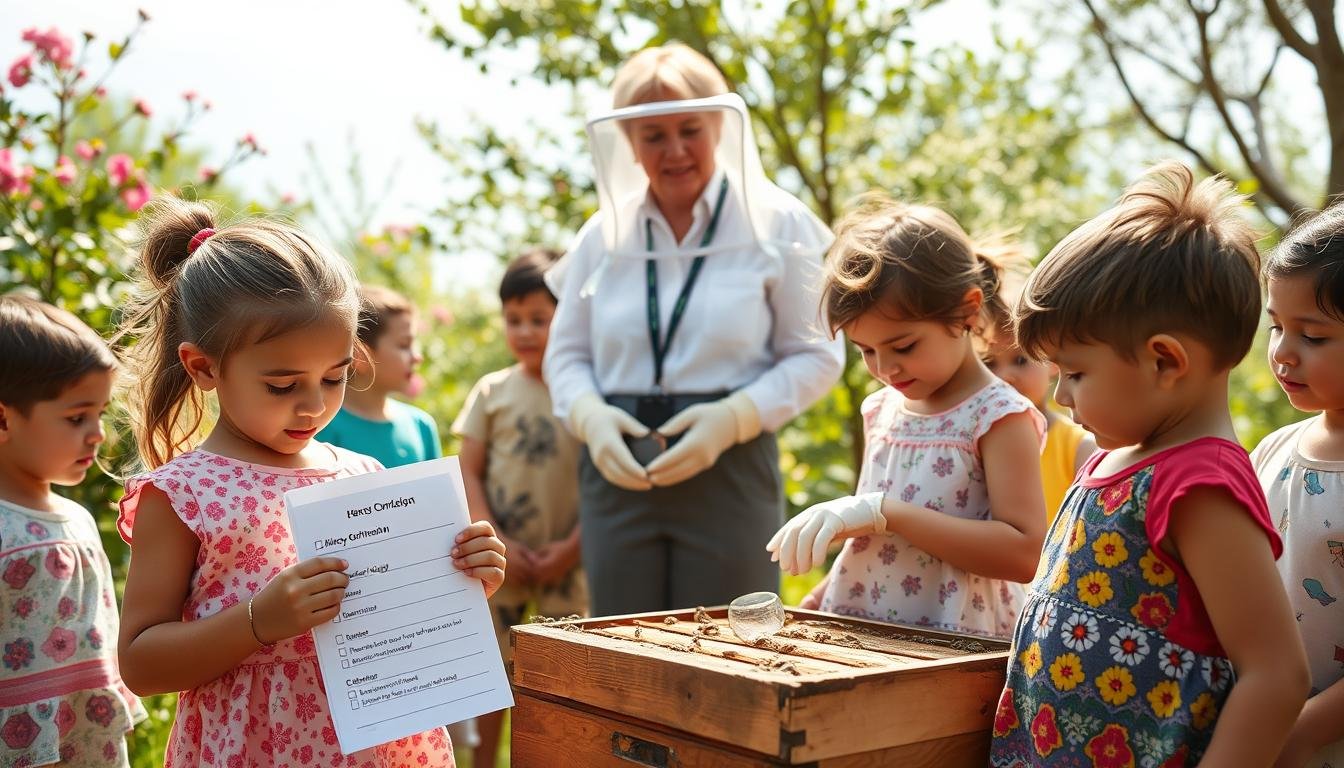
Even the best-fitted, highest-quality kids’ bee suit doesn’t substitute for direct adult supervision and age-appropriate hive interaction guidelines; this guide focuses specifically on the gear itself, and readers wanting the broader picture of how and when to actually bring a child near an active hive safely, including positioning, timing, and behavioral expectations, should consult this site’s dedicated guide to teaching children safe hive interaction.
Color Choices: Safety and Practical Considerations
Light, plain colors, typically white, pale khaki, or light beige, remain the standard recommendation for kids’ bee suits for the same reason they’re standard for adult gear: bees are generally calmer around light, uniform colors and tend to react more defensively to dark colors, rough textures, or strong patterns, which they may associate with natural predators like bears or skunks. Beyond the behavioral angle, a light-colored suit also makes it dramatically easier for a supervising adult to visually spot any bee that has landed on or gotten near a child during a hive visit, a genuinely practical safety advantage on top of the behavioral one. Brightly colored or heavily patterned “fun” kids’ suits, while appealing from a marketing standpoint, work against both of these advantages and are generally worth avoiding for actual hive use, even if they’re fine for imaginative play away from real bees.
Are white kids’ suits harder to keep clean than darker alternatives, and does that matter?
White and light-colored suits do show dirt and propolis stains more visibly than darker fabric, but this is a purely cosmetic tradeoff against a genuine safety advantage, and most experienced beekeeping families consider the visibility and calmer-bee-behavior benefits well worth the extra laundering attention a light-colored suit occasionally requires.
Common Mistakes
The most common mistake is buying a suit based on age label alone without checking the brand’s actual height and weight chart, resulting in a suit that’s genuinely too small or, less commonly, dangerously oversized at the closures for the specific child wearing it. Another mistake is prioritizing suit color, character branding, or appearance over the functional closure and fabric details that actually determine sting protection. A third, more serious mistake is purchasing a costume-marketed “beekeeper suit” intended for imaginative play or Halloween and mistakenly treating it as adequate for a genuine hive visit, when it offers essentially no real protective function at all.
Is bee sting allergy testing something to consider before a child’s first hive visit?
It’s a genuinely reasonable precaution worth discussing with a pediatrician, particularly if there’s any family history of insect sting allergies, since a child’s first-ever sting reaction is impossible to predict in advance regardless of how well-fitted their protective gear is; good gear substantially reduces the chance of a sting happening at all, but it isn’t a substitute for basic awareness of allergy risk before a child’s first supervised hive visit.
Do most kids’ bee suits come in unisex designs, or are boys’ and girls’ versions sold separately?
The overwhelming majority of kids’ beekeeping suits on the market are sold as genuinely unisex products with no gendered styling differences, since the functional requirements, correct fit, secure closures, and effective sting protection, apply identically regardless of the child’s gender, so buyers generally don’t need to search for or expect separate boys’ and girls’ product lines.
Frequently Asked Questions
At what age can a child reasonably start wearing a real bee suit and visiting an active hive?
There’s no single universal age; it depends heavily on the individual child’s ability to follow instructions calmly and stay still when asked, with most experienced beekeeping families and educators suggesting somewhere around age 6 to 8 as a reasonable starting point for brief, closely supervised visits, a topic covered in more depth in this site’s guide to teaching children safe hive interaction.
Should a child wear gloves along with a kids’ bee suit, or is the suit alone sufficient?
Gloves are still recommended for children, since hands are one of the most exposed and frequently used parts of the body during any hive interaction, and kids’ sized beekeeping gloves are available separately from most of the same retailers that sell kids’ suits.
Can a kids’ bee suit be resold or handed down between children as they grow?
Yes, and it’s a genuinely common, sensible practice given how quickly children grow and how relatively infrequently a young hobbyist beekeeper’s child may actually need to wear the suit; just re-check the closures and overall condition for wear before passing a suit down, since elastic and hook-and-loop closures can degrade with age and use.
Do kids’ bee suits typically include integrated gloves or boots the way some adult suits do?
Generally no; most kids’ suits cover the torso, limbs, and head with an integrated veil, while gloves and boots are sold separately, so budgeting for those additional pieces is worth factoring into the total cost of properly outfitting a child for a hive visit.