Published September 1, 2026
Table of Contents
- The Short Answer
- Why Honey Doesn’t Spoil the Way Other Foods Do
- What “Best By” Dates on Honey Labels Actually Mean
- Normal Changes: Crystallization and Darkening
- The One Real Way Honey Can Actually Spoil
- Proper Storage to Keep It at Its Best
- The Famous “Ancient Egyptian Honey” Claim
- Common Mistakes
- Does Raw vs. Processed Honey Store Differently?
- Does This Apply to Comb Honey Too?
- Can You Freeze Honey?
- How to Safely Decrystallize Honey
- A Note on Infused or Flavored Honey
- Commercial Packaging vs. Home Jars
- A Beekeeper’s Note on Long-Stored Honey
- Does This Change If You Bake With It?
- A Reminder on Infant Safety
- Storing Honey While Traveling or Shipping
- How This Compares to Other Hive Products
The Short Answer
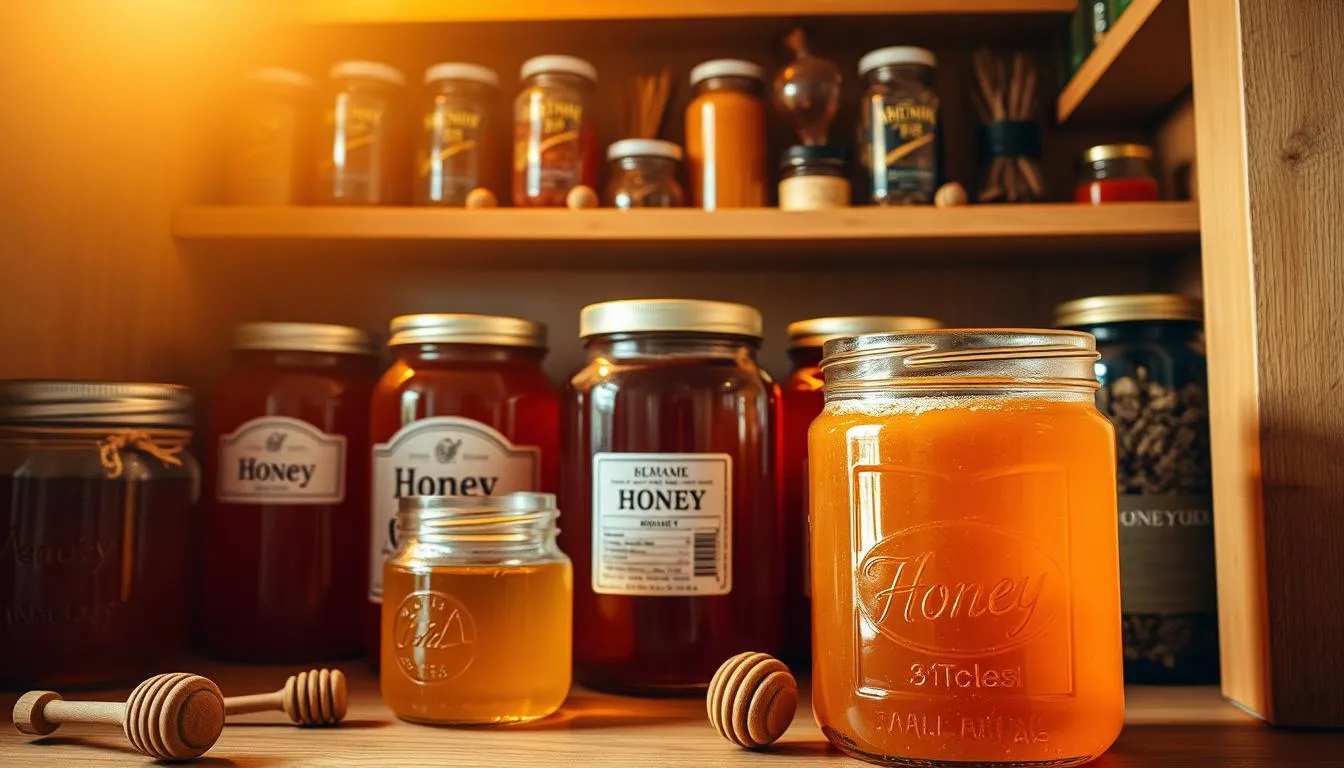
Properly stored honey doesn’t spoil and is safe to eat indefinitely, as long as it stays sealed and free of added moisture. The “best by” date printed on a honey label reflects peak flavor and quality, not a food safety cutoff, and honey that has crystallized or darkened over time is still completely safe to eat.
Why Honey Doesn’t Spoil the Way Other Foods Do
Honey is a supersaturated sugar solution with very low water content and naturally high acidity, creating an environment that’s genuinely inhospitable to the bacteria and microorganisms responsible for spoiling most other foods. This isn’t a folk claim; it’s a real, well-documented property of honey’s chemistry that has made it one of the few naturally shelf-stable foods known throughout history.
What “Best By” Dates on Honey Labels Actually Mean
A “best by” date on a honey label is a manufacturer’s estimate of when flavor and quality are at their peak, not an indication that the honey becomes unsafe or spoiled after that date passes. Honey well past its printed date remains safe to eat under normal storage conditions, though very old honey may have undergone more crystallization or gradual flavor mellowing than a fresher jar.
Normal Changes: Crystallization and Darkening
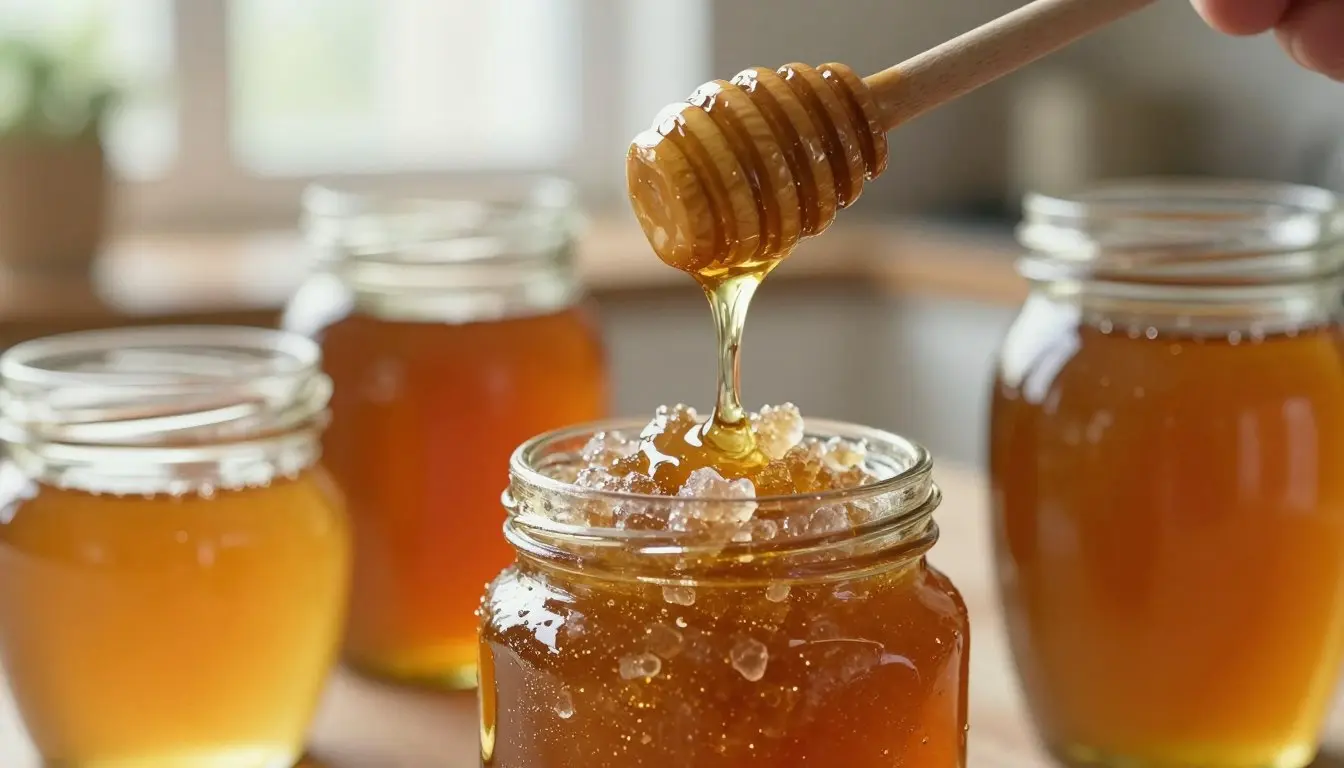
Crystallization, where honey turns cloudy, grainy, or solid, is an entirely natural process driven by honey’s glucose content and doesn’t indicate spoilage or reduced safety in any way; crystallized honey can be gently warmed to return it to a liquid state if preferred. Gradual darkening in color and subtle shifts in flavor over months or years are similarly normal aging changes rather than warning signs, much like how wine or aged cheese changes character over time without becoming unsafe.
The One Real Way Honey Can Actually Spoil
The one genuine spoilage risk for honey is moisture contamination: if water gets into the jar, whether from a wet spoon, condensation, or a poorly sealed lid, it can dilute honey’s naturally protective low-water-content environment enough to allow fermentation to begin. Fermented, spoiled honey is generally unmistakable: a sour, alcoholic, or off smell, visible foaming or bubbling, or mold growth are all clear signs to discard a jar rather than second-guess.
Proper Storage to Keep It at Its Best
Store honey in a tightly sealed container at room temperature, away from direct sunlight and excess humidity, and always use a clean, dry utensil when scooping it out rather than a spoon that’s been in a drink or a wet dish. Refrigeration isn’t necessary and tends to accelerate crystallization rather than meaningfully extending shelf life, so a cool, dry pantry or cupboard is generally the better long-term storage spot.
The Famous “Ancient Egyptian Honey” Claim
Honey’s remarkable shelf stability is often illustrated with the widely repeated claim that archaeologists have found millennia-old honey in ancient Egyptian tombs still in an edible state, a story frequently cited across food and honey-industry sources as a vivid, if informal, demonstration of just how long properly sealed honey can theoretically last. While the precise archaeological details of any specific discovery are less rigorously documented than the popular version of the story suggests, the underlying chemistry it illustrates, honey’s genuine long-term shelf stability, is accurate and well-supported.
Does Raw vs. Processed Honey Store Differently?
Both raw and processed honey share the same core low-moisture, high-acidity chemistry responsible for long-term shelf stability, so the fundamental “doesn’t spoil if kept sealed and dry” rule applies equally to both. Raw honey, having undergone less filtration and heat processing, does tend to crystallize somewhat faster than heavily processed honey due to its retained pollen and mineral content acting as crystallization nuclei, though this remains a normal cosmetic change rather than a storage-life difference.
Does This Apply to Comb Honey Too?
Comb honey follows largely the same shelf-stability principles as extracted liquid honey, since the honey itself has the same protective chemistry regardless of whether it remains in the wax comb, though the wax component can be more sensitive to temperature extremes and should generally be stored slightly cooler to keep the comb from softening or melting. Comb honey is also more visually obvious when something has gone wrong, since mold or unusual discoloration on the wax itself is typically easy to spot.
Can You Freeze Honey?
Honey can be frozen, and doing so effectively pauses the crystallization process for as long as it stays frozen, making it a reasonable option for extremely long-term storage of a large batch. That said, freezing isn’t necessary for typical shelf stability given how well honey already keeps at room temperature, and thawed honey may need to be gently warmed afterward to fully return to a smooth, pourable consistency.
How to Safely Decrystallize Honey
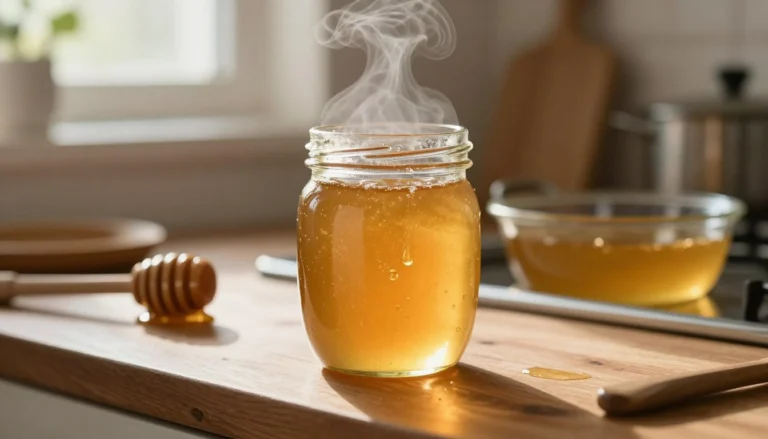
To liquefy crystallized honey, place the sealed jar in a bowl of warm (not boiling) water and let it sit, occasionally swirling, until the crystals dissolve, checking every few minutes rather than leaving it unattended. Avoid microwaving honey directly, since uneven, rapid heating can damage some of its beneficial enzymes and flavor compounds and risks scorching the honey closest to the container’s edges before the center has even softened.
A Note on Infused or Flavored Honey
Honey infused with fresh ingredients like herbs, fruit, or garlic behaves differently from plain honey, since the added ingredient introduces its own moisture and its own separate spoilage risk that plain honey’s natural chemistry doesn’t protect against in the same way. Infused honey containing fresh, water-containing additions should generally be treated more like a standard perishable food with a genuinely limited shelf life, refrigerated, and used within a reasonably short window rather than assumed to share pure honey’s indefinite stability.
Commercial Packaging vs. Home Jars
Commercially packaged honey typically arrives properly sealed and moisture-free from the processing facility, giving it a reliable starting point for long-term storage the moment it reaches a home pantry. Honey transferred into a different home container, or repeatedly opened and closed in a humid kitchen environment, faces a somewhat higher practical risk of gradual moisture exposure over time, making a genuinely tight-sealing container and mindful handling more important the more a jar gets used.
A Beekeeper’s Note on Long-Stored Honey
From a working beekeeper’s perspective, honey harvested and properly bottled years ago that’s still sitting in storage isn’t unusual or concerning; it’s simply a reflection of the same shelf-stability this article describes, and many beekeepers keep personal reserve jars specifically because they know proper storage means there’s no rush to use it before some feared expiration point. This confidence in honey’s stability is itself part of why beekeepers rarely worry about overproducing in a strong year, since well-stored surplus honey isn’t at risk of going to waste from spoilage the way a perishable harvest crop would be.
Does This Change If You Bake With It?
Honey’s own shelf stability doesn’t extend to whatever it gets baked into; a honey-sweetened baked good, covered in our guide to substituting honey for sugar in recipes, follows the normal, much shorter shelf life of that finished baked product rather than honey’s own indefinite storage life. Once combined with eggs, dairy, or other perishable ingredients and baked, standard food-safety storage timelines for that specific finished dish apply, not honey’s separate shelf-stability rules.
A Reminder on Infant Safety
Honey’s long shelf life has no bearing on the completely separate infant botulism risk covered in our dedicated infant honey safety guide; a jar of honey being perfectly safe for an adult to eat after years of storage says nothing about its safety for a baby under 12 months old, since that risk depends on the infant’s own immature digestive system rather than anything about the honey’s age or freshness.
Storing Honey While Traveling or Shipping
Honey travels well precisely because of the same shelf-stable chemistry covered throughout this guide; a sealed jar can handle normal shipping conditions, temperature swings during transport, and extended time in transit without any special preservation measures beyond keeping the container intact and sealed. The main practical concern when shipping or traveling with honey is breakage and leakage rather than spoilage, making secure packaging the priority rather than temperature control or expedited delivery.
How This Compares to Other Hive Products
Honey’s near-indefinite shelf life isn’t shared equally by every hive product; beeswax is also quite stable and long-lasting under normal storage, but pollen and royal jelly are considerably more perishable and generally require refrigeration or freezing to maintain their beneficial properties over any meaningful length of time. This is worth knowing since these other hive products are sometimes stored alongside honey under the mistaken assumption that they share the same forgiving storage rules, when in fact they don’t. Propolis, by contrast, is nearly as stable as honey itself when kept dry and away from heat, making it another hive product that tolerates long-term pantry storage reasonably well without special refrigeration needs. Understanding these differences across the various products a single hive can produce helps prevent the common mistake of applying honey’s famously forgiving storage rules uniformly to everything that comes out of an apiary, when each product actually has its own distinct chemistry and corresponding storage needs. Honey remains the clear outlier in this comparison, and its unusual chemistry is precisely why it earned such a strong historical reputation as one of the very few naturally long-lasting sweeteners available before modern preservation and refrigeration technology existed. Long before refrigeration, canning, or artificial preservatives existed, honey was already doing on its own what those later technologies were eventually invented to accomplish for nearly everything else sitting in the pantry alongside it, a quiet reminder that nature occasionally solves a problem more elegantly than any technology invented across all the many long centuries that have quietly passed by since.
Common Mistakes
Throwing out honey solely because it has crystallized or darkened, mistaking a completely normal aging process for spoilage, wastes a perfectly good, safe product. Assuming the printed “best by” date is a hard safety cutoff, rather than a quality estimate, leads to unnecessarily discarding honey that remains entirely safe to eat. Using a wet spoon or storing honey somewhere humid introduces exactly the moisture risk that can genuinely cause fermentation and spoilage, the one real threat honey actually faces.
Sources
Shelf-life and spoilage-mechanism details reflect published food-science literature on honey’s chemical composition and antimicrobial properties, along with standard food industry labeling guidance on “best by” dating.
FAQ
Can honey actually go bad?
Properly stored, sealed honey doesn’t spoil and remains safe to eat indefinitely. The only real spoilage risk comes from moisture contamination, which can cause fermentation, producing an unmistakable sour or off smell.
Is crystallized honey safe to eat?
Yes. Crystallization is a completely natural process related to honey’s glucose content, not a sign of spoilage, and crystallized honey can be gently warmed to return it to a liquid state if preferred.
What does the “best by” date on honey actually mean?
It reflects the manufacturer’s estimate of peak flavor and quality, not a food safety cutoff – honey remains safe to eat well past this date under normal storage conditions.
How can I tell if honey has actually spoiled?
Real spoilage from moisture contamination and fermentation is usually unmistakable: a sour or alcoholic smell, visible foaming or bubbling, or mold growth. Crystallization and darkening alone are not signs of spoilage.