Published August 31, 2026
Table of Contents
- What a Cappings Spinner Actually Does
- How It Works
- How Much Honey You Actually Recover
- Construction and Build Quality
- Sizing: Matching Capacity to Your Operation
- Cappings Spinner vs. Manual Draining
- Where It Fits in Your Extraction Workflow
- DIY Alternatives Worth Knowing About
- Coordinating With a Harvest Team
- Who Actually Needs One
- How Spinning Affects Cappings Wax Quality
- Cleaning and Maintenance Requirements
- Power Requirements and Setup Considerations
- Does Spinner-Recovered Honey Differ in Quality?
- Cost and Realistic Payback Timeline
- Renting or Borrowing Before Buying
- Noise and Vibration During Operation
- Buying Used Cappings Spinners
- Off-Season Storage
- Batch Processing vs. Continuous-Feed Models
- Tracking Recovery Results Over Time
- Common Mistakes
What a Cappings Spinner Actually Does
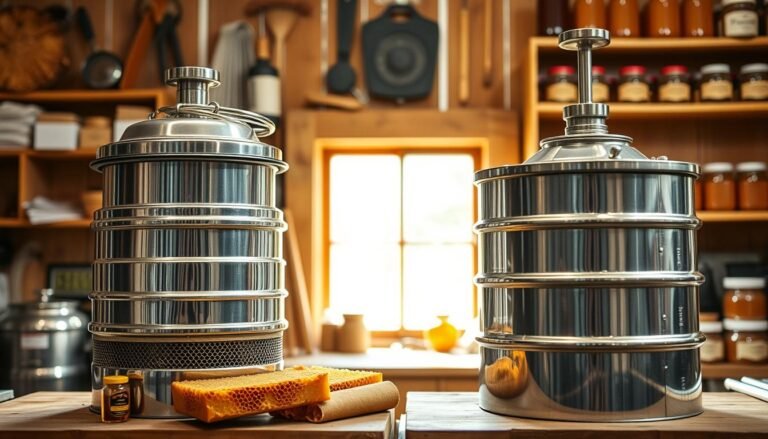
A cappings spinner is dedicated equipment that separates residual honey from the wax cappings sliced off frames during the uncapping step of extraction, using centrifugal force similar to a standard honey extractor but specifically designed and sized for processing cappings rather than full frames. It solves a real, otherwise wasteful problem: cappings removed during uncapping still carry a meaningful amount of honey that would otherwise be lost or require slow, messy manual draining.
How It Works
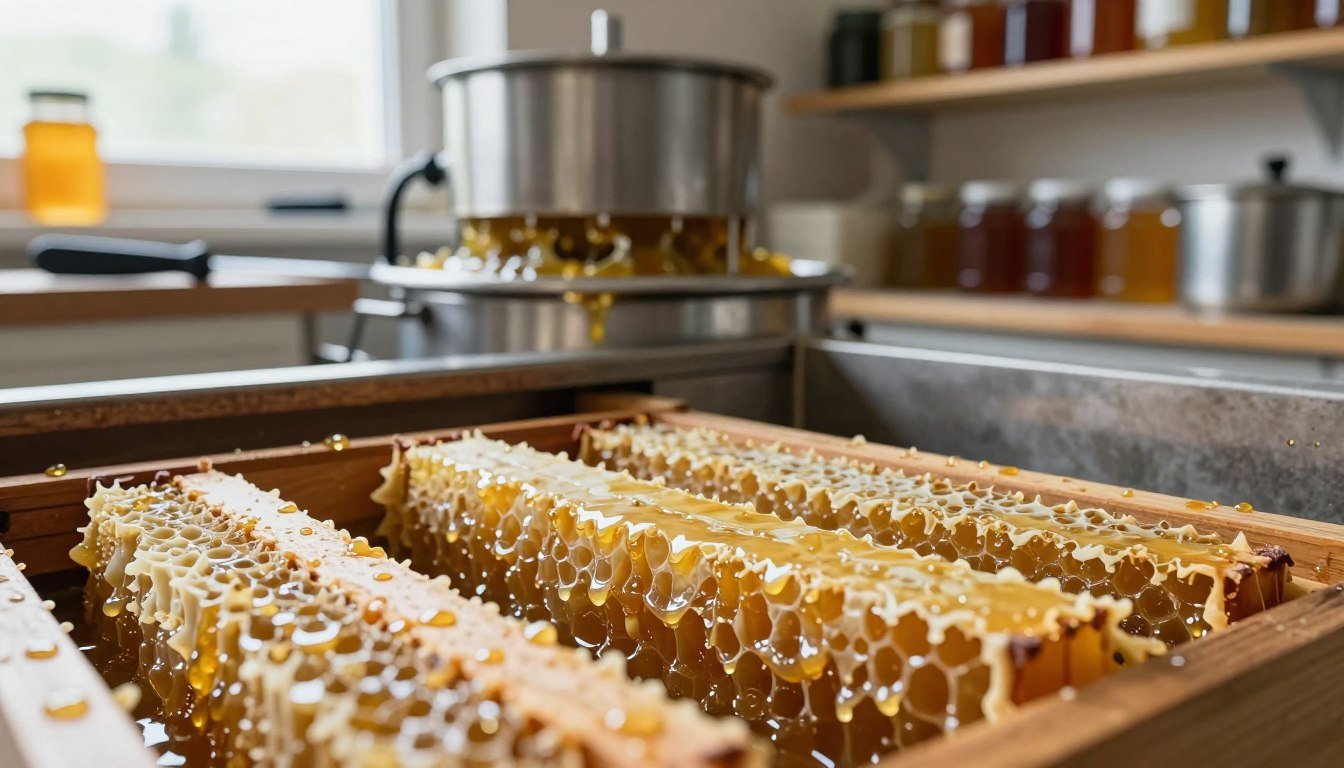
Cappings are loaded into the spinner’s inner perforated basket — either collected first or, with some setups, cut directly into the machine to skip a collection step — and the basket spins at speed, flinging residual honey out through the perforations while the drier wax remains inside; the separated honey then drains through a gate or valve at the bottom into a collection container. This mechanical process is dramatically faster than passive draining, which can otherwise take days to achieve a comparable result.
How Much Honey You Actually Recover
Well-designed cappings spinners recover roughly 98% of the honey present in processed cappings within just a few minutes of spinning, a genuinely impressive recovery rate that makes a real difference to overall harvest yield, particularly for operations processing enough colonies that cappings honey loss would otherwise represent a meaningful volume left behind. This recovery efficiency is the core economic case for the equipment beyond pure convenience.
Construction and Build Quality
Quality cappings spinners are typically constructed from food-grade stainless steel throughout, including the perforated cappings basket itself, both for food-safety compliance and genuine long-term durability under the corrosive, sticky conditions of regular honey processing. A cappings breaker component, which helps break up larger clumps of cappings for more even, effective spinning, is a feature worth checking for specifically when comparing models, since it directly affects processing efficiency.
Sizing: Matching Capacity to Your Operation
Cappings spinners are sized by approximate hive-count capacity, with smaller “junior” models suited to operations of roughly 100 hives or fewer, scaling up to larger commercial units designed for continuous, high-volume processing on bigger operations. Buying meaningfully oversized capacity for your actual colony count wastes money upfront, while undersizing creates a genuine processing bottleneck during peak harvest — matching size to your realistic near-term colony count, with modest room for planned growth, is the sensible approach.
Cappings Spinner vs. Manual Draining
| Factor | Cappings Spinner | Manual/Passive Draining |
|---|---|---|
| Time to process | Minutes | Days |
| Honey recovery rate | ~98% | Lower, less consistent |
| Upfront cost | Real equipment investment | Minimal (basic draining rack) |
| Practical for scale | Yes, especially at volume | Becomes impractical beyond small scale |
For a very small hobbyist operation processing just one or two colonies’ worth of cappings, manual draining may remain perfectly adequate; the calculation shifts toward a dedicated spinner as colony count and the resulting cappings volume grow.
Where It Fits in Your Extraction Workflow
The cappings spinner operates as a parallel step alongside frame extraction — cappings removed during uncapping go into the spinner while frames go into the standard extractor covered in our extractor brands comparison, with both honey streams eventually combined for bottling. Running both processes concurrently, rather than sequentially, is a genuine workflow efficiency for operations processing meaningful honey volume during a harvest session.
DIY Alternatives Worth Knowing About
Some hobbyist beekeepers build improvised cappings spinners from repurposed equipment (like a converted paint-mixer drum or washing-machine-style spin mechanism), achieving reasonable results at a fraction of commercial equipment cost, though generally without the food-grade material certainty, consistent build quality, or cappings-breaker refinements a purpose-built commercial unit offers. This DIY route is a reasonable option for a genuinely small-scale hobbyist testing whether dedicated cappings processing is worth a larger investment before committing to commercial equipment.
Who Actually Needs One
Beekeepers managing enough colonies that cappings honey loss represents a real, meaningful volume — generally once you’re processing multiple colonies’ worth of cappings per harvest — get genuine value from a dedicated spinner. A beekeeper with just one or two hives processing a small cappings volume may reasonably stick with simple passive draining, where the time cost is less consequential relative to the modest volume involved.
How Spinning Affects Cappings Wax Quality
Beyond honey recovery, running cappings through a spinner also leaves the resulting wax cleaner and drier than passively drained cappings, making subsequent wax rendering (covered in our guide to rendering cappings wax cleanly) somewhat easier and typically yielding a higher-quality end product, since less residual honey means less risk of fermentation or off-odors developing in stored cappings before you get around to rendering them.
Cleaning and Maintenance Requirements
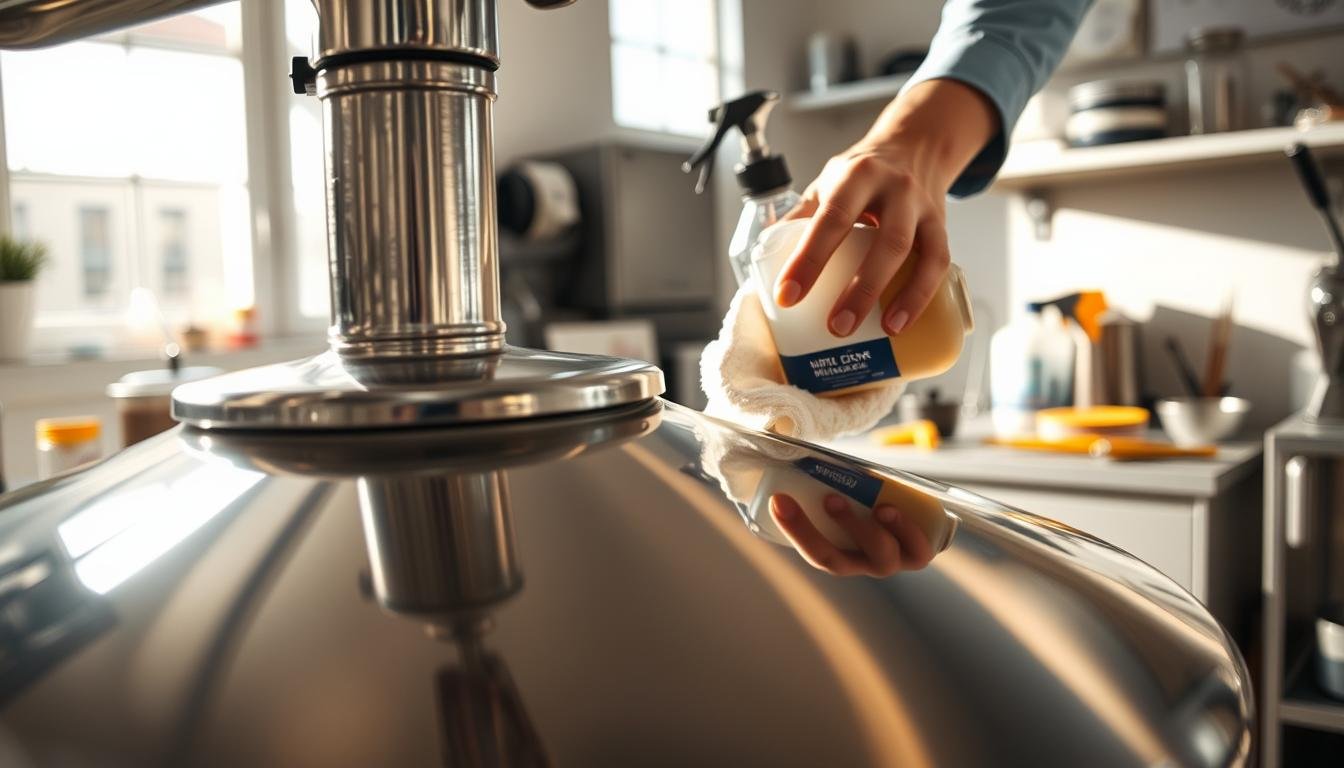
Regular thorough cleaning after each use is genuinely important for cappings spinners specifically, since the sticky honey-and-wax residue left behind can harden and gum up moving parts if allowed to sit, and stainless steel construction (rather than cheaper plastic components) makes this repeated cleaning cycle meaningfully easier and more durable over years of regular use. Rinsing promptly after use, before residue has a chance to dry and harden, saves considerably more cleaning effort than letting it sit until the next use.
Power Requirements and Setup Considerations
Larger commercial cappings spinners typically require dedicated electrical circuits given their motor size and continuous-duty operation, while smaller hobbyist-scale units generally run on standard household outlets without special electrical work needed — checking a specific model’s power requirements against your actual honey house or workspace electrical setup before buying avoids an unwelcome surprise after the equipment arrives.
Does Spinner-Recovered Honey Differ in Quality?
Honey recovered from a cappings spinner is generally comparable in quality to frame-extracted honey, since both come from the same harvest and undergo the same basic centrifugal separation principle, though beekeepers focused on producing a specific premium single-batch product sometimes keep cappings-spinner honey separate rather than blending it directly with frame-extracted honey, purely as a matter of batch-tracking preference rather than any inherent quality difference.
Cost and Realistic Payback Timeline
A dedicated cappings spinner represents a genuine upfront equipment cost, but for an operation processing enough colonies, the additional honey recovered compared to passive draining alone can meaningfully offset that cost over a small number of harvest seasons, particularly once the time savings on labor are factored in alongside the pure honey-volume recovery benefit. Calculating this payback specifically against your own typical cappings volume and local honey pricing gives a more useful answer than a generic industry rule of thumb.
Renting or Borrowing Before Buying
Some local beekeeping clubs maintain shared or rentable cappings spinners specifically for members not yet ready to invest in their own unit, and checking whether this option exists locally before committing to a purchase is a genuinely sensible way to confirm the equipment is worth the investment for your specific operation before spending the money. This trial-before-buying approach mirrors the same reasonable caution worth applying to any significant equipment purchase, not just cappings spinners specifically.
Noise and Vibration During Operation
Cappings spinners, like any centrifugal equipment, produce meaningful noise and vibration during operation, particularly larger commercial units running at higher speeds, which is worth factoring into where you plan to set up and use the equipment — a securely anchored, stable work surface reduces both noise and the real risk of the unit “walking” across a surface during operation if not properly secured.
Buying Used Cappings Spinners
Used cappings spinners appear on the secondary market periodically, often at meaningful savings over new equipment, though buyers should inspect the perforated basket carefully for corrosion or damage, confirm the motor and bearing assembly run smoothly without unusual noise, and thoroughly clean and sanitize any used food-contact equipment before putting it into service. A well-maintained used stainless steel unit can offer genuine value, but the same food-safety and mechanical-condition scrutiny that applies to any used extraction equipment applies here too.
Off-Season Storage
Between harvest seasons, cappings spinners should be stored fully cleaned, thoroughly dried, and ideally covered to prevent dust accumulation on the food-contact surfaces, particularly the perforated basket where residue could otherwise attract pests if any trace amount of honey or wax remains from the prior season’s final use. A few minutes of proper end-of-season cleaning and storage prep genuinely extends equipment lifespan and avoids an unpleasant surprise the following harvest season.
Batch Processing vs. Continuous-Feed Models
Most hobbyist and mid-scale cappings spinners operate as batch units — load a quantity of cappings, run a full spin cycle, then unload before starting the next batch — while some larger commercial operations use continuous-feed centrifuge systems that process cappings in an ongoing flow rather than discrete batches. Continuous-feed systems represent a significant additional investment generally only justified at genuinely large commercial scale, well beyond what most sideline or hobbyist operations need to consider.
Tracking Recovery Results Over Time
Keeping simple notes on cappings volume processed and resulting honey recovered each harvest gives you a genuinely useful personal benchmark for evaluating whether your equipment is performing as expected, and helps identify if recovery rates start declining over time in a way that might signal a maintenance issue (like a partially clogged basket or worn seal) worth addressing before it becomes a bigger problem.
Common Mistakes
Buying a spinner sized well beyond your actual near-term colony count wastes money on unused capacity that could have gone toward other equipment needs. Skipping the cappings-breaker feature to save cost, then dealing with inconsistent spinning results from large unbroken clumps, undermines the recovery-rate benefit that’s the whole point of the equipment. Neglecting thorough cleaning between uses, given the sticky, residue-prone nature of cappings processing, risks both hygiene issues and mechanical wear over time.
Coordinating Cappings Processing With a Harvest Team
Operations with multiple people working a harvest session often assign cappings-spinner operation as its own dedicated task running in parallel with frame uncapping and extraction, since the spinner’s short batch cycle time fits naturally into a continuous workflow when someone is specifically responsible for keeping it loaded and running rather than treating it as an afterthought handled only once frame extraction finishes.
Sources
Equipment design, recovery-rate figures, and sizing guidance reflect published beekeeping equipment manufacturer documentation on cappings processing and honey extraction workflow.
FAQ
How much honey does a cappings spinner actually recover?
Well-designed spinners recover roughly 98% of the residual honey in cappings within a few minutes of processing, a meaningfully higher and faster recovery than passive manual draining achieves.
Do I need a cappings spinner with just a couple of hives?
Probably not — simple manual draining is generally adequate for the smaller cappings volume a hobbyist with one or two colonies produces; the equipment investment makes more sense as colony count and cappings volume grow.
What size cappings spinner should I buy?
Match capacity to your realistic near-term colony count with modest room for growth — smaller “junior” models suit roughly 100 hives or fewer, with larger commercial units available for bigger operations.
Can I build my own cappings spinner instead of buying one?
Some hobbyists build DIY versions from repurposed equipment at lower cost, though commercial units offer more consistent food-grade construction and features like a cappings breaker that improve processing efficiency.
How long does it take to process cappings in a spinner?
Just a few minutes per batch — a dramatic time savings compared to passive manual draining, which can take days to achieve a comparable level of honey recovery.
Can a cappings spinner also be used for anything besides cappings?
Some beekeepers use the same equipment for small-scale crushed-comb honey processing, since the centrifugal principle works similarly, though the equipment is specifically optimized for cappings and this is more of a secondary, informal use than its designed purpose.