Published August 31, 2026
Table of Contents
- What OTS Queen Rearing Actually Is
- Mel Disselkoen and the 25-Year Development History
- A System, Not Just a Notching Technique
- The Brood-Break Varroa Control Mechanism
- The Local Survivor Stock Philosophy
- Why OTS Is Marketed as “Miticide-Free”
- IMN Mating Nucs and the Broader OTS Ecosystem
- Getting Started With OTS
- Who OTS Genuinely Fits
- The Colony Increase Component
- Seasonal Timing for OTS Cycles
- OTS vs. Other Named Queen-Rearing Systems
- Community Adoption and Ongoing Support
- Scaling OTS From Hobbyist to Sideline Operations
- Realistic Learning Curve Expectations
- Tracking OTS Results Over Multiple Seasons
- Adapting OTS to Different Regional Climates
- Using OTS for Requeening vs. Pure Colony Increase
- Common Mistakes
What OTS Queen Rearing Actually Is
OTS (“On The Spot”) Queen Rearing is a complete apiary management system developed by Mel Disselkoen over roughly 25 years, built around the notching technique for graft-free queen production but extending well beyond it into a broader philosophy of colony increase, varroa management through deliberate brood breaks, and raising locally adapted survivor stock without routine miticide use. It’s important to understand OTS as this full system rather than just “the notching method” — the mechanical notching technique itself is covered in depth in our dedicated guide to notching for graft-free queen cells, while this guide focuses specifically on the broader OTS framework Disselkoen built around it.
Mel Disselkoen and the 25-Year Development History
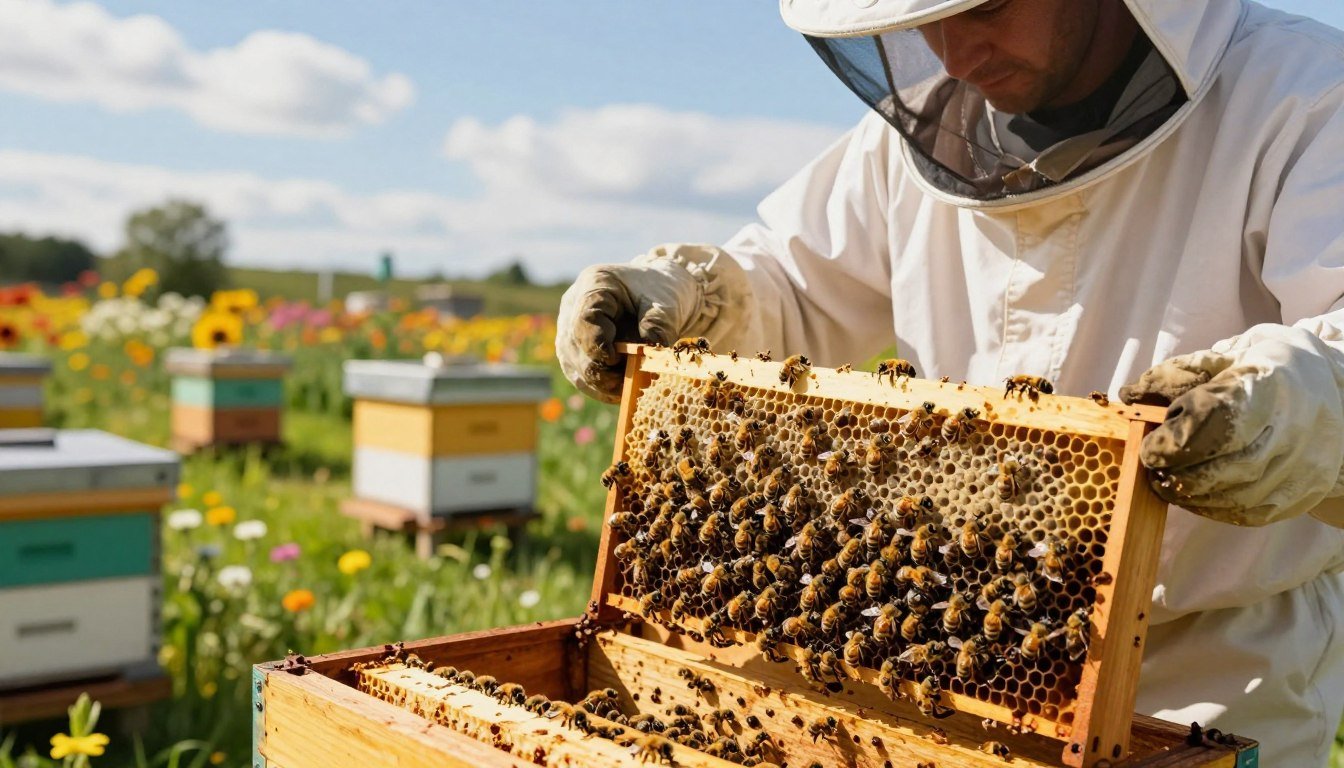
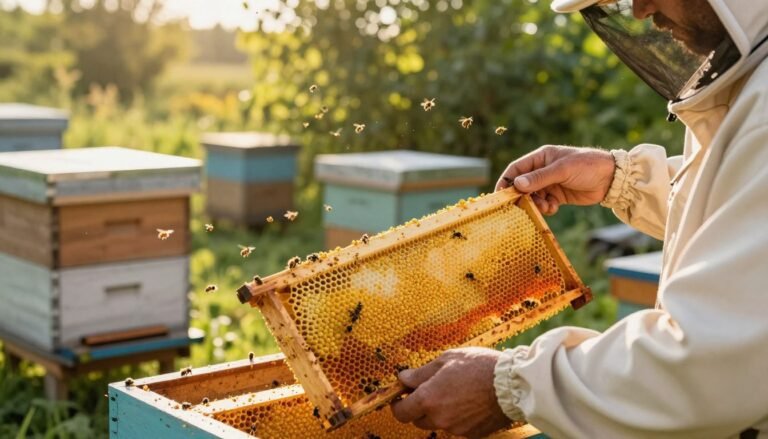
Mel Disselkoen, a Michigan beekeeper, developed and refined OTS over roughly two and a half decades, evolving it from earlier “IMN” (International Mating Nuc) queen-rearing methods into the complete system now known specifically as OTS. This long, iterative development history — refined through direct beekeeper feedback and Disselkoen’s own ongoing apiary practice — is part of why OTS carries genuine credibility as a mature, field-tested system rather than a recently packaged idea, and it’s documented in Disselkoen’s own published book on the method.
A System, Not Just a Notching Technique
While notching (breaking down the bottom third of a cell wall to redirect bees toward building a queen cell from young larvae) is the mechanical core of OTS, the full system also incorporates a specific approach to colony increase through splits, deliberate timing tied to swarm-prevention goals, and an integrated framework connecting queen rearing directly to varroa management rather than treating them as separate concerns. This systems-level integration — not any single mechanical step — is OTS’s real differentiating contribution to beekeeping practice.
The Brood-Break Varroa Control Mechanism
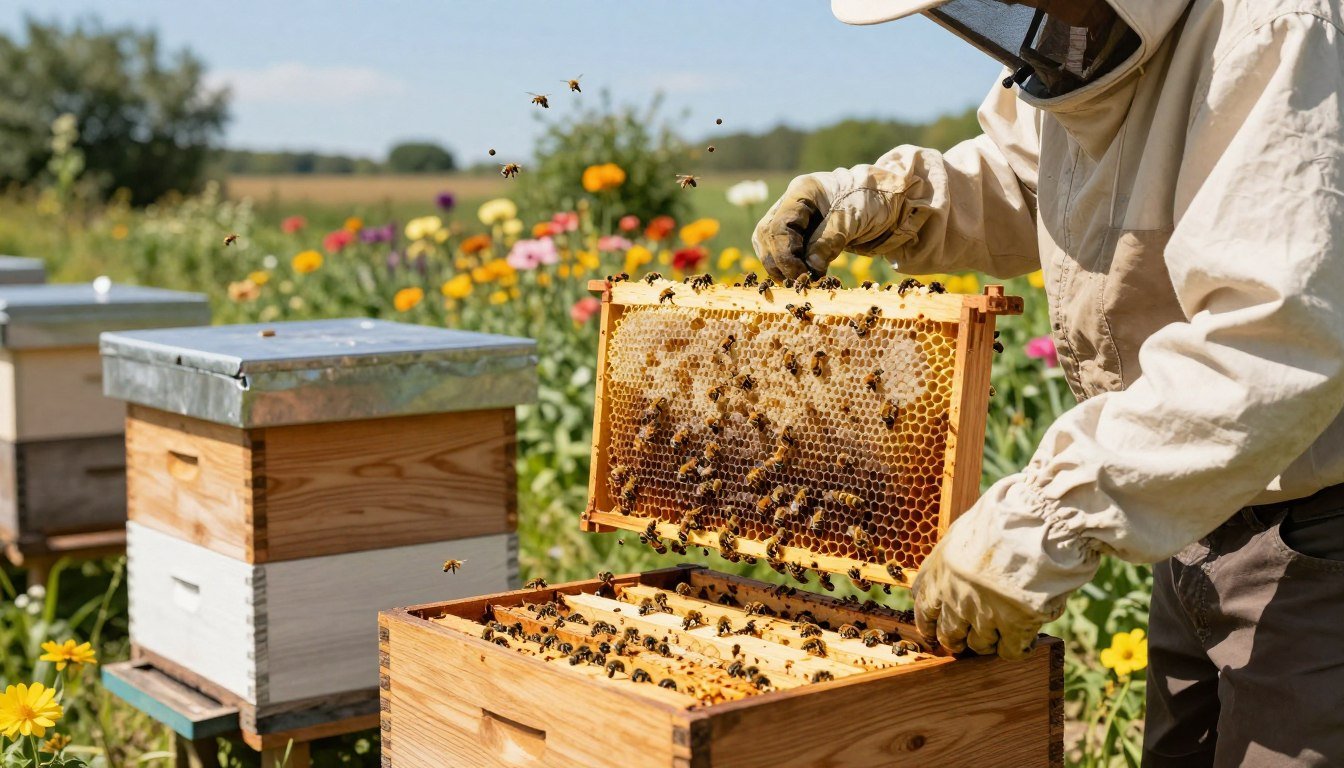
A core pillar of OTS is that the queen-rearing process itself creates a natural brood break — a period where the colony has no capped brood for varroa mites to reproduce in — interrupting the mite breeding cycle as a direct side effect of normal queen-rearing activity rather than requiring a separate dedicated brood-break intervention. This dual-purpose mechanism (raising queens while simultaneously suppressing mite reproduction) is a genuinely elegant piece of the OTS philosophy, and it’s the primary reason Disselkoen frames the system as enabling miticide-minimal beekeeping rather than purely as a queen-production method.
The Local Survivor Stock Philosophy
OTS is built around the idea that raising queens directly from your own strongest, best-performing local colonies — rather than purchasing outside genetics every season — gradually builds a population of bees genuinely adapted to your specific regional conditions and mite pressure, summarized in Disselkoen’s own frequently repeated phrase that “the best bees are the bees you can raise in your own yard.” This survivor-stock philosophy is a meaningfully different approach than seeking out named commercial lines like Buckfast or Russian genetics, prioritizing locally proven performance over documented breed-level traits like those covered in our Buckfast bees guide.
Why OTS Is Marketed as “Miticide-Free”
Because the brood-break mechanism provides a real, if partial, mite-suppression benefit as a side effect of normal queen-rearing cycles, OTS is often marketed and discussed as enabling miticide-free or miticide-minimal beekeeping — an appealing proposition, though as with any resistance or suppression strategy, beekeepers should approach this claim the same way they’d approach any mite-management method’s effectiveness claims: with genuine mite monitoring to confirm results in their own apiary rather than assuming the brood-break effect alone guarantees adequate control in every situation or region.
IMN Mating Nucs and the Broader OTS Ecosystem
Disselkoen’s earlier IMN (International Mating Nuc) queen-rearing work, which evolved into OTS, also produced a specific small mating nuc design associated with the broader system, giving practitioners a complete, purpose-built equipment and technique ecosystem, similar in spirit to dedicated systems like Apidea mating nucs, rather than requiring them to source mating nucs and queen-rearing guidance from unrelated separate sources. Beekeepers going deep into OTS often adopt this full ecosystem together, though the core notching-and-brood-break philosophy can also be applied using standard equipment already covered in our mating nuc guides.
Getting Started With OTS
Disselkoen’s own published book, “OTS Queen Rearing: A Survival Guide for Beekeepers Worldwide,” is the primary authoritative resource for learning the complete system directly from its developer, and it’s worth starting there specifically rather than piecing the philosophy together secondhand, given how much of OTS’s value comes from understanding the full integrated reasoning behind each step rather than just the mechanical notching technique in isolation.
Who OTS Genuinely Fits
Beekeepers specifically interested in reducing chemical treatment reliance through management practice rather than genetics alone, those wanting to build locally adapted stock over time instead of repeatedly buying outside queens, and beekeepers already comfortable with basic splitting and notching mechanics looking for a more complete integrated system are the strongest fits for OTS. A beekeeper simply wanting the mechanical notching technique without adopting the broader philosophy is better served by our standalone notching guide.
The Colony Increase Component
Beyond queen rearing itself, OTS incorporates a specific approach to colony increase through splits timed around the natural brood-break cycle, letting a beekeeper simultaneously raise new queens, multiply colony count, and interrupt mite reproduction as one integrated seasonal workflow rather than three separate management tasks handled independently. This efficiency — accomplishing multiple management goals through a single coordinated process — is a big part of why OTS practitioners describe it as a genuinely practical, time-efficient system rather than an academically interesting but impractical technique.
Seasonal Timing for OTS Cycles
OTS is generally practiced during the main active season when colonies have strong populations and adequate drone availability for successful queen mating, with specific timing tied to regional bloom and swarm-season patterns rather than a single universal calendar date — beekeepers new to the system typically need to adapt Disselkoen’s general timing guidance to their own specific regional conditions rather than applying a generic national timeline. Getting this timing right matters more in OTS than in some other queen-rearing approaches, since the brood-break mechanism’s mite-suppression benefit depends on the timing aligning well with the colony’s actual seasonal population and mite-pressure curve.
OTS vs. Other Named Queen-Rearing Systems
| System | Core Mechanism | Broader Philosophy |
|---|---|---|
| OTS | Notching + timed brood breaks | Miticide-minimal, local survivor stock |
| Miller method | Saw-tooth foundation strips | No grafting, no hardware, historical technique |
| Jenter/Nicot | Plastic grafting-free system | Commercial hardware-based reliability |
Seeing these side by side highlights what makes OTS genuinely distinct: it’s the only one of the three built around an explicit varroa-management philosophy as a core design goal, not just a mechanical alternative to hand-grafting larvae.
Community Adoption and Ongoing Support
OTS has built a genuinely active practitioner community over its 25-year development, including dedicated online forums and discussion groups where beekeepers troubleshoot specific application questions and share regional adaptation experiences, giving newcomers a real support network beyond Disselkoen’s own published material alone. This kind of sustained community engagement is a reasonable signal of a technique’s practical staying power, distinct from a system that generates initial interest but fades without an ongoing user base actually applying and refining it in real apiaries.
Scaling OTS From Hobbyist to Sideline Operations
While OTS was developed with small-scale hobbyist practicality in mind, requiring no special grafting skill or expensive equipment, beekeepers running sideline operations with dozens of colonies have also adapted the system successfully by staggering notching cycles across their apiary in batches rather than treating every colony identically at once, spreading out the labor and queen-mating timeline across a longer window. This scalability, without needing to invest in industrial grafting equipment or hire specialized labor, is part of the system’s practical appeal beyond pure hobbyist use.
Realistic Learning Curve Expectations
While OTS requires no special equipment, the notching technique itself does take some practice to execute reliably — cutting to the correct depth consistently, selecting larvae of the right age accurately, and timing the whole cycle correctly relative to your specific colony’s condition all improve with repetition rather than being immediately intuitive on a first attempt. New practitioners should expect their first one or two cycles to involve some trial and error, consistent with learning any hands-on beekeeping skill, rather than expecting textbook-perfect results immediately.
Tracking OTS Results Over Multiple Seasons
Because the survivor-stock philosophy depends on cumulative improvement across multiple generations rather than a single season’s results, keeping records on which source colonies produced your best queens — tracking temperament, productivity, and mite counts of daughter colonies over time — helps you actually apply the selection logic OTS is built around rather than notching cells somewhat randomly without building toward genuinely improved local stock over successive years.
Adapting OTS to Different Regional Climates
Because OTS’s timing depends on aligning the brood-break cycle with regional bloom and drone-availability patterns, beekeepers in short-season northern climates need to compress their OTS cycles into a narrower window than beekeepers in longer-season southern or mild-winter regions, who have more flexibility to run multiple cycles across an extended active season. Successful OTS practitioners generally treat Disselkoen’s published general guidance as a starting framework to adapt specifically to their own regional bloom calendar rather than a fixed universal schedule.
Using OTS for Requeening vs. Pure Colony Increase
OTS-produced queen cells can be used either to requeen an existing colony directly or to establish entirely new colonies through splits, giving beekeepers flexibility to apply the same core technique toward whichever specific goal matters most that season — replacing an aging or underperforming queen, or genuinely growing total colony count — without needing a fundamentally different process for each purpose.
Common Mistakes
Treating OTS as identical to simple notching, and missing the broader varroa-management and survivor-stock philosophy that actually defines the system, overlooks what makes OTS a genuinely distinct approach rather than just a queen-rearing technique with a name attached. Assuming the brood-break mechanism alone eliminates the need for any mite monitoring repeats the same overconfidence risk relevant to any partial-resistance strategy. Skipping Disselkoen’s own foundational material and trying to reconstruct the system purely from secondhand summaries risks missing genuinely important integrated details the full system depends on.
Sources
System history and philosophy reflect published materials from Mel Disselkoen’s OTS Queen Rearing program and associated beekeeping education resources.
FAQ
Is OTS the same thing as notching?
Not exactly — notching is the mechanical technique at the core of OTS, but OTS itself is a broader integrated system also covering colony increase, brood-break-based varroa management, and a survivor-stock breeding philosophy.
Who developed OTS queen rearing?
Mel Disselkoen, a Michigan beekeeper, developed and refined the system over roughly 25 years, evolving it from his earlier IMN (International Mating Nuc) queen-rearing methods.
Does OTS really eliminate the need for mite treatment?
The brood-break created during queen rearing provides a genuine mite-suppression benefit, but beekeepers should still monitor mite levels in their own apiary rather than assuming this mechanism alone guarantees adequate control in every situation.
Do I need special equipment for OTS?
No — the core technique requires no special skills or equipment beyond a standard hive tool, though practitioners going deeper into the full system sometimes adopt Disselkoen’s associated IMN mating nuc design as well.
How is OTS different from a standard walk-away split?
OTS specifically uses deliberate notching to control exactly which larvae become queen cells and to time the resulting brood break for maximum varroa-suppression benefit, rather than simply letting a queenless split raise emergency cells from whatever larvae happen to be present at whatever age.
Can OTS be combined with mite-resistant genetic lines?
Yes — pairing OTS’s brood-break management approach with a naturally resistant or hygienic line simply layers a management-level mite-suppression strategy on top of a genetic one, and the two approaches are entirely compatible rather than competing.