Published August 31, 2026
Table of Contents
- What Cordovan Bees Actually Are
- The Genetics Behind the Color
- What Cordovan Bees Look Like
- Why Cordovan Queens Are Easier to Find
- The Genetic-Marker Use Case for Breeders
- What Cordovan Coloring Does NOT Tell You
- Cordovan vs. Other Named Genetic Traits
- Buying Cordovan Queens
- Who Actually Benefits From Cordovan Stock
- Where the Cordovan Trait Came From
- Why This Matters More Than It Sounds Like for New Beekeepers
- Combining Cordovan Coloring With Other Selected Traits
- The Drone Side of Reliable Cordovan Breeding
- Cordovan Coloring vs. Physically Marking a Queen
- Do All Workers From a Cordovan Cross Look the Same?
- A Useful Teaching Tool Too
- A Practical Bonus: Easier Photo Documentation
- Realistic Cost Expectations
- Common Mistakes
What Cordovan Bees Actually Are
Cordovan bees are not a separate honey bee race or breed — they’re a color variant within Italian honey bee stock, caused by a simple recessive genetic mutation that replaces the normal black pigment in the bee’s exoskeleton with a lighter brown or golden tone. The result is a strikingly light-colored, “blonde” bee that’s visually distinct from standard Italian coloring, and while the trait itself is purely cosmetic, it has real practical value that goes beyond appearance.
The Genetics Behind the Color
Because the Cordovan trait is recessive, both the queen and the drone she mates with need to carry the gene for it to reliably show up in their daughter workers — a single Cordovan parent alone isn’t enough to guarantee Cordovan-colored offspring. This genetic detail matters practically: reliably breeding true Cordovan-colored colonies generally requires controlled mating (instrumental insemination or an isolated mating yard) rather than open mating with an unrelated local drone population, similar in principle to the controlled-mating requirements covered in guides on graft-free queen-rearing methods.
What Cordovan Bees Look Like
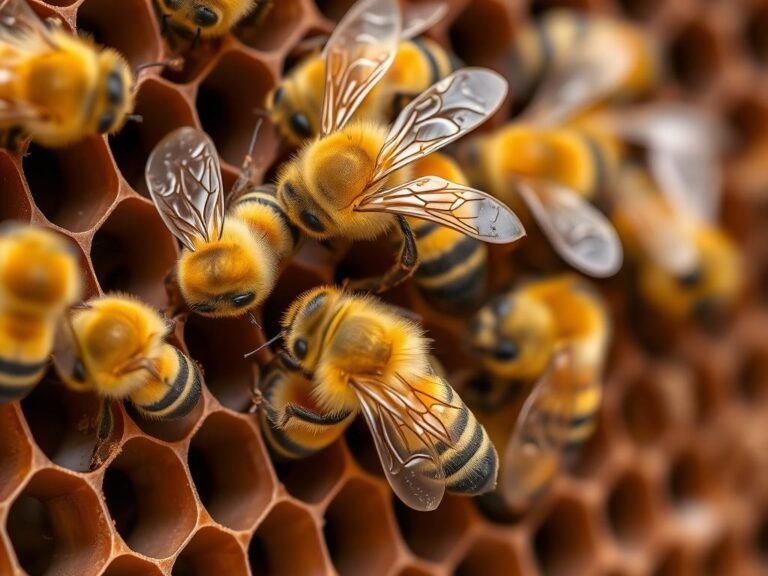
Cordovan workers show a noticeably lighter, golden or “blonde” body coloring with less-defined striping compared to standard Italian bees, while the queen typically displays an even lighter, more uniformly pale body that stands out clearly against the darker background of a typical mixed colony. This visual distinctiveness is the trait’s whole practical appeal — it doesn’t change behavior, productivity, or disease resistance, only appearance.
Why Cordovan Queens Are Easier to Find
A Cordovan queen’s pale, distinctive coloring makes her genuinely easier to spot during routine hive inspections compared to a standard darker queen blending into a frame of similarly colored workers — a real, practical time-saver, especially valuable for newer beekeepers who still struggle with the “find the queen” skill that becomes more automatic with experience. This single practical benefit is likely the biggest reason hobbyist beekeepers specifically seek out Cordovan stock, separate from any breeder-focused genetic-tracking use case.
The Genetic-Marker Use Case for Breeders
Queen breeders use the visible Cordovan trait as a practical genetic marker for tracking crosses and confirming mating success — because the trait is recessive and only shows up when both parents carry it, seeing Cordovan-colored offspring in a test colony gives a breeder direct visual confirmation that a controlled cross actually worked as intended, without needing genetic testing. This use case is a good example of a purely cosmetic trait having real functional value in a breeding program, distinct from any productivity or resistance benefit.
What Cordovan Coloring Does NOT Tell You
Because Cordovan is strictly a color trait tied to pigmentation genetics, it says nothing on its own about a colony’s temperament, honey production, swarming tendency, or disease and mite resistance — those characteristics depend entirely on whatever underlying Italian stock the Cordovan trait happens to be bred into, exactly the same “trait vs. broader stock package” distinction that applies to VSH. A beekeeper choosing Cordovan stock purely for the color without checking the underlying line’s other qualities may be surprised if temperament or productivity doesn’t match expectations.
Cordovan vs. Other Named Genetic Traits
| Trait | What It Actually Affects | Purpose |
|---|---|---|
| Cordovan | Body color/pigmentation only | Visual queen-finding, breeder marker |
| VSH | Hygienic mite-removal behavior | Varroa resistance |
| Buckfast lineage | Temperament, productivity, swarming | Overall colony management traits |
Seeing these side by side makes clear that “genetic trait” in beekeeping covers a wide range of very different characteristics — some purely cosmetic, some behavioral, some broader package traits — and Cordovan sits firmly in the cosmetic-but-practically-useful category rather than offering any performance advantage.
Buying Cordovan Queens
Cordovan queens are available from several Italian-line queen breeders who specifically maintain the trait through controlled mating programs, generally at a modest premium over standard Italian queens reflecting the additional breeding-control effort required to reliably reproduce a recessive trait. Since the trait itself doesn’t affect performance, there’s no compelling reason to pay a large premium purely for coloring — a reasonable, modest premium for genuine controlled-mated stock is the expectation to look for.
Who Actually Benefits From Cordovan Stock
Newer beekeepers who still find locating the queen during inspections time-consuming, and queen breeders wanting a practical visual cross-confirmation tool, are the two groups who get genuine functional value from Cordovan stock beyond simple aesthetic preference. An experienced beekeeper who already finds queens quickly regardless of coloring may see the trait as a nice-to-have rather than a meaningful practical upgrade.
Where the Cordovan Trait Came From
The Cordovan color mutation isn’t a modern engineered trait but a naturally occurring recessive mutation that has appeared periodically within Italian bee populations for many decades, noticed and deliberately preserved by breeders specifically because of its striking, useful visual distinctiveness rather than being introduced through any targeted genetic program. This makes it a genuinely different kind of “named trait” compared to VSH or Pol-line — those were deliberately engineered through sustained selection for a functional benefit, while Cordovan was simply an existing natural variation breeders chose to maintain once they recognized its practical value.
Why This Matters More Than It Sounds Like for New Beekeepers
Locating the queen during an inspection is one of the more genuinely frustrating early-learning-curve skills in beekeeping — a single queen among tens of thousands of visually similar workers, often actively avoiding light and movement — and a distinctly pale Cordovan queen removes a meaningful amount of that difficulty during exactly the phase of a beekeeper’s development when it matters most. Experienced beekeepers often develop pattern-recognition skills (watching worker behavior change near the queen, scanning systematically) that make queen-finding easier over time regardless of color, but a new beekeeper doesn’t have that experience built up yet, making the visual shortcut genuinely more valuable early on.
Combining Cordovan Coloring With Other Selected Traits
Because Cordovan is purely a color trait, some breeders specifically work to combine it with other functionally useful traits like VSH mite resistance, producing stock that’s both easier to visually track in breeding work and genuinely mite-resistant — essentially stacking a practical breeder convenience on top of a real performance benefit. A beekeeper interested in this combination, such as a Cordovan queen bred from Pol-line stock, should confirm a breeder’s specific claims about both traits independently, since a queen marketed primarily on her striking color shouldn’t be assumed to also carry a documented resistance trait unless the breeder specifically states it.
The Drone Side of Reliable Cordovan Breeding
Reliably producing Cordovan-colored offspring requires attention to drone genetics specifically, not just the queen’s own coloring — a breeder maintaining Cordovan lines typically needs a dedicated Cordovan drone source (either through an isolated mating apiary or instrumental insemination) to ensure enough matings carry the recessive gene from both parents. This is a genuinely more involved breeding requirement than simply selecting a visually distinctive queen, which is part of why reliably Cordovan-colored stock commands a modest premium over standard Italian queens.
Cordovan Coloring vs. Physically Marking a Queen
Many beekeepers already physically mark queens with a dot of paint on the thorax specifically to make her easier to spot, which raises a fair question about whether Cordovan coloring is even necessary given that marking already solves the same problem — the honest answer is that marking requires catching and handling the queen first (itself sometimes difficult with a hard-to-find queen), while Cordovan coloring helps you spot her in the first place without needing to catch her at all. The two approaches are complementary rather than competing, and many beekeepers use both together for maximum ease of tracking.
Do All Workers From a Cordovan Cross Look the Same?
Even in a well-controlled Cordovan cross, individual worker coloring can show some natural variation in shade intensity and striping definition, since coat coloring in insects is influenced by minor environmental and developmental factors on top of the core genetic trait — beekeepers shouldn’t expect perfectly uniform coloring across every single worker in the colony, only a clear, recognizable shift toward the lighter Cordovan phenotype overall. The queen herself typically shows the most consistent, distinctly pale coloring of any bee in the colony, which is ultimately the more practically useful individual to reliably identify anyway.
A Useful Teaching Tool Too
Beyond the individual practical benefit of easier queen-spotting, Cordovan colonies are sometimes specifically used in beginner beekeeping classes and mentorship programs precisely because the visual distinctiveness makes it easier for a new student to practice queen-finding skills with a higher success rate early on, building confidence before moving on to standard-colored colonies where the skill becomes more challenging. This educational use case is a small but genuine extension of the same core practical benefit that makes Cordovan appealing to individual new beekeepers.
A Practical Bonus: Easier Photo Documentation
Beekeepers who like to photograph or document their queens for personal records, club presentations, or social media find that Cordovan’s pale, high-contrast coloring photographs noticeably more clearly against typical frame backgrounds than a standard darker queen, a small but genuinely appreciated bonus for anyone who keeps visual records of their colonies over time. It’s a minor point compared to the practical inspection benefit, but worth mentioning as one more small way the trait’s visual distinctiveness pays off in everyday beekeeping life.
Realistic Cost Expectations
Because Cordovan is a widely available, well-established trait rather than a rare or newly developed one, the price premium over standard Italian queens tends to be modest and predictable across most breeders offering it, unlike some newer specialty genetic lines where pricing can vary more widely depending on how limited supply currently is. This makes it a relatively low-risk, low-cost way to try a genetically distinct stock for the practical queen-spotting benefit alone.
Common Mistakes
Assuming a queen advertised as “Cordovan-cross” will reliably produce Cordovan-colored daughter workers overlooks the trait’s recessive genetics — without a Cordovan drone in the mix too, daughter workers won’t consistently show the color even from a Cordovan queen. Choosing Cordovan stock purely based on appearance without checking the underlying Italian line’s temperament, productivity, and mite-resistance profile risks disappointment in areas the color trait says nothing about. Paying a large premium expecting the color trait itself to deliver a performance benefit misunderstands that Cordovan is cosmetic, not a productivity or resistance trait.
Sources
Genetic mechanism and breeding-use details reflect published beekeeping genetics resources and established queen-breeder documentation on the Cordovan color trait.
FAQ
Is Cordovan a separate bee breed?
No — Cordovan is a color variant within Italian honey bee stock, caused by a recessive pigmentation gene, not a distinct race or breed of honey bee.
Do Cordovan bees have any special behavioral traits?
No — the trait affects only body coloring; temperament, productivity, and mite resistance depend entirely on the underlying Italian stock the Cordovan gene happens to be bred into.
Will a Cordovan queen’s daughters always be Cordovan-colored?
Not necessarily — since the trait is recessive, daughter workers only reliably show Cordovan coloring if both the queen and the drone she mated with carried the gene, which usually requires controlled rather than open mating.
Why do queen breeders use Cordovan coloring?
As a practical visual genetic marker — because the trait only appears when both parents carry the recessive gene, seeing Cordovan-colored offspring gives breeders direct visual confirmation that a controlled cross worked as intended.
Can Cordovan coloring appear in bee stock other than Italian?
The trait is most commonly associated with and maintained within Italian stock, since that’s the population it was originally identified and preserved in, though the underlying recessive mutation could theoretically appear in other stock through deliberate crossing — in practice, “Cordovan” almost always refers to Cordovan-Italian bees specifically.