Published August 31, 2026
Table of Contents
- What a Miller Feeder Is
- Design: Full Hive-Width Trough
- Miller Feeder vs. Other Top Feeders
- Capacity: Why It Matters for Fall Feeding
- Setting Up and Using a Miller Feeder
- Bee Access and Drowning Prevention
- Best Times to Use One
- Cleaning and Off-Season Storage
- Who Should Use a Miller Feeder
- Wood vs. Plastic Construction
- Robbing Risk During Feeding
- Monitoring Syrup Consumption
- Scaling Feeding Across Many Colonies
- Removing the Feeder Before Honey Supers Go On
- Cost Compared to Smaller Feeders
- DIY Construction as an Alternative
- Cold Weather Feeding Limitations
- Checking Fill Level Without Full Disassembly
- Historical Context Worth Knowing
- Common Mistakes
What a Miller Feeder Is
The Miller feeder is a named top-feeder design — attributed to early 20th-century beekeeper C.C. Miller — built as a shallow, hive-width wooden box with a central bee access channel and two large syrup reservoirs running the full length on either side, giving a colony access to a genuinely large volume of syrup in one feeding without needing frequent refills. Our broader guides comparing top, frame, and pail feeders and feeder shims vs. top feeders cover feeder types generally; this guide covers the Miller design specifically.
Design: Full Hive-Width Trough
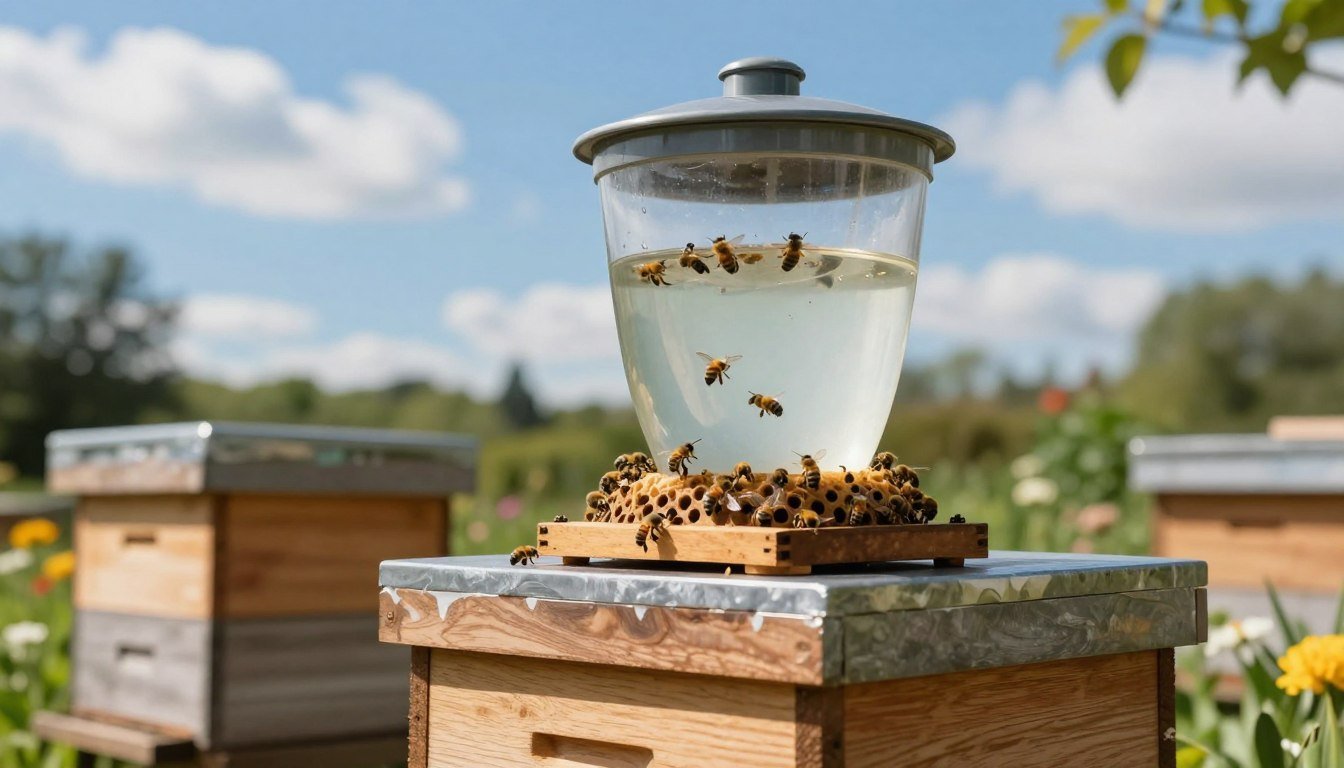
Unlike a smaller pail or frame feeder, the Miller design’s defining feature is its full hive-width footprint, sitting directly on top of the brood box like a super, with bees accessing the syrup troughs through a central slot or screened opening that keeps them separated from directly contacting the liquid while still allowing them to feed. This large-format design is specifically built for volume — moving substantial syrup into a colony quickly, which matters most for a particular feeding scenario covered below.
Miller Feeder vs. Other Top Feeders
| Factor | Miller Feeder | Standard Rectangular Top Feeder | Frame/Division Board Feeder |
|---|---|---|---|
| Capacity | Very high — full hive width | Moderate to high | Lower — fits in one frame slot |
| Refill frequency | Low, given high capacity | Moderate | Higher |
| Footprint | Full super-width | Full or partial width | Single frame slot |
| Best for | Large-volume fall feeding | General seasonal feeding | Small-scale, occasional feeding |
The Miller design’s real advantage over a standard rectangular top feeder or a frame feeder is sheer capacity — for a beekeeper feeding many colonies ahead of winter, fewer required refill trips genuinely saves meaningful time across an apiary, a practical labor consideration that matters more at scale than for a single backyard hive.
Capacity: Why It Matters for Fall Feeding
The classic use case for a Miller-style feeder is heavy fall feeding — building winter stores quickly before a colony’s outdoor foraging window closes, where a colony genuinely needs to take down a large volume of syrup in a compressed timeframe. A feeder with limited capacity requiring frequent refills works against this urgency, since each refill visit disturbs the colony and adds labor precisely when weather may already be turning unfavorable for repeated hive access.
Setting Up and Using a Miller Feeder
Place the feeder directly on top of the brood box (replacing the inner cover temporarily, or positioned according to your specific model’s design), fill the trough reservoirs with syrup at an appropriate ratio for the season (thicker syrup for fall feeding, thinner for spring stimulative feeding), and cover with an outer cover or empty super to protect the open feeder from weather and robbing bees from other colonies.
Bee Access and Drowning Prevention
A well-designed Miller feeder includes a screen or float material within the syrup reservoirs specifically to prevent bees from drowning while accessing the syrup — check that this feature is present and in good condition on any unit you’re using, since a feeder without adequate drowning prevention can result in meaningful bee loss during heavy feeding sessions, undermining the very colony-strengthening purpose the feeding is meant to serve.
Best Times to Use One
Fall, ahead of winter, is the classic Miller feeder use case given its capacity advantage for building stores quickly, though the same high-capacity design also works well for spring buildup feeding in regions or seasons where colonies need substantial syrup input before a reliable natural nectar flow begins. It’s less commonly used for light, occasional supplemental feeding, where a smaller feeder’s lower capacity isn’t actually a disadvantage.
Cleaning and Off-Season Storage
Clean the feeder thoroughly after each use, removing any dried syrup residue or debris that could harbor mold or attract pests during storage, and store in a dry location protected from moisture and temperature extremes between feeding seasons — wooden Miller feeders benefit from the same general woodenware care as any other hive component, including periodic inspection for developing rot or warping over multiple seasons of use.
Who Should Use a Miller Feeder
Beekeepers managing multiple colonies who want to minimize refill trips during a critical fall feeding push, or anyone whose colonies genuinely need to take down large syrup volumes quickly, are the clearest fit for this design. A hobbyist with one or two hives doing light, occasional feeding may find a smaller top feeder or frame feeder simpler and adequately sized without the larger footprint and cost of a full Miller-style unit.
Wood vs. Plastic Construction
Traditional Miller feeders are built from wood, matching standard hive woodenware construction, though some modern manufacturers offer plastic or composite versions aimed at easier cleaning and better moisture resistance — wood provides a more traditional look and integrates visually with standard equipment, while plastic resists warping and rot better over many seasons of syrup exposure. Neither material fundamentally changes the design’s core capacity advantage, so material choice comes down more to maintenance preference and budget than functional performance.
Robbing Risk During Feeding
Because a Miller feeder holds substantial syrup volume in an open reservoir, a poorly sealed or improperly covered unit can attract robbing bees from other colonies, particularly during a dearth when foraging bees are actively searching for any available sugar source — ensure your outer cover fits snugly and check for any gaps a robbing bee could exploit before leaving a filled feeder unattended, since a robbing event during fall feeding can genuinely destabilize both the target colony and any weaker colonies nearby that get drawn into the resulting robbing frenzy.
Monitoring Syrup Consumption
Even with a Miller feeder’s large capacity reducing refill frequency, periodically check consumption rate rather than assuming a full feeder means the colony is steadily taking syrup at an adequate pace — a colony that isn’t drawing down syrup as expected may signal a problem (a weak or queenless colony, poor weather limiting bee activity, or syrup that’s fermented or otherwise unappealing) worth investigating rather than simply waiting out the feeding cycle passively.
Scaling Feeding Across Many Colonies
For an operation managing many colonies, the Miller feeder’s capacity advantage compounds meaningfully across an apiary — fewer total refill visits across dozens of colonies represents real labor savings during a busy fall feeding push, and some commercial beekeepers specifically standardize on high-capacity feeders like this design for exactly this reason, treating the somewhat higher per-unit cost as worthwhile against the labor efficiency gained at scale.
Removing the Feeder Before Honey Supers Go On
Since the Miller feeder sits in the same position a honey super would occupy, remove it before adding supers for honey production, and never feed syrup while supers intended for human consumption honey are in place, since syrup mixed into what should be pure floral-source honey compromises the product and, depending on jurisdiction, may violate honey labeling regulations for pure honey. This timing consideration applies to any top feeder, not uniquely to the Miller design, but is worth restating given how large and prominent this particular feeder’s footprint is.
Cost Compared to Smaller Feeders
A Miller feeder generally costs more upfront than a smaller pail or frame feeder, reflecting its larger material footprint and higher capacity — for a hobbyist with one or two hives, this cost premium may not be justified relative to a smaller feeder’s adequate capacity for lighter feeding needs, while for an operation managing many colonies, the labor savings from reduced refill trips can offset the higher per-unit cost across a season’s feeding schedule.
DIY Construction as an Alternative
Because the Miller design is a relatively simple wooden box with a central bee channel, it’s a genuinely popular DIY project for beekeepers comfortable with basic woodworking, and plans are widely available through beekeeping community resources — a well-built DIY version performs comparably to a commercial unit, trading purchase cost for build time and effort, a reasonable tradeoff for a handy beekeeper wanting to minimize equipment spending.
Cold Weather Feeding Limitations
Like any liquid syrup feeder, a Miller feeder’s effectiveness drops off once temperatures get cold enough that bees cluster tightly and reduce their willingness to break cluster and travel to a feeder, even a large, well-stocked one positioned directly above them — if you’re feeding into genuinely cold weather, dry sugar or fondant-based feeding methods generally work better than liquid syrup, since cold syrup is also harder for bees to process and can even chill the cluster during feeding. Time your Miller feeder use to before this cold-weather cutoff for your specific climate, switching to solid feeding methods once temperatures drop below that threshold.
Checking Fill Level Without Full Disassembly
Some Miller feeder designs include a viewing window or simple method to check syrup level without fully opening the hive, a genuinely useful feature that reduces colony disturbance during routine checks compared to models requiring you to remove the outer cover and feeder lid every time you want to confirm remaining syrup level. If minimizing disturbance during your feeding checks matters to you, this is worth checking for specifically when choosing a specific model or supplier.
Historical Context Worth Knowing
C.C. Miller was a prominent late-19th and early-20th-century American beekeeper whose practical innovations, including this feeder design, remain in active use over a century later — a genuine testament to how well the underlying design solves a real, persistent beekeeping problem. Several other named techniques and equipment designs covered elsewhere on this site share similar origins in that same era of American beekeeping innovation, when many of the field’s foundational practical methods were first developed and refined.
Common Mistakes
Using a Miller feeder without confirming proper drowning-prevention screening is in place risks meaningful bee loss during feeding sessions. Filling the feeder with syrup at the wrong seasonal ratio — thin syrup in fall when thick syrup is needed for efficient stores-building, or vice versa in spring — undermines the feeding’s actual purpose. Leaving the feeder uncovered or poorly protected invites robbing from other colonies, turning a feeding session meant to help one colony into a source of conflict across the apiary.
Sources
Design and historical attribution reflect general beekeeping equipment history and extension guidance on top-feeder design and use, alongside current manufacturer product information for Miller-style feeders.
FAQ
Why is the Miller feeder good for fall feeding specifically?
Its large, full-hive-width capacity lets a colony take down substantial syrup volume quickly with fewer refill visits, which matters most when building winter stores before cold weather limits access and reliable feeding time.
Do bees risk drowning in a Miller feeder?
A well-designed unit includes screening or float material specifically to prevent this — confirm this feature is present and functional before relying on the feeder for a real feeding session.
Is a Miller feeder worth it for one or two hives?
Not necessarily — its capacity advantage matters most for beekeepers managing multiple colonies with heavy feeding needs; a hobbyist doing light, occasional feeding may find a smaller feeder simpler and adequately sized.
What syrup ratio should I use in a Miller feeder?
Match the ratio to the season — thicker syrup for efficient fall stores-building, thinner syrup for spring stimulative feeding, the same seasonal guidance that applies to feeding generally, not specific to this feeder design.
Can I use a Miller feeder while honey supers are on?
No — remove any top feeder, Miller design included, before adding honey supers, since feeding syrup while supers are in place risks contaminating what should be pure floral-source honey.
Can I check syrup level without fully opening the hive?
Some models include a viewing window or simple check method that reduces colony disturbance during routine monitoring — worth checking for specifically if minimizing disturbance matters to you when choosing a model.