Published August 27, 2026
Table of Contents
- Is Honey Bee Vomit? The Short Answer
- The Crop: A Separate Organ From the Digestive Stomach
- How Nectar Is Collected in the First Place
- How Nectar Actually Becomes Honey
- Sealing It In: The Final Step
- Other Animals That “Regurgitate” Food (And Why It’s Not Gross)
- Why the “Bee Vomit” Idea Sticks Around
- How to Actually Explain This to Someone
- FAQ
Is Honey Bee Vomit? The Short Answer
No. Despite the claim showing up constantly online, honey is not bee vomit. The confusion comes from one real fact: bees do regurgitate nectar as part of making honey. But regurgitation and vomiting aren’t biologically the same thing, and the distinction comes down to which organ the nectar actually passes through on its way from flower to finished honey.
The Crop: A Separate Organ From the Digestive Stomach
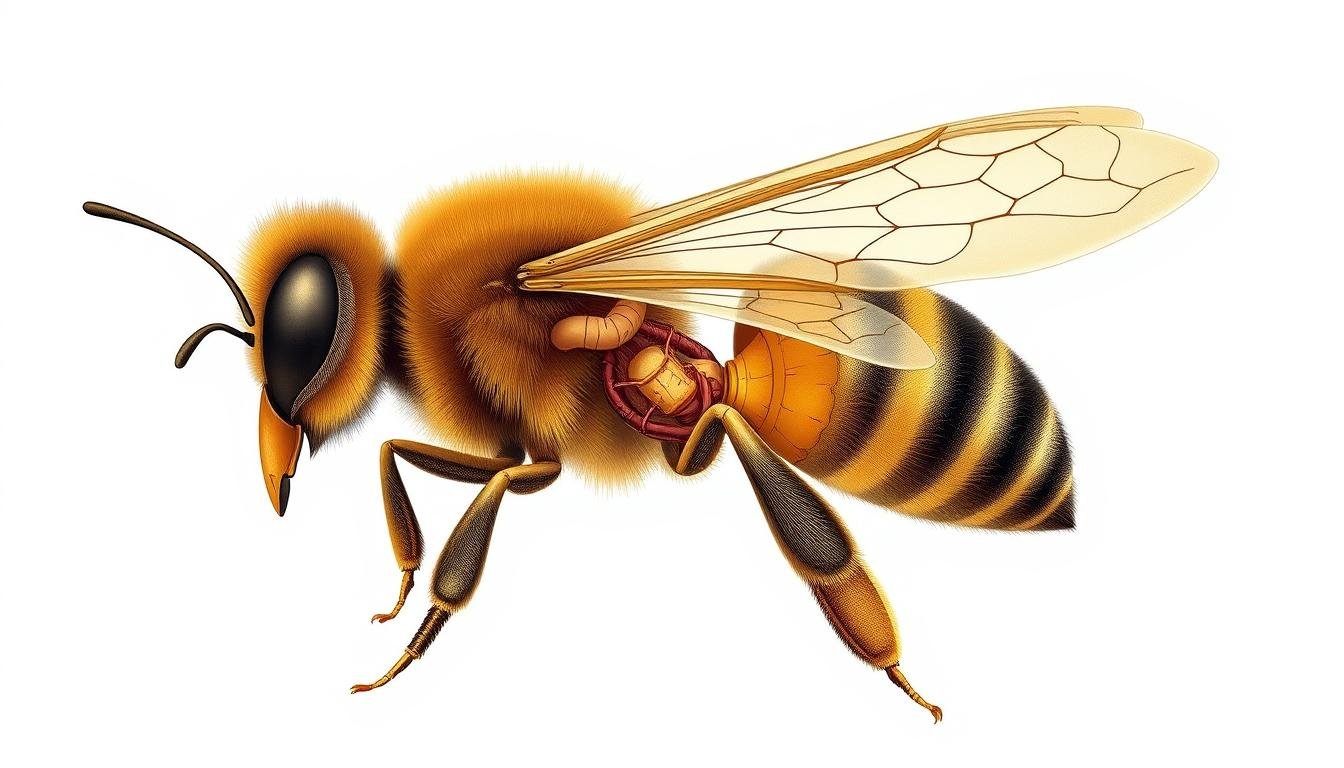
A honey bee has two distinct stomach-like structures: the crop (sometimes called the “honey stomach”) and the true digestive stomach (the midgut) further along the digestive tract, separated by a valve called the proventriculus. Nectar collected during foraging goes into the crop — not the midgut where actual digestion happens. Enzymes the bee adds mix with the nectar in the crop, beginning the chemical transformation into honey, but the nectar never enters the true digestive system at all. That’s the core biological distinction: vomiting expels contents from the digestive stomach after digestion has begun; what a forager bee does when it passes nectar to a hive bee is moving food from a dedicated storage-and-transport organ that was never part of digestion in the first place.
For more on how a bee’s body is organized more broadly, see honeybee physiology: how a bee’s body actually works.
How Nectar Is Collected in the First Place

A foraging bee uses a long, straw-like tongue called a proboscis to draw nectar from flowers directly into the crop — the nectar doesn’t pass through the mouth and down into a digestive stomach the way food does for most animals eating a meal. A single forager can visit dozens to hundreds of flowers per trip, carrying that collected nectar in the crop back to the hive. Because the crop is essentially a holding tank rather than a digestive organ, a bee can carry a meaningful volume of nectar (up to roughly its own body weight in some cases) without that nectar being broken down as food for the bee itself along the way.
How Nectar Actually Becomes Honey
Back at the hive, the forager passes the nectar mouth-to-mouth to house bees through a process called trophallaxis — the same food-sharing behavior colonies use to distribute food and chemical signals throughout the hive generally, not something unique to honey-making. Each transfer adds more enzymes (notably invertase, which breaks down complex sugars into simpler ones) and reduces the nectar’s water content slightly. House bees then deposit the partially processed nectar into wax comb cells, and worker bees fan their wings across the open cells to evaporate the remaining moisture — nectar starts around 70-80% water, while finished honey needs to drop to around 17-18% water content before it’s stable enough to cap and store long-term. For the full mechanics of how bees pass food and information between each other, see the role of trophallaxis in colony communication.
Sealing It In: The Final Step
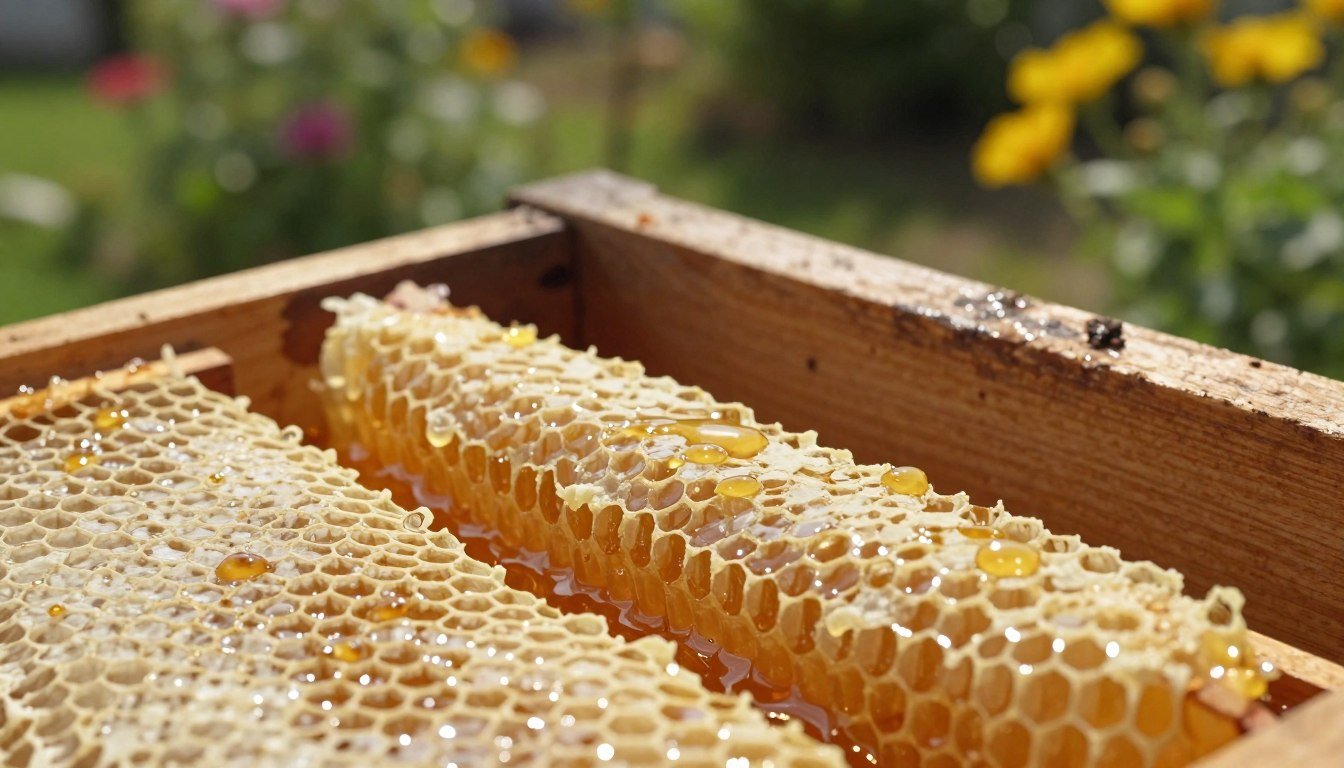
Once the moisture target is reached and the enzymatic conversion is far enough along, bees seal the cell with a thin wax capping. That capping is what makes capped honey shelf-stable almost indefinitely under proper storage — the low moisture and low pH (honey is naturally acidic, generally in the 3.4-6.1 range) create an environment most bacteria and molds can’t survive in.
Other Animals That “Regurgitate” Food (And Why It’s Not Gross)
Bees aren’t unusual in using regurgitation as a legitimate food-transport or food-sharing mechanism. Many birds regurgitate partially processed food to feed chicks, and it’s a normal, essential part of parental care, not a sign anything went wrong. Ants use a similar “social stomach” (their own version of a crop) to carry and share liquid food among the colony through trophallaxis, functioning almost identically to how bees move nectar. In every one of these cases, the behavior is a specialized transport-and-sharing adaptation, not a digestive malfunction — which is exactly the distinction that gets lost when honey gets casually labeled “bee vomit.”
Why the “Bee Vomit” Idea Sticks Around
The myth persists mostly because “regurgitation” sounds unappetizing regardless of the biology behind it, and because most people don’t know bees have two separate stomach-like organs, so any mouth-to-mouth food transfer reads as vomiting by default. It’s a good example of a claim that has one accurate detail (regurgitation happens) wrapped around an inaccurate conclusion (therefore it’s vomit) — worth knowing if you want to correct it accurately rather than just insist it’s wrong. For more common beekeeping claims worth a second look, see debunking common beekeeping myths and misconceptions.
How to Actually Explain This to Someone
If someone brings up the “bee vomit” claim, the most accurate short version is: bees carry nectar in a dedicated storage organ (the crop) that’s separate from their real digestive stomach, add enzymes to it, pass it to other bees the same way they share all food and information in the colony, and then dehydrate it in the comb until it’s stable honey. None of that nectar ever enters a digestive tract or gets broken down as waste — which is the actual technical reason “vomit” is the wrong word for it, even though “regurgitation” is accurate.
Sources
Honey bee crop/midgut anatomy and the proventriculus valve are established entomological facts; nectar moisture reduction figures (roughly 70-80% down to about 17-18%) and honey’s typical pH range reflect standard honey-production reference data.
FAQ
Do bees vomit to make honey?
No. Nectar is carried and processed in the crop, a separate organ from the true digestive stomach, and never enters the digestive system at all — so it isn’t vomiting in the biological sense.
What is the crop in a honey bee?
The crop (or “honey stomach”) is a storage organ in a bee’s digestive tract, separated from the true digestive stomach by a valve called the proventriculus, used to carry and begin processing nectar before it becomes honey.
Do other animals do something similar to bees?
Yes — many birds regurgitate food to feed chicks, and ants use a comparable “social stomach” to share liquid food through trophallaxis, the same general concept bees use.
Is it safe to eat honey knowing bees regurgitate it?
Yes — the regurgitation and enzyme process is exactly what makes honey shelf-stable and antimicrobial in the first place, and it’s a normal, essential part of how bees have processed nectar for millions of years.