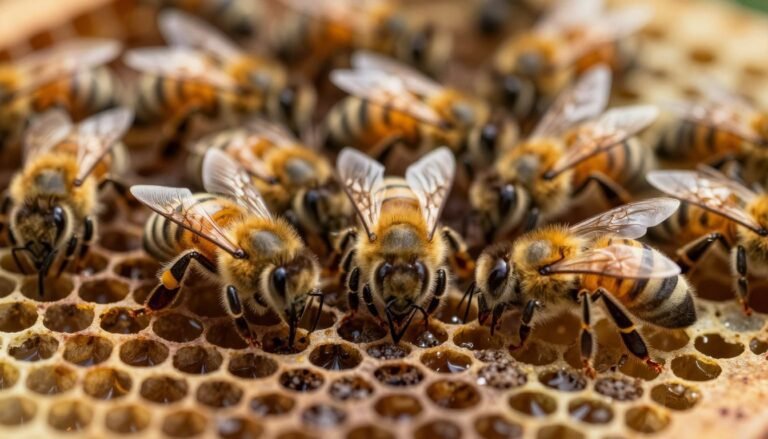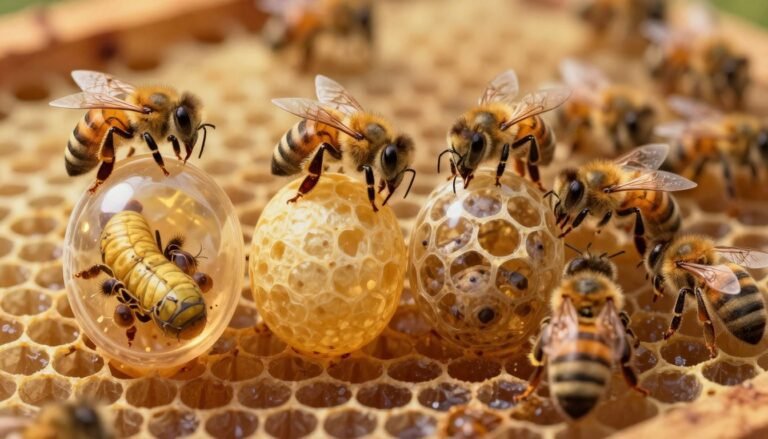
Introducing a new queen is a core skill for beekeepers and shapes the health of the entire colony. The Purdue Extension updated guidelines in April 2024 stress that a healthy queen releases strong pheromones that keep the hive organized.
Plan the process carefully so workers accept her instead of attacking. Use a queen cage to let the colony acclimate over several days and offer sugar syrup to distract workers during this time.
Check the queen herself: intact wings, firm abdomen, and active behavior predict good egg laying and a steady brood pattern. Also consider environmental cues and choose calm mid-morning hours to reduce stress on the bee and lessen risk to eggs and cells.
Follow proven methods and regional guidance, such as the Purdue notes and a guide on suitable cages, to reduce mortality and boost long-term colony success. See the Purdue Extension guidance and tips on queen cages and timing.
Key Takeaways
- Use a cage to acclimate a new queen over several days.
- Offer sugar syrup to distract workers during the process.
- Inspect the queen for intact wings and strong behavior before release.
- Choose calm mid-morning hours to introduce the queen.
- Follow Extension guidelines to protect brood and eggs.
Understanding the Importance of Queen Introduction
The reproductive female defines colony character. Her steady egg laying and pheromone signals keep workers organized and support a reliable brood pattern. A high-quality individual brings traits such as disease resistance and consistent honey flow.
Beekeepers must be ready to replace a failing reproductive female. Queens age and lose vigor. Removing an underperforming one prevents decline and lets a more productive replacement take over.
Prefer mated queens when immediate laying is needed; they begin filling cells quickly and restore colony balance in a matter of weeks. Watch for workers tending multiple stages of brood — this shows successful integration.
- Confirm the hive is queenless and remove existing cells to avoid rejection.
- High numbers of young nurse bees improve acceptance.
- Use careful selection to maintain desirable colony traits.
For methods that also boost population and nurse numbers, see boost colony population naturally.
Identifying the Best Weather for Queen Introduction
Timing matters. “Introduce a new queen when foragers are active so her pheromones reach more workers fast.”
A strong nectar flow improves acceptance because returning foragers dilute tensions and help spread scent. During dearth, feed 1:1 sugar syrup to simulate that flow and raise the colony’s receptivity.

Impact of Nectar Flows
When nectar is coming in, workers focus on stores and comb work. That focus makes them less likely to attack a new queen and more likely to chew the candy end of the cage.
Temperature Considerations
Avoid extremes. Heat or cold stresses both the queen and the workers while she waits in the cage. Place the cage centrally in the brood area so the candy plug is accessible.
- Ensure frames do not block the cage so workers can reach the candy plug.
- Use the candy plug as a timed release over several days.
- Monitor nectar and local forecasts and consult a seasonal calendar when planning.
For regional timing, consult a seasonal guide like an eight-season beekeeping calendar to pick the right time and reduce risks to brood and cells.
Preparing Your Colony for a New Queen
Make sure the workers notice the previous queen is gone before introducing a new one. A clear absence raises acceptance rates and calms hive activity.
Ensuring a Queenless State
Confirm queen removal. Locate and remove the old reproductive female and destroy any visible queen cells. That stops the colony from raising its own rival.
Wait at least 24 hours. Leave the colony without a leader so workers sense the loss. This short time helps them accept a replacement when you place her in a cage.
- Use a frame of open brood or eggs to test for emergency cell building.
- Prefer a small split or nuc; success is higher in compact colonies.
- Remove any found queen cell or sealed cell to avoid conflict with an unmated female.
Ensure enough brood and nurse bees are present to support egg laying after release. Disturb the hive as little as possible for two weeks after the process to let the new leader settle. For detailed techniques and a practical example, see successful introduction techniques and consult hive installation tips.
Selecting the Right Introduction Method
Select a technique that protects the queen while letting workers assess her scent. Use a method that suits your hive size, brood pattern, and time available.
Candy Plug Technique
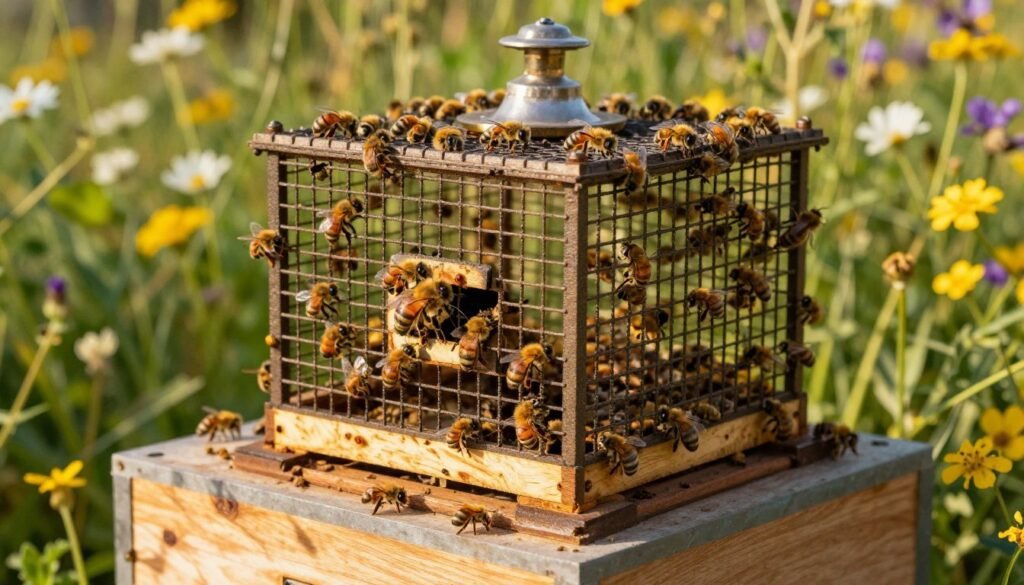
How it works: Pack a candy plug at one end of a queen cage so bees chew through it over 2–4 days. This gives a timed release while the colony adjusts.
Make sure the candy is firm but chewable. Heat honey or liquid sugar to 95°F, then mix with powdered sugar until a firm dough forms.
Butler Cage Benefits
A Butler cage is a simple mesh tube wedged between frames of brood. It lets attendants feed the queen through mesh and helps workers accept her scent.
Inspect the Butler cage at 4–6 days to confirm release and establishment.
Push-in Cage Advantages
This method offers the safest immediate start. Use 8 mesh hardware cloth and press it firmly into the comb so the queen can lay eggs under protection.
Remove attendants from the shipping cage before placing the queen. Place the queen cage centrally in the brood area and spray 1:1 sugar syrup to distract workers during the first hours and days.
| Method | Main Benefit | Typical Time |
|---|---|---|
| Candy Plug | Timed, gradual release | 2–4 days |
| Butler Cage | Easy placement between frames | 4–6 days inspection |
| Push-in Cage | Immediate, protected laying | Release when cage removed |
Managing Queen Health and Stress During Transit
Treat transit as a critical phase: the queen needs stable conditions to keep pheromones and fertility strong.
Keep the queen cage in a dark spot at room temperature, ideally 65°F–80°F. Avoid direct sun and pesticides. Daily moisture on the outside screen helps; rub a droplet of water so attendants can access it.
Monitor attendants inside the cage. Their survival matters for the queen’s welfare during shipment. If they look weak or few, allow the queen to recover in a small nucleus colony before moving her into the larger hive.
Inspect the queen on arrival. Look for lethargy, damaged wings, or dull movement. Provide a calm recovery period and do not disturb the colony for two weeks after introduction so brood and workers can settle.
- Temperature control: prevents reduced fertility and low pheromone output.
- Hydration: water on the cage screen on first contact.
- Recovery: place in a nuc if transit stress is evident.
| Issue | Action | Why it matters |
|---|---|---|
| Heat or cold exposure | Store at 65°F–80°F in dark | Protects fertility and pheromone production |
| Dehydrated queen | Apply water droplet to cage screen | Allows attendants to feed and hydrate queen |
| Stressed attendants | Consider nuc placement before full release | Gives queen time to regain strength |
For more on spotting problems after arrival consult an article on early signs your queen is failing and review hive air handling ideas like ventilation hacks to reduce transit-related stress.
Monitoring Colony Acceptance After Release
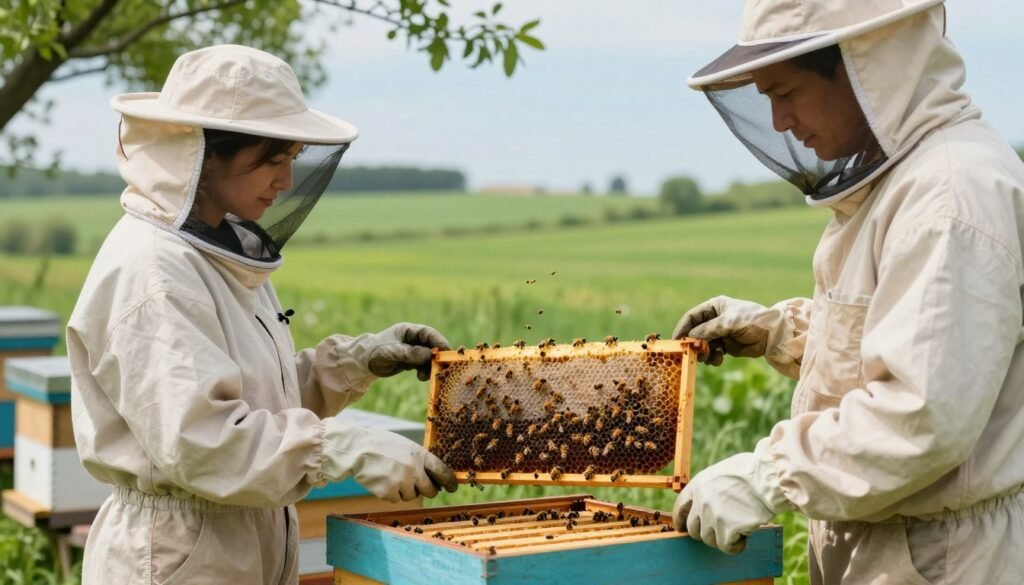
Check frames about a week after the queen’s release. Look for evidence in the comb rather than hunting to find queen herself.
Signs of Successful Integration
Primary signs: new eggs and young larvae in several frames. These show the colony is accepting the queen and she is laying.
If workers are still clustered on the cage or chewing the candy end, wait longer. Some methods require extra days before full release.
- Inspect 5–7 days after release to confirm eggs and larvae appear.
- A tight brood pattern with few empty cells signals a healthy laying queens and good worker support.
- If the candy plug has not cleared after 4 days, be ready to manually release the queen to avoid harm.
If the colony rejects the new queen you may find her dead or face aggressive workers. Also make sure the hive does not host an unmated rival, as that often causes rejection.
“A clear brood pattern and steady egg laying are the best proof that bees accept a new leader.”
Avoid disturbing the colony for two weeks after release so the queen can establish her brood nest. Careful monitoring during this process is the final step toward long-term success. For regional timing and follow-up, consult the Extension guide and a seasonal overview at Seasonal Beekeeping.
Conclusion
A careful rearing and timed release make the difference between a rejected and a thriving colony. Prepare the hive so it is truly queenless and remove spare queen cells before you place a new female.
Use a reliable method — candy plug, Butler or push-in cage — and allow several days for workers to adjust. Monitor comb for eggs and young larvae to confirm the new queen is accepted.
Patience and attention to queen health and colony state improve long‑term success. Review regional timing and brood cycles at timing and brood cycles and check climate guidance at climate guidance to refine your plan.
FAQ
What are the ideal outdoor conditions to introduce a new queen into a hive?
Choose a calm, warm day with steady temperatures between about 65–85°F and little wind. Avoid introducing during heavy rain, cold snaps, or extreme heat. A stable nectar flow helps workers stay busy and more accepting of a new queen.
How long should a colony be queenless before introducing a new queen?
Remove the previous queen and wait at least 24 to 48 hours to ensure the colony senses the absence. Shorter waits can work if you use a cage or candy plug to slow release, but a clear queenless period reduces rejection risk.
Does a nectar flow affect acceptance of a new queen?
Yes. Active nectar and pollen flows keep workers occupied and increase tolerance of a new queen. During weak forage periods, workers may be more prone to stress and aggression, lowering acceptance rates.
How does temperature impact queen introduction?
Temperatures too low slow bee activity and royal pheromone distribution, while extreme heat stresses the queen. Moderate warmth ensures bees move, feed larvae, and spread the queen’s pheromones, improving integration.
What is the candy plug technique and why use it?
The candy plug technique places a queen in a cage with a sugar or candy barrier. Workers gradually chew through the candy to release her, giving them time to adjust to her scent and lowering the chance of immediate rejection.
What are the advantages of using a butler queen cage?
A butler cage (wire or wooden queen cage) protects the queen from direct contact while letting attendants feed and scent her. It can be hung between frames close to brood so workers meet her gradually and accept her pheromones.
When is a push-in cage recommended?
Use a push-in cage to introduce a queen directly on comb, especially in small hives or nucleus colonies. It keeps the queen near brood and foragers while still restricting direct access, allowing controlled acceptance.
How should I prepare frames and brood before introducing a new queen?
Provide frames with open brood and eggs so workers remain focused on brood care. Remove emergency queen cells and ensure sufficient food stores. A balanced colony with nurse bees nearby improves acceptance odds.
What should I check about the queen’s condition before placing her in the hive?
Verify the queen is healthy, active, and mated if applicable. She should be free of visible mites or deformities. Ensure attendants and a small amount of syrup or candied food are with her in the cage for immediate feeding.
How long does it take to know if the colony accepted the new queen?
Initial signs appear within 3–7 days: attendants calm around the cage and no aggressive behavior. Full acceptance is clear by 7–14 days when egg-laying resumes and emergency queen cells remain closed or are removed by workers.
What are clear signs the colony rejected a new queen?
Signs include aggression or balling at the cage, dead or damaged queen, removal of the cage, persistent queen cells being built, or no eggs laid for more than two weeks after release. Immediate removal of the cage and re-evaluation may be needed.
Can transported queens become stressed and how does that affect introduction?
Queens stressed by long transit, heat, or jostling may emit different pheromones and face higher rejection. Minimize transit time, keep cages shaded and cool, and allow a short acclimation in the hive before full release.
Should I remove introduced queen cages after release or leave them in the hive?
Remove empty cages after the queen is free to reduce obstruction and avoid attracting robbers. If a queen remains caged, check regularly and only remove the cage when you confirm she is safely walking and accepted by workers.
Is it safe to introduce a queen into a hive with capped queen cells?
Avoid introducing into a hive with viable capped queen cells unless you plan to remove them. Workers may prefer emergent virgins, leading to rejection of the introduced queen. Remove queen cells to give your introduced queen the best chance.
How can I increase acceptance when introducing a mated queen?
Use a gradual release method (candy plug or butler cage), place the cage near open brood, introduce during active forage, and ensure the colony is calm and queenless. Having a few escort workers in the cage also helps acceptance.
What steps should I take if the colony keeps building emergency queen cells after introduction?
Inspect for signs the introduced queen is not laying or is missing. Remove emergency cells and check for eggs. If the queen is absent or not accepted, consider reintroducing a different queen or allowing the colony to rear its own from young larvae.
Can I introduce a queen at night, and does timing matter during the day?
Introducing at midday on a warm calm day is often best because many foragers are out and nurse bees remain in the hive. Night introductions reduce activity but can increase aggression as workers cluster; use caution and appropriate cage methods if introducing after dark.