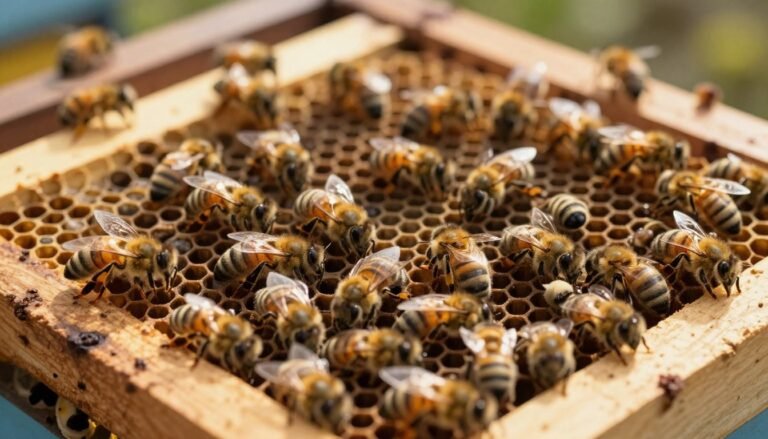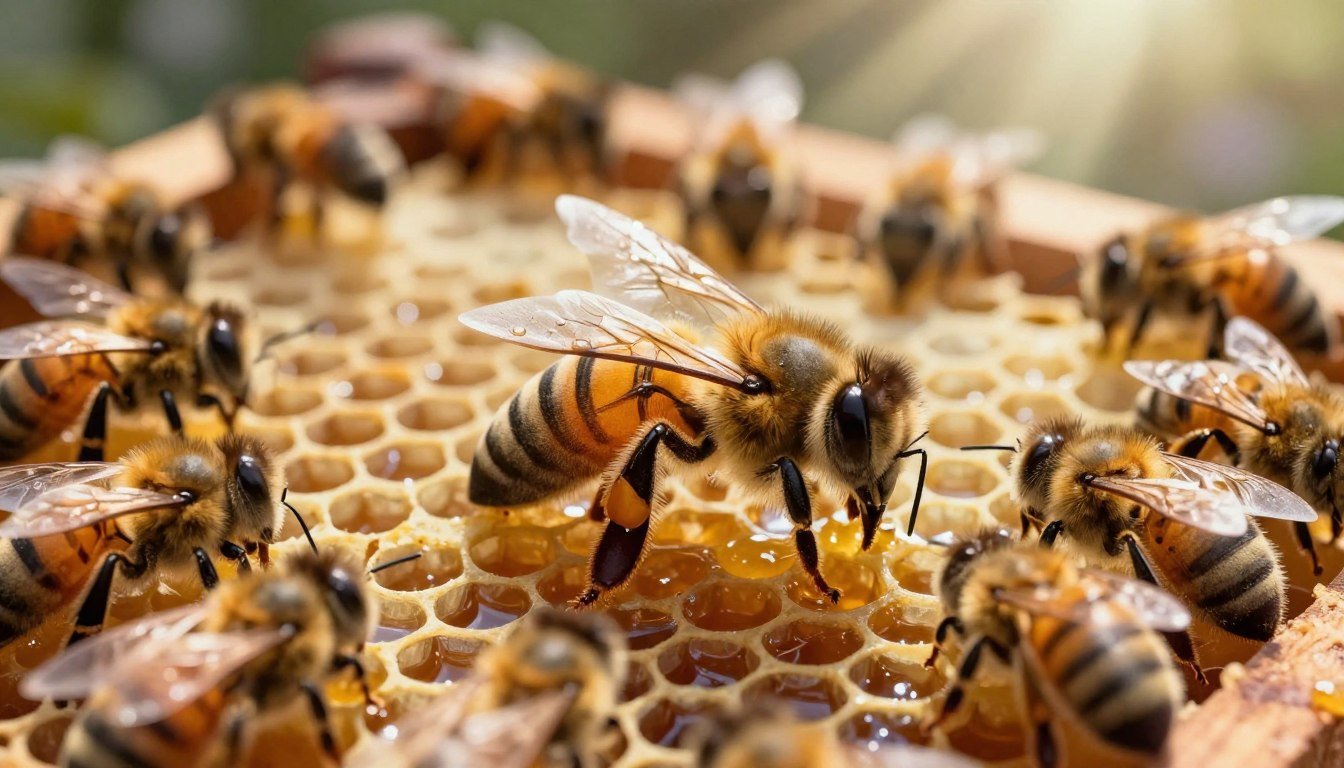
The queen shapes the life of every hive. Her egg laying sets the pace for brood growth, honey production, and colony strength.
Many beekeepers face a timing choice when the colony is busy with a nectar flow. Requeening is the process of replacing one queen with another to restore vigor or fix problems such as poor brood patterns or disease.
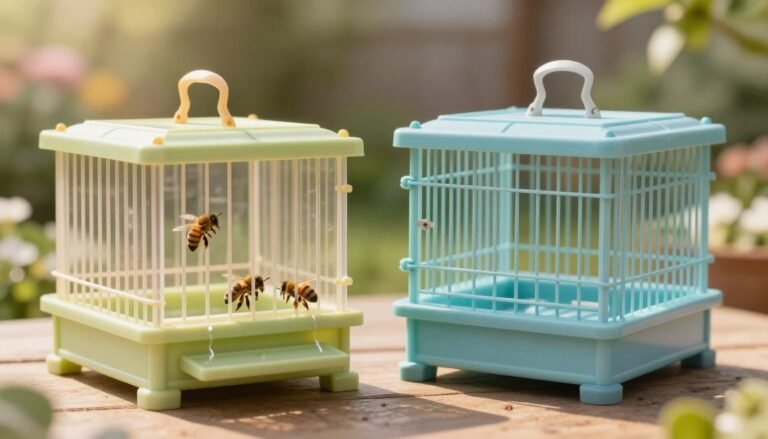
Most new queens arrive in a queen cage with a candy plug. This method gives the workers time to accept the new queen before she is released. Having the new queen on hand before removing the old one avoids gaps in egg laying.
Good practice includes checking frames, brood, and cells after about a week to confirm the new queen is laying eggs. For more on timing and introduction techniques, see practical requeening tips at requeening basics and swarm-related timing notes at swarm indicators.
Key Takeaways
- Queen health drives colony productivity and longevity.
- Indirect introduction via a queen cage with a candy plug improves acceptance.
- Have the new queen on hand before removing the old one to protect egg laying.
- Inspect brood, frames, and cells about one week after introduction.
- Nectar flow timing affects requeening strategy and hive behavior.
Understanding the Importance of Requeening
A strong queen keeps a hive productive; spotting decline early preserves colony health.
Signs of a failing queen often appear slowly. Look for fewer eggs, scattered brood, or the presence of queen-cups. These cells may mean the colony is preparing to replace her.
Signs of a Failing Queen
- Reduced egg laying: brood patches shrink and worker numbers fall.
- Drone-only brood: a drone-laying queen produces mainly males and hurts production.
- Behavior shifts: sudden aggression or low activity can signal problems.
Benefits of Proactive Replacement
Replacing an aging queen in spring or fall boosts acceptance and keeps hives vigorous. Andrew Larson notes productivity often drops around three years, which affects honey yields and worker counts.
“Maintaining a young, productive queen helps hives survive winter and improves year-round output.”
Proactive beekeepers often replace queens every one to two years to avoid problems and maintain strong colonies. For tips on encouraging healthy population growth, see boost colony population naturally.
Can You Requeen During a Nectar Flow
High nectar abundance often keeps workers busy, which may ease introduction of a new queen.
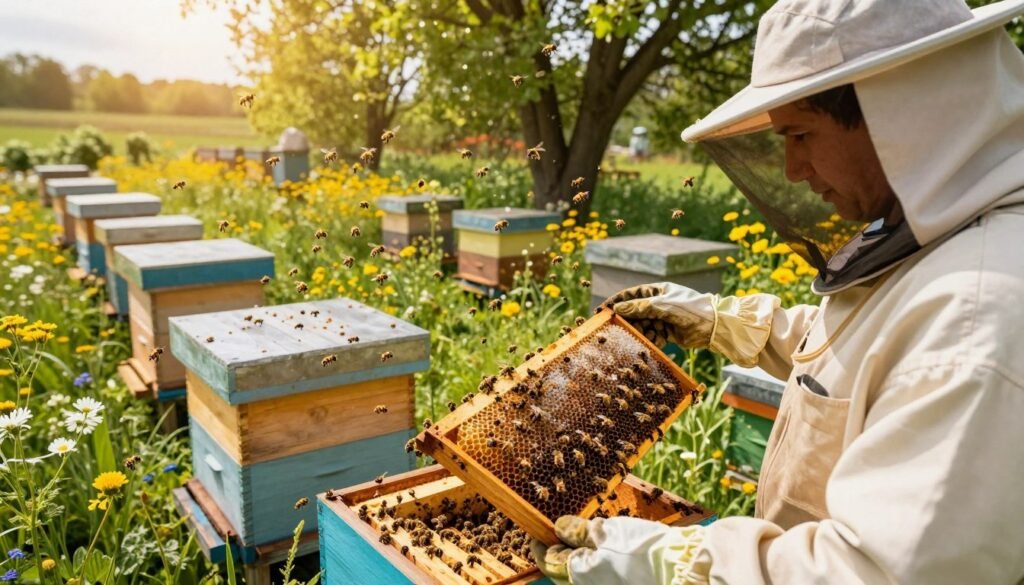
Many experienced beekeepers report higher acceptance rates when swapping queens in heavy nectar periods. Foragers leave the hive more, and guards show less hostility. That calmer hive mood helps the new queen settle in.
Spring nectar flows are especially favorable. The colony focuses on growth, and the odds of swarming drop. A queen installed then can build brood and strength well before winter arrives.
- September and late summer often lack sustained nectar, so acceptance slows.
- Monitor local bloom strength and hive behavior to pick the best time.
- Some beekeepers prefer late summer to prepare the hive for the next year.
| Season | Acceptance Likelihood | Key Advantage |
|---|---|---|
| Spring | High | Strong brood build-up |
| Summer (nectar peak) | High | Busy foragers, calmer guards |
| Fall/September | Moderate to Low | May need patience; less nectar |
For practical steps and timing tips, review this requeening guide aimed at beekeepers in the United States.
Essential Steps for a Successful Queen Introduction
A clean plan and steady hands make queen introductions far smoother for busy hives.
Preparing the New Queen
Order a healthy new queen from a trusted supplier. Murdoch’s offers Italian and Carniolan strains that suit many beekeepers looking to improve genetics.
Most queens arrive in a small cage with attendant bees and a candy plug. Keep her calm in cool, dark storage until installation.
Removing the Old Queen
Decide on a humane removal method before opening the hive. Options include using Everclear, placing the queen in a freezer, or an instant kill method.
Use a frame holder to keep frames outside the hive while you search. This helps protect comb and prevents losing the queen by accident.
Installing the Cage
Place the queen cage between frames of active brood so workers meet her pheromones quickly. The candy plug gives bees days to eat through and release the new queen on their schedule.
Wait at least one week before heavy inspections. After that time, look for fresh eggs or young brood to confirm acceptance.
“Introduce the new queen gently, give the colony time, and check for eggs after seven days.”
- New queens often arrive with attendants; handle gently.
- Frame holders speed inspections and reduce disturbance.
- If making splits, sealed queen cells offer an alternate method to establish colonies.
| Step | Best Practice | Expected Time |
|---|---|---|
| Prepare queen | Keep cool, use quality strain | Hours to days |
| Remove old queen | Choose humane method; use frame holder | Minutes |
| Install cage | Place near brood; use candy plug | 7+ days before full inspection |
For detailed rearing techniques consult the Purdue extension queen rearing guide and practical tips at queen rearing basics.
Managing Hive Dynamics During the Transition
Small adjustments in management reduce risk and help the new queen settle into her role.
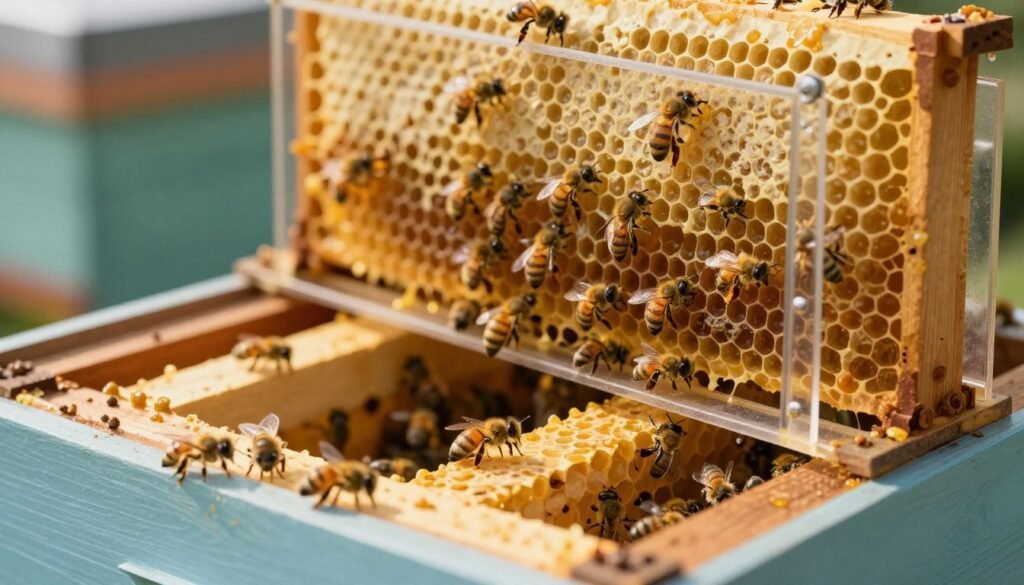
Place the queen cage between healthy frames of comb so workers access her pheromones quickly. David and Sheri Burns recommend a push-in screen cage over capped brood to improve acceptance.
Minimize disturbance for at least seven days. Short inspections and gentle handling let the queen’s scent spread through the hive and lower aggression.
Minimizing Hive Disturbance
Simple steps prevent loss and speed acceptance.
- Position cage plug up: set the candy plug facing up so dead attendants do not block release.
- Secure placement: keep the cage steady between frames to let bees interact safely before release.
- Calming spray: a light mist of sugar water with peppermint extract can reduce hostility if aggression rises.
- Let nature work: allow bees to eat through the plug and free the queen on their schedule.
| Action | Why it helps | Timeframe |
|---|---|---|
| Push-in screen cage over brood | Protects queen, increases contact with workers | 7–10 days |
| Cage plug facing up | Prevents blockage from dead attendants | Immediate at installation |
| Peppermint in sugar spray | Neutralizes aggression, calms bees | Use sparingly in first week |
When the colony is focused on foraging, transitions may be calmer. For further timing notes and indicators, consult requeening reconsidered and practical honey timing at honey flow indicators.
Conclusion
A planned queen change preserves colony strength and sets the hive up for the year ahead.
Patience and proper method matter most. Always have the new queen on hand before removing the old queen, use a queen cage with the candy plug, and limit disturbances for at least seven days. Regular inspection of frames and brood cells confirms eggs and acceptance.
Requeening is a skill that improves with practice. For advanced techniques, consult the advanced requeening strategies. Seasonal checks help maintain health; see seasonal hive inspections. For planning expansion or making splits, review expansion tips.
With a young, vigorous queen, a healthy hive will build brood, boost production, and head into winter ready.
FAQ
Is it safe to introduce a new queen during a heavy spring nectar flow?
Introducing a new queen in spring when foragers collect abundant honey often succeeds because strong brood rearing and plentiful stores reduce stress. Favorable forage keeps worker bees busy and less aggressive toward introductions. Plan introductions during calm weather and perform minimal inspections to avoid disrupting foraging and upset in the colony.
What are clear signs the current queen is failing and needs replacement?
Look for patchy brood patterns, many drone cells, reduced egg-laying, or aggressive behavior from workers. A sudden drop in population or excessive queen supersedure cells also indicates problems. Regular inspections during the season help spot declining productivity before it affects honey production.
What benefits come from proactive queen replacement rather than waiting?
Replacing an older or low-performing queen boosts brood quality, steadies temperament, and increases honey and pollination output. New queens improve genetics for disease resistance and productivity. Proactive requeening prevents mid-season crashes and reduces emergency splits or swarm risks.
How should I prepare a new queen before placing her in the hive?
Choose a mated queen from reputable breeders like Mann Lake or BetterBee for proven genetics. Keep her in a small cage with attendants, provide candied fondant or candy plug for gradual release, and wait until the hive shows calm behavior. Warm, ventilated storage for short periods preserves her fertility and vigor.
What is the best method to remove an old queen without harming the colony?
Locate the laying queen during a quick brood frame inspection and remove her gently with a queen clip or smoker to calm the bees. If supersedure cells exist, remove them only if you intend to control the replacement. Removing the old queen minimizes conflict when introducing the new one, especially if workers already resent the incumbent.
How do I install the new queen cage for highest acceptance rates?
Place the cage between two brood frames near open brood so workers can smell and tend her. Orient the candy end outward for gradual feeding escape. Close the hive and avoid further disturbance for five to seven days. Workers will feed through the mesh and acclimate to pheromones before full release.
What steps reduce disturbance and swarm triggers while changing queens mid-season?
Keep inspections short, work at midday when foragers are out, and handle frames over the hive to minimize disorientation. Limit frame removal and avoid shaking bees. Ensure adequate space on brood nest frames to prevent crowding that causes swarming.
Should I block queen cells or allow the colony to raise its own replacement during a strong honey flow?
If the goal is controlled genetics and improved productivity, prevent emergency queen rearing and introduce a selected mated queen. Allowing the colony to raise a queen can work but risks poor genetics, variable acceptance, and lost production. For commercial operations, deliberate introduction yields predictable results.
How long after introducing a new queen will I see improved brood pattern and production?
Expect noticeable changes in two to six weeks as the queen settles and eggs progress to brood. Full improvement in brood pattern and foraging numbers typically appears within two months for consistent productivity gains across the season.
What problems might arise when replacing a queen while the colony is strong and full of stores?
Risks include initial worker antagonism, accidental introduction of a laying worker, or a failed mating for virgin queens. Strong colonies may also attempt to supersede again if the new queen’s pheromones differ. Using mated, quality queens and gradual release reduces these problems.
Is there a preferred timeline for requeening relative to seasonal cycles or winter preparation?
Spring requeening promotes rapid brood buildup and maximizes honey season output, while fall requeening gives the colony time to integrate a new queen before winter. Avoid last-minute winter swaps; earlier replacement allows time to confirm acceptance and healthy brood before cold weather.
Can splitting a colony help when introducing a new queen?
Yes. Creating a split reduces aggression, concentrates nurse bees and brood with the new queen, and lowers conflict risk. Splits also expand apiary capacity and control swarming. Ensure each unit has adequate stores and brood to support a new queen’s acceptance and egg-laying.
How should I monitor a hive after introducing a new queen to ensure success?
Perform a light check after seven to ten days to confirm the queen’s presence and look for eggs. Avoid frequent checks. At three to four weeks, inspect for a solid brood pattern and steady laying. If problems appear, consider reintroducing another mated queen or investigating disease and nutrition issues.