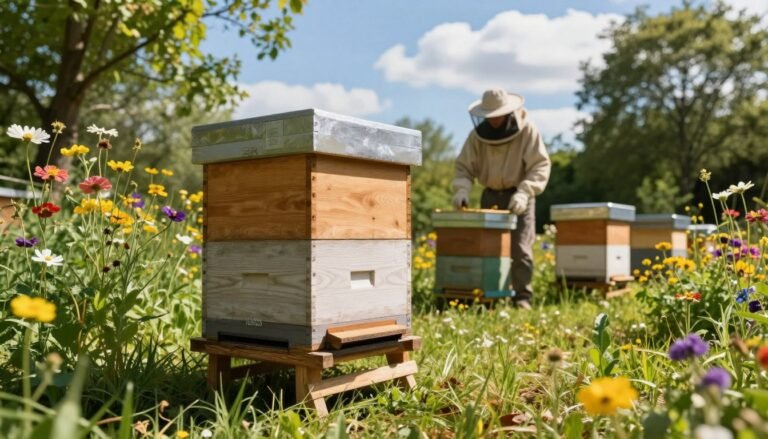
Successful beekeeping in the United States starts with equipment choices that support colony health. Small changes to hive hardware can make a big difference to brood development and honey flow.
Professional beekeepers often learn that the right hive floor design helps manage moisture, pests, and airflow. Regional weather patterns guide which features work best for each apiary.
This article reviews technical aspects of hive flooring to help you pick tools that match your site. Expect clear guidance that links design details to practical hive management and productivity.
Key Takeaways
- Choose hive hardware that matches local conditions to protect colony health.
- Small design differences can affect moisture control and pest management.
- There is no single solution; adapt choices to your apiary region.
- Proper equipment supports consistent honey production and easier management.
- Experienced beekeepers weigh technical details against seasonal needs.
Understanding the Role of the Hive Bottom Board
A hive’s lower platform does more than hold boxes; it shapes the colony’s internal conditions. The primary purpose of a bottom board is to seal the base of your hive from weather and pests.
The base also serves as the foundation for the hive box and sets the width of the entrance for the bees. That entrance controls traffic flow during foraging and helps the colony defend stores of honey.
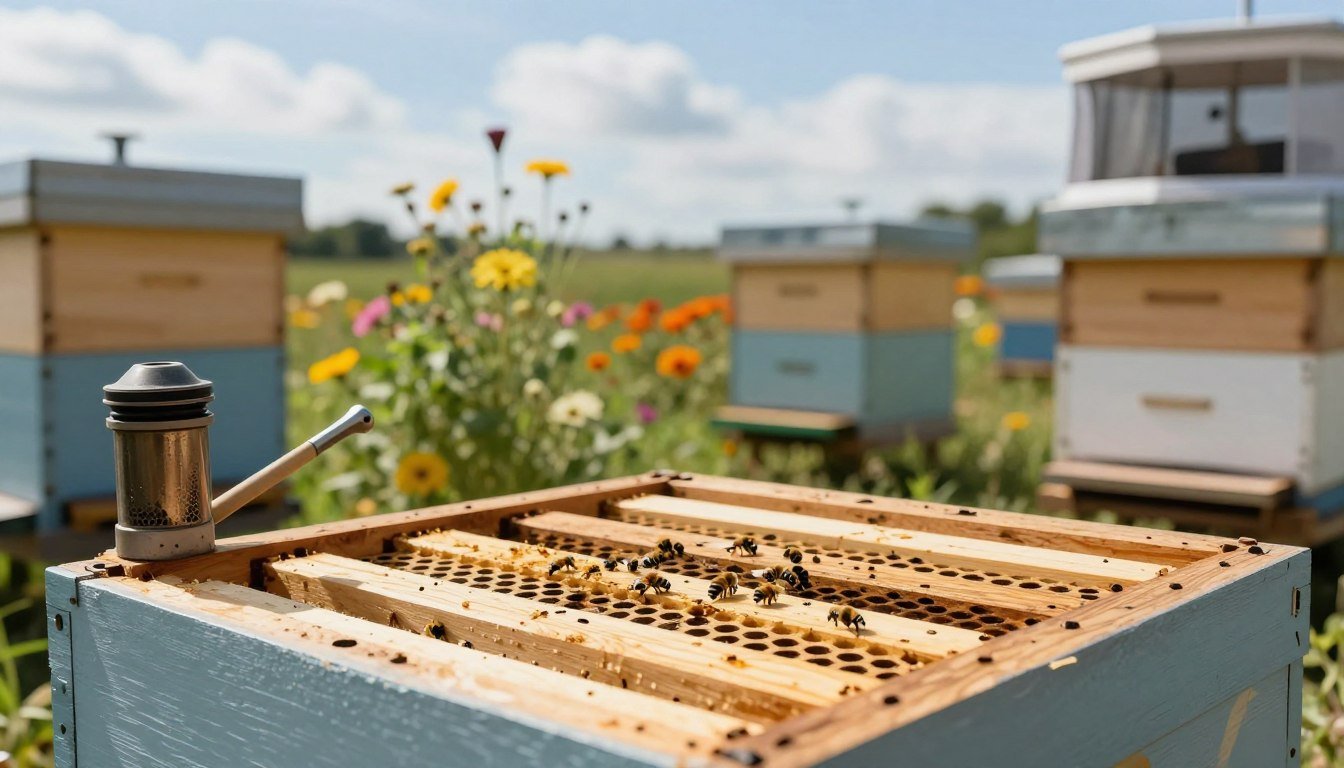
Professional beekeepers watch the base during inspections. Observing debris, droppings, or activity gives quick clues about hive health and hygiene.
- Structural support: The bottom board carries the weight of brood boxes and honey supers.
- Environmental control: It influences airflow and moisture inside the hive.
- Management point: The entrance on the base helps protect honey and limits pest entry.
For more detail on airflow options and hive design, see this beehive ventilation guide.
Analyzing Ventilated Bottom Board Pros and Cons in Hot Climates
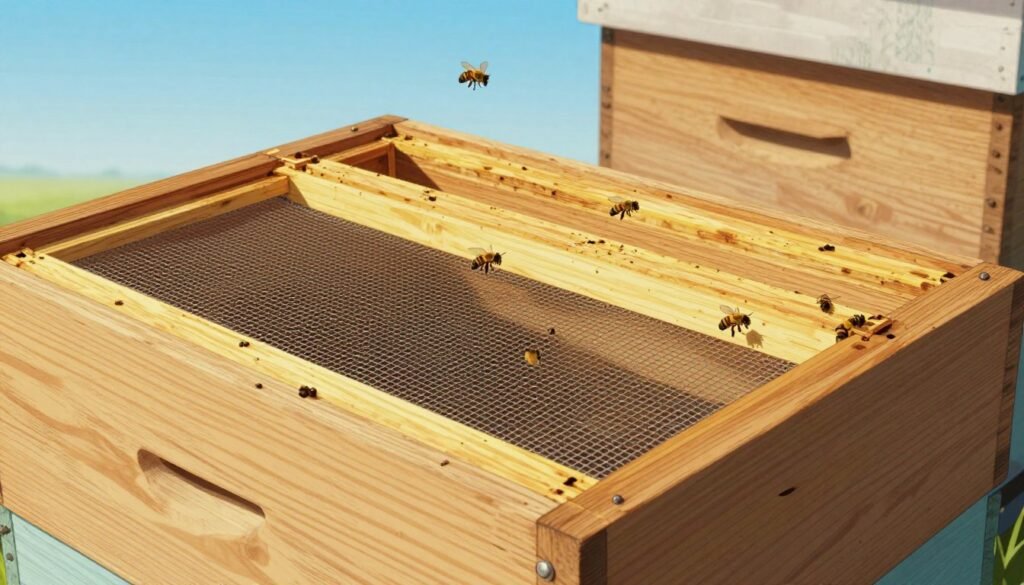
Choosing the right hive floor affects how colonies manage heat, pests, and scent signals. A screened lower panel can ease heat stress by improving airflow during the summer months and reducing the energy bees spend fanning.
Thermal Regulation Benefits
Screened bottoms encourage steady air movement across frames. That reduces peak temperatures and helps maintain brood health during long warm spells.
Varroa Mite Monitoring
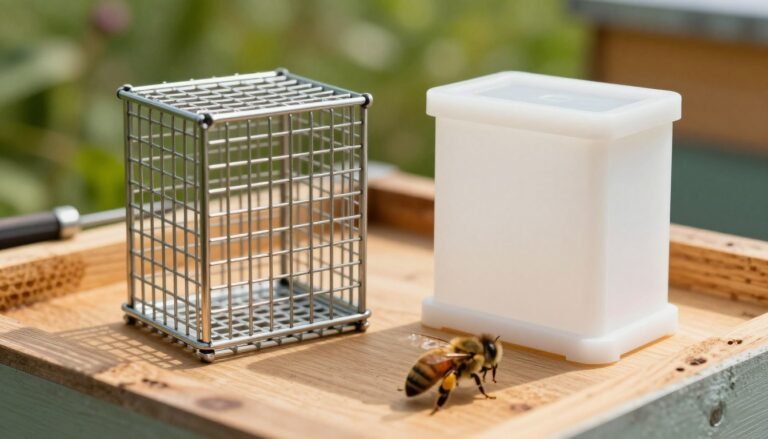
Using a mesh base lets debris and fallen mites drop through. Placing a sticky sheet under the screen gives beekeepers a simple view of mite buildup and trends over time.
Potential Pheromone Disruption
Note that removing a full floor can change how queen pheromones circulate. This may slightly alter brood care or guarding behavior, so monitor colonies after switching floors.
| Feature | Benefit | Consideration |
|---|---|---|
| Screened mesh | Passive mite drop (~20% reduction) | May let wax cappings fall through; needs clean-up |
| Airflow | Reduced heat stress during summer | Possible loss of winter insulation if used year-round |
| Monitoring | Simplifies mite counts with sticky sheets | Sticky trays require regular checks |
| Pheromone flow | — | Can disrupt queen signals; watch colony behavior |
For practical installation tips and alternate designs, see this hive ventilation hacks to balance airflow, pest control, and brood protection.
The Case for Solid Bottom Boards in Beekeeping
Choosing a closed base often boosts insulation and encourages bees to seal the interior. This choice changes internal temperature and how bees use resins to line the hive.
Immune Response and Propolis Benefits
Propolis coating on a solid bottom board supports colony health. Research shows propolis raises the immune response of European Honeybees. Bees apply resins around the hive, which can reduce pathogen loads.
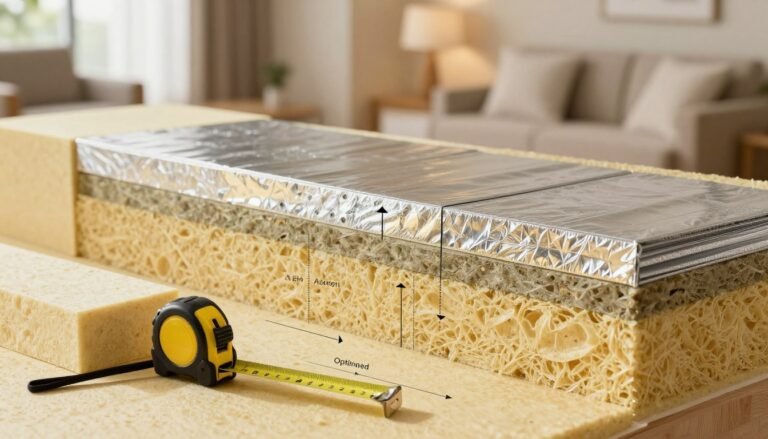
Practical gains include better winter insulation and earlier spring brood rearing. A warmer hive means bees spend less energy keeping brood healthy and may boost honey production.
- Solid boards limit debris falling through, which can deter ants and some pests.
- They are often cheaper to build and closely mimic natural cavities used by wild bees.
- Beekeepers should still monitor mites and hive hygiene regularly to avoid buildup.
| Feature | Solid Base | Screened Base |
|---|---|---|
| Insulation | High — retains heat | Lower — increases airflow |
| Propolis use | Encourages heavy coating | Less internal sealing |
| Pest debris | Contained under hive | Falls through for monitoring |
For guidance on how ventilation needs affect your choice of bottom boards, see this choice of bottom boards.
Impact of Climate and Geography on Equipment Choice
Apiary location—coastal fog, inland heat, or northern cold—steers equipment choices for healthy colonies.
Langstroth hives let beekeepers swap a solid bottom board for a screened version as seasons shift. This flexibility helps manage summer heat and cooler, damper periods without rebuilding the hive.
Warre hives often come with a screened bottom to offset the high insulation those boxes provide. That screen reduces condensation inside the hive and helps maintain the queen’s brood nest.
Region matters. In the Pacific Northwest many prefer a solid option to control moisture and mild temperatures. In the deep south, pest pressure and strong sunlight push some beekeepers toward a screen to increase air flow.
Practical tip: keep both types on hand. Professional beekeepers often switch boards between spring, summer, and fall as humidity, sun exposure, and pest threats change.
For winter guidance tailored to northern zones, see this winterizing resource to plan seasonal equipment swaps that protect honey stores and colony health.
Pest Management Strategies and Bottom Board Selection
Managing pests often begins with the right floor setup and careful monitoring routines. Choose hardware that supports both physical controls and data-driven checks to reduce treatments over time.
Small hive beetle control relies on a mix of cleanliness, traps, and regular inspections. A screened panel lets debris and beetles fall through, so you can use sticky inserts to monitor pressure and catch trends.
Small Hive Beetle Control
Use traps inside the hive and keep the area under the hive tidy. A sticky sheet under a screen gives a quick view of pest activity and helps time interventions.
Natural Comb and Mite Life Cycles
Encouraging foundationless frames leads to natural comb with smaller cells. That shortens brood incubation and narrows the breeding window for Varroa mites.
- Monitor: screened bottoms plus sticky inserts provide measurable mite and beetle counts.
- Prevent: solid setups keep debris contained and reduce hiding spots near the hive.
- Biological: foundationless frames disrupt mite reproduction and cut chemical use.
| Strategy | How it Helps | Care Notes |
|---|---|---|
| Sticky insert under screen | Clear view of mite/beetle drop | Check weekly during spring and summer |
| Foundationless frames | Smaller cell comb shortens mite lifecycle | Rotate frames; inspect for cross-comb |
| Solid option | Contains debris and deters ground pests | Clean under hive regularly to prevent buildup |
For a practical comparison of floor choices see this solid vs screened guide. For region-specific tips, consult these humid-climate tips.
Managing Hive Health Through Proper Ventilation
Smart ventilation lets bees cool the nest by bringing water and fanning, saving the colony vital calories. Proper air exchange controls moisture and keeps comb dry, which limits mold and disease.
A screened bottom board helps excess humidity escape and makes it easier to view mite and debris buildup under the hive. Use a mesh insert carefully so airflow aids summer cooling without forcing bees to overwork to warm the brood during cool nights.
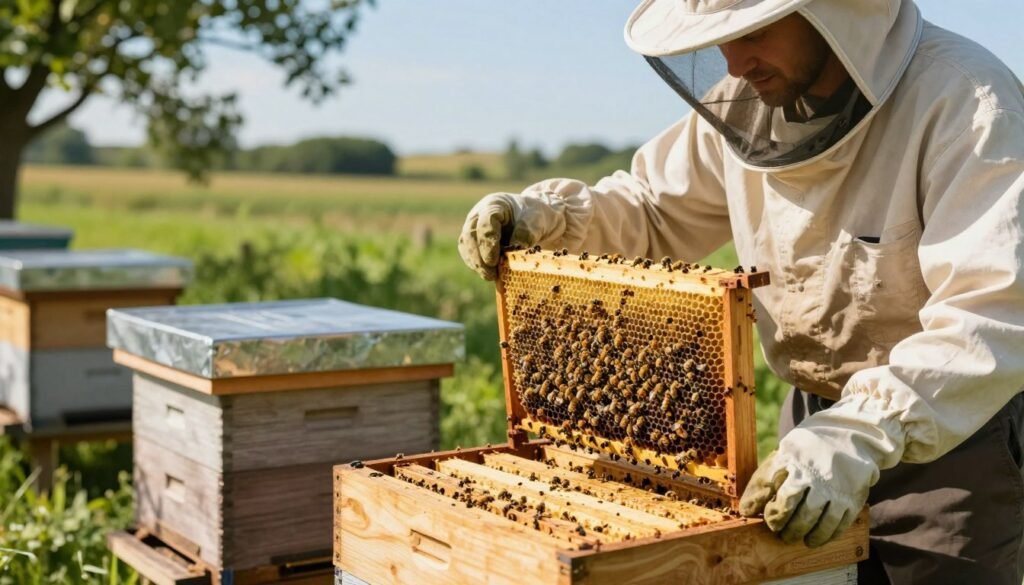
Balance is key: pair a screen floor with good insulation when temperatures drop. Rotate between a solid bottom and a screen based on months, local climate, and colony condition.
- Monitor: check sticky trays and the area under the hive for mite trends.
- Adjust: add or remove a screen as heat, humidity, or pest pressure changes.
- Protect: maintain entrance management and insulation to support brood development.
| Issue | Benefit of Managed Airflow | Action |
|---|---|---|
| High humidity | Reduces condensation | Use screened bottom boards seasonally; inspect weekly |
| Summer heat | Improves cooling with less fanning | Open screened floor and provide shade |
| Cold months | Preserves brood temperature | Switch to solid bottom and add insulation |
For practical installation and seasonal tips, read about proper hive ventilation. Consider hardware that also reduces vibration and disturbance, such as noise-reducing hive stands, to protect hive health and honey production.
Conclusion
A good hive setup balances equipment choice with regular care. Selecting between screened bottom boards and a solid bottom board depends on your local climates, pest pressure, and colony goals.
Experimentation matters: try a screen for summer cooling or a solid option for winter warmth. Track mites, honey flow, and queen health to guide each choice.
For tips on airflow strategy see this hive ventilation configuration. For wet-weather guidance, consult managing hives in wet climates.
Final note: equipment helps, but consistent monitoring and proactive pest management keep bees productive and colonies strong.