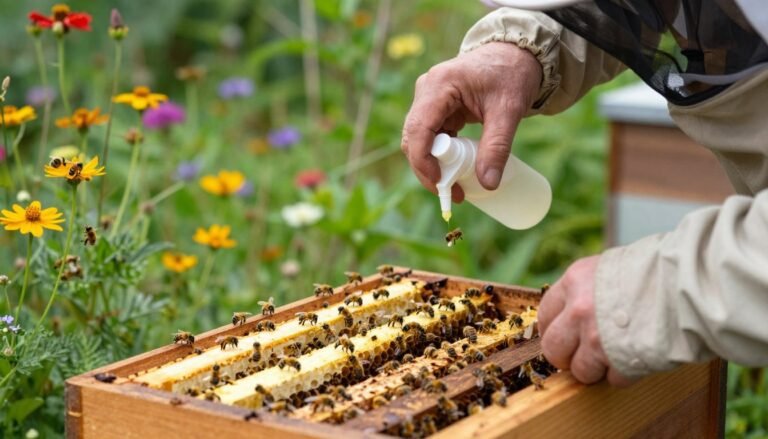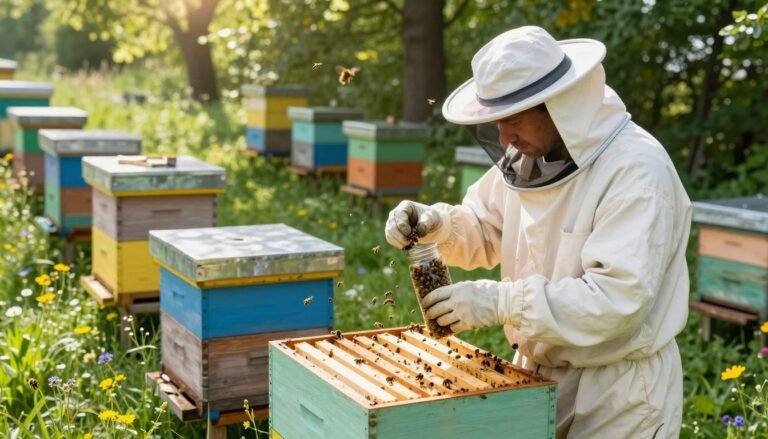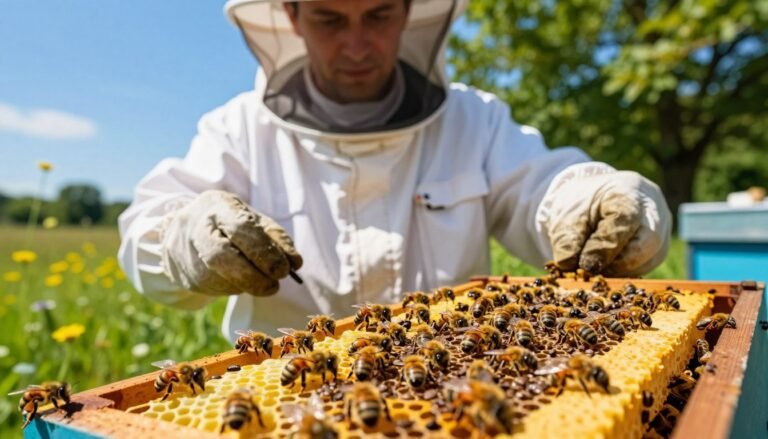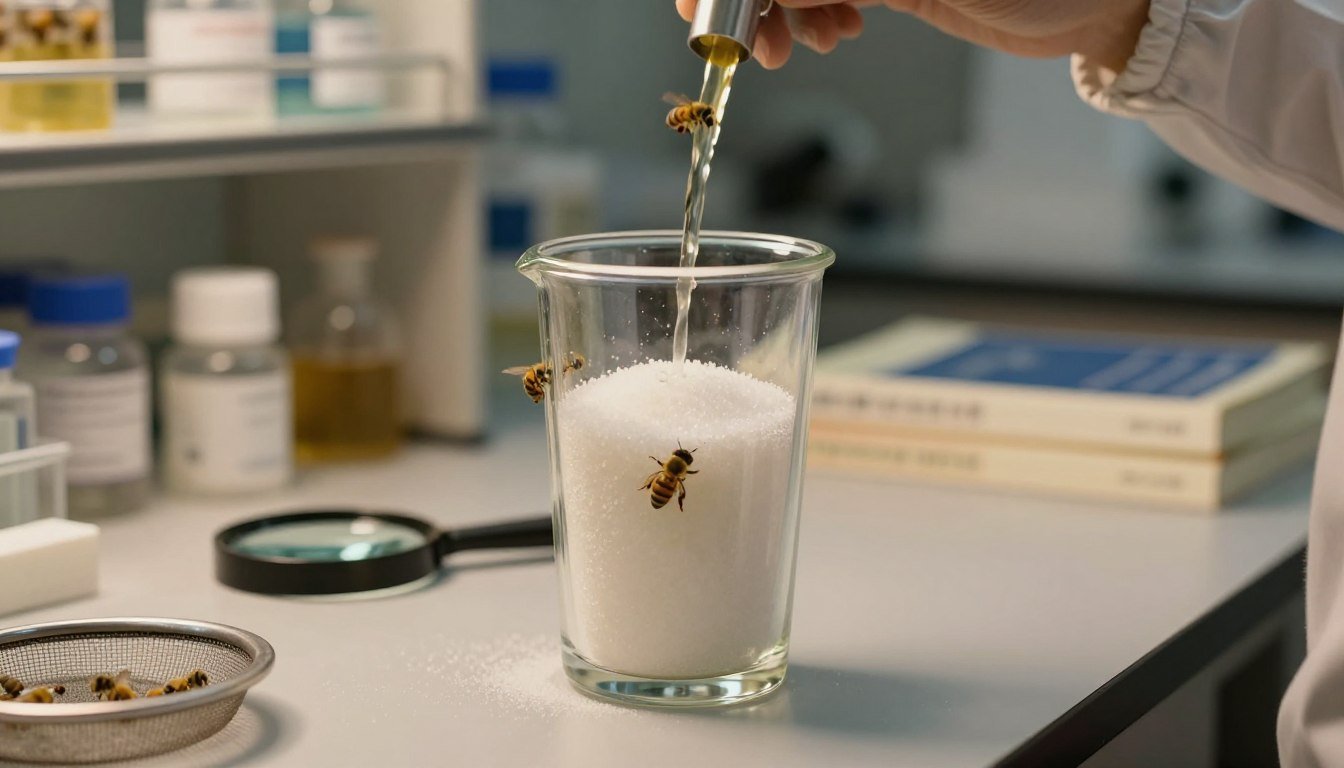
Accurate monitoring matters. A half cup of bees — roughly 300 individuals — is the standard sample for checking mite levels in a hive. Use a measured cup and a consistent jar so results stay comparable across visits.
Handle samples carefully. If you find about 3 mites per 100 bees in that sample, treatment is usually advised. Research shows sampling can affect survival; one study found 56% of bees from powdered sugar rolls leave the hive within five days.
Varroa are small, reddish-brown ovals (about 1.1 mm by 1.7 mm) and are easy to miss without proper technique. If you suspect an infestation, report it at 1-800-084-881 and confirm results with a reliable method such as an alcohol wash or by comparing approaches at sugar roll vs. alcohol wash.
Key Takeaways
- Use a standard cup and jar for repeatable counts.
- A 300-bee sample gives a reliable snapshot of mite pressure.
- Three mites per 100 bees is the common treatment threshold.
- Powdered sugar methods can reduce bee retention; confirm with liquid methods when unsure.
- Report suspected infestations to the Exotic Plant Pest Hotline immediately.
Understanding the Sugar Shake Method for Varroa Monitoring
Repeatable sampling matters. Use the same gear and steps every time to keep counts comparable. A standard mason jar fitted with 1/8 inch hardware cloth in the lid keeps the bees secure while allowing sugar and mites to escape.
Essential Equipment
Gather these items: a mason jar, a cloth mesh lid cut to fit the ring, a 1/2 cup measuring cup, a light-colored tray, and one tablespoon of powdered sugar.
Proper Sampling Techniques
- First, make sure the brood frame you select has many workers and does not contain the queen.
- Brush about 300 bees into the 1/2 cup so your sample size stays consistent.
- Place the bees in the jar, add one tablespoon of sugar, and roll the container to coat every bee.
- After one minute, vigorously shake the jar for 30–60 seconds over a tray with an inch of water to collect fallen mites.
- The dissolved sugar helps you count mites on a light tray; then return the bees to the hive promptly.
| Item | Purpose | Tip |
|---|---|---|
| Mason jar + lid | Contain bees and allow debris to pass | Use 1/8″ hardware cloth cut to lid ring |
| 1/2 cup | Standardize sample number (~300 bees) | Collect from a brood frame without the queen |
| Light tray & water | Collect and count mites | White tray improves visibility |
For a step-by-step guide on the powdered method, see this practical demonstration. To compare sample sizes for liquid methods, consult this alcohol wash guide.
Common Sugar Shake Mistakes in Varroa Testing
Even experienced beekeepers trip up on simple steps that alter mite recovery. Small errors change results more than you expect. Handle samples quickly and keep bees shaded to avoid sticky or asphyxiated workers.
Secure the bees jar and lid tightly. A loose mesh lets bees escape and skews the number you record. Also, never include the queen; always check the brood frame before sampling.
Use a white or light tray so mites are visible against debris. If you struggle to see specimens, a magnifying lens helps spot tiny reddish-brown mites in the water.

- Do a vigorous roll and jar motion; weak effort leaves mites on bees.
- Avoid pre-mixed icing blends that clump and trap specimens.
- Work sheltered from wind and limit time away from the hive.
If results seem odd, confirm with a follow-up method such as this how to test for varroa mites guide and compare post-treatment counts at post-treatment varroa mite counts.
Evaluating Alternative Monitoring Techniques
When accuracy and speed matter, many beekeepers now rely on alcohol washes. This method is quicker, less messy, and it does not encourage robbing around the hive.
The Case for Alcohol Washes
Research supports its reliability. A 2025 study by Bruckner et al. found alcohol washes more consistent than the powdered approach for estimating mite levels.
The procedure is simple: swirl a measured sample of bees in a fluid for 60 seconds to dislodge mites. Use a standardized container such as the Varroa easyCheck to keep the number of bees and fluid volume constant.
- Alcohol washes give a fast, accurate snapshot for the bees hive.
- They avoid sticky residue that can attract robbers and wasps.
- Always strain the fluid through a fine cloth to capture every mite before you count.
- Natural mite drop monitoring is useful but can be skewed by debris or predators on an open mesh floor.
For practical guidance on interpreting counts, see this guide on how to read an alcohol wash mite count. For broader monitoring options check local protocols at monitoring resources or explore natural approaches at natural remedies. For biosecurity information call the Customer Service Centre at 136 186.
Conclusion
Consistent checks give you real numbers, not gut feelings, about hive health. Use reliable methods and record results so decisions rest on data that protect your bees.
The powdered sugar roll and its shake variant were popular, but recent work recommends alcohol washes for precise counts. For details on harm studies, see this discussion on test impacts at harm to bees.
Keep gear—jar, cup and lid—clean and organized. If the mite number is high, contact your local apiary officer and review treatment options such as those compared here: treatment strategies.
Accurate monitoring protects brood and colony survival. Stay careful, stay informed, and let clear counts guide your next steps.
FAQ
What is the correct number of bees to collect for an accurate test?
Collect about 300 adult worker bees from the brood area for a representative sample. Use a jar or cup that holds them comfortably without crushing. A full sample gives more reliable mite counts than very small samples.
How long should I agitate the jar when performing the test?
Agitate the container gently for about one minute. Too brief and mites won’t dislodge; too vigorous and you may harm bees or break brood-carrying behavior. Consistent timing helps compare results between hives and inspections.
Will using wet bees or adding water affect the outcome?
Avoid wet bees or adding water to the test. Moisture causes clumping and reduces mite removal. Keep bees dry and handle them quickly after collection to maintain test accuracy.
Can I test from bees taken at the hive entrance instead of the brood nest?
Samples from the brood nest are preferable because foragers often have different mite loads. If you must use entrance bees, note that results may under- or overestimate infestation compared to brood-area sampling.
How do I avoid losing mites through the jar lid or cloth during processing?
Use a tight-fitting lid with a screened or solid mesh insert designed for testing. Secure any cloth or mesh and strain contents over a light surface so mites are visible. A stable setup prevents mite loss during shaking or pouring.
What light or surface is best for counting mites after the test?
Use a white or light-colored tray or sheet to enhance visibility. Good daylight or a bright lamp helps you spot small brown mites against the background and improves counting accuracy.
How often should I monitor hives for mites using this method?
Monitor regularly through key periods: early spring, peak nectar flow, and before winter preparation. Frequency depends on local pressure and treatment history; monthly checks during active seasons are common.
When should I avoid testing because it might harm the hive or queen?
Avoid sampling during extreme weather, when colonies are weak, or if the queen is highly stressed. Disturbing very small or newly established colonies can cause harm; choose stronger frames and limit handling when possible.
How do I convert mite counts into an infestation percentage?
Divide the number of mites found by the number of bees sampled, then multiply by 100 to get a percent. This figure helps decide if treatment is needed based on regional action thresholds.
Are there alternatives to this method that give better results?
Alcohol washes and ether rolls provide comparable or higher mite recovery, especially for precise monitoring. Each method has pros and cons—consider bee welfare, legal restrictions, and ease when choosing a technique.