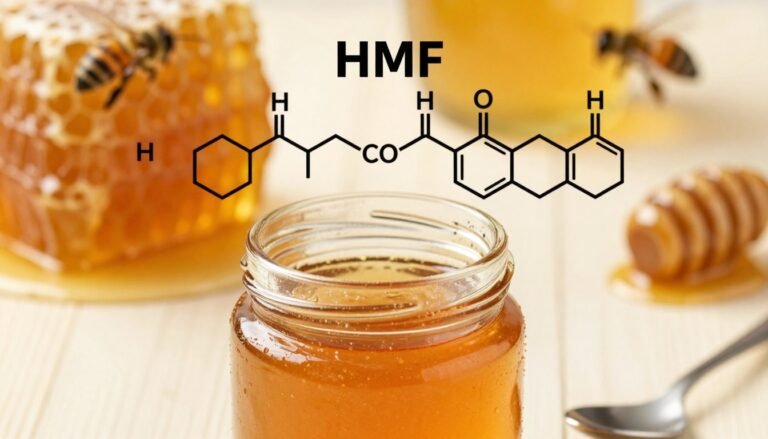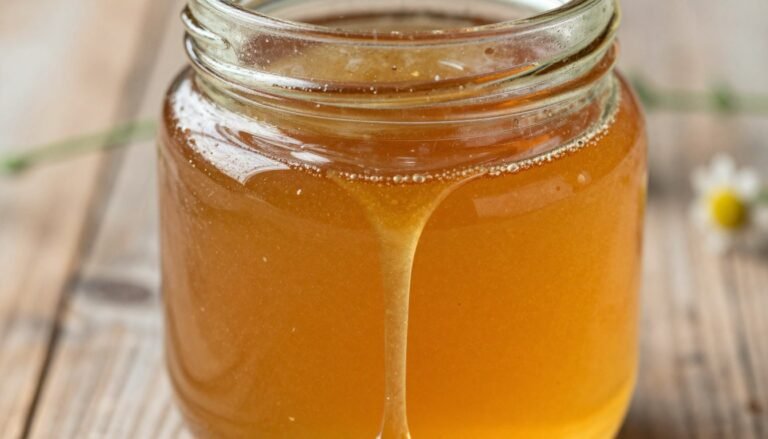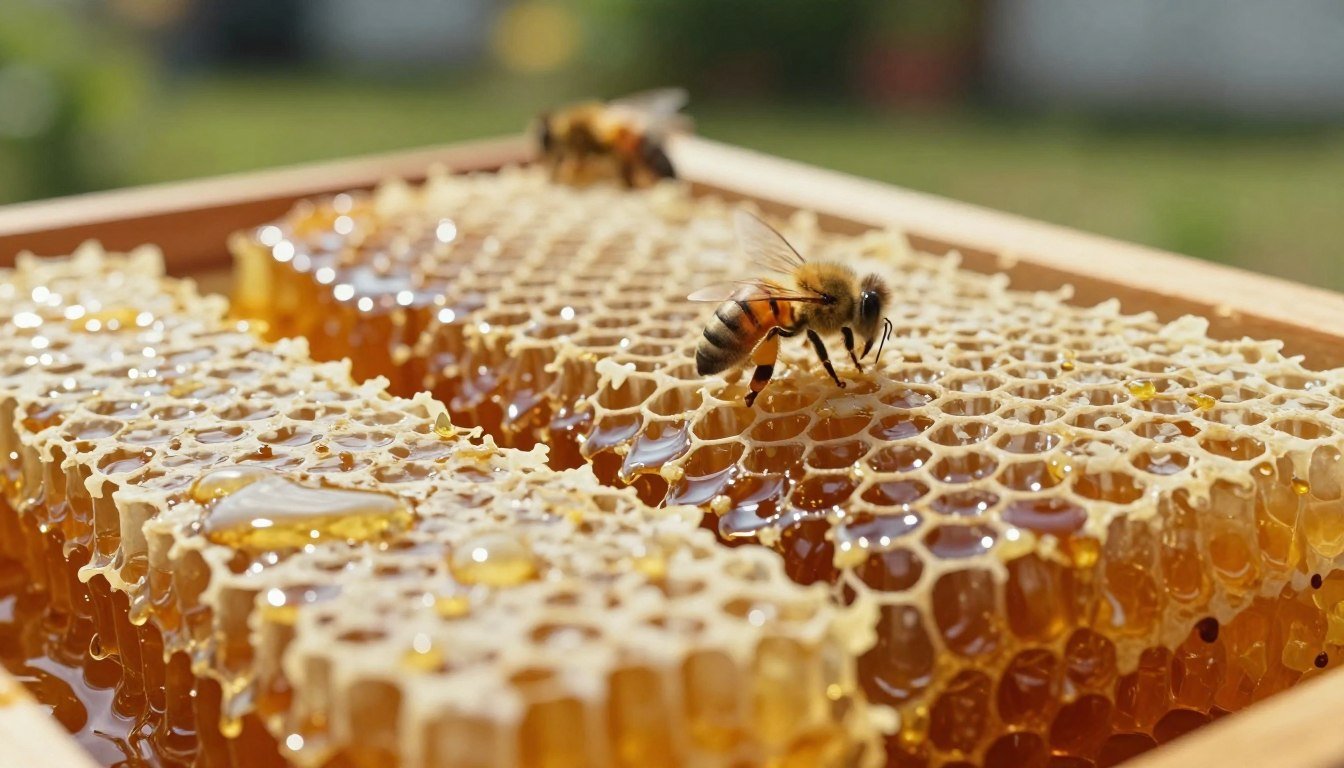
Knowing when a frame is ready affects flavor, storage, and the colony’s health. Start by watching the hive through the season and note local nectar flow patterns. First-year beekeepers often leave stores for the bees so the colony can build comb and gain strength for winter.
Morning checks can help. JeffH recommends pulling frames early in the day because bees have spent the night reducing moisture. Many experienced beekeepers wait until late summer when most cells are capped for the main harvest.
Successful harvesting blends timing, observation, and simple tests. Learn the local nectar runs, confirm capped cells on central frames, and ensure the colony has enough stores for the coming months. For deeper guidance on assessing ripeness, see an expert take on readiness at is the honey ready and detailed extraction and storage advice at extract and store raw honey.
Key Takeaways
- Watch local nectar flow and adjust harvest timing accordingly.
- First-year beekeepers should usually leave most frames for the colony.
- Morning checks help because bees lower moisture overnight.
- Main harvest often occurs late summer when most cells are capped.
- Confirm stores remain for winter before removing supers.
Understanding Honey Ripeness and Hive Biology
Understanding the biology behind sealed comb helps beekeepers judge readiness with confidence.
Capping signals completion. Worker bees seal cells with wax once nectar reaches roughly 16.5%–18% moisture. This wax cap preserves the product for long-term storage and for the colony’s winter needs.
Industry standards set a hard limit: honey with water above 20% risks fermentation and fails many quality checks.
The Importance of Capping
Bees will not seal cells that remain too wet. During warm summer flow, intense nectar collection speeds filling, but the bees must still evaporate water by fanning.
Moisture Content Standards
Nighttime activity matters. Strong colonies rearrange stores and de-water honey while also feeding brood. A steady supply of pollen and nectar keeps brood rearing on track and the hive healthy for the year ahead.
“If the moisture content remains high, the bees will not seal the cells.”
| Metric | Typical Range | Significance |
|---|---|---|
| Wax capping moisture | 16.5% – 18% | Stable storage; capped honey |
| Saleable moisture limit | < 20% | Prevents fermentation |
| Nectar flow effect | Variable (seasonal) | Determines filling and capping speed |
- Wax capping marks readiness for long-term storage.
- Water content above standards prevents sealing and invites spoilage.
- Colony strength and pollen stores influence processing ability.
How to Tell if Honey is Unripe Before Extracting
A simple shake of a frame often reveals more than a visual glance.
Perform a horizontal shake test on any suspect frame. Gently hold the frame and give it a short, level shake. If liquid or nectar beads drip from uncapped cells, leave that frame in the hive.
Only harvest frames with at least 70%–80% capped honey. That level shows the colony reduced moisture enough for stable storage. Pulling less-capped comb risks fermentation and lowers overall quality.
Talk with other beekeepers in your local area about typical nectar flow and best harvest windows. Regional advice helps match your schedule to seasonal patterns and reduces wasted effort.
“Extracting unripe honey can spoil an entire batch when mixed with lower-moisture stores.”
- Use the shake test for any frame that looks partly uncapped.
- Target 70%–80% caps before harvesting.
- Consult nearby beekeepers each year for timing tips.
| Check | Result | Action |
|---|---|---|
| Shake test — drip present | Likely unripe honey | Leave frame for further processing |
| 70%–80% capped | Acceptable for harvest | Include in extraction |
| Mixed moisture levels | Risk of fermentation | Separate high-risk frames |
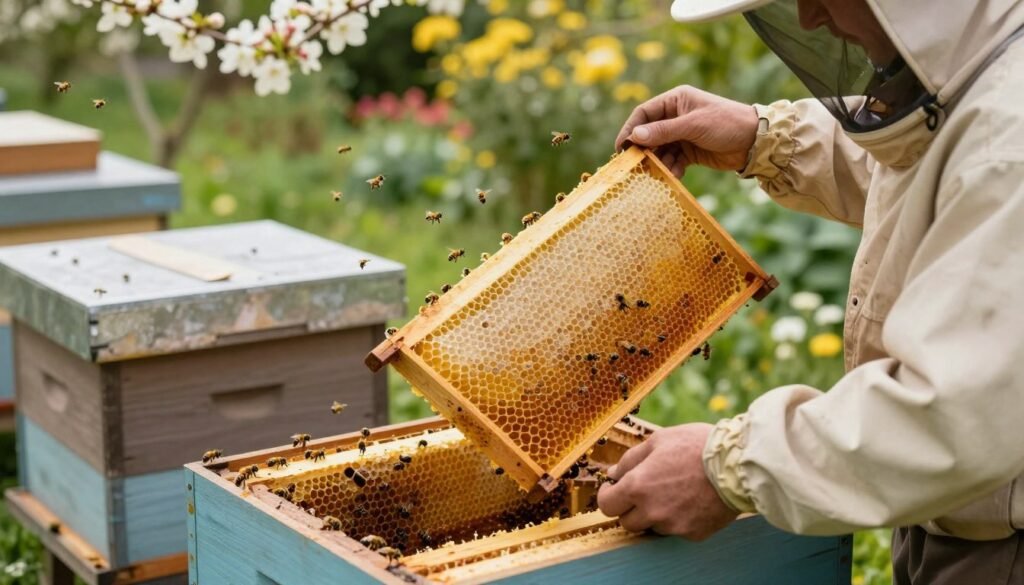
For a simple field test and community input, see a practical forum test and guidance on tool sanitation at simple ripeness test and capping scraper sanitation tips.
The Role of Environmental Conditions and Timing
Evening smells and daytime hum reveal much about the drying work inside a colony.
Diurnal cycles drive evaporation. In summer, bees fan for hours each evening and night. RBK noted a strong honey scent at dusk, a sign that bees were removing water from nectar.
JeffH observed frames taken early in the morning often show lower moisture. A sustained 10-hour fanning period overnight can cut water content significantly.
Diurnal Cycles and Evaporation
The nectar flow creates heavy workloads. On calm summer evenings a beekeeper can hear the hive humming as bees process incoming nectar.
Timing harvests around these cycles helps protect stores needed for winter. Proper management during peak flow keeps the colony strong and frames in good condition.
“A 10-hour period of sustained fanning can significantly reduce the moisture content of the honey.”
- Evening fanning speeds evaporation during warm months.
- Morning inspections often find frames closer to ripe.
- Plan the final removal so the colony retains adequate winter stores.
| Factor | Effect on Moisture | Practical Note |
|---|---|---|
| Night fanning | Reduces water content | Inspect frames in early morning |
| Strong nectar flow | Increases processing load | Monitor frames for mixed moisture |
| Calm summer evenings | Audible hive activity | Use smell and sound as cues |
For regional timing and climate guidance, consult regional climate profiles and a practical guide on collecting honey.
Practical Techniques for Assessing Frame Readiness
Combining tactile tests with measurements gives the most reliable assessment of frame condition. Start with quick field checks, then confirm with a tool when needed.
The Shake Test Method
The shake test is fast and effective. Hold the frame by the side bars and give a sharp, horizontal shake. If liquid sprays or beads fall from cells, return that frame to the top of the hive for more drying.
Always perform this over an inverted roof or an open hive floor to avoid spills that invite robbing. This simple process helps spot wet frames during peak flow times.
Using a Refractometer
Portable refractometers provide precise moisture content readings. Dee uses a budget model bought on eBay and checks samples in the field.
Martydallas reported consistent readings below 17.5% during late‑afternoon checks, showing that timing a test can affect results. Use the refractometer to confirm visual and tactile observations.
Visual Inspection of Comb
Look for wax cappings across the face of the comb. Solid, even cappings are the clearest sign that bees finished the process and sealed the cells.
If caps are patchy, treat the frame as high risk. Inspect frames at different times of day to track moisture fluctuation and processing flow.
“Return frames that shed nectar during a shake; let the bees finish their work.”
- Shake test checks for free liquid from cells.
- Refractometer confirms moisture content numerically.
- Visual cappings indicate completed storage and readiness.
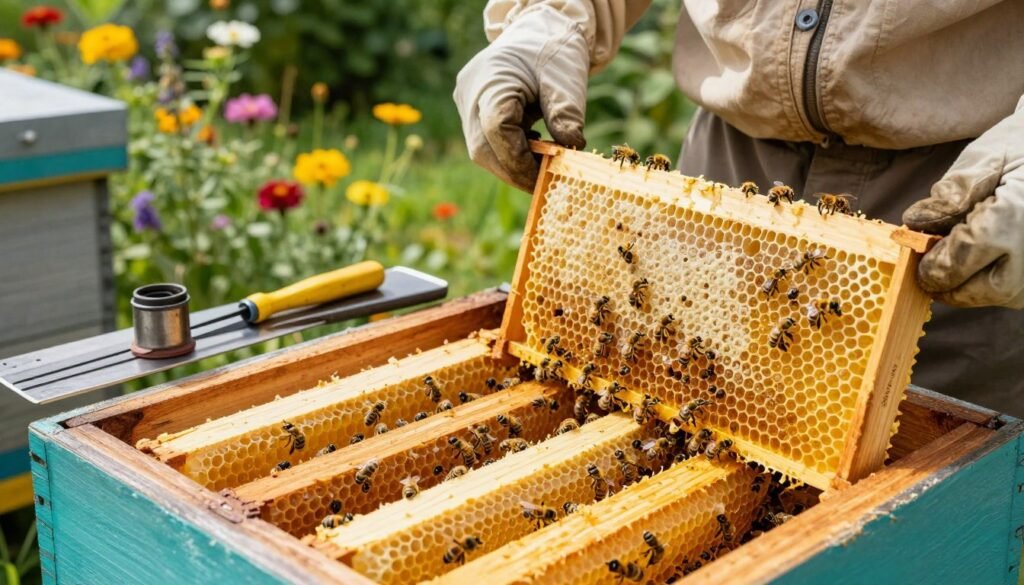
For scaling checks in larger apiaries, see a practical guide on high-volume beekeeping.
Managing Frames That Fail the Ripeness Test
A dripping frame signals unfinished work and needs another round inside the colony.
Return any wet comb to the hive, ideally on the strongest, queenright colony. That gives the bees space and resources to finish capping and reduce moisture. Bees will repair wax and finish cells while they dehydrate the nectar.
Keep unripe honey separate from the main harvest. Mixing wet stores with low‑moisture product can trigger fermentation and ruin an entire batch.
“If a frame drips when shaken, it should not enter the extractor.”
Some beekeepers stack supers in a warm room with a dehumidifier as a short-term option. This can help remove excess water, but it is less reliable than returning frames to active bees.
- Return failing frames to the best colony for finishing work.
- Do not mix wet comb with finished jars.
- Use controlled warming and dehumidification only as a backup.
- Correct management preserves quality and secures stores for winter.
| Issue | Action | Benefit |
|---|---|---|
| Dripping frame | Return to strong colony | Bees finish capping and lower moisture |
| Partly uncapped comb | Hold separate from harvest | Prevents batch fermentation |
| High water content | Warm room + dehumidifier (optional) | Speeds drying but slower than bees |
For more on timing and harvest workflow, see this honey harvesting guide.
Best Practices for Storing and Warming Supers
Maintaining even temperature for stacked supers reduces crystallization and speeds processing.
Set a honey warming cabinet to 40°C. This keeps comb soft and makes the extraction process smoother. A steady 40°C also retards early crystallization and keeps liquid content workable.
Rotate supers from top to bottom every day or two while in the cabinet. This ensures even heating across frames and protects delicate wax and cells from uneven stress.
If frames must return to the colony, place the super on top during summer so bees continue finishing nectar and capping comb. Some beekeepers nadir the super by placing it beneath the brood box when that fits colony flow.
Protect stored supers from robbing. Keep stacks secured against wasps and other bees after clearing them from the hive. Proper storage preserves quality and prevents loss.
- Warm at 40°C for easier spinning and preserved quality.
- Rotate stacks routinely for even heat across frames.
- Return frames on top of the hive for finishing when needed.
“Maintaining a warm environment for supers is standard practice among serious beekeepers.”
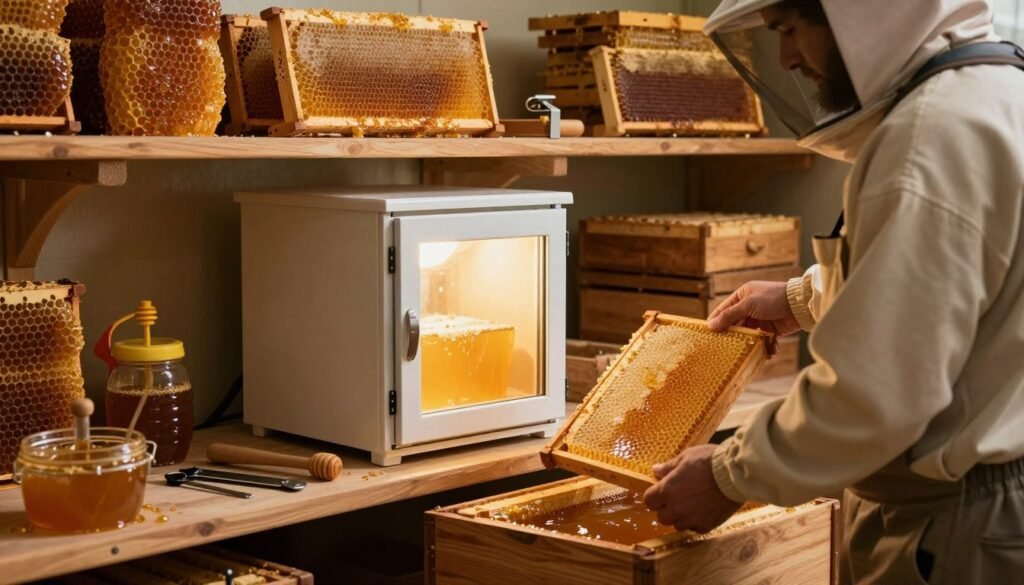
For seasonal storage plans, see storing supers for the season and guidance on balancing harvest with colony needs.
Final Thoughts on Successful Honey Harvesting
A careful, patient approach turns a season of work into a clean, safe harvest.
Successful harvesting completes a year of steady hive care. Honor the bees by leaving enough stores and by choosing frames ready for removal. Use the shake test and simple tools to keep quality high when you lift a frame from the top of the stack.
As experience grows, you will read the colony better and refine your harvest timing. For practical steps on planning and timing, see this harvest guide, and for warm-room handling and temperature control consult avoid overheating honey.
FAQ
Checking Honey Ripeness Before Extraction: What should be examined on the frame?
Look at cell cappings first. Fully capped cells are a strong sign the colony finished drying nectar. Examine color and gloss of comb: ripe honey appears glossy and may sit level under the cappings. Check moisture with a refractometer or do a brief shake test. Also consider recent nectar flow, weather, and colony strength before harvesting.
Understanding Honey Ripeness and Hive Biology — Why does capping matter?
Cappings indicate bees sealed moisture at a safe level for storage. The wax cap protects honey from humidity and fermentation. Frames with more than roughly 80% capped surface are usually ripe, while uncapped or partly capped cells suggest active drying or ongoing nectar processing by the colony.
Moisture Content Standards — What target should be aimed for?
Commercial standards generally aim for 17-18% moisture or lower. Many beekeepers accept up to 18.6% in home harvests, but values above 19% risk fermentation. Use a refractometer for a precise reading to maintain quality and shelf stability.
How to Tell if Honey is Unripe Before Extracting — Which quick checks work in the field?
Do a visual scan for uncapped cells and wet-looking nectar. Perform the shake test: hold a frame and give it a short, firm shake; drip or slosh indicates excess water. Measure with a refractometer for certainty. Combine tests with knowledge of recent nectar sources and hive behavior.
The Role of Environmental Conditions and Timing — How do weather and season affect ripeness?
High humidity and cool nights slow evaporation of nectar inside cells. During heavy nectar flows, bees may store more liquid before finishing drying. Late summer and early fall flows typically produce more stable, lower-moisture honey. Plan extra checks after rainy spells or during weak flows.
Diurnal Cycles and Evaporation — Does time of day influence testing?
Yes. Bees evaporate moisture most actively on warm, dry days. Inspect frames in the afternoon for the clearest picture of ripeness. Early-morning checks may show more uncapped or wetter nectar because evaporation slows overnight.
The Shake Test Method — How is it done and what does it show?
Hold a frame firmly by the top bar and give a quick lateral shake. If honey splashes or runs out of cells, moisture is likely too high. A small wobble of capped cells is normal; visible sloshing or dripping means delay extraction and allow more drying time in the hive.
Using a Refractometer — Why use one and how accurate is it?
A handheld refractometer gives a reliable estimate of moisture percentage in a small honey sample. It’s the preferred tool for precision. Calibrate before use and correct for temperature, or use a model with automatic temperature compensation for consistent results.
Visual Inspection of Comb — What visual cues indicate unripe nectar?
Look for open, glistening cells with visible liquid, pearly or cloudy nectar, and inconsistent capping. Ripe honey often has uniform, opaque cappings and a firm surface under the wax. Patchy cappings and irregular sheen point to ongoing drying.
Managing Frames That Fail the Ripeness Test — What are common options?
Return supers to the hive and allow bees more time to finish drying. Move questionable frames to inner brood boxes where temperatures are higher. Use a queen excluder to let bees finish processing while preventing brood contamination. In some cases, store frames in a warm, ventilated room to allow controlled evaporation.
Best Practices for Storing and Warming Supers — How should supers be handled pre-extraction?
Keep supers dry and warm. Store them in a low-humidity area or a warmed room for a short period to reduce moisture. Avoid airtight containers if frames still have high moisture; allow gentle ventilation. Label supers with the date and source colony for traceability.
Maintaining Optimal Temperature — What temperature range helps finishing nectar?
Bees work best at hive temperatures around 95°F (35°C) in the broodnest for evaporation. For stored supers being warmed externally, keep temperatures moderate—roughly 75–85°F (24–29°C)—to prevent melting cappings while encouraging moisture loss.
Final Thoughts on Successful Honey Harvesting — What practices reduce harvest risk?
Combine visual checks, the shake test, and refractometer readings before extraction. Consider weather patterns and nectar flows. Store and warm supers responsibly and only extract once moisture readings are within the safe range. Consistent record-keeping and timing improve both yield and quality year after year.