Choosing the right opening in an inner cover matters. A well-made cover sits under the telescoping lid of a Langstroth hive and helps manage heat, moisture, and bee movement.
Small adjustments to the top can change how bees use the space above the brood. The correct hole can reduce unwanted comb in the roof and keep honey production efficient.
Good covers act as a bridge between the bees and the outer lid. They protect the colony from rain while still allowing targeted feeding and ventilation.
Experienced beekeepers often debate whether to screen or seal the opening. Practical solutions include adding mesh, a thin wood patch, or a vinyl mat to guide bees away from building comb in the upper cavity. Learn more about real-world fixes in this forum discussion: managing the top cover opening.
Key Takeaways
- Inner covers sit under the telescoping lid and help control the top hive environment.
- Proper openings guide bees and reduce wild comb in the roof space.
- Small modifications—mesh, wood, or a mat—can improve ventilation and management.
- Choosing the right option supports honey production and colony health.
- Consult experienced threads for practical tips on sealing or screening the opening.
The Purpose and Function of Inner Cover Openings
An opening in the top cover plays a central role in keeping the hive dry and breathable. Proper vents let warm, moist air escape and reduce condensation that can drip on the cluster during winter. This simple design choice helps protect brood and stored honey.
Ventilation and moisture control
Ventilation and Moisture Control
Good airflow through the holes prevents water build-up and lowers disease risk. Many beekeeping websites recommend using an upper vent when you have a telescoping lid to stop it from sticking due to propolis.
Facilitating Supplemental Feeding
Facilitating Supplemental Feeding
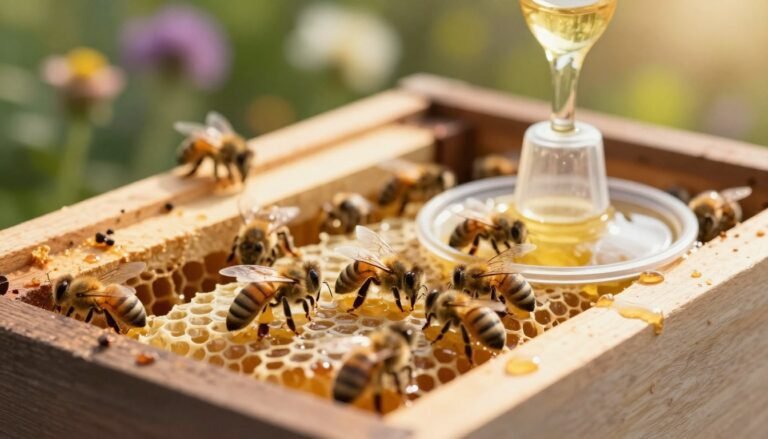
Placing a feeder over the center opening keeps bees from drawing comb across the top. If you lack an inner cover, drilling a 1/2″ hole in the top super offers basic ventilation and a point to place a jar or board.
Use the notch in the side as an extra upper entrance to help bees regulate hive temperature. When the lid sticks, the cover makes removal easier and disturbs the colony less during inspections.
Learn more about the function and placement of this component on an authoritative website.
Determining Ideal Feeder Access Hole Sizes for Inner Covers
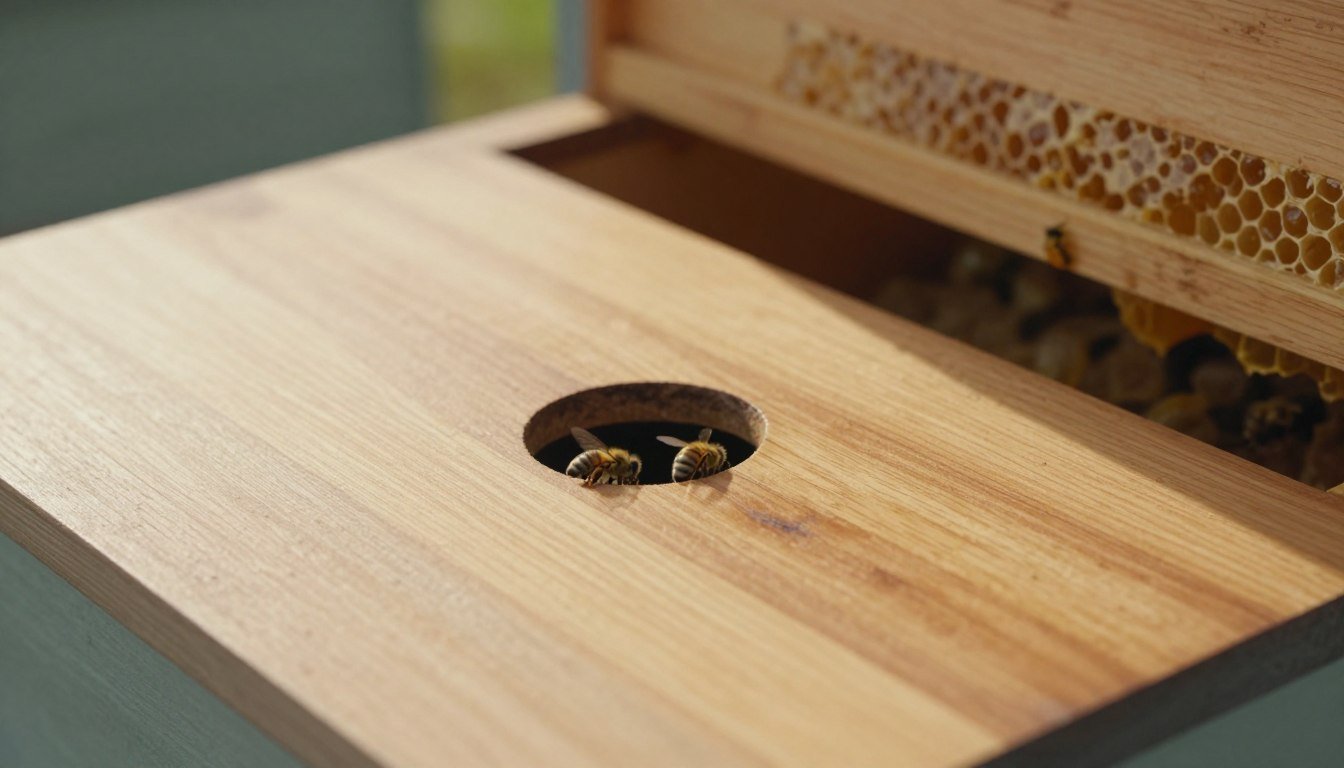
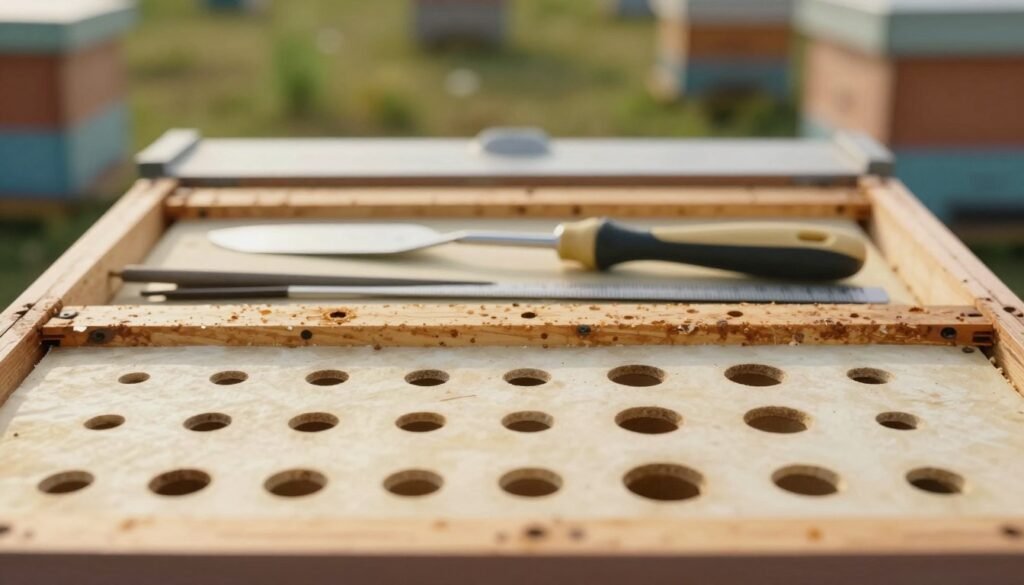
The diameter of the top opening directly shapes how a colony uses the space under the lid. Dave Cushman tested openings from 19 mm up to 340 mm to see bee preference and behavior.
His trials showed that openings 50 mm or smaller encouraged bees to move honey down into the main chamber. A 32 mm opening even led bees to fill a shallow frame despite a damaged lug.
Conversely, larger openings — 100 mm and above — often invite wild comb in the upper cavity. That extra comb can block frames and complicate inspections.
Practical takeaway: keep the top port modest to limit unwanted comb and protect your frames. Many beekeeping resources back this advice and offer feeding options to place over small openings, such as a mason-jar board described on a practical feeding guide here.
Choosing the right opening makes the cover a helpful tool rather than a maintenance problem. For managing entrances and top ventilation alongside sizing choices, see additional hardware tips on this site: entrance reducer options.
Best Practices for Seasonal Hive Management
Adjusting your cover each season helps bees keep a steady microclimate inside the boxes. Small changes to the lid and top port guide ventilation and warmth without heavy work.
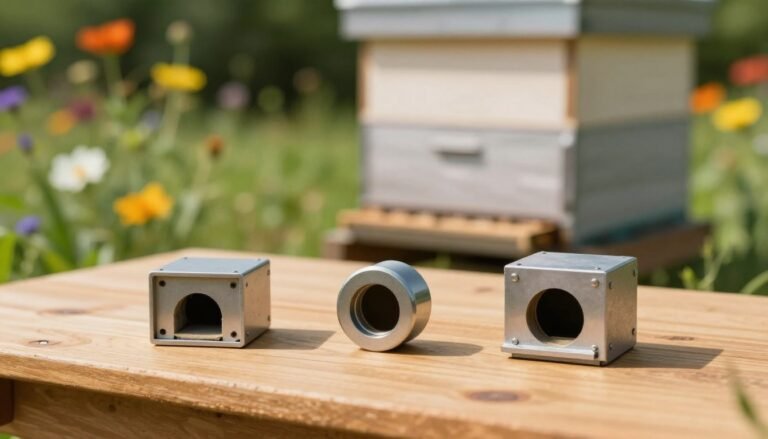
Winter setup: use an insulated cover with a 1.5″ Upper Vent Cap centered to trap heat. A sealed top or a top/middle upper entrance helps bees conserve warmth and protect honey stores.
Summer setup: open the center cap to improve airflow, or rotate the entrance disk to the vent position to reduce robbing risk and heat stress.
- The Insulated Inner Cover fits standard 8-frame and 10-frame Langstroth boxes, making conversions simple.
- Position the tunnel section so frames are either restricted or allowed movement based on inspection needs.
- Monitor the cover holes each season to avoid drafts in winter or poor ventilation in summer.
- Use a feeding board that fits the center port during spring buildup or fall supplemental feeding; see recommendations on best bee feeding options.
For technical detail about what the center port accommodates, consult this guide on what the center port is made to. Proper lid adjustments help your bees maintain a stable environment and protect frames and honey through seasonal shifts.
Conclusion
A well-chosen opening at the top of the hive simplifies care and boosts colony performance. Select a modest hole and matching size to limit stray comb and to help bees store honey where you want it.
Dave Cushman’s research shows that small ports encourage downward storage and reduce building in the roof. Adjust the lid and cover with the season in mind to balance ventilation and insulation.
Keep routine maintenance simple. Learn entrance tips in the entrance management guide, review expansion planning at beekeeping expansion tips, and consider trapping advice like pollen trap recommendations to support a healthy, productive apiary.