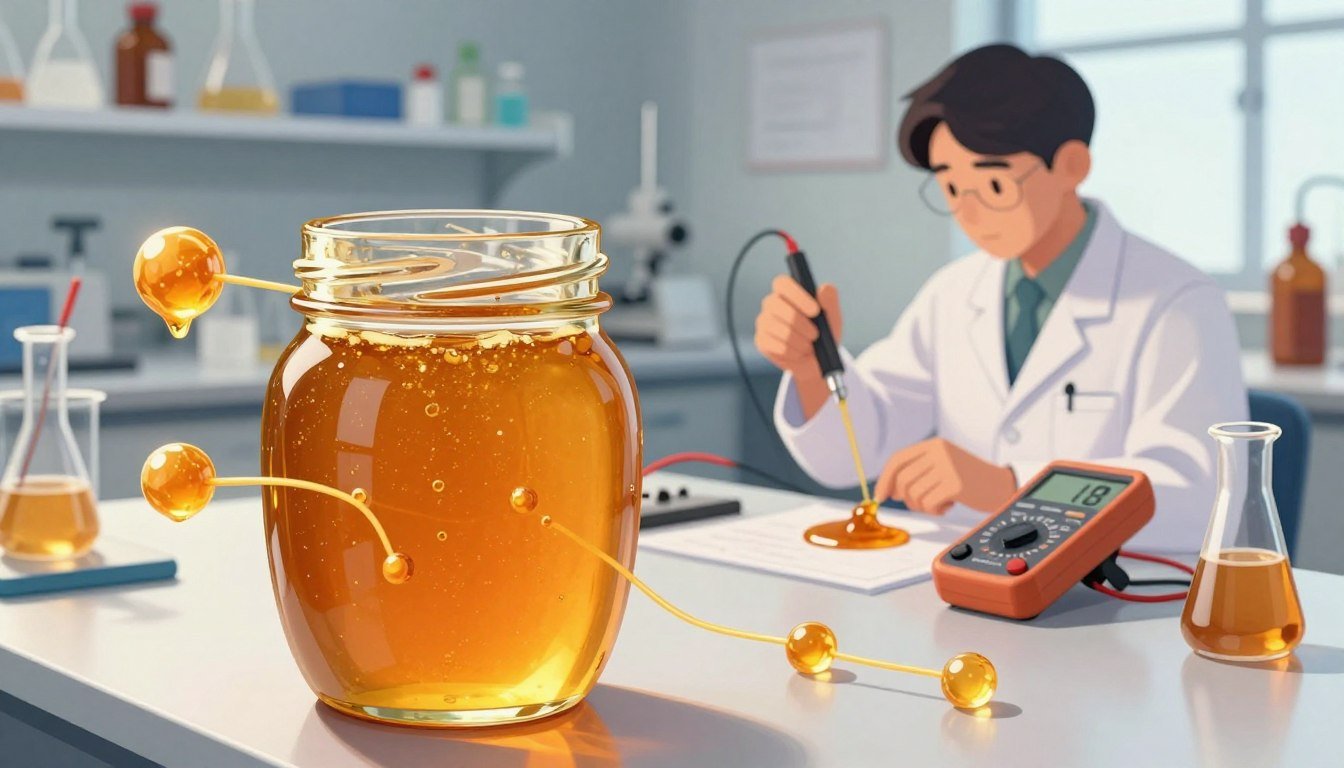
This introduction outlines why measuring the electrical profile of honey matters for producers and buyers. Simple tests help confirm the botanical origin of jars sold as authentic food. Beekeepers use a standard threshold of less than 0.8 mS/cm to judge samples against international guidelines.
Every bee colony draws nectar from nearby plants and makes a product with a distinct taste and chemical profile. That local loyalty gives each batch its character and helps sellers tell one type of honey from another.
When lab staff analyze honeys, they dilute samples with demineralized water so results remain accurate. Proper handling protects the test and supports clear labeling for consumers across the United States.
Key Takeaways
- Testing can verify the botanical origin of a product.
- International limits guide quality checks and reporting.
- Each bee colony produces a unique flavor and profile.
- Use demineralized water during sample dilution for reliable results.
- Clear lab data helps beekeepers market authentic food items.
Understanding Electrical Conductivity in Honey Explained
Measuring ionic flow in a diluted sample tells producers a lot about product quality.
Raw honey is viscous, so ions cannot move freely. Diluting samples with demineralized water creates a solution where sugars and minerals allow ion flow.
Use a reliable meter such as the Horiba LAQUAtwin COND for a precise reading. Temperature affects readings, so note the value at a controlled degree Celsius.
“A properly prepared sample and the right meter provide consistent results across different types.”
- Professional studies require accurate measurement to confirm food quality and market claims.
- Producers test samples to detect additives or dilution and to distinguish various honeys.
- Results help beekeepers label products with confidence and meet buyer expectations.
| Step | Purpose | Outcome |
|---|---|---|
| Dilute sample | Reduce viscosity | Enable ion movement |
| Measure with meter | Get a stable value | Compare against standards |
| Record temperature | Correct readings | Ensure repeatability |
The Science of Mineral Content and Botanical Origin
Trace minerals and organic acids give each jar a chemical fingerprint tied to local plants.
The Role of Ions and Minerals
Small amounts of mineral salts and organic acids define the product’s character. Labs measure how many dissolved particles a diluted sample contains to assess quality.
Electrical conductivity correlates with ash or mineral density, so higher readings often signal greater mineral content.
Identifying Botanical Sources
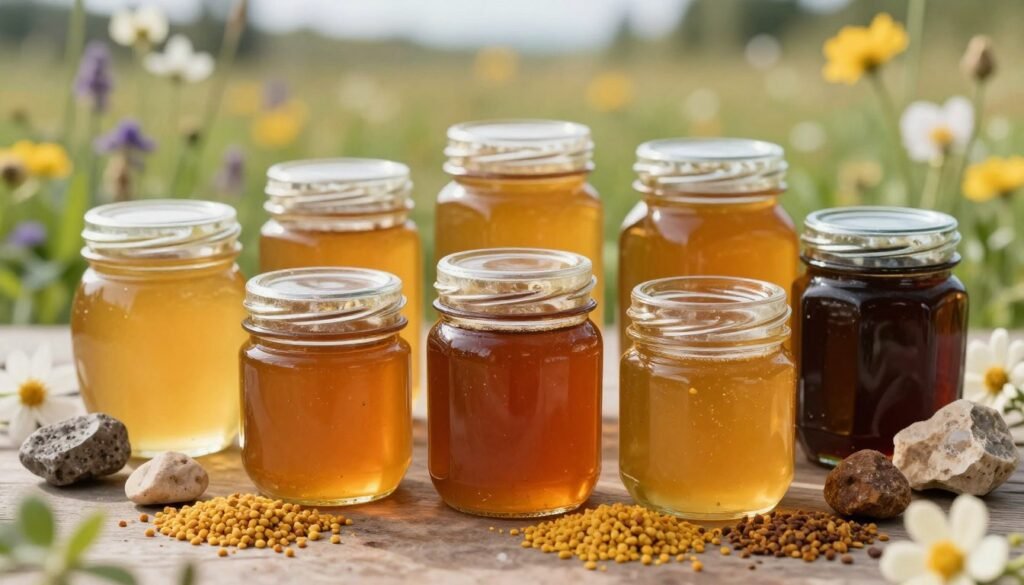
Different plants add unique ions and compounds to nectar. By checking mineral composition and other chemical properties, researchers link jars back to specific floral sources.
- The mineral content of a sample helps indicate botanical origin.
- Composition studies compare minerals, organic acids, pollen, and moisture to classify honeys.
- These parameters let beekeepers spot honey different in flavor and nutrition based on local flora.
For deeper analysis, see a detailed mineral composition study and a practical guide on how floral source affects pH at floral source and pH.
Essential Equipment for Accurate Measurement
Choosing compact, purpose-built gear makes routine analysis faster and more consistent.
Choosing the Right Conductivity Meter
The Horiba LAQUAtwin COND is a compact, user-friendly meter designed for on-site checks of honey quality.
This tool fits field testing and lab benches. It reads a diluted solution reliably and is easy to calibrate.
Use a consistent preparation method: dissolve 20 grams of product into 100 milliliters of demineralized water. That ratio helps sugars and ions move freely so the meter can measure accurately.
- Select a reliable tool — the LAQUAtwin provides the precision many producers need for professional results.
- Calibrate the device before use and correct for temperature; readings shift with changes in degrees Celsius.
- Proper gear lets beekeepers screen samples quickly without complex lab combustion tests.
“A stable sample and a field-ready meter speed decision-making for small-scale producers.”
For practical home testing tips and step-by-step how-tos, see this quick guide on testing purity at home. For a deeper discussion of why a meter matters for botanical origin and mineral checks, visit this resource on using a conductivity meter.
Preparing Your Honey Sample for Testing
A dependable sample begins with the right ratio of product to demineralized water and careful mixing.
Weigh 20 grams of honey and dissolve it into 100 milliliters of demineralized water. This method creates a uniform solution that helps the meter read dissolved particles and sugars reliably.
Check moisture before you mix. Aim for a moisture content between 14% and 18% to avoid fermentation and spoilage during storage and production.
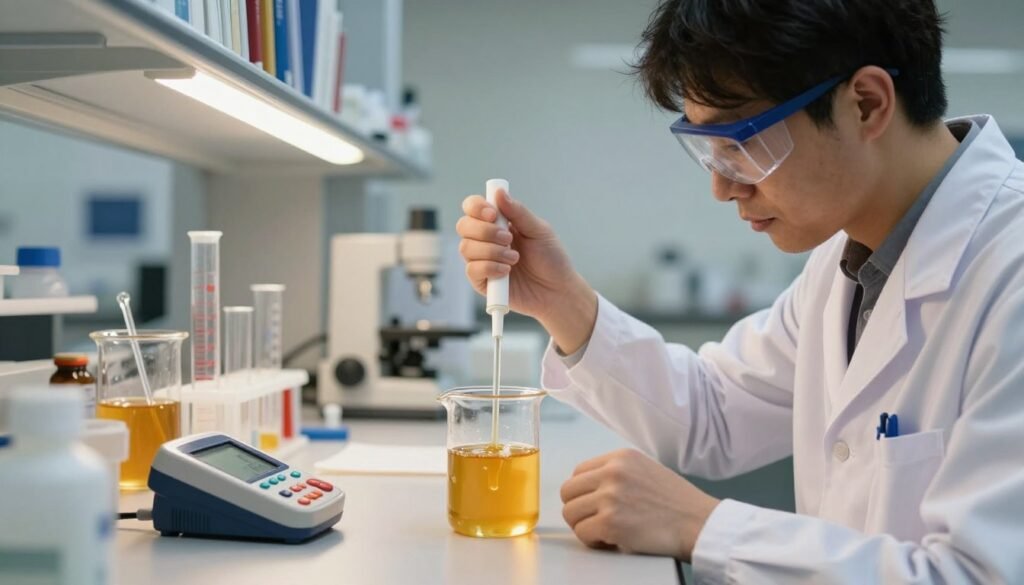
Keep temperature stable during preparation. Note the temp so your measurement can be compared across other samples and studies.
Beekeepers should sample from multiple jars or combs to capture variation in production. Proper prep lets labs detect pollen, sugars, and mineral content without interference from uneven mixing.
- Use clean glassware to prevent contamination.
- Mix until fully homogeneous for consistent measurement.
- Record moisture and temperature with each sample for quality control.
For guidance on how humidity affects curing and long-term stability, see this article on humidity effects on curing.
Interpreting Conductivity Values for Quality Assurance
A measured value can separate authentic product from samples altered with cheap syrups. Quality teams use that number to decide if a batch fits accepted standards before label claims or shipment.
Standard Thresholds for Purity
Standard ranges offer quick checks: forest honey often reads about 0.78 mS/cm, while blossom varieties typically sit between 0.3 and 0.7 mS/cm. Comparing a sample to these ranges helps verify product type.
Detecting Potential Adulteration
Values outside the expected range may signal added syrups or dilution. Minerals and organic acids drive most of the measurement, so a low mineral content can lower a reading even if sugars remain high.
- Use the standard threshold to flag suspect samples for further analysis.
- Check moisture, pollen, and organic acids alongside the meter value for full composition insight.
- Regular testing keeps producers consistent and protects food integrity.
For more on how a meter supports routine checks, see what role does an electrical conductivity meter.
Distinguishing Between Blossom and Honeydew Varieties
The source—flower nectar or insect-harvested sap—determines whether a jar is blossom or honeydew.
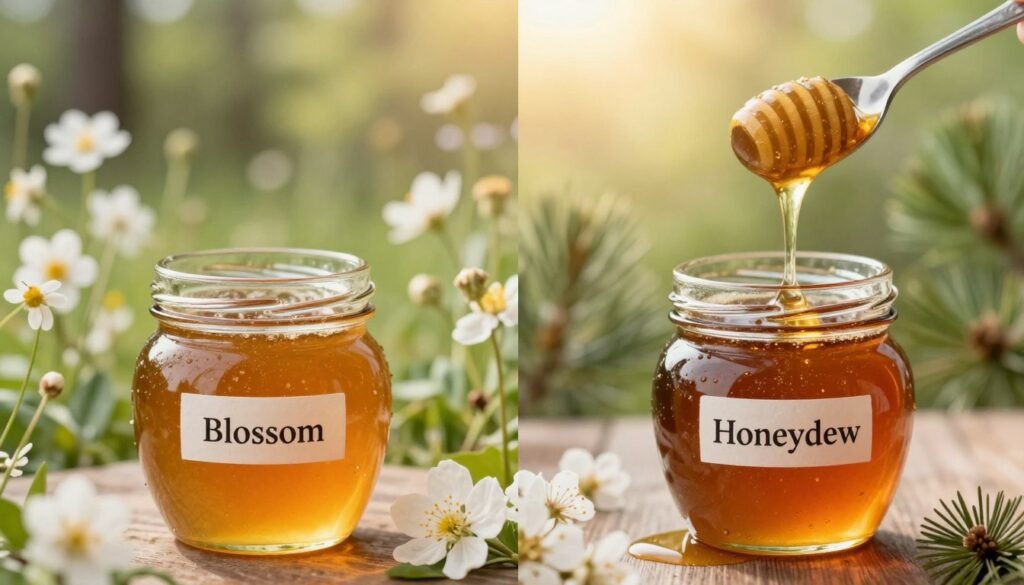
Blossom jars come from floral nectar and usually show lower measured values because they contain fewer minerals and acids.
Honeydew types form when insects collect sap secretions from trees. Those samples are richer in minerals and organic acids. That difference gives honeydew a higher meter reading compared with blossom types.
Beekeepers use this metric to classify product type and to support clear labeling for buyers. The botanical origin shows up in mineral profiles, and those profiles explain why some jars have higher values.
- Meter readings help separate blossom and honeydew varieties.
- Plant sources and bee foraging behavior shape final composition.
- Accurate sampling ensures correct labeling and market trust.
| Type | Source | Typical value | Key traits |
|---|---|---|---|
| Blossom | Flower nectar | Lower | Floral aroma, lighter mineral profile |
| Honeydew | Tree sap secretions | Higher | Darker color, richer minerals and acids |
| Mixed | Various plants | Variable | Blended traits; test samples to confirm |
For lab protocols and regional benchmarks that inform classification, consult this botanical origin guidelines.
Factors Influencing Conductivity Readings
Ionic movement and sample makeup together determine the final meter value. Several parameters interact during testing and can shift readings if not controlled.
Temperature Sensitivity
Temperature changes cause ions to move faster or slower. Professional meters often include automatic temperature compensation to avoid errors.
Note the ambient temperature during measurement and record it with your value.
The Impact of Viscosity
Viscosity depends on sugars and solids. A more viscous solution slows ion movement and lowers the reading.
Maximum measured conductivity for a diluted solution typically occurs near a solids content of ~30%.
Moisture Content Effects
Water presence is a critical parameter. Higher moisture raises ion mobility and the meter response.
Also remember that honeydew types contain more minerals and organic acids than blossom jars, so their values trend higher.
“Control temperature, dilution and mixing to keep measurements consistent.”
- Account for temperature and moisture during each analysis.
- Use consistent dilution and thorough mixing for reliable samples.
- Label results and combine with pollen or composition checks when needed.
For advice on packaging and labeling that supports traceability, see how to package and label for sale.
Integrating Conductivity Testing into Your Production Workflow
A simple testing step at bottling helps catch variations before products leave the apiary.
Make checks routine. Add a quick meter read for each batch so producers can confirm product quality and meet export standards. This method keeps batch uniformity and builds buyer trust.

Use a reliable tool and a set method: prepare the solution, note temperature, then record the value. Regular study of the production line helps spot unauthorized dilution, shifts in bee foraging, or changes in sugars and moisture.
- Verify botanical origin and batch consistency.
- Flag outlier honey samples for further lab study.
- Document results to meet standards and scale production.
“Consistent testing turns occasional checks into a predictable quality system.”
| Step | Action | Outcome |
|---|---|---|
| Sample prep | Mix defined grams with water, control temperature | Repeatable solution for measurement |
| Measure | Use a calibrated tool at set temp | Reliable value to compare against standards |
| Review | Log and compare batches; send odd samples for pollen check | Confident release decisions |
For practical examples and application notes, see conductivity measurement examples. The HONESTBEE knowledge base also offers guidance for high-volume production tools and workflows.
Conclusion
A short, repeatable test can protect a brand and verify a batch before it ships.
Regular checks of samples help confirm botanical origin and keep product quality steady. Simple monitoring of moisture and mineral content gives clear, actionable results that support labeling and market claims.
These analysis steps form a scientific basis for meeting national and international standards. Understanding each jar’s properties and composition lets beekeepers sort harvests and maintain consumer trust.
Consistent testing of honey samples acts as the backbone of quality assurance for production and food safety. For related insights on hive nutrition and the benefits of pollen, see benefits of fermented pollen.
FAQ
What does electrical conductivity measure in honey?
Conductivity measures how well a honey sample carries an electric current. This depends on dissolved ions and mineral salts from plant sources, soil and nectar. Higher values usually indicate richer mineral content and can help distinguish honeydew from blossom types.
How does botanical origin affect readings?
Different floral sources supply varying amounts of minerals and organic acids. Chestnut, heather, and some forest honeys typically show higher values than light floral varieties like acacia or clover. That pattern helps beekeepers and laboratories identify likely botanical origin.
Which ions and minerals influence the measurement most?
Common contributors include potassium, calcium, magnesium, sodium and phosphate ions. Organic acids and free minerals released from pollen and plant tissue also raise the level. Those constituents determine the bulk of a sample’s electrical response.
What equipment do I need for reliable testing?
Use a calibrated portable or benchtop conductivity meter with a temperature compensation feature and clean cell. High-quality meters from brands like Hanna Instruments and Thermo Fisher provide consistent results for routine checks.
How should I prepare a honey sample before testing?
Gently homogenize the sample by warm, careful stirring (not overheating). If viscosity prevents contact, dilute with a known volume of deionized water at a controlled temperature, following standard methods to ensure comparable results.
Are there standard thresholds for classifying honey by result values?
Standards vary by region, but a common benchmark separates blossom honeys (lower values) from honeydew honeys (higher values). National labs and organizations set numeric cutoffs; consult local standards like FDA guidance or EU directives for exact figures.
Can conductivity detect adulteration or dilution?
It helps indicate inconsistencies. A sudden drop in value may reflect dilution with sugar syrups or water, while atypical increases might suggest contamination. Pair conductivity with sugar profile, moisture and pollen analysis for conclusive results.
What is the difference between blossom and honeydew varieties using this method?
Blossom honeys typically register lower values due to fewer minerals, while honeydew honeys—derived from insect secretions or plant exudates—show higher values because they carry more dissolved salts. This distinction aids product classification and labeling.
How does temperature affect measurements?
Temperature changes alter ionic mobility and sample viscosity, shifting readings. Use instruments with automatic temperature compensation or measure at a controlled standard (often 20°C) to ensure repeatability across samples.
Does viscosity or moisture content change results?
Yes. Thicker samples can trap air and reduce electrode contact, while higher moisture increases ion mobility and the measured level. Proper warming, dilution protocols and moisture testing improve accuracy.
How do producers integrate testing into their workflow?
Many producers perform on-site screening with portable meters during harvest and before packaging. Positive screens go to certified labs for full analysis, including mineral profile, sugar composition and pollen count, ensuring quality control across batches.
Where can I find validated methods and standards?
Refer to national food safety agencies, AOAC International methods and ISO standards for sampling and measurement procedures. These sources provide step-by-step protocols to maintain traceability and meet regulatory requirements.