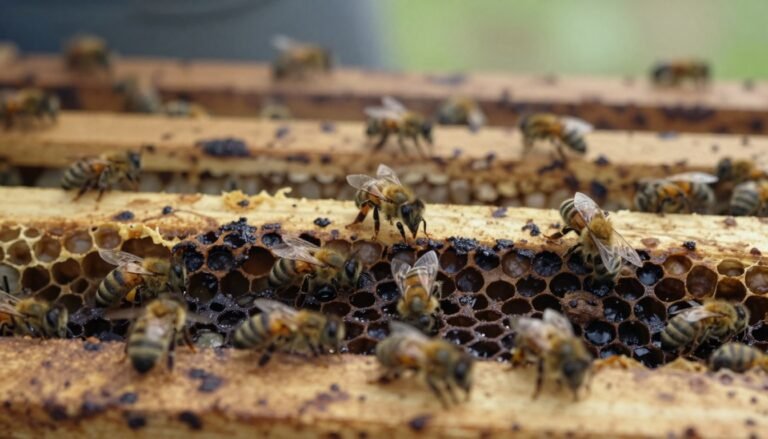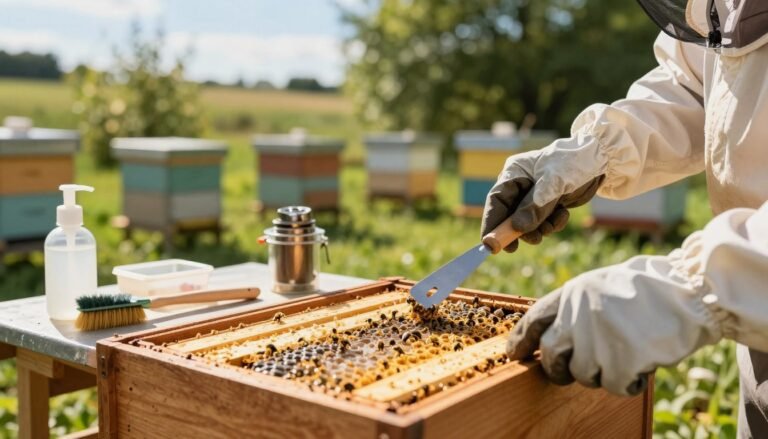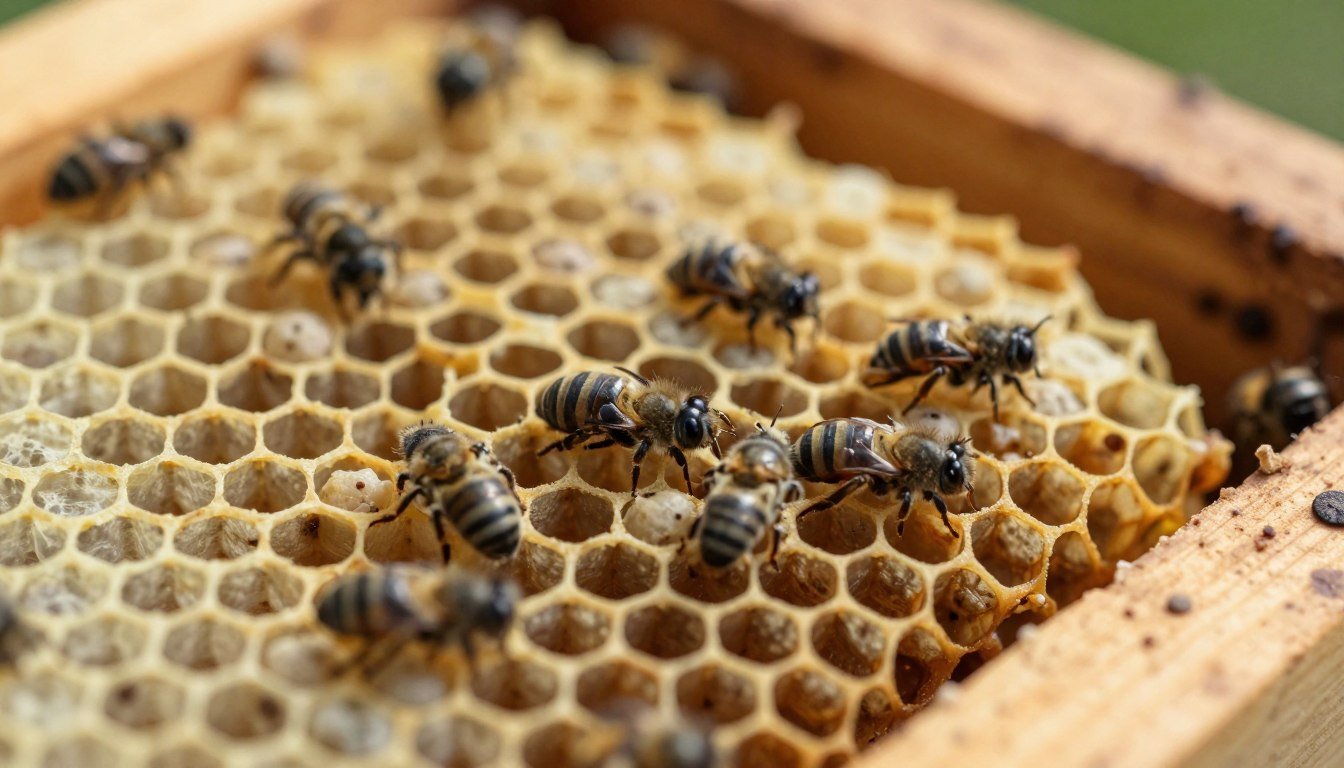
Quick, accurate inspection helps keep a hive healthy. The BBKA Module 3 lays out clear steps for spotting problems in the nest and comb.
Monitor brood pattern and the placement of capped cells to tell normal development from trouble. Spotty patches, sunken caps, or unusual mummies call for closer review.
Early detection lets beekeepers act before colonies weaken. Check for bullet-like caps low on frames, uneven coverage, or dark brown larvae that do not look right. Use simple tests, and compare patterns to a healthy brood layout.
For guidance on chilled conditions and how to tell them apart from infection, see a practical guide on identifying chilled brood. For broader pest and pathology notes consult the BBKA-style review at common hive problems.
Key Takeaways
- Follow BBKA guidance to inspect comb and capped cells regularly.
- Compare brood pattern to a healthy baseline to spot abnormalities.
- Look for bullet caps low on frames as a sign of neglect or stress.
- Identify chalk-like mummies and use simple tests before major interventions.
- Early action and better nutrition can prevent colony collapse.
Understanding the Importance of Brood Health
Healthy brood is central to colony growth. Nurse bees must hold the nest at about 35°C (95°F) so larvae develop into strong adults. A steady internal temperature reduces the chance of developmental problems and infection.
A good brood pattern shows almost every cell in an area with developing bees and no wide gaps. The BBKA Nucleus guidance suggests brood and eggs should cover at least half the comb to keep the hive stable.
In early spring colonies can expand quickly. If the adult bee population is small, temperature swings happen. That makes proper nutrition and a calm environment critical to resist common brood diseases.
“Preventive care—adequate food, warm brood nest, and regular checks—keeps colonies strong.”
- Maintain steady heat and good forage.
- Look for compact cell coverage and even development.
- Follow guidance on inspecting and understanding the brood pattern.
How to Identify Drone Brood Disease Signs
When a hive comes under pressure, male brood is often the first to receive less care. Watch for patchy rearing and reduced attention from nurse bees. Small changes often point to larger colony stress before obvious symptoms emerge.
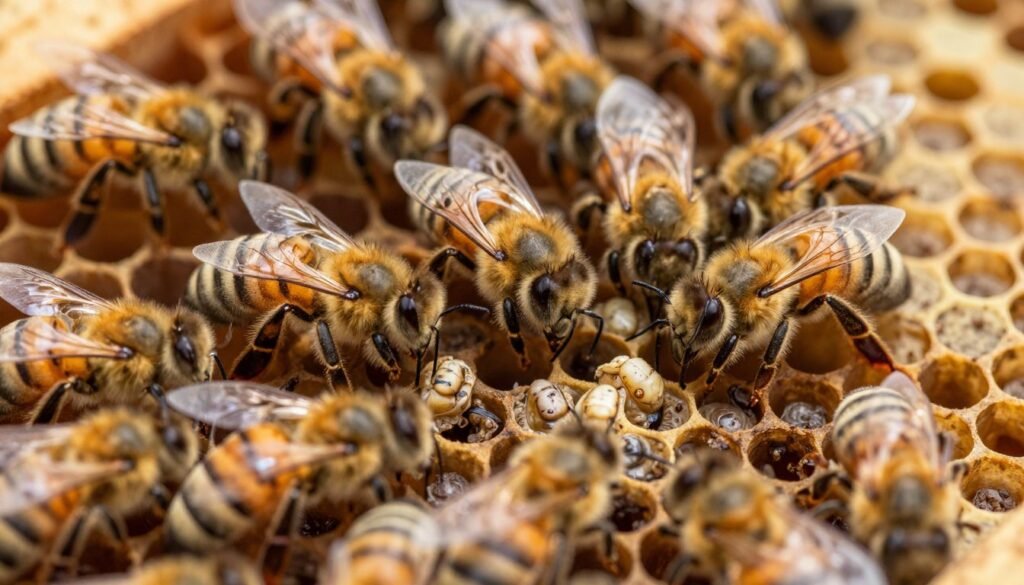
Neglected Male Cells
Worker bees prioritize survival. If food is scarce or weather is poor, adult bees stop tending larger cells first.
Look for empty or sunken cells and missing larvae low on frames. A queen that lays only males or laying workers reduces the pool of nurse bees. This makes feeding larvae harder and leaves many developing individuals uncared for.
Colony Stress Indicators
Stress shows as a poor pattern across the comb and increased removal of weak larvae at the entrance.
During rough spring weather, sisters may ditch brothers to protect the queen and core workers. Healthy colonies keep a balance of young and flying bees so all cells receive attention.
Watch patterns, not single cells—consistency across frames reveals real problems.
Recognizing Foulbrood Infections in the Apiary
Recognizing bacterial infections early helps protect comb structure and nearby hives. Inspect capped and uncapped cells in every hive and note unusual textures or residues on the comb.
American Foulbrood Characteristics
American foulbrood is caused by Paenibacillus larvae and ranks as the most lethal condition for honey bee colonies. Infected larvae dry into hard, dark scales that cling to the cell wall.
These scales cannot be scraped out without damaging the comb. Spores survive long-term and can spread between hives.
European Foulbrood Symptoms
European foulbrood comes from Melissococcus plutonius and usually affects very young larvae before cells are capped.
Infected larvae often appear twisted in their cells and have a soft, watery consistency rather than forming hard scales.
The Ropiness Test
The ropiness test helps separate AFB from other problems. Insert a matchstick into a dead larva and withdraw it slowly.
If the remains stretch out—sometimes up to 25mm or more—the result is classic for AFB. If the material is watery and does not rope, think EFB.
| Feature | American Foulbrood | European Foulbrood |
|---|---|---|
| Causative agent | Paenibacillus larvae | Melissococcus plutonius |
| Larval texture | Hard, dark scales | Soft, watery, twisted |
| Ropiness test | Positive (stretches up to ~25mm) | Negative (does not rope) |
| Comb impact | Scales adhere firmly; comb damage likely | Cells may be soft; comb often salvageable |
Note: For contaminated frames and foundation handling, see guidance on cleaning plastic foundation after colony loss.
Managing Fungal Pathogens Like Chalkbrood
Chalkbrood is caused by the fungus Ascosphaera apis, which germinates when a larva consumes spores with its food.
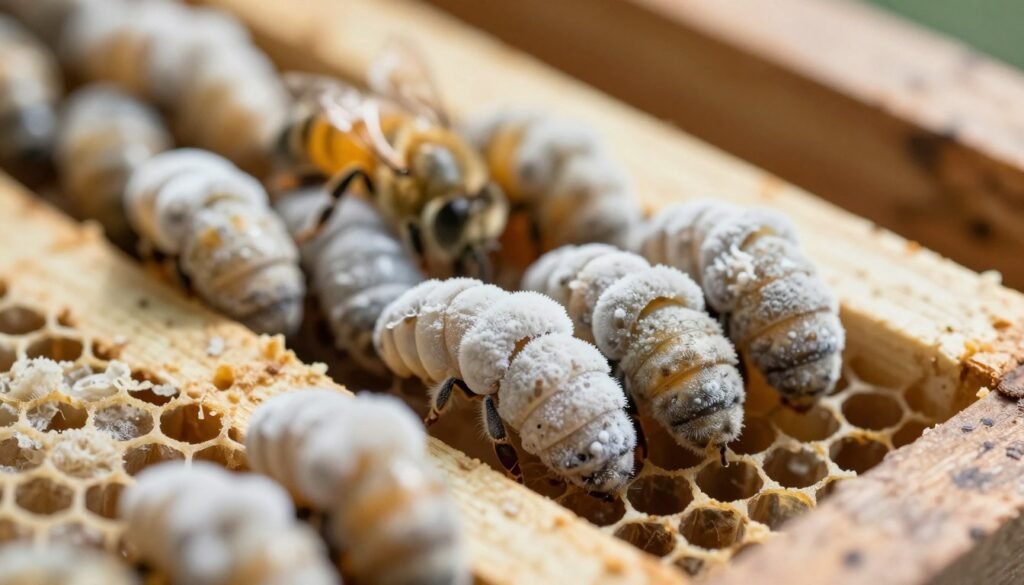
Infected larvae swell to fill the cell. White mycelia cover them and they harden into chalk-like mummies. Housecleaning workers often carry these mummies to the hive floor or outside the hive entrance.
There is no chemical cure. Management relies on strong colonies, better ventilation, and regular replacement of old brood cells and comb. Good nutrition and a vigorous queen reduce fungal growth and speed recovery.
- Improve airflow and avoid damp hive boxes.
- Replace dark, crowded comb to reduce spores.
- Keep colonies healthy so workers remove infected material.
Stonebrood from Aspergillus fungi is rarer; larvae become coated in colored spores and harden.
| Feature | Chalkbrood (Ascosphaera) | Stonebrood (Aspergillus) |
|---|---|---|
| Primary host | Young larvae | Young larvae |
| Appearance | White mycelia; chalk-like mummies | Yellow/green/black spore coating |
| Common location | Hive floor, outside entrance | Inside cells or on comb |
| Treatment | Colony strength, ventilation, comb replacement | Similar hygiene and comb management |
For practical guidance on prevention and control, see chalkbrood guidance and tips to prevent chalkbrood.
Viral Threats and Sacbrood Symptoms
Viral infections can change the look of sealed cells and alter what a beekeeper finds on a routine check. Pay attention to how developing young appear after capping and how workers behave around affected frames.
Sacbrood virus causes larvae to die after capping and often leaves a characteristic “gondola” or “banana” shape with the head raised toward the cell opening. Infected larvae change from glistening white to grey or pale yellow, then gradually dark brown or black as they decompose.
Black Queen Cell Virus
BQCV targets developing queens and commonly kills them after their cells are sealed by workers. Outbreaks often coincide with high Nosema levels and peak in early spring when queen rearing increases.
- Transmission commonly occurs through brood food glands when nurse bees feed larvae in the hive.
- Watch for altered posture, color shifts in larvae, and patches of failed queen cells.
- Compare affected frames to a healthy brood pattern and note any change in worker removal activity.
“Good hygiene and strong colonies reduce viral spread; monitor queen rearing times closely.”
For a printable reference, consult the comprehensive bee disease symptom checker.
Environmental Factors and Chilled Brood
Cold snaps in early spring can overwhelm small colonies that lack enough adults to hold steady heat.
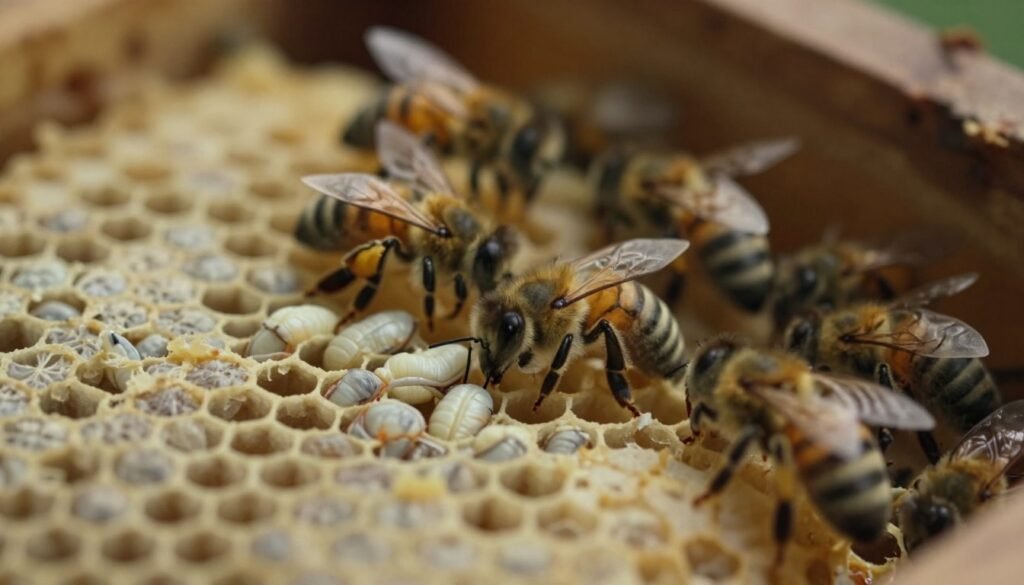
Chilled brood happens when a hive cannot keep the nest at about 35°C (95°F). A reduced adult population or rough handling during inspections often causes this problem.
Dead larvae often turn yellowy-grey at first. Over days the remains darken to brown or black as they dry in the cell.
Spreading frames by adding foundation too soon in spring increases empty space. If not enough bees cover the frames, cells cool and developing young die.
Practical fixes: use a solid wooden dummy board in a ten-frame brood box to shrink the area. That helps the cluster conserve heat while the colony builds numbers.
Prolonged cold or lack of food forces nurse bees to abandon brood at nest edges. Beekeepers should watch the brood pattern and avoid unnecessary frame shifting during cold periods.
| Issue | Appearance | Quick response |
|---|---|---|
| Insufficient adult bees | Patches of cooled, darkened larvae in outer cells | Reduce box space; add dummy board; delay adding foundation |
| Chilling after inspection | Yellowy-grey then brown/black remains in comb | Shorten inspections; work warm days; restore cluster quickly |
| Starvation or prolonged cold | Abandoned brood at frame edges; poor brood pattern | Feed syrup if needed; combine weak colonies or supplement until strong |
“Keep colony size matched to space in early spring to protect developing young.”
Best Practices for Hive Inspections
Systematic checks reveal trends that matter. Conduct full inspections in early spring and again in autumn to monitor brood pattern and colony strength. Short, regular visits reduce stress on workers and let you compare frames over time.
Hygienic Behavior
Hygienic traits help colonies resist infection. Some honey bee strains uncap and remove infected pupae, reducing spread of spores and virus loads. Selective breeding for this trait can make your apiary more resilient.
Parasitic Mite Syndrome
Parasitic Mite Syndrome (PMS) stems from heavy Varroa infestations plus high viral pressure and often precedes collapse. Look for mites on adult bees and feeding at open larvae in cells during inspections.
Practical steps: break the brood cycle by caging the queen for two weeks to reduce mites and viral transmission. Track irregular patterns and consult guides like how to conduct brood inspections or use heat-mapping for brood pattern assessment to spot subtle changes.
Keep records of mite counts, comb condition, and queen performance to guide treatments and strengthen colonies.
Conclusion
A few minutes each week inspecting frames prevents small problems from becoming apiary-wide crises. Regular checks reveal early patterns and help you act before colonies weaken.
Keep colonies strong and well fed to reduce fungal and viral pressure. Replace old comb and keep tools clean to limit spore spread.
When you suspect American foulbrood, perform the ropiness test promptly and follow legal guidance for control. If you find uncertain conditions, contact your local apiary inspector or a qualified professional for confirmation and next steps.
Routine care, clear records, and timely help protect hive health and preserve your apiary’s future.
FAQ
How can I identify disease in drone larvae and adult bees during early spring inspections?
Look for irregular brood pattern, sunken or perforated capped cells, and dead larvae that are dark brown or stringy. Check adult workers for disorientation at the hive entrance and increased removal of dead brood. Inspect comb for mummies, unusual odor, or dried remains. Note that infected larvae may be soft before drying and often stick to cell walls.
Why is brood health important for my honey bee colony?
Healthy brood ensures steady population growth and strong seasonal buildup. Compromised larval development reduces worker numbers, weakens foraging capacity, and increases vulnerability to mites, viruses, and secondary infections. Early detection protects queen productivity and overall colony resilience.
What are the signs of neglected drone brood versus worker brood problems?
Neglected drone brood often appears spotty with scattered uncapped cells and a higher proportion of empty cells where drones should develop. Worker brood issues show broader patchy patterns and fewer emerging workers. Both can show darkened larvae, but drone cells are larger and clustered differently on comb.
What colony stress indicators should I watch for during inspections?
Watch for reduced brood area, depleted nurse bee populations, slow brood capping, and decreased brood food at cell bottoms. Also note abnormal behavior like frenzied cleaning, increased robbing, or hive entrance traffic changes. Stress can amplify susceptibility to foulbrood and viral problems.
How do American Foulbrood and European Foulbrood differ in appearance?
American Foulbrood (AFB) typically shows sunken, punctured cappings and a foul odor; larval remains become a dark, sticky scale that adheres to the cell and resists removal. European Foulbrood (EFB) often affects younger larvae, which look twisted or yellowish before turning dark; cappings may remain intact and the hive smell is usually sour rather than putrid.
What is the ropiness test and how do I perform it safely?
The ropiness test distinguishes AFB by teasing a small sample of dead larva with a sterile wooden stick; AFB-infected material will form a stringy, rope-like filament up to several centimeters. Perform outdoors with gloves and avoid contaminating tools—disinfect or burn samples and follow local regulations if AFB is suspected.
How can beekeepers recognize and manage chalkbrood in combs?
Chalkbrood produces hard, white or gray mummified larvae in capped and uncapped cells, sometimes visible on bottom boards. Improve ventilation, reduce humidity, and replace old, warped comb to discourage fungal growth. Promote strong colony populations and hygienic strains to reduce incidence.
What are common viral symptoms, including sacbrood and Black Queen Cell Virus?
Sacbrood causes larvae to die in an upright position inside cells, forming a sac filled with fluid; dead larvae often look brittle or discolored. Black Queen Cell Virus causes queen pupae and darkened queen cells with blackened, shriveled tissue. Both require managing underlying stressors like Varroa mites to reduce spread.
How do environmental factors cause chilled brood and what should I do?
Chilled brood results from cold snaps, poor cluster thermoregulation, or a thin nurse bee population. Affected larvae appear discolored and may die before capping. Improve insulation, avoid splitting colonies too early in spring, and ensure adequate population and food stores to maintain brood nest temperature.
What best practices should I follow for routine hive inspections to detect problems early?
Inspect combs systematically, check brood pattern and larval stages, and note odors or abnormal debris. Use consistent hygiene: clean tools, change gloves between hives, and limit hive opening time. Record observations and take photos for comparison. Early, regular checks reduce the chance of widespread infection.
How does hygienic behavior help limit spread of infections in a hive?
Hygienic worker bees detect, uncap, and remove diseased or dead larvae, interrupting pathogen cycles. Selecting or purchasing queen lines bred for hygienic traits reduces incidence of foulbrood, chalkbrood, and some viral issues by improving natural colony defenses.
What is Parasitic Mite Syndrome and how does it affect brood health?
Parasitic Mite Syndrome (PMS) results from heavy Varroa destructor loads that vector viruses and weaken developing brood. Symptoms include spotty brood patterns, deformed adults, and increased larval mortality. Monitor mite levels and use integrated pest management: screened bottom boards, timely treatments, and maintaining strong colonies.
When should I contact an apiary inspector or veterinarian about suspected foulbrood or other severe infections?
Contact authorities immediately if you find ropy larvae, persistent foul odors, large numbers of mummies, or sudden colony collapse. Many regions require reporting AFB. An inspector can confirm diagnosis, advise on legal controls, and help prevent spread to neighboring apiaries.