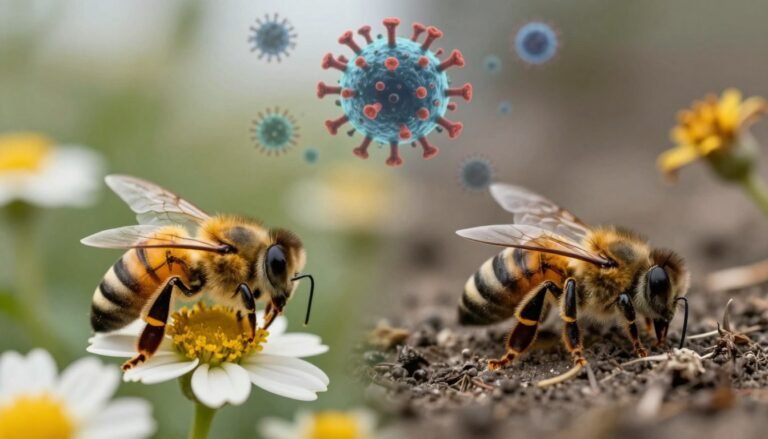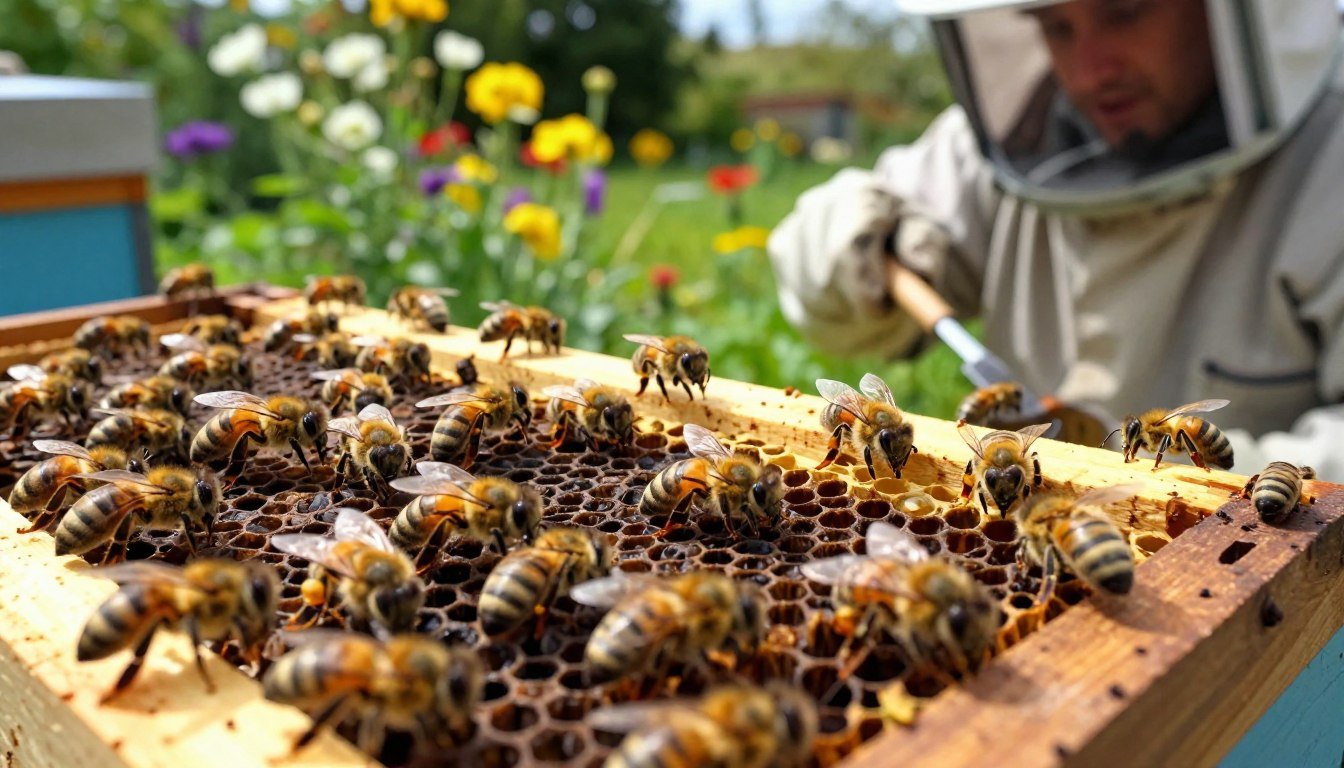
Quick, disciplined monitoring helps protect a new hive during the first weeks. When you introduce a honey bee package to your apiary, early checks catch problems while they remain small. Watch brood frames, observe adult activity, and note any unusual larvae or sunken cells.
Inspect the brood area in the first seven days to confirm the queen is laying and that larvae look healthy. Nurse workers can spread pathogens unintentionally, so keep records of any discolored larva or odd behavior. A strong colony resists threats best, so bolster hives with sugar syrup and steady feed when needed.
Daily entrance checks reveal whether the colony clears debris and maintains hygiene. Early action limits spread to other hives and helps preserve honey stores and comb integrity.
Key Takeaways
- Monitor daily: early observation prevents larger problems.
- Check brood frames in week one for healthy larvae and regular egg patterns.
- Note sunken cells or discolored larva and document symptoms promptly.
- Support new colonies with supplemental food to strengthen resilience.
- Keep hives strong and well populated to slow pathogen spread.
Preparing for Your New Package Bees
Prepare equipment and the site first. Clean all boxes, frames, and tools. Remove unknown comb and any debris that could harbor spores. This lowers the risk of introducing persistent threats to the colony.
Mix a 1:1 sugar syrup to feed the incoming group. Offer it in a feeder to stimulate wax building and support early brood and larvae development.
Place the hive where it gets morning sun and wind protection. A nearby clean water source helps adult workers control humidity and temperature inside the hive.
- Sanitize equipment and avoid old comb.
- Provide steady sugar syrup for wax and brood production.
- Confirm the queen is laying by checking cells within days.
- Monitor daily for proper orientation and foraging behavior.
| Preparation Step | Why It Matters | Quick Tip |
|---|---|---|
| Sanitize gear | Prevents introduction of spores and pathogens | Use heat or approved disinfectant on tools |
| Sugar syrup (1:1) | Stimulates comb building and brood growth | Refill feeders until natural nectar flow begins |
| Site & water | Helps bees regulate hive climate for healthy larvae | Choose sunny, sheltered locations with water nearby |
“A stable environment reduces stress and speeds colony growth.”
For further planning and expansion advice, see beekeeping expansion tips.
Identifying Disease Signs After Installing Package Bees
Start each inspection at the brood nest and move outward, noting any unusual color or pattern in the cells.
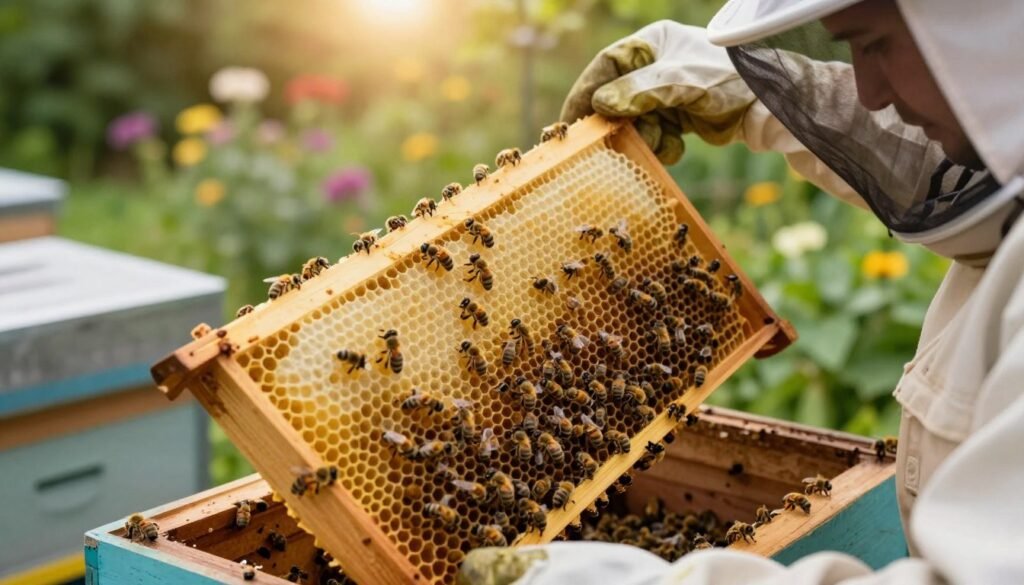
Visual Inspection
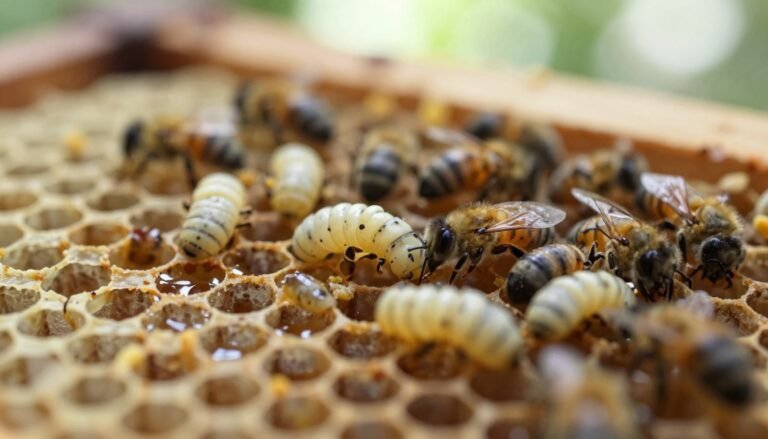
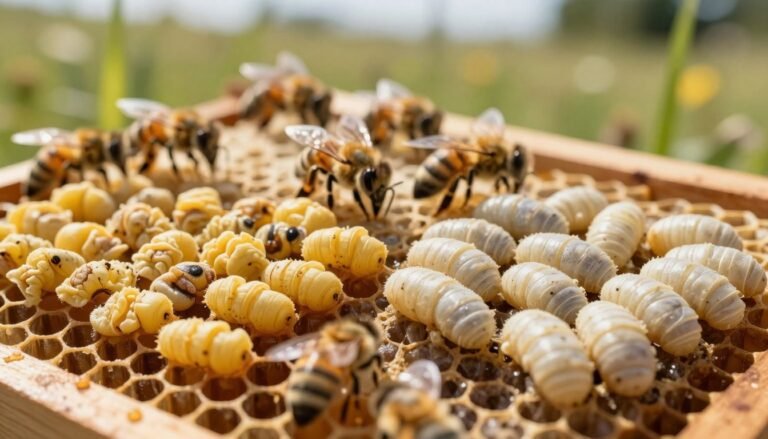
Look for a uniform brood pattern. A spotty brood pattern may indicate the queen is weak or the colony is fighting an infection. Healthy brood cells hold pearly white larvae and flat, intact cappings.
Sacbrood causes larvae to lie on their backs in a canoe shape. Infected larvae often shift from gray to light brown and then dark brown as the issue advances.
Behavioral Observations
Observe adult bees at the entrance and on frames. Trembling, abnormal movement, or adults that cannot fly and crawl near the hive may also signal trouble.
Workers uncapping or removing pupae can be hygienic behavior or a response to mites. Note these reactions and document any unusual activity for follow-up checks.
- Check brood cells for off-white, yellow, or brown larvae.
- Watch for canoe-shaped larvae typical of sacbrood.
- Record any uncapped or sunken cells and abnormal adult behavior.
| Observation | What to Look For | Immediate Action |
|---|---|---|
| Brood pattern | Uniform vs. spotty coverage | Recheck queen laying; isolate frames if needed |
| Larval color | Pearly white vs. gray to dark brown | Collect samples and compare to references |
| Adult behavior | Trembling, crawling, or removal of pupae | Inspect for mites; increase monitoring frequency |
For in-depth comparisons and lab references, see common honey bee problems and guidance on chilled brood at identifying chilled brood.
Recognizing Common Brood Pathogens
Recognizing common brood pathogens early helps protect colony growth and prevent costly losses. Inspect brood frames for pattern, color, and the condition of larvae and cappings.
American Foulbrood
American foulbrood is caused by Paenibacillus larvae and is highly lethal. Look for brittle, dark scales that stick to the brood cells and are hard for workers to remove.
Perform the ropy test by inserting a sterile tool into a cell. If remains stretch up to 3/4 inch, suspect american foulbrood and contact your state apiary inspector.
European Foulbrood
European foulbrood stems from Melissococcus pluton and often appears in spring when colonies are stressed. Larvae die before capping and leave a rubbery, granular residue rather than an elastic strand.
European foulbrood can create a spotty brood pattern with sunken or perforated cappings; document findings and increase monitoring frequency.
Sacbrood
Sacbrood is a viral infection that causes larvae to form a thin, darkened skin that resembles a fluid-filled sac. Affected larvae often lie on their backs and are easily removed by the workers.
Avoid sharing old equipment between hives; spores and pathogens persist and can infect new colonies. If you suspect an infection, notify the apiary inspector promptly for guidance.
- Quick checks: note brood pattern, larval color, and cell condition.
- Action: sample suspect cells and isolate frames when instructed.
- Prevention: keep equipment clean to reduce long-term spore spread.
Monitoring Adult Bee Health and Parasites
Check adult activity and hive traffic regularly to spot early changes in population and hygiene. A robust worker population maintains brood temperature and cleans cells, protecting larvae and comb.
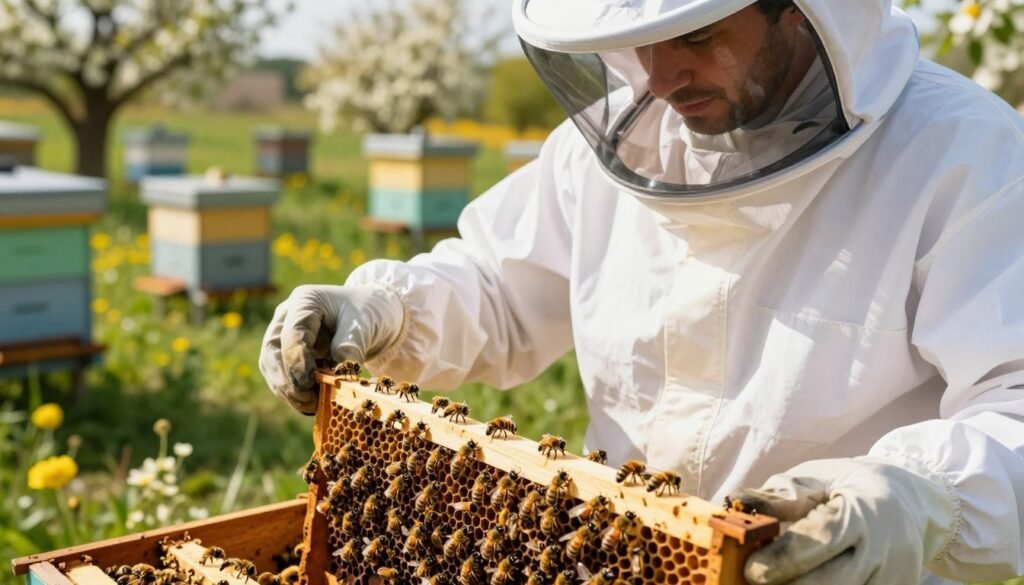
Use simple tests to quantify parasitic pressure. Perform an alcohol wash or sugar shake to count varroa mites accurately during the active season. Record counts and compare frames to track trends.
Watch for reduced foraging, trembling, or deformed adults; these can indicate mite feeding or Nosema infection. Confirm nosema by testing for spores in lab analysis when symptoms persist.
| Check | What to look for | Action |
|---|---|---|
| Alcohol wash / sugar shake | Number of mites per 100 adults | Implement control if counts exceed threshold |
| Adult population | Strong worker numbers and grooming | Supplement feed and monitor brood temperature |
| Spore testing | Nosema spores present in samples | Send to lab; follow regional guidance |
Keep records and act quickly if varroa levels rise. For regional protocols and treatment timing, consult disease management guidelines and a practical late-summer varroa plan.
“Consistent monitoring lets a beekeeper protect brood and maintain a healthy colony.”
Managing Varroa Mite Infestations
Catching varroa early protects brood and preserves honey quality while keeping colony numbers strong. Seasonal monitoring and careful treatment choices reduce long-term harm to hives.
Detection Methods
Use an alcohol wash or sugar shake to quantify mites on adult bees. These tests are most reliable in spring and autumn.
Inspecting drone brood reveals whether the parasitic mite is reproducing inside developing cells. Count mites per 100 adult bees and compare to thresholds.
Seasonal Control
Treatment thresholds: act if counts reach 2–3 mites per 100 adult bees in spring; aim for under 3 per 100 in autumn before winter prep.
- Avoid chemical treatments while honey supers are on to prevent contamination of honey.
- Rotate control methods to limit resistance; include mechanical options like screened bottom boards during flows.
- Use thymol or formic acid with caution—follow label guidance to protect brood and adult workers.
| Season | Test | Action Threshold |
|---|---|---|
| Spring | Alcohol wash / sugar shake | 2–3 mites per 100 adult bees |
| Autumn / Pre-winter | Alcohol wash / drone brood check | 3 mites per 100 adult bees |
| Honey flow | Visual monitoring | Avoid chemical treatments; use mechanical controls |
“Keep mite levels low before winter — it greatly increases hive survival.”
Addressing Hive Pests and Environmental Stress
A strong population is the best defense when wax moths and other pests arrive. Keep colonies robust and active so workers can patrol brood cells and remove trouble quickly.
Wax Moth Prevention
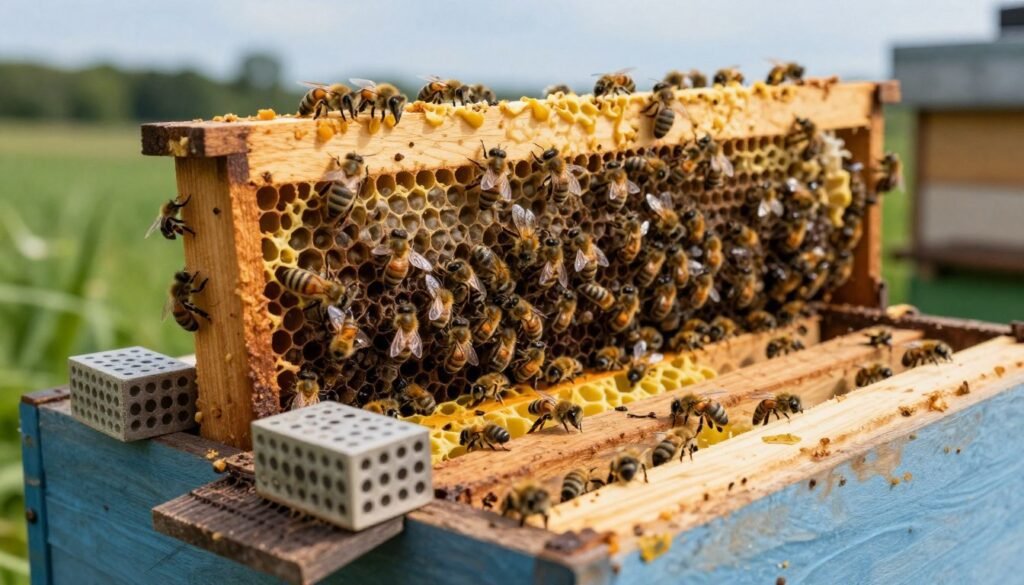
Wax moth larvae (Galleria mellonella) can reach 1.5 inches and tunnel through comb, leaving silk cocoons and ruined frames. If you see silk on frames, act fast to protect the brood and stored honey.
Store unused equipment in a freezer for 1–2 days to kill eggs and larvae. Regularly inspect stored combs and consider PDB crystals for long-term storage control.
- Ventilation & elevation: keep hives dry and off the ground to limit moisture and fungal growth.
- Seal and rotate: close gaps and rotate old comb so pests cannot establish a foothold.
- Population management: maintain strong worker numbers so the colony polices frames naturally.
| Problem | Key Action | Quick Tip |
|---|---|---|
| Wax moths | Freeze stored comb | Check for silk cocoons |
| Moisture | Improve ventilation | Elevate hive bodies |
| Weak colonies | Boost feed and combine | Monitor brood and population |
For broader pest and pathogen references consult common bee problems and follow regional recommendations to protect your hives.
Essential Diagnostic Techniques for Beekeepers
Field diagnostics give a beekeeper quick, actionable clues about what is affecting larvae and adult workers.
Learn the ropy test. Use a clean toothpick to pull material from a suspect cell. Elastic, stringing material suggests american foulbrood and calls for further confirmation.
The Holst milk test is an easy follow-up: place a suspect larva in 4 ml of 1% powdered skim milk and watch for clearing that indicates AFB spores.
To confirm nosema, dissect the digestive tract of an adult bee and examine the ventriculae under a microscope for swelling or pale discoloration. Microscopy is the reliable method for this infection.
Keep neat records of brood patterns, larvae color, and any anomalies. Good notes speed decisions on treatment and colony moves.
| Technique | What it detects | Required equipment |
|---|---|---|
| Ropy test | Suspected american foulbrood in cells | Toothpick, clean gloves |
| Holst milk test | AFB spore confirmation | 1% powdered skim milk, small vial |
| Microscopic gut check | Nosema in adult bees | Dissection tools, microscope |
If you are unsure of a result, contact your local apiary inspector. For sterilizing gear and preserving equipment between checks, see tool sterilization methods. For lab-level references on honey and brood pathogens download the USDA guide honey bee disease manual.
Treatment Protocols and Colony Management
Begin treatment only after confirming mite levels and assessing colony population and brood condition. Quick tests guide choices so you avoid unnecessary stress on the hive.
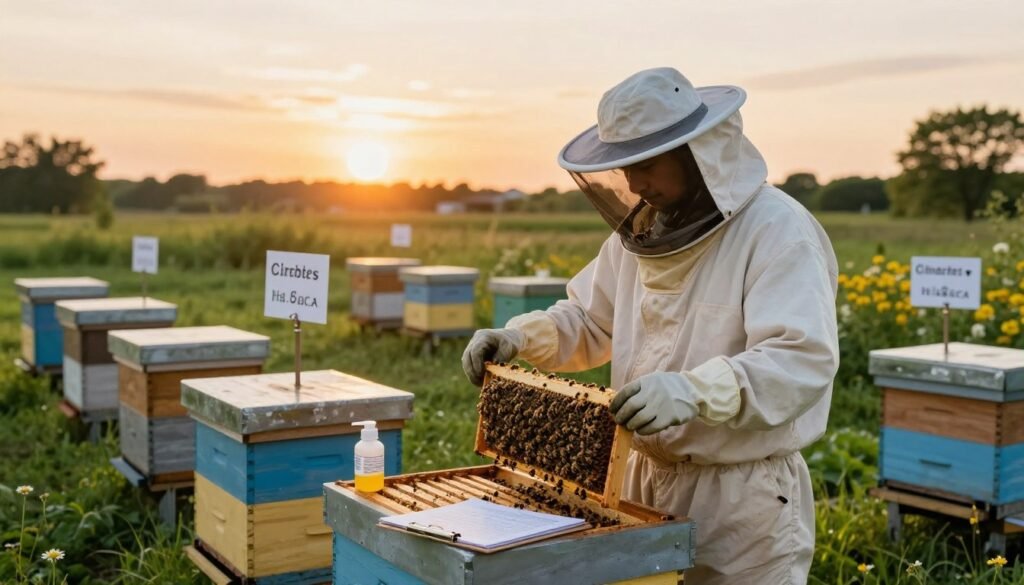
Nosema control: use Fumadil-B when spore counts exceed labeled thresholds. Mix it with sugar syrup and feed in spring or autumn following the product directions and a veterinarian prescription when required.
European foulbrood: the shook swarm technique forces workers to draw fresh comb and breaks the cycle of infection. Remove suspect frames and provide clean foundation.
Varroa mites: rotate treatments to reduce resistance. Monitor counts and treat when thresholds are reached. Use integrated methods so chemical pressure stays low and worker health stays high.
For heavy american foulbrood infections, the only accepted control may be destroying frames and euthanizing the colony to stop spore spread. Consolidating a small, recoverable population into fewer hive bodies helps bees guard stores and sustain brood temperature during recovery.
- Always follow label instructions and record dates of treatment.
- Maintain a strong population so workers can recover and care for larvae and pupae.
- Keep regular monitoring and proactive management to protect honey and brood cells.
“Timely testing and population management give treatments the best chance to succeed.”
For practical setup and error avoidance when managing new colonies, review common beginner guidance at beginner mistakes in beekeeping.
Conclusion
Concluding your inspection routine with a clear plan helps protect brood and maintain hive strength. Stay steady with checks and note any symptoms that suggest american foulbrood or european foulbrood so you can act fast.
Keep records of brood pattern, larvae condition, and cell issues. A strong colony and good hygiene reduce infections and lower the need for heavy treatment.
Use mite monitoring and timely varroa control to protect workers and honey stores. If you feel unsure, contact your local apiary inspector and review practical guidance like these new hive inspection tips.