Managing mites while honey is being produced requires careful timing and clear priorities. Randy Oliver of ScientificBeekeeping.com has mapped many of the challenges that face commercial apiaries when mite pressure rises but harvests are underway.
Protecting bees and preserving pure honey means choosing treatments that respect legal limits and colony biology. This short guide outlines professional practices to reduce mite counts without contaminating extracted honey.
Good planning balances hive health and market quality. Inspect colonies, track mite trends, and select a treatment path that matches both season and label directions.
Key Takeaways
- Follow established research to protect colony health while keeping honey clean.
- Monitor mite levels regularly and base treatment timing on data, not guesswork.
- Use approved treatments and follow label rules to meet legal standards.
- Prioritize practices that support long-term hive vitality and stable colonies.
- Combine inspection, recordkeeping, and targeted actions for best results.
Understanding the Varroa Mite Challenge
Knowing the parasite’s life stages helps beekeepers pick the right control steps at the right time.
Life Cycle of the Parasite
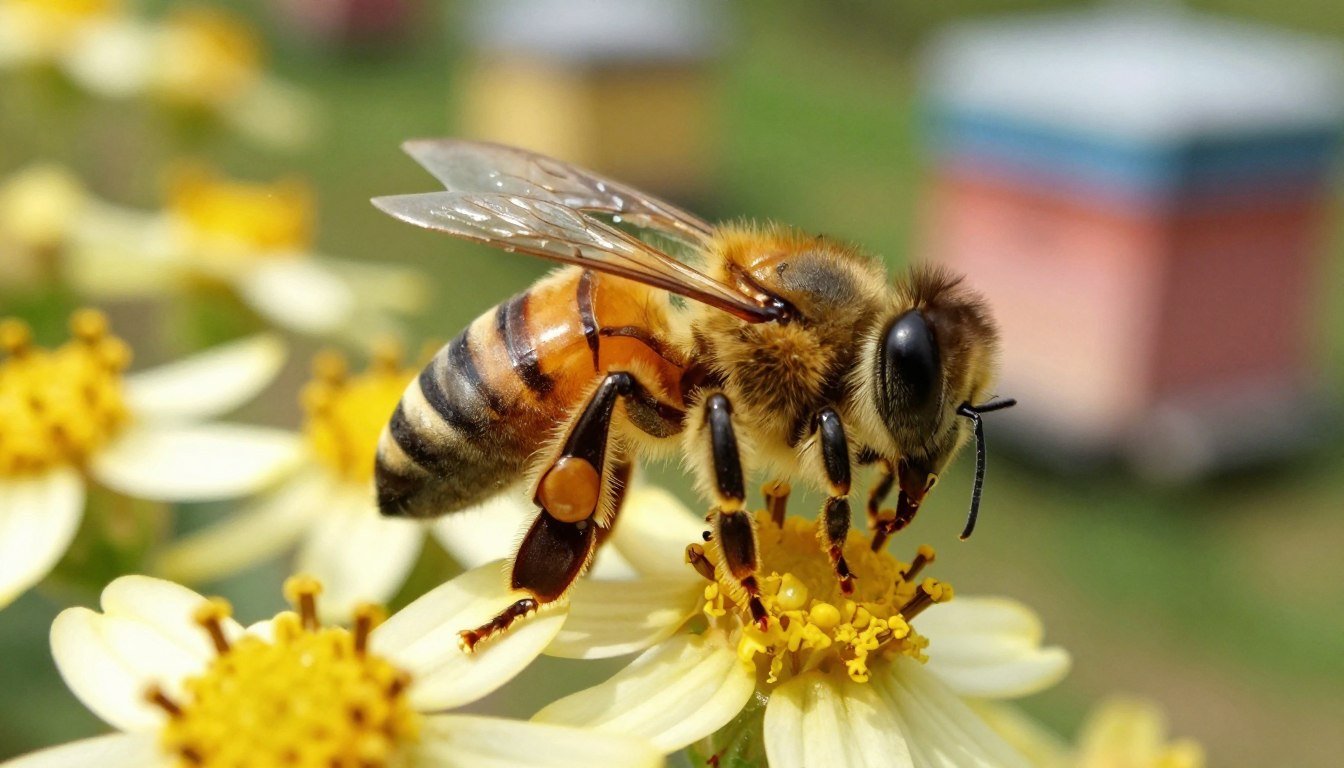
Varroa destructor are external parasites roughly 1.1mm by 1.5mm in size. Their small profile lets them hide on adult bees and inside brood cells.
The phoretic stage lasts about 5–11 days while brood is present. Females enter brood cells to lay eggs; one mite may produce 5–6 offspring each reproductive cycle.
Impact on Colony Health
Infestations weaken individual bees by feeding on fat bodies and spreading viruses. Affected bees have shorter lifespans and lower task performance.
Consequences for the hive include reduced brood success, increased disease, and eventual colony failure if left unchecked.
- Preference for drone brood speeds mite reproduction due to longer development.
- Effective mite control is essential in modern beekeeping to protect colonies and hives.
- Regular monitoring informs timely treatment choices and keeps honey bee populations stable.
For detailed management steps and product guidance, see this resource on varroa mites and integrated approaches.
Can You Treat Varroa During a Nectar Flow
Balancing mite control with active honey production requires strict selection of methods.
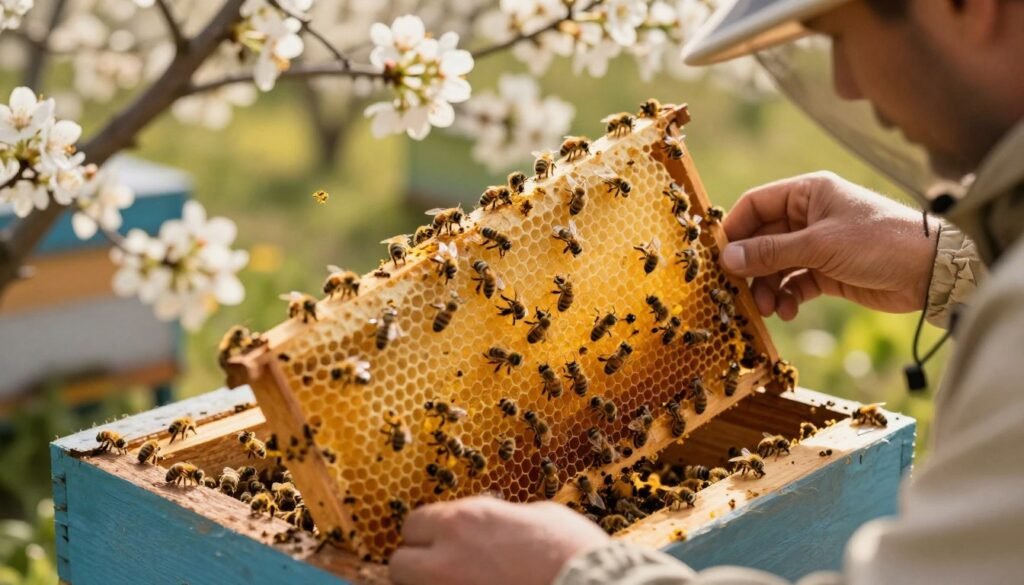
Determining whether can you treat varroa during a nectar flow is the core decision for commercial and hobby beekeepers. Most standard chemical options are off-limits while honey supers sit on the hive to avoid residue in the harvested honey.
That limits choices to label-approved products with clear instructions. Formic acid is often permitted in specific setups. Every application must follow product labels and the Honey Bee Health Coalition guidance.
“Know the constraints of any chosen product before applying it with supers present.”
Checklist before any mite treatment:
- Assess mite counts in the colony using a validated test.
- Confirm product labels allow use with supers or state withdrawal times.
- Prefer nonchemical or approved organic options when honey is at risk.
| Option | Permitted with Supers | Notes |
|---|---|---|
| Formic acid | Sometimes | Follow label; can reach mites in brood |
| Oxalic acid | No (usually) | Use when supers are off or brood is minimal |
| Synthetic acaricides | No | Risk of honey contamination and legal violations |
| Mechanical controls | Yes | Drone brood removal, screened bottom boards |
Failing to respect restrictions risks tainted product and legal trouble. Prioritize colony health and product labels to protect both bees and honey quality.
The Importance of Following Product Labels
Labels on bee health products set strict rules that protect both consumers and colonies.
Legal responsibilities matter. Mark Dykes of the Bee Squad stresses that “the label is the law.” Ignoring instructions risks liability and can contaminate honey.
Many pesticide labels focus on liability language more than step-by-step guidance. Read the full label before use and follow directions for dosage, placement, and withdrawal times.
Legal Implications for Beekeepers
Some products list limits of use. For example, Apivar is restricted to two uses per year in most labels. Exceeding that limit invites penalties and may harm colony health.
- Remove honey supers before applying restricted chemicals to protect harvested honey.
- Confirm label language about brood exposure and treatment intervals.
- Refer to state registration notes and association guidance to avoid common errors.
Proper label adherence keeps treatments effective and helps maintain market trust. For best practices on keeping strong, productive apiaries, review resources on apiary productivity.
Monitoring Mite Levels Before Treatment
Early detection of mites relies on straightforward, repeatable sampling methods.
Regular checks give clear numbers to guide any treatment decision. Monitoring across the year, and especially in the fall, helps protect colonies before winter preparation.
Sugar Shake Method
The sugar shake method uses roughly 300 adult bees collected into a jar. Powdered sugar is added to dislodge mites from the bees for an accurate count.
This nonlethal technique offers a quick snapshot of mite levels and supports ongoing mite control plans.
Alcohol Wash Technique
The alcohol wash method is highly accurate but lethal to sampled bees. It provides a precise varroa mite count and is useful when exact numbers are needed.
Agricultural extension services recommend starting treatment if monitoring shows about 3 mites per 100 bees in spring.
- Inspect frames for drone brood to find high-risk reproduction zones.
- Keep a consistent monitoring schedule to catch infestations early.
- Use results to select timely, label-approved treatments for the hive.
Using Formic Acid During Honey Production
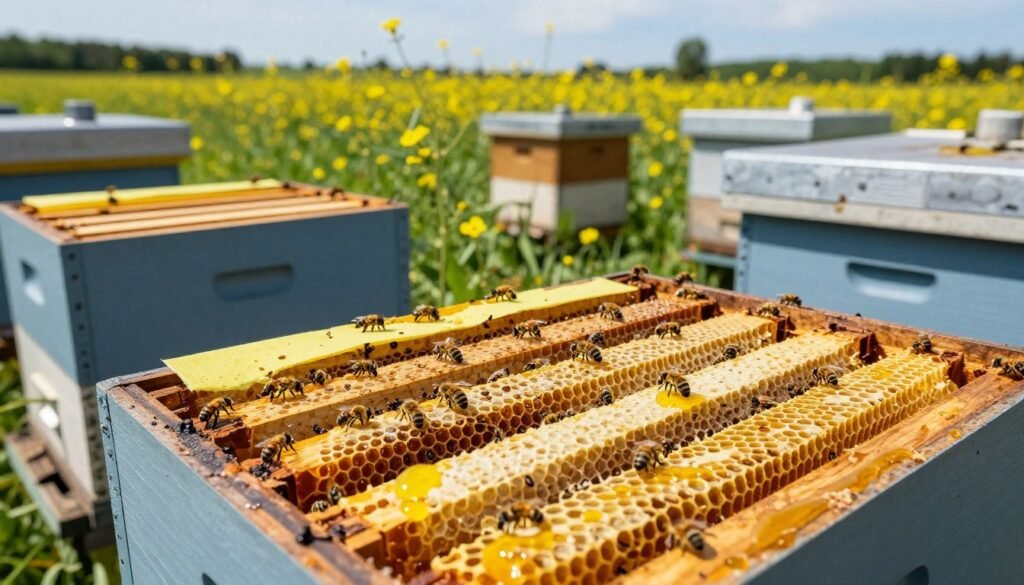
Formic acid offers one of the rare approved options when honey supers remain on productive hives.
Formic Pro, developed by NOD Apiary Products, is among the few products labeled for use with honey supers while honey production proceeds.
Research shows that at 90°F strips lost about 65g over 24 hours, highlighting rapid evaporation rates under hot weather. High temperatures raise risk to brood and may cause queen loss if labels are ignored.
The correct application places strips near the edges of the bottom-most brood box so vapors reach capped brood. After roughly two to three weeks, bees often chew up and remove spent strips, reducing labor.
Pros and cautions:
- All-natural acid option that allows continued honey production when used per guidelines.
- Follow temperature limits closely; monitor colonies for stress after application.
- Place strips to target brood caps while avoiding direct contact with frames of honey.
| Product | Use with Honey Supers | Notes |
|---|---|---|
| Formic Pro | Approved | Place strips low in brood box; follow temperature rules |
| Other formic formulations | Varies | Check label for application method and withdrawal times |
| Synthetic acaricides | Not approved | Avoid when honey production is underway to prevent contamination |
For complementary approaches that lower mite pressure without risking honey quality, see guidance on natural remedies for mites.
Why Most Synthetic Treatments Are Prohibited
Most synthetic miticides are off‑limits while honey harvests are active because residues pose a direct food-safety risk.
Products like Apivar, which use amitraz, target nerve synapses in mites and deliver fast mortality.
Those same compounds often accumulate in beeswax and linger in the hive environment for months.
Regulatory limits reflect that persistence. Labels forbid use when supers are installed to prevent contamination of marketable honey.
- Synthetic chemicals may leave residues that reduce product quality and breach legal tolerances.
- Long half‑lives mean interactions with other pesticides and chronic exposure for bees and brood.
- Annual rotation of chemical families is advised to slow resistance in mites.
Professional beekeepers must weigh short‑term efficacy against long‑term colony health and honey integrity.
When possible, prefer approved, lower‑risk products or mechanical controls while supers remain on hives.
| Issue | Impact | Practical note |
|---|---|---|
| Residue persistence | Honey and wax contamination | Remove supers before application unless label permits |
| Mode of action | Rapid mite paralysis and death | Effective but may select for resistance |
| Regulation | Restricted use with supers | Follow label and state rules strictly |
| Colony health | Possible chronic exposure to bees and brood | Balance treatment timing with colony needs |
Managing Hive Temperature and Humidity
Internal climate control matters when applying mite controls in active colonies.
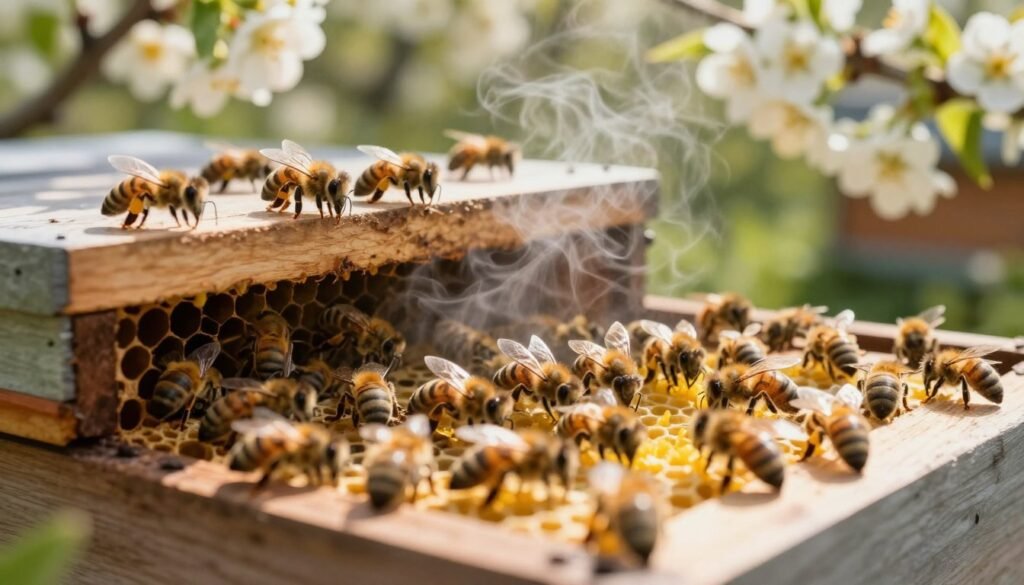
Temperature affects treatment performance and bee behavior. Applying formic acid in hot weather often triggers bearding as bees ventilate the hive. Bees may cluster outside in high heat, which signals stress and requires close attention.
High humidity alters how acid vapors disperse. That change can reduce efficacy against mites and raise stress on brood if exposure becomes uneven.
Impact on Bee Behavior
Research shows bearding is common with acid-based methods, yet colonies rarely abscond when humidity stays favorable. Monitor colonies for persistent crowding at the entrance; this hints at overheating or too‑intense vapor release.
Oxalic acid and other vapor treatments need careful timing. Avoid very hot afternoons to protect brood and to keep mortality of workers low. Apply when internal temperature and humidity are within safe ranges for the colony.
“Monitor internal conditions closely; temperature and moisture drive both treatment success and colony resilience.”
- Check hive temperature trends before placing formic strips or running vaporizers.
- Use screens and shade in hot weather to reduce overheating and stress.
- Record conditions when treatments are applied to guide future choices and protect honey quality.
For seasonal readiness and timing tips that preserve colony strength and honey, see this guide on signs your bees are preparing for.
The Role of Integrated Pest Management
Integrated Pest Management (IPM) blends routine checks with targeted actions to keep mite pressure low and protect honey quality.
IPM uses multiple strategies. Cultural steps such as drone brood removal and screened bottom boards lower natural mite counts. Mechanical approaches reduce reattachment of fallen mites.
Chemical options remain part of IPM when needed. Short-term use of oxalic acid and formic acid is effective if labels and timing are followed. Rotate products each year to slow resistance and keep methods effective.
Monitoring matters. Test in spring, summer, and fall to track mite levels. Keep records of tests, treatments, and hive observations to guide data-driven decisions.
“Follow sampling guides and control plans to make consistent, evidence-based choices.”
| IPM Element | Purpose | Typical Timing |
|---|---|---|
| Drone brood removal | Reduces mite reproduction | Spring to summer, repeat every few weeks |
| Oxalic acid vapor | Low-residue mite knockdown | Broodless periods or when frames show minimal brood |
| Formic acid strips | Penetrates capped brood | Use per label; observe temperature limits |
| Screened bottom boards | Trap fallen mites | Year-round |
For detailed sampling and IPM templates, refer to the Honey Bee Health Coalition and region resources such as Integrated Pest Management guidance. Clear plans and steady records help sustain healthy colonies and clean honey harvests.
Protecting Your Honey Quality
Protecting honey quality starts with strict choices about what goes into the hive. Priority one is preventing any chemical residue from entering honey while honey supers remain on hives.
Treatments not labeled for honey production must be avoided when supers are present. Follow withdrawal periods exactly to meet food‑safety standards and preserve market confidence.
Organic acids applied per label often provide effective mite control without compromising honey marketability. Use acid products only within indicated temperature and placement limits.
Keep colonies healthy while minimizing disruptions to honey production. Record any control steps, monitor hive response, and remove supers if labels require withdrawal time.
“Residue prevention preserves both consumer trust and long-term apiary value.”
- Avoid nonapproved chemicals when supers are on the hive.
- Follow product labels for withdrawal periods and placement.
- Prioritize colony health alongside honey quality.
| Focus | Action | Benefit |
|---|---|---|
| Honey supers | Keep on unless product permits removal | Protects harvest purity |
| Chemical withdrawal | Follow label intervals strictly | Meets safety and legal standards |
| Organic acid use | Apply per label, monitor temps | Effective control with low residue risk |
| Recordkeeping | Log treatments and observations | Improves future decisions and traceability |
Recognizing Signs of Treatment Stress
Heat-driven crowding at the hive entrance often signals stress after chemical applications. Watch colonies closely after any treatment to protect brood and honey production.
Early detection helps limit long‑term effects on colony strength. Small signs may escalate in the days and weeks after application.
Bearding Behavior
Bearding is common when formic acid is used in hot weather. Bees cluster outside to cool the nest and reduce internal temperature.
Short periods of bearding are normal, but prolonged crowding suggests high vapor load or poor ventilation.
Queen Loss Indicators
Monitor brood patterns closely for spotty or missing brood. That often signals queen failure or impaired laying after treatments.
If adult mortality rises or brood declines sharply, re-evaluate the treatment and placement of strips or acid sources immediately.
“Prompt checks in the weeks after treatment protect queen health and preserve production.”
- Bearding usually links to temperature stress rather than immediate colony collapse.
- Preventable queen loss has been reported when application methods are adjusted, such as temporary queen management in high‑risk cases.
- Stay vigilant for several weeks to confirm recovery before harvesting honey or moving supers.
| Sign | Likely Cause | Action |
|---|---|---|
| Extended bearding | High internal temperature from acid vapor | Improve shade/ventilation; check label temperature limits |
| Spotty brood pattern | Queen impairment or brood mortality | Inspect queen; consider re-queening if not recovered in 14–21 days |
| High adult mortality | Overexposure to treatment | Stop application; provide supplemental feeding and shade |
Record Keeping for Apiary Health
Clear, consistent records turn seasonal observations into actionable hive plans.
Maintain concise logs of mite levels, treatments, and colony strength. Note dates, products used, and weather for every treatment period.
Record frames of brood and frame counts for each inspection. Track weeks and days between checks to spot trends in mite counts and brood health.
- Log product name, method of use, and placement in the hive when acid or other products are applied.
- Note colony response over the next two to three weeks to assess treatment effect.
- Keep an annual summary of mite control successes and failures per year to guide future choices.
Digital tools and mobile apps simplify schedules, reminders, and shared notes for multiple apiaries. Consistent documentation helps demonstrate compliance with regulations and supports long‑term control planning.
“Good records convert observations into reliable information that improves decisions and protects honey quality.”
| Record Type | What to Log | Benefit |
|---|---|---|
| Mite levels | Counts, date, method | Detect trends and time interventions |
| Treatments | Products, placement, weather | Ensure label compliance and traceability |
| Colony strength | Frames of brood, adult population | Decide if and when to act |
Conclusion
Strong apiary results come from routine checks, careful treatment selection, and accurate records. Regular monitoring detects rising varroa mites pressure early and guides timely action without risking honey quality.
Combine nonchemical controls with labeled products when needed. Use options such as oxalic acid where approved, select each mite treatment per label, and rotate methods to slow resistance.
Keep clear notes of inspections, weather, and outcomes. Good records and up‑to‑date information make future choices easier and protect both colonies and marketable honey.
For deeper guidance on managing mites with supers present, review this detailed [resource] on mite control while honey is on the. Follow labels: the law supports safe, effective treatments and better long‑term results.