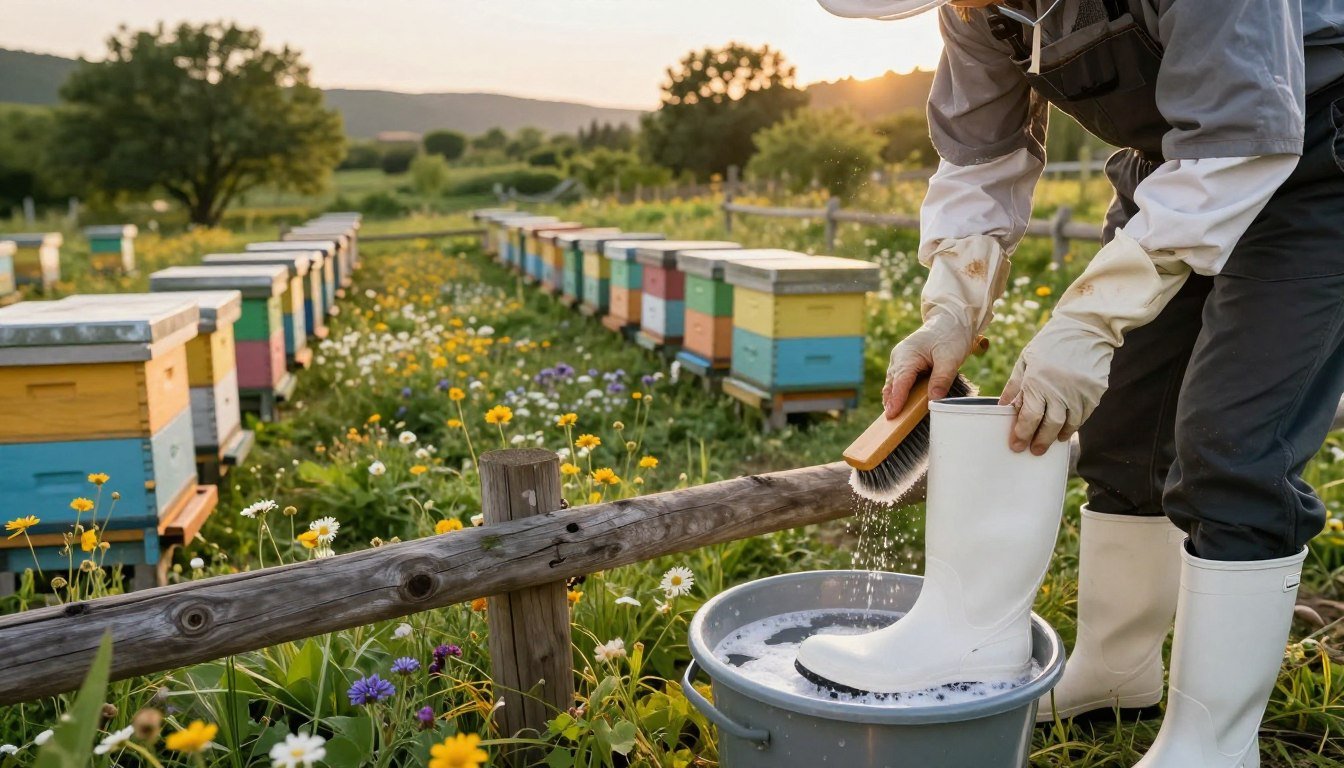
Effective Boot Cleaning Protocol for Apiary Yard Visits

Understand the boot cleaning protocol between apiary yards and how to implement it effectively. Our how-to guide provides detailed instructions for beekeepers.

Protecting bee colonies starts with simple habits. A clear routine for footwear and site hygiene lowers the chance of spreading pathogens and preserves colony health.

The Center for Food Security & Public Health offers guidance on selecting effective disinfectants for farm and hive use. Follow those recommendations to reduce risks when moving between locations.

Every beekeeper should prioritize proper footwear care and a steady routine. Tucking pant legs and choosing tall, sealed options helps keep bees out and provides stability during inspections.

Consistent maintenance keeps operations reliable and supports long-term sustainability. For more on why footwear matters, see this short guide on proper protective choices: why proper footwear matters for beekeepers.

Key Takeaways

  • Routine matters: a repeatable boot cleaning protocol between apiary yards reduces contamination risk.
  • Use disinfectants recommended by experts to protect colonies and the environment.
  • Choose tall, sealed boots or sealed yard footwear to prevent bee entry and improve stability.
  • Tuck pant legs into boots to create a complete barrier and reduce sting risk.
  • Regular maintenance supports calm handling and long-term apiary health.

The Importance of Biosecurity in Apiary Management

Controlling movement on your property is the first defense against pathogens that threaten colonies. Foot traffic and gear can move bacteria, viruses, and fungi into sensitive areas.

Maintaining high biosecurity standards on a farm reduces the chance that harmful microbes reach hives or other livestock. Simple steps protect both production and pollinators.

  • Limit who enters animal contact areas and record visitors to reduce risk.
  • Use clear signage to direct travel routes and keep people out of critical areas.
  • Restrict access to specific areas to cut down on cross-contamination from foot traffic.

Proactive management of people and equipment is essential. For practical guidance on on-site measures, consult the state beeyard factsheet and field strategies for serious keepers: beeyard biosecurity factsheet and field note strategies.

Implementing an Effective Boot Cleaning Protocol Between Apiary Yards

Keeping soles free of soil and organic matter is one of the easiest ways to protect hives and livestock. Start with a simple routine and make it mandatory for all visitors and staff who move across farm areas.
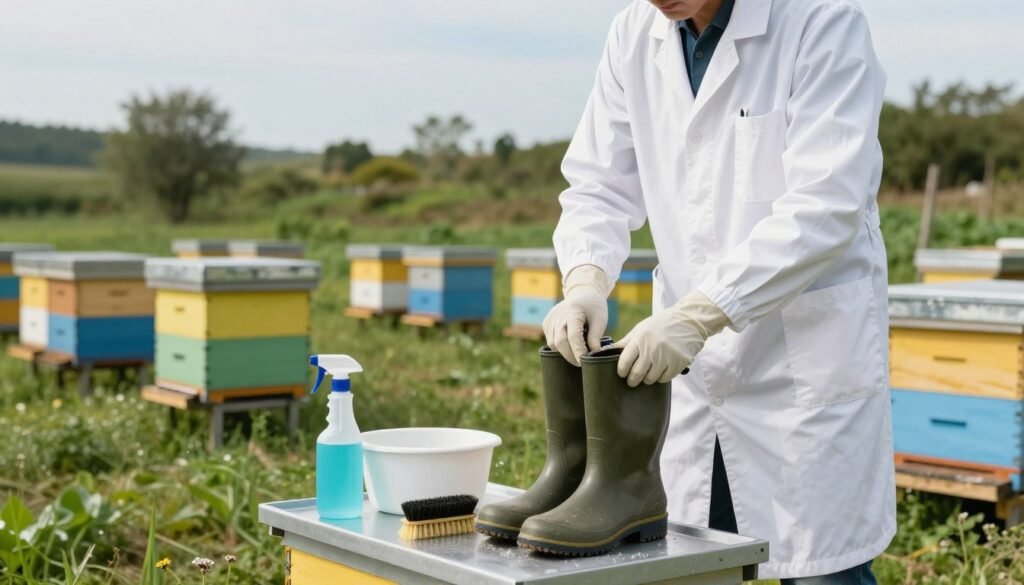
A clean and organized apiary yard featuring a professional wearing a lab coat and gloves, actively disinfecting sturdy rubber boots. In the foreground, the boots rest on a designated cleaning station with brushes, disinfectant sprays, and water basins. The middle ground showcases a vibrant apiary with hives surrounded by greenery, hinting at the importance of biosecurity measures. The background reveals a clear sky and distant trees, symbolizing the outdoor environment of the apiary. Soft, natural lighting highlights the cleanliness of the scene, while the angle is slightly elevated to provide a comprehensive view of the cleaning process. The mood is focused and serious, emphasizing the importance of boot cleaning in maintaining a healthy apiary.

Removing Debris

Scrub with a stiff brush to remove visible debris such as mud or manure from the soles and treads. Remove clumps first so the disinfectant can reach all surfaces.

Check laces and seams; organic matter can hide in crevices. Clean equipment used for scrubbing to avoid recontamination.

Washing with Soap

Follow product label instructions when using soap water to wash footwear. Soap loosens dirt and makes disinfection effective.

Important: rinse thoroughly with clean water after washing. Soap residue can inactivate disinfectants, so a full rinse is essential.

Disinfection Procedures

Apply a registered disinfectant via footbath or spray so the solution contacts all parts of the boots. Allow the recommended contact time — typically 3–10 minutes — before moving on.

“Using the correct dilution and following label directions protects colonies and equipment.”

  • Use a spray bottle or dedicated footbath for even coverage.
  • Follow dilution rates for bleach or other disinfectants exactly as shown on the label.
  • Consider vehicles and other equipment when assessing risk across areas.

For a broader plan on sustainable site hygiene, see creating a sustainable apiary plan.

Setting Up Dedicated Footwear and Sanitation Stations

A dedicated station for footwear and sanitation makes hygiene simple and consistent for all staff and visitors. Place stations at key entrances to production areas and near vehicle access points to limit transfer of debris and organic matter.

Essential Equipment for Footbaths

Start with two heavy-duty containers: one for clean water and one for the disinfectant solution.

  • Clean water container for rinsing and removing visible debris before disinfection.
  • A second container with a prepared disinfectant solution. To prepare a 1% active sodium hypochlorite mix, follow the product label instructions exactly.
  • Stiff brush and soap water for initial washing if soles have heavy material.
  • Flat placement on a solid surface or tarpaulin if the station sits on dirt.

Verify product efficacy by checking registered decontaminants in the APVMA or PubCRIS systems. This confirms your chosen disinfectants are suitable for farm footwear and related equipment.

Maintain the station by changing water and solution regularly to avoid buildup and loss of effectiveness. Provide short, clear instructions for visitors so everyone uses the equipment correctly and keeps the area safe.

For a formal reference on on‑site measures, consult the biosecurity manual: biosecurity manual.

Conclusion: Maintaining Long-Term Farm Hygiene

Simple routine steps form the backbone of effective biosecurity on farms. Consistent footwear care and clear entry practices make a measurable difference in reducing pathogen transfer.

By stopping bacteria and viruses at boundary points, beekeepers protect both pollinators and other livestock. This low-cost approach supports hive health and overall production.

Adopt clear stations and brief instructions so staff and visitors follow the same standard every time. Small habits—when repeated—become reliable defenses against soil‑borne threats.

For practical guidance on protective clothing and site hygiene, see safe beekeeping practices, the honey bee producer guide, and resources on common bee diseases.

Commitment to these standards signals a professional approach and helps safeguard your operation from costly outbreaks and long-term losses.

FAQ

What is the first step in an effective boot cleaning protocol for apiary yard visits?

Begin by removing visible debris from footwear. Use a stiff brush and clean water to knock off soil, plant material, and hive residue. Clearing debris reduces organic load so disinfectants can work properly. Allow mud and clumps to fall away before moving to washing or disinfection.

How often should footwear be washed with soap during inspections?

Wash footwear with detergent and water at the start and end of each site visit, and between individual hive inspections if moving among distinct apiary areas. Use warm, soapy water and a brush to scrub soles and seams for at least 20–30 seconds, then rinse with clean water.

Which disinfectants are suitable for use in footbaths at farms?

Use disinfectants labeled for agricultural or veterinary use such as quaternary ammonium compounds, glutaraldehyde formulations, or sodium hypochlorite (household bleach) at manufacturer-recommended dilutions. Always follow label instructions for concentration and contact time, and avoid mixing products. Replace solution when visibly soiled.

What is the correct contact time for disinfectant solutions?

Contact time varies by product; common ranges are 1–10 minutes. Check the product label for the required wet contact time to inactivate bacteria, viruses, and fungal agents relevant to apiaries. Keep footwear immersed or thoroughly sprayed to maintain that wet period.

How do you set up a sanitation station for dedicated footwear?

Place a mat or grate to remove debris, a large basin or trough for soapy wash, a rinse station, and a footbath with disinfectant. Provide signage, PPE like disposable overshoes, and replaceable solutions. Position the station at entrances to hive blocks and near vehicle access points to prevent cross-contamination.

What essential equipment is needed for footbaths and stations?

Essential items include a durable trough or tub, stiff brushes, approved disinfectant, measuring tools for dilution, clean water supply, disposable gloves, rinse containers, and signage. Consider waterproof mats, a boot scraper, and containers for used solution disposal.

How should disinfectant solutions be mixed and stored on the farm?

Mix according to the label using calibrated measuring tools and clean water. Prepare fresh batches daily or sooner if solutions become cloudy or contaminated. Store concentrate in original labeled containers away from heat and sunlight, and label prepared solutions with concentration and preparation date.

Are commercial disinfectant sprays effective for footwear and vehicles?

Yes, sprays that are registered for agricultural use can supplement footbaths for quick treatment of soles and wheel hubs. Ensure thorough coverage and allow full contact time. Sprays are most effective when used after brushing and rinsing to remove organic matter.

What should visitors and contractors be instructed to do on arrival?

Require visitors to use the sanitation station on entry and exit, change into site-dedicated footwear or use disposable overshoes, and follow signage for handwashing and vehicle cleaning. Ask about recent farm visits and restrict access if they’ve been on properties with known disease issues.

How can farms manage disposal of used disinfectant and wastewater?

Follow local environmental regulations. Neutralize and dilute certain disinfectants before disposal if the label allows, or collect and dispose of waste through approved farm waste services. Avoid draining concentrated solutions into natural waterways.

How often should stations be inspected and maintained?

Inspect daily during active seasons and after heavy use. Replace soiled disinfectant, clean basins and brushes, refill water, and repair damaged mats or signage. Keep a simple log to document maintenance and solution changes for biosecurity records.

Can vehicles spread pathogens between farm areas and how do you reduce that risk?

Vehicles can carry pathogens on tires and undercarriage. Wash tires and wheel wells when moving between blocks, use wheel wash systems, and limit off-road access. Combine vehicle cleaning with personnel sanitation to reduce cross-contamination.

Are bleach solutions a good option for routine disinfection?

Sodium hypochlorite is effective and inexpensive when used properly. Prepare fresh, correctly diluted solutions and avoid use on metal equipment without thorough rinsing to prevent corrosion. Do not mix bleach with ammonia or other cleaners.

What records should be kept to maintain long-term farm hygiene?

Maintain logs of station maintenance, disinfectant preparation dates and concentrations, visitor entries, and any biosecurity incidents. These records support traceability and help identify gaps in hygiene practices over time.
Share on Social Media