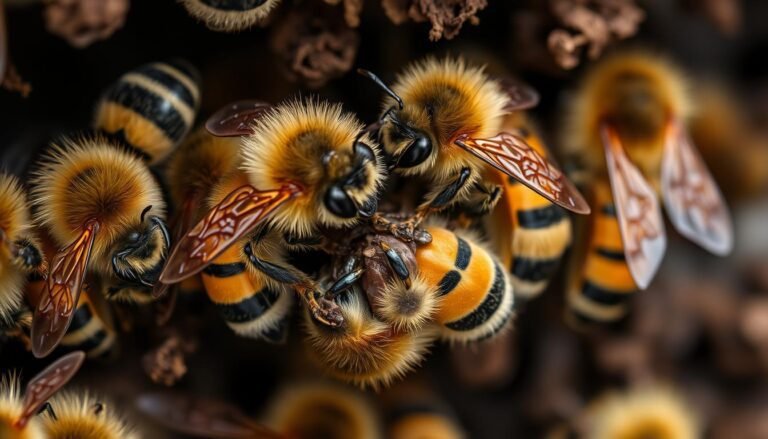
Since 1987, tiny parasites have reshaped American beekeeping and pushed hobbyists to adopt smart control plans. These pests reproduce in capped brood and can spread viruses that weaken a hive.
Every colony depends on timely action to keep populations low before winter. Monitoring populations with sugar rolls or alcohol washes helps you decide when to act and which option to choose.
Using chemical, organic, and cultural approaches in rotation can reduce resistance and protect honey and brood. Options range from slow-release oxalic acid strips to thymol gels and hop-derived strips.
Practical guides and surveys explain product performance and seasonal timing. See a detailed survey of varroa treatments and tips on natural remedies to match methods to hive conditions.
Key Takeaways
- Monitor counts first; act when thresholds are reached.
- Rotate control modes to limit resistance and residue.
- Match method to brood status and seasonal windows.
- Slow-release oxalic and thymol options suit different needs.
- Document results and adjust plans to protect colonies.
Understanding the Threat of Varroa Mites
Small parasitic arthropods have reshaped honey bee health across the United States since the late 1980s. Their life cycle and feeding habits make them unusually destructive to a hive’s long-term stability.
Life Cycle and Impact
Adult female mites enter brood cells just before capping and reproduce while the bee develops. Their offspring feed on larvae and emerging adults, causing deformities and weakened immune responses.
The result is reduced lifespan of workers, lower honey yields, and higher virus transmission that can collapse a colony over time.
Transmission Between Colonies
Spread occurs during foraging and drifting. Mites hitch rides on bees visiting the same flowers or entering nearby colonies.
Notably, the global spread culminated in June 2022 when Australia confirmed its first detection, underscoring how quickly populations can expand across continents.
- Reproduction in brood cells amplifies population growth.
- Movement between colonies happens through bee-to-bee contact.
- Early monitoring guides timely treatment decisions.
The Importance of Regular Mite Monitoring
Consistent checks of hive samples tell you when mite populations are rising and when action is urgent. Regular monitoring turns uncertainty into clear numbers that guide every control decision.
Routine sampling—using sugar rolls or alcohol washes—lets you quantify mites and decide if a treatment is needed. These simple tests reveal when counts exceed safe levels and when a queen or developing brood are at risk.
Mite populations can grow fast. Weekly or monthly checks during peak season catch trends before colonies decline. Consistent records help you compare colonies and spot one that needs focused care.
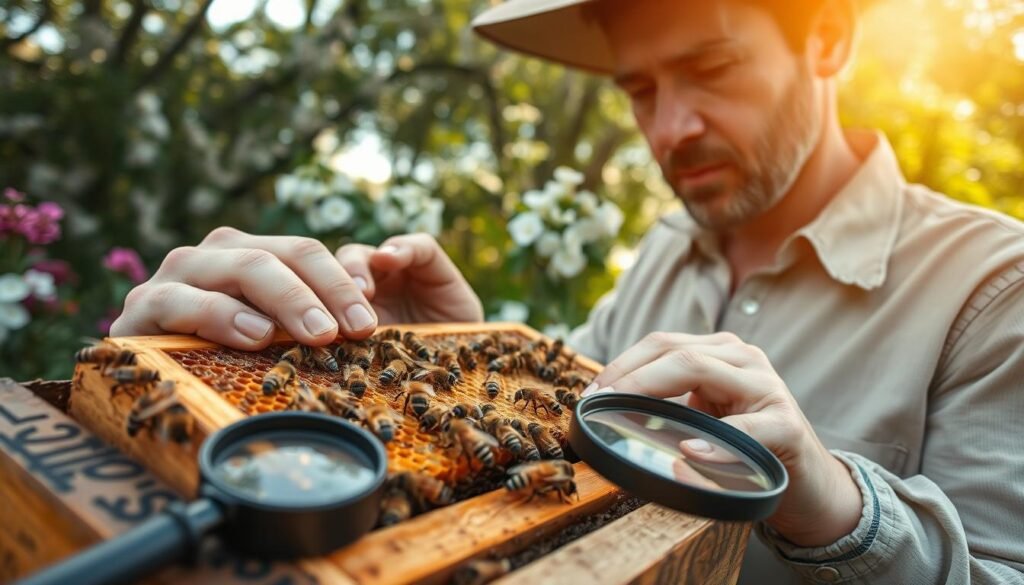
“Tools for Varroa Management provides clear sampling protocols that improve accuracy and timing.”
Consult the Honey Bee Health Coalition guide and use proven sampling methods. For a practical overview of available options, see a concise guide to treatments varroa mites. Reliable data ensures every hive gets the right control at the right time.
Selecting the Best Varroa Mite Treatment for Backyard Beekeepers
Start by assessing colony health: check queen vigor, brood pattern, and current population counts. These facts guide which approach will protect bees and brood with the least risk to honey.
Decide between synthetic and naturally derived options based on efficacy, residue risk, and local temperature windows. Some products need narrow temperature ranges to work safely; using them at the wrong time can harm the colony or fail to reduce populations.
Calculate dosage by frame count. A single strip may suit a small hive, while larger colonies often need multiple strips spaced across frames to ensure even distribution of the active ingredient.
Rotate methods across seasons to limit resistance in the mite population. Also confirm any product is approved for use with honey supers so your harvest stays clean.
- Read label instructions carefully to protect the queen and developing brood.
- Match the method to time of year and local climate.
- Consider genetic and behavioral tools — see research on predisposition to hygienic behavior.
Evaluating Synthetic Miticide Options
Synthetic acaricides remain a powerful option when colonies face heavy infestations and rapid knockdown is needed. Evaluate each product by its documented kill rate, delivery method, and label restrictions before applying it to a hive.
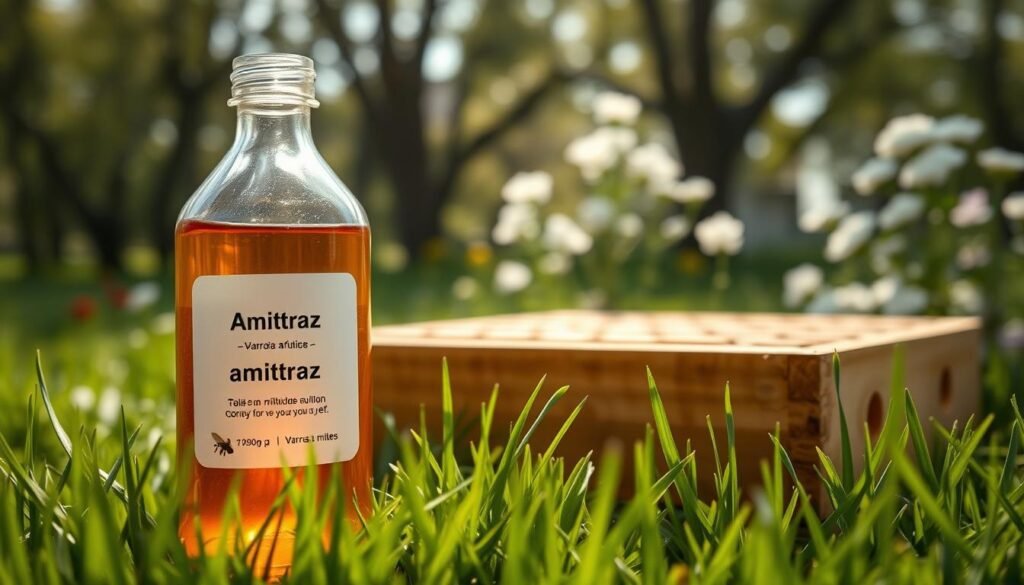
Amitraz Based Solutions
Apivar is an amitraz-based product that paralyzes pests and can achieve about a 95% kill rate with a single application. The active ingredient is housed in polymer strips that provide a steady dose as bees move through frames.
Apply strips only according to the label and never while honey supers are on the hive. Monitor brood, queen, and adult bees after use to confirm there are no adverse effects on egg-laying or colony behavior.
Risks of Older Chemical Treatments
Older organophosphates like coumaphos can persist in wax and build up over time. Residues may harm the queen and developing brood and can contaminate honey if used incorrectly.
“Rotate modes of action and follow label limits to reduce resistance and protect hive products.”
- Rotate chemistries to limit resistance in mites and protect colonies.
- Use synthetic options only when monitoring shows counts above thresholds.
- Follow timing guidance to avoid honey contamination and brood harm.
Exploring Naturally Derived Treatment Methods
Naturally derived options offer targeted control while leaving fewer residues in wax and honey.
Formic acid delivered via Quick Strips is notable because it can be applied even with honey supers on the hive. MiteAway Quick Strips report a 90–99% kill range and work well during warm windows when brood is present.
Formic acid and Quick Strips
Use strips per label timing and monitor temperature closely. Formic acid penetrates brood cappings and reduces populations in developing bees.
Essential oil formulations
Api Life Var blends thymol, eucalyptus oil, l-menthol, and camphor and shows about a 94% kill rate when used at proper temps.
Apiguard is a slow‑release thymol gel with roughly 93% efficacy. Its gradual release lets worker movement distribute the active ingredient through the colony.
Oxalic acid vaporization
Oxalic acid vaporization is most effective during broodless periods. It cleanses adult bees quickly but does not reach mites inside capped brood.
Handle with care: oxalic acid is corrosive; wear PPE and follow safety steps to protect skin and lungs.
“These naturally derived options provide a sustainable path to manage populations without relying solely on harsh synthetics.”
- Rotate methods to reduce resistance and protect honey.
- Match method to colony status — brood presence matters.
- Follow label instructions and safety guidance every time.
| Method | Typical Efficacy | Supers Allowed | Notes |
|---|---|---|---|
| Formic acid (Quick Strips) | 90–99% | Yes | Penetrates capped brood; watch hive temp |
| Essential oils (Api Life Var) | ~94% | No (check label) | Temperature sensitive; blends of thymol and oils |
| Thymol gel (Apiguard) | ~93% | Depends on label | Slow release; good when brood present |
| Oxalic acid vapor | High on adults | No | Best during broodless periods; PPE required |
For practical guidance on application and timing, review an overview of treatments and product notes and explore methods in a natural pest control guide at Natural Pest Control.
The Role of Cultural and Mechanical Controls
Active colony management—removing targeted brood and altering nest architecture—shifts the balance against pests. These hands-on steps reduce pressure on bees and cut infestation levels without immediate chemical input.
Introduce a drone frame to concentrate reproductive stages where mites prefer to breed. Once capped, remove and freeze or dispose of that frame to lower overall varroa mites counts in the hive.
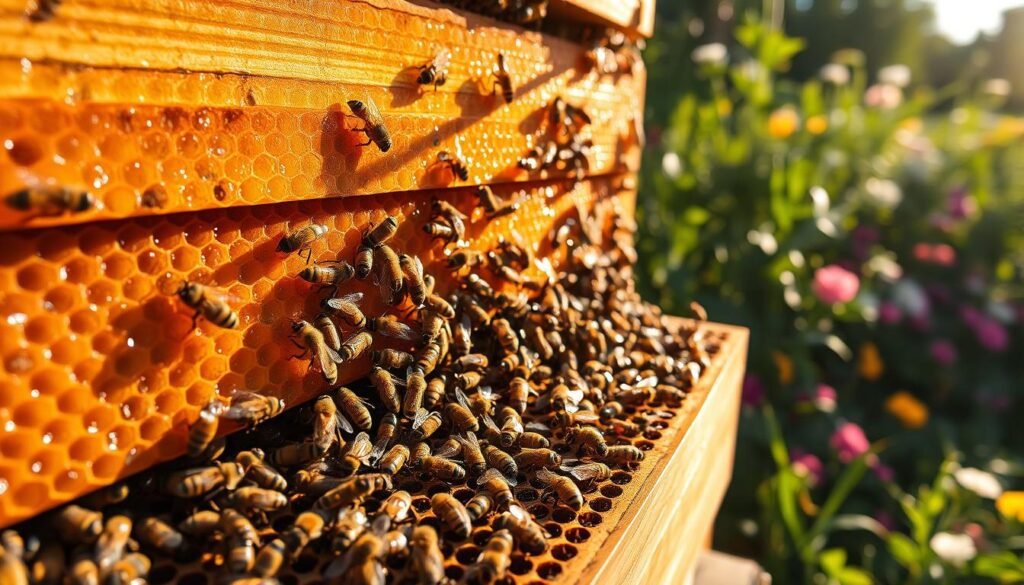
Use a screened bottom board as passive defense. Fallen mites drop through and cannot climb back, which steadily reduces mites between active treatments.
Splitting a colony creates a brood break that interrupts mite reproduction. The temporary lack of capped brood makes many control options more effective and lowers mite populations.
Combine these mechanical tactics with periodic monitoring and selective treatments to keep levels below collapse thresholds. Understanding the queen and brood cycle helps you time interventions for maximum impact.
“Non-chemical controls are essential tools in integrated pest management and help preserve honey quality.”
Seasonal Considerations for Effective Application
Season and flow dictate when to apply controls so honey stays clean and colonies remain strong.
Timing is everything. Avoid applying chemical options while honey supers are on the hive during the honey flow. That prevents taint and protects your harvest.
Timing Treatments Around Honey Flow
Plan applications so the active ingredient has time to work before bees begin storing surplus honey. Apply approved options in windows that do not overlap major nectar flows.
Winter use of oxalic acid is most effective when a colony has little to no capped brood. In that state, oxalic acid targets mites on adult bees and gives a strong population reduction.
Use formic acid or other label‑approved methods before the main flow to reduce pressure without risking honey quality. Always read product directions to confirm if supers hive configurations are allowed.
- Schedule a late‑summer check and treat if counts are high before fall honey stores form.
- Use brood breaks, splits, or a drone frame to improve timing and lower overall counts.
- Track queen status and colony strength after any application to ensure winter survival.
“Good calendar planning makes each application more effective and preserves honey quality.”
For a seasonal timeline and planning tips, consult the seasonal management schedule.
Safety Protocols and Handling Instructions
Handle corrosive chemicals with the same care you give your hive equipment—safety reduces risk to both people and bees.
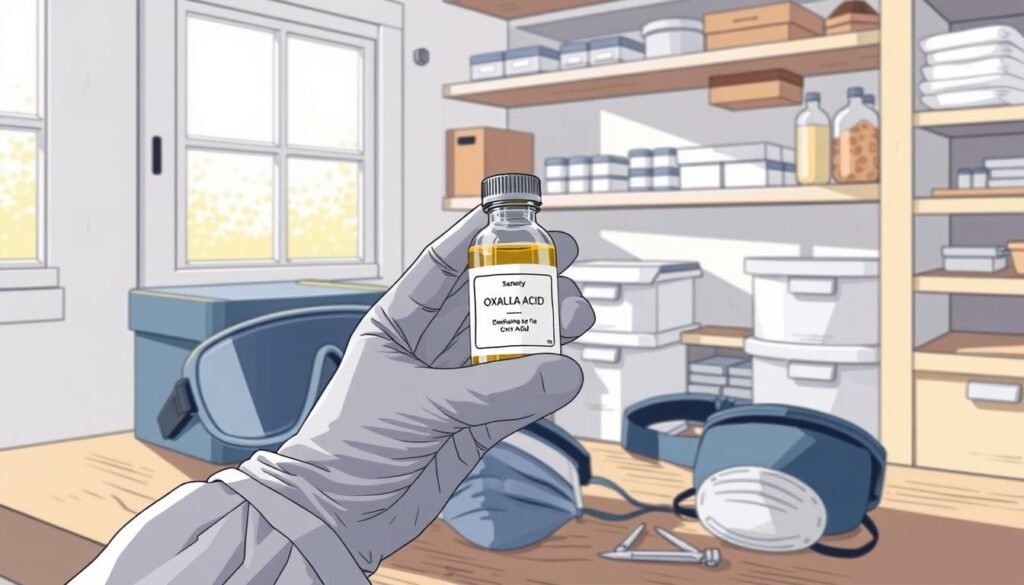
Wear protective gloves, eyewear, and a respirator when you mix or apply oxalic acid. Work outdoors or in a well‑ventilated area to avoid inhaling acid vapors.
Follow label directions exactly. Never exceed the recommended dosage for your colony or the specified exposure time to protect the queen and brood.
Keep records: note the date, method used, and observed levels before and after any treatment. Clear logs help you spot an unusual infestation and track efficacy.
- Store strips and chemicals in sealed containers away from food and honey.
- If counts are high or unfamiliar, consult experienced beekeepers or your local extension before trying a new approach.
- Use PPE and avoid applying vapors around children, pets, or livestock.
“Prioritize safety—protect yourself, your bees, and your harvest by following handling instructions every time.”
Navigating Regulatory Requirements and State Guidelines
Before applying any product, confirm its legal status in your state and whether the label allows use near honey supers hive. Rules vary and some active ingredient approvals differ by state.
Check your State Department of Agriculture website or contact extension agents to verify registration. This step prevents legal risks and avoids harming bees or contaminating honey.
Do not use unapproved oxalic acid mixes or off-label formulations. Unregulated acid can damage brood, stress the colony, and produce unintended environmental effects.
“Report unusual or resistant mite infestation to local officials—data helps the whole community.”
- Buy treatments from reputable retailers who supply labeled strips and products.
- Follow label directions about supers, timing, and application levels.
- If resistance appears, notify authorities and review integrated control steps.
Staying compliant protects your apiary and preserves honey quality. For planning and productivity tips that fit regulatory practice, review this apiary productivity resource.
Conclusion
A clear action plan ties monitoring data, seasonal timing, and selected products into one workable strategy.
Use regular sampling to track mite populations and act before levels climb. A thoughtful varroa mite treatment choice—whether a synthetic option or a naturally derived approach like oxalic acid—supports long‑term colony health.
Prioritize the welfare of your honey bee by following labels, protecting the queen and brood, and keeping concise records. Learn from others who favor non‑chemical methods in real cases by reading a practical account of natural control at natural control experience.
Stay current on breeding and resistance research to improve outcomes; see work on resistant lines at resistant bee genetics. With steady monitoring, timely action, and safe use of oxalic acid when appropriate, you can keep populations low and your apiary resilient.